The Plataeans
Citizens of a small Boeotian city allied to Athens, about 519-479 BCE
In the game: Level 8: The Bay of Marathon, Level 11: The Finale
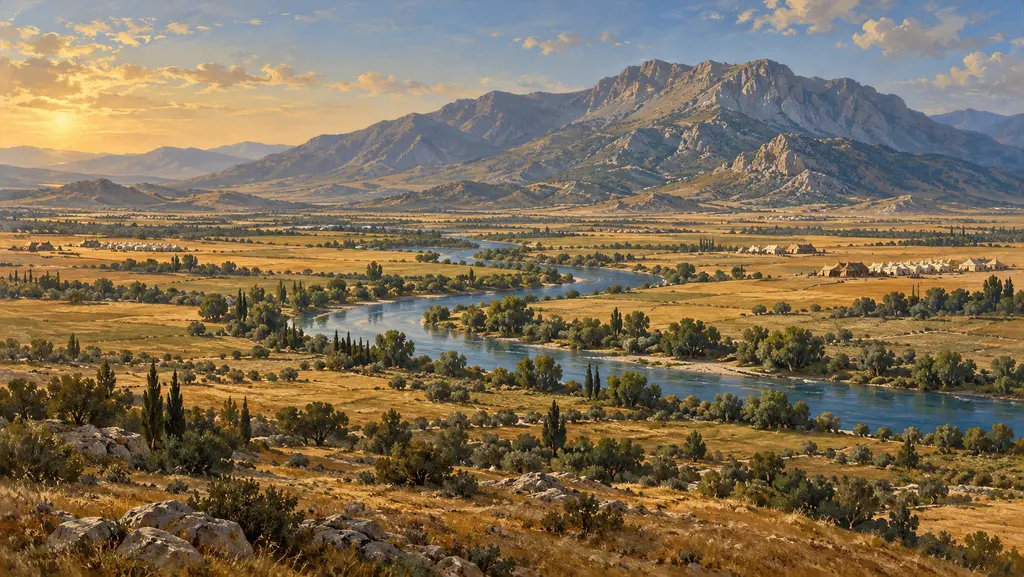
Plataea was a small Boeotian city on the northern slopes of Mount Cithaeron, at odds with its larger neighbour Thebes and allied to Athens. Its citizens were the only Greeks who stood with the Athenians at Marathon in 490, and in 479 the decisive land battle against Mardonius was fought on their territory. No Persian document names them, so their story comes almost entirely from Greek writers.
In the game: The game presents Plataea as the only city that fought beside Athens at Marathon and as the battlefield of 479. Both claims agree with Herodotus, who says the Spartans arrived only after the battle of Marathon was over.
A Boeotian city that turned to Athens
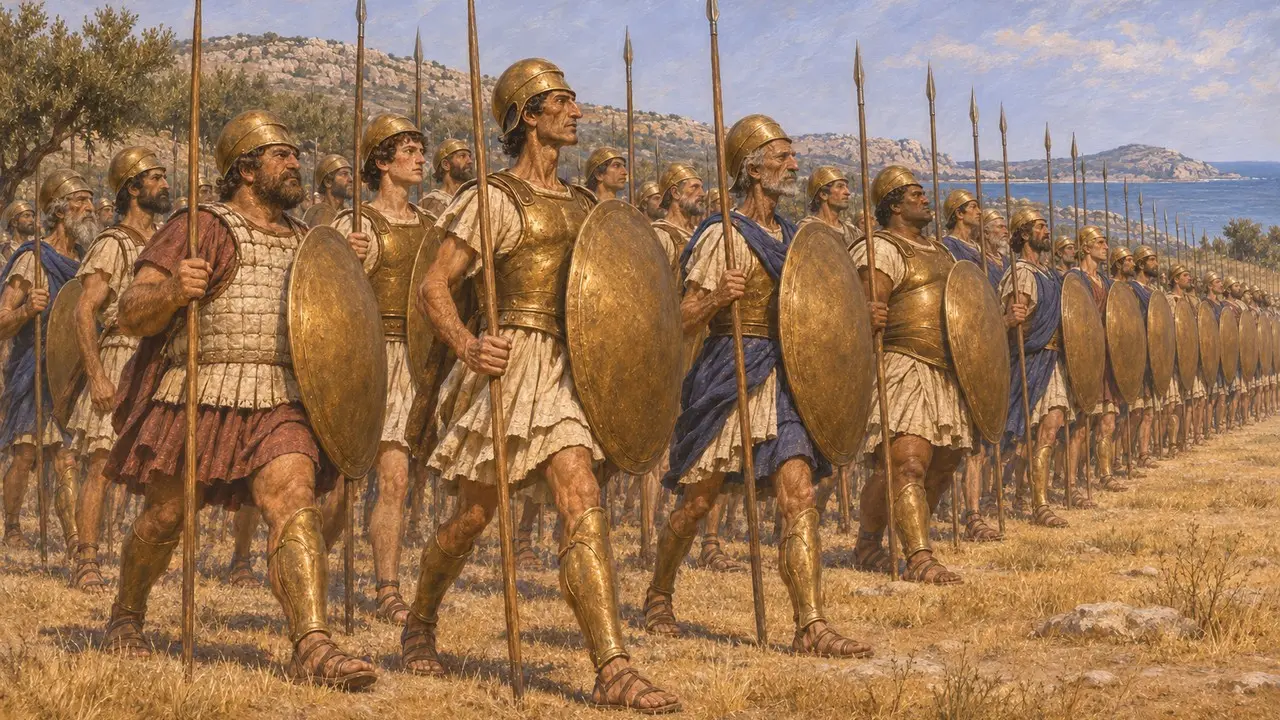
Ancient accountHerodotus says the Plataeans, pressed by Thebes, first offered themselves to the Spartan king Cleomenes. He sent them to Athens instead, hoping to set Athens and Thebes against each other. When the Persians landed at Marathon in 490, the Plataeans marched out in full force and took the left wing of the Athenian line. Herodotus adds that the Athenians afterwards included Plataea in the prayers at their great festivals.
Herodotus 6.108, 6.111
Uncertain dates and numbers
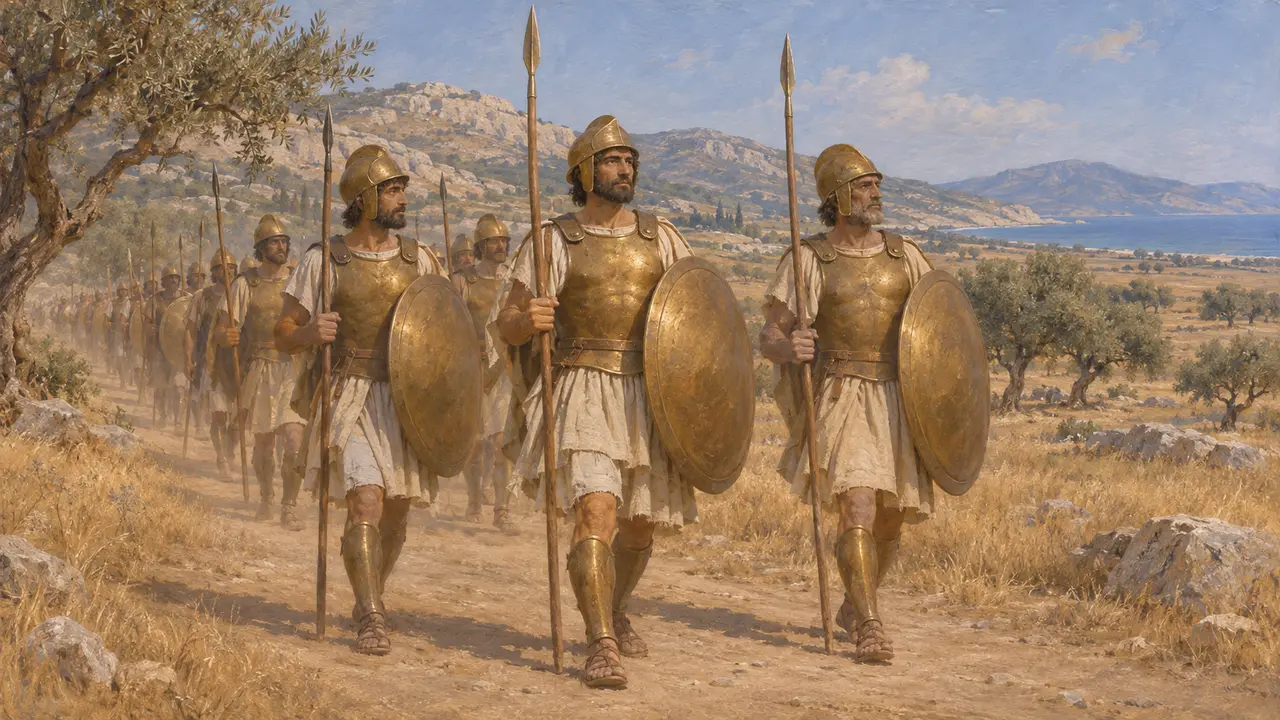
DisputedThucydides dates the alliance with Athens to 519. Some historians prefer about 509, a time when Cleomenes is better attested in central Greece. Herodotus gives no figure for the Plataeans at Marathon. The much later writers Cornelius Nepos and Justin say they sent 1,000 men, a number modern accounts often repeat but cannot confirm.
Thucydides 3.68; Cornelius Nepos, Miltiades 5; Justin, Epitome
Burned in 480, avenged in 479
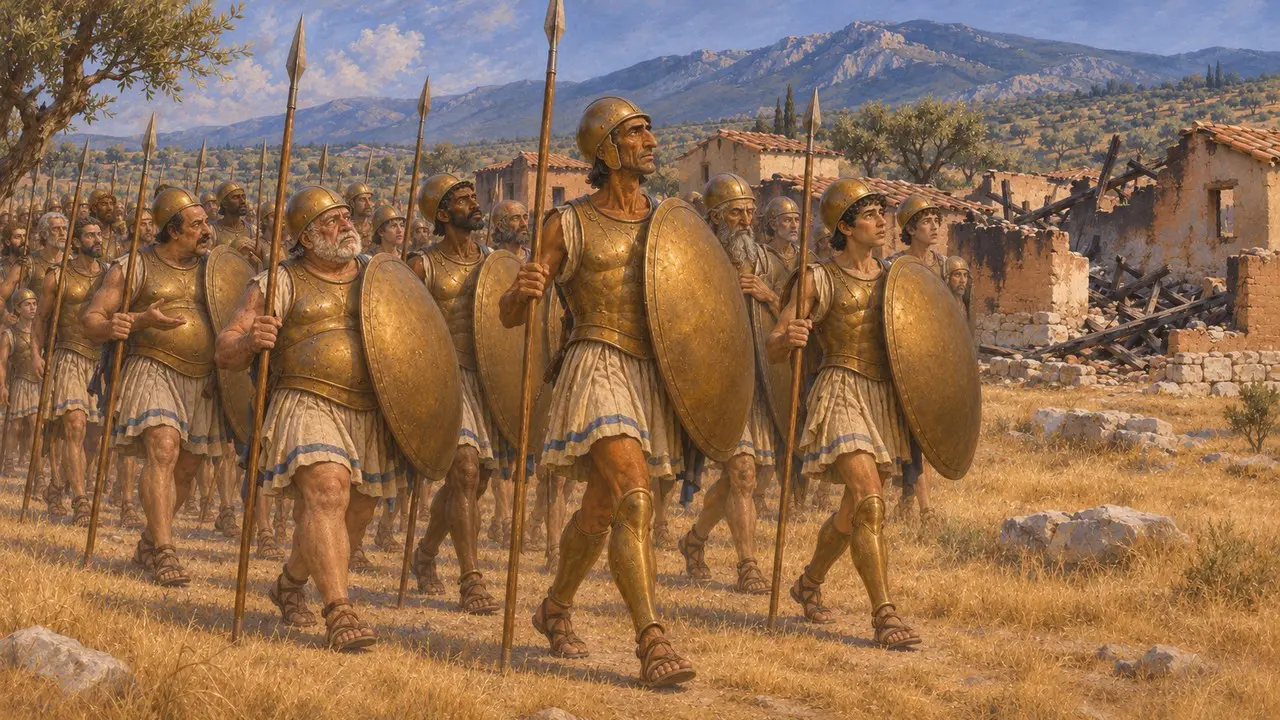
Ancient accountHerodotus says that in 480 Plataeans helped row Athenian ships at Artemisium, then went home to move their families and goods instead of sailing on to Salamis. Xerxes' army, on Theban advice, burned their city. In 479 they sent 600 hoplites to the Greek army that defeated Mardonius on their own land. Thucydides says the Spartan regent Pausanias then swore to respect their independence.
Herodotus 8.1, 8.44, 8.50, 9.28; Thucydides 2.71
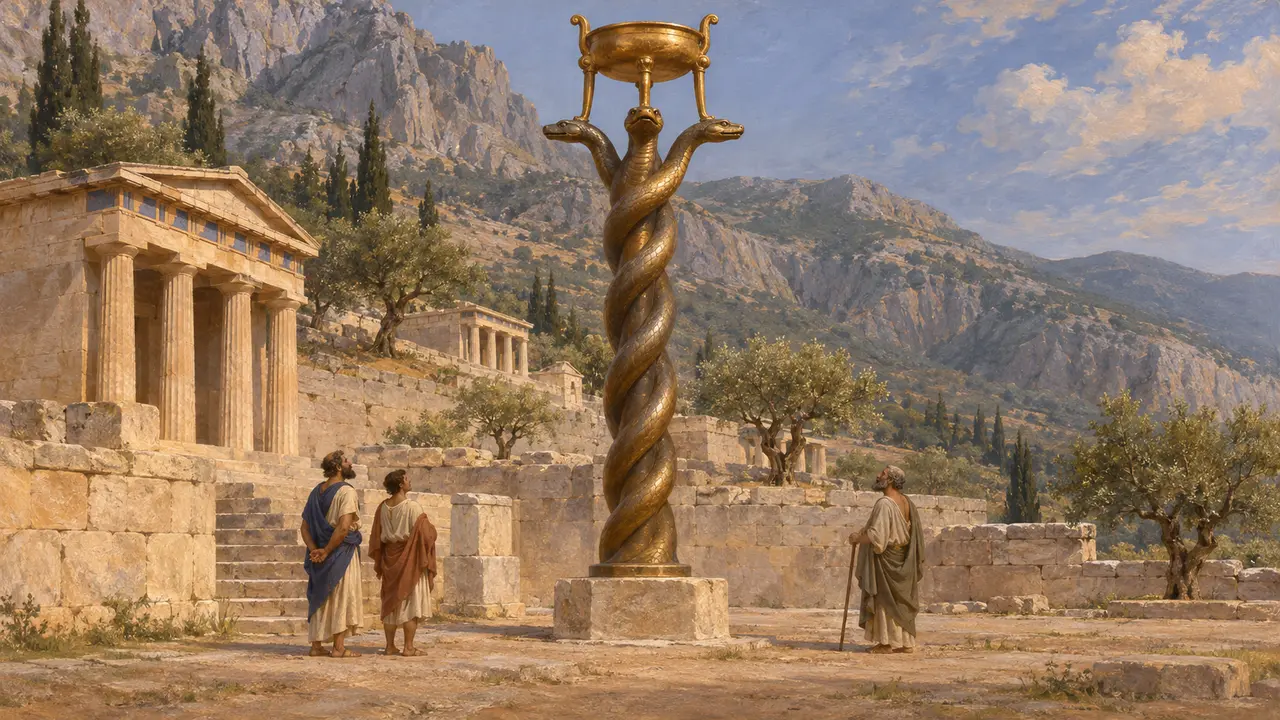
Their name on the Serpent Column
In the recordThe bronze Serpent Column, dedicated at Delphi from the spoils of 479, lists the cities that fought the Persians, and the Plataeans are among them. The column survives today, damaged, in the Hippodrome of Istanbul, where it was taken in the time of Constantine. No Persian text mentions Plataea; the King's inscriptions name lands and peoples, not small Greek cities.
Serpent Column inscription (R. Meiggs and D. Lewis, A Selection of Greek Historical Inscriptions, no. 27); Herodotus 9.81
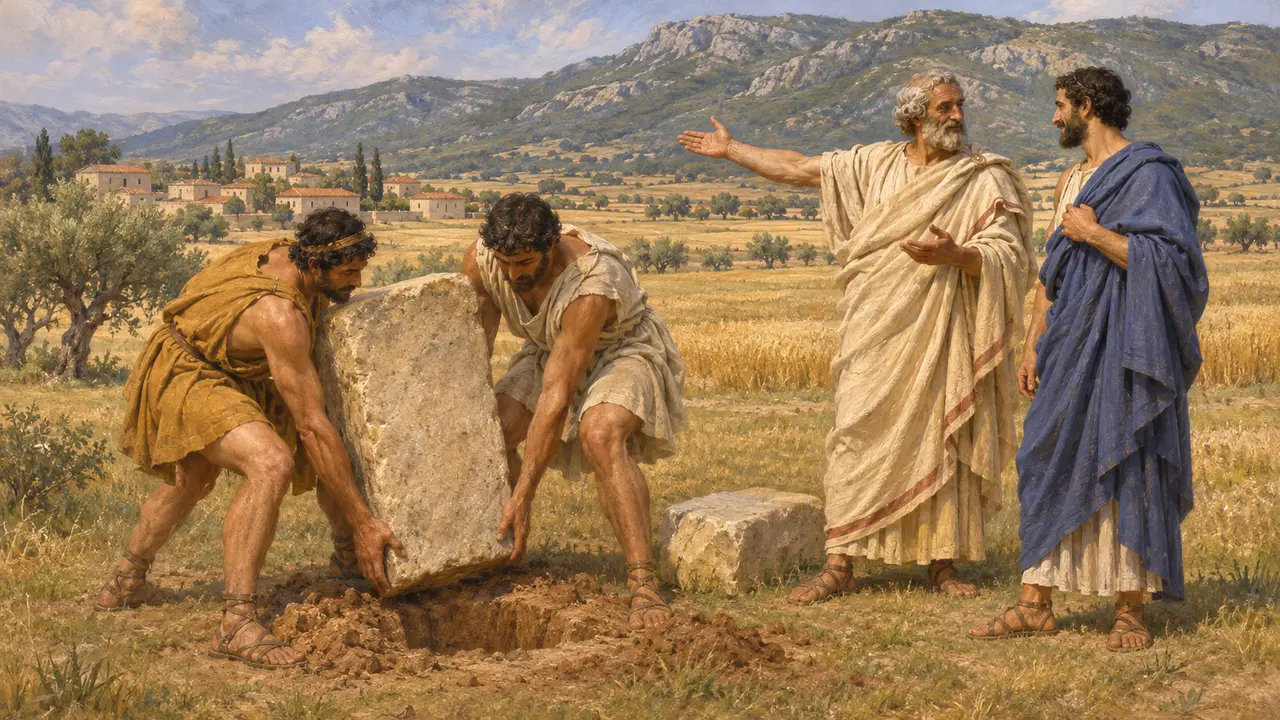
The moved boundary stones
Later legendPlutarch, writing some six centuries later, tells that an oracle promised Aristides and the Athenians victory if they fought on their own soil, in the plain of Demeter and Kore. The Plataeans, he says, solved the problem by removing their boundary stones and giving the battlefield to Athens. The story reads as a tribute to the friendship of the two cities rather than as reliable history.
Plutarch, Aristides 11
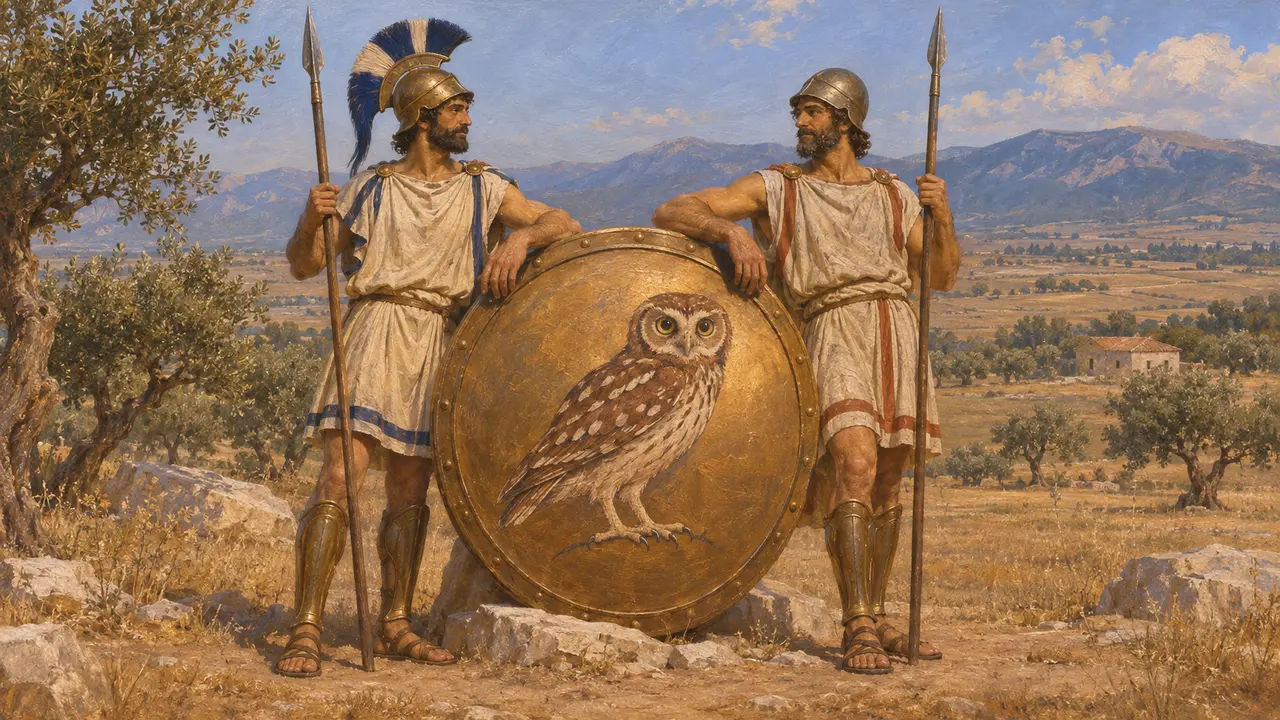
The emblem beside its name
DisputedPlataea had no coin of its own in 490, and in the game the Plataeans share the Athenians' owl, since they fought beside them at Marathon. Herodotus says the Athenians prayed for the Plataeans at their festivals ever after.
Herodotus 6.108, 6.111
Sources
- Herodotus, Histories, books 6, 8 and 9
- Thucydides, History of the Peloponnesian War, books 2 and 3
- R. Meiggs and D. Lewis, A Selection of Greek Historical Inscriptions, 1988
- Plutarch, Aristides
- Cornelius Nepos, Miltiades
- P. Green, The Greco-Persian Wars, 1996