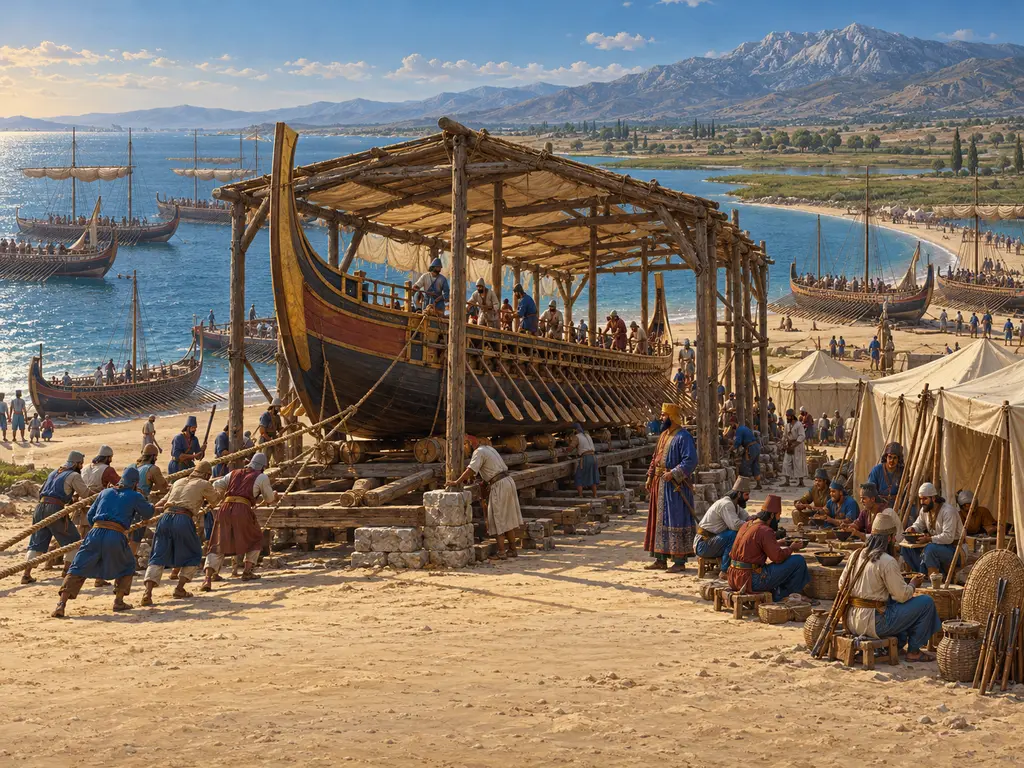
Ship Camp
The beached Persian fleet at Marathon bay, Attica, 490 BCE
In the game: Level 8: The Bay of Marathon
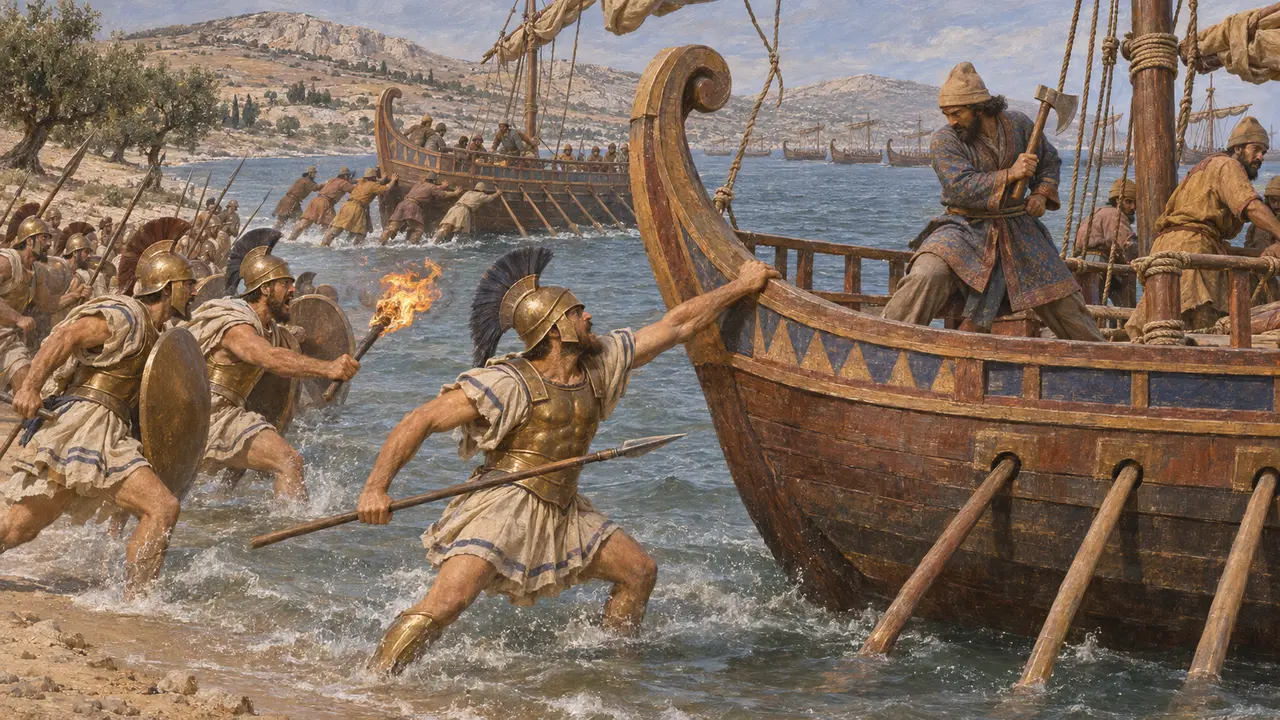
In 490 the fleet of Datis and Artaphernes crossed from Eretria and put in at Marathon, on the north-east coast of Attica. The ships, the horse transports and the shore camp beside them were the army's base and its only way home. When the Persian line broke, the fighting ended at the water's edge as the Athenians tried to seize and burn the ships.
In the game: The game builds the camp as a monument with limestone footings, hauling ways and a timber stockade. Herodotus records no such works at Marathon; the stockade resembles the beach rampart he describes at Mycale in 479.
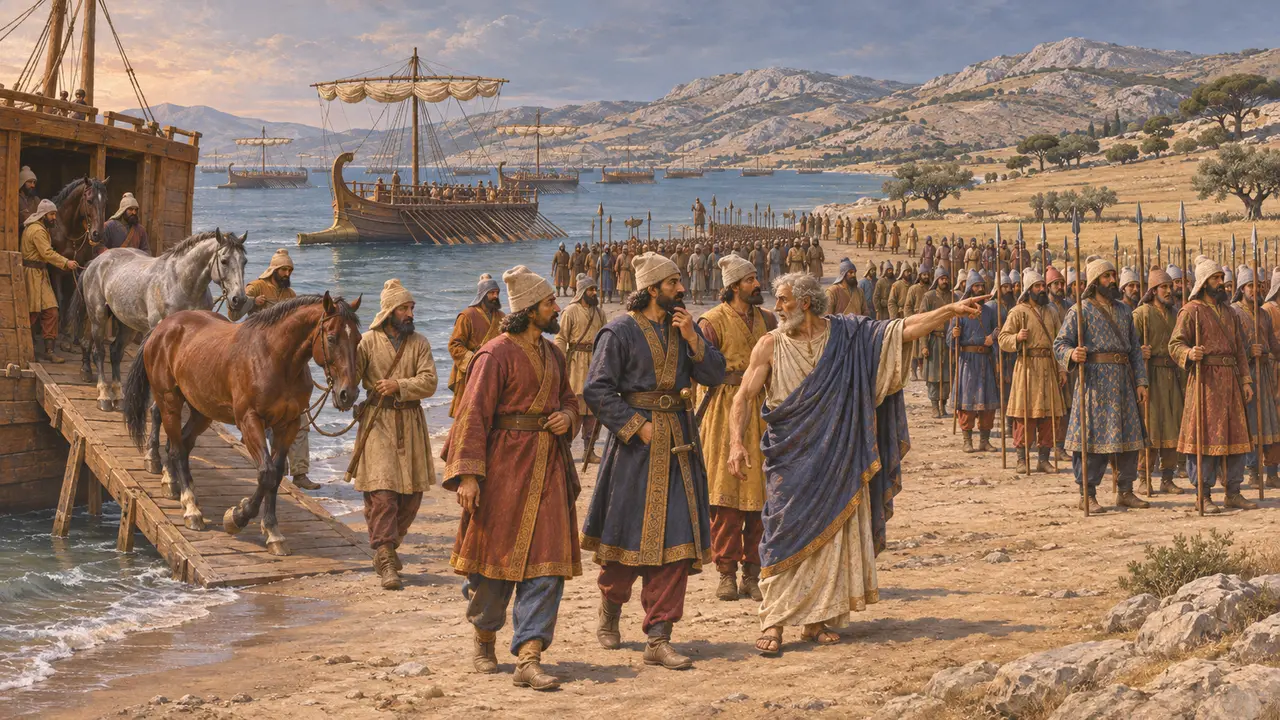
The landing at Marathon
Ancient accountHerodotus says the exiled Athenian tyrant Hippias guided the Persians to Marathon because it was the best ground in Attica for horsemen and lay close to Eretria. He says Hippias brought the ships to anchor there and set the troops in order as they came ashore. He gives the fleet as 600 triremes with horse transports, a figure most historians think too high.
Herodotus 6.95, 6.102, 6.107
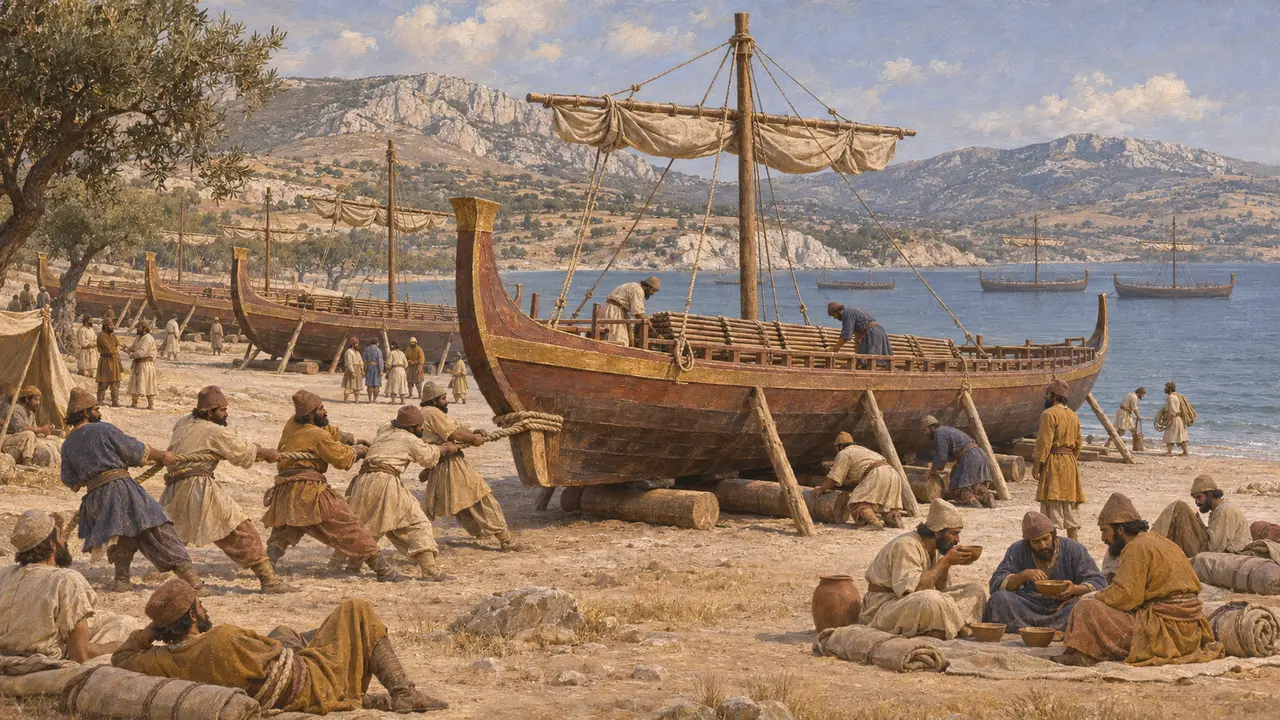
How an ancient fleet made camp
Ancient accountOared warships of the period were light enough to be hauled up onto a beach, where their hulls could dry and their crews could eat and sleep ashore. At Mycale in 479, Herodotus says, the Persians dragged their ships onto the land and threw up a rampart of stones and timber around them, cutting down orchard trees for it. He describes no such defence at Marathon, and some ships there may simply have lain at anchor.
Herodotus 9.96-97
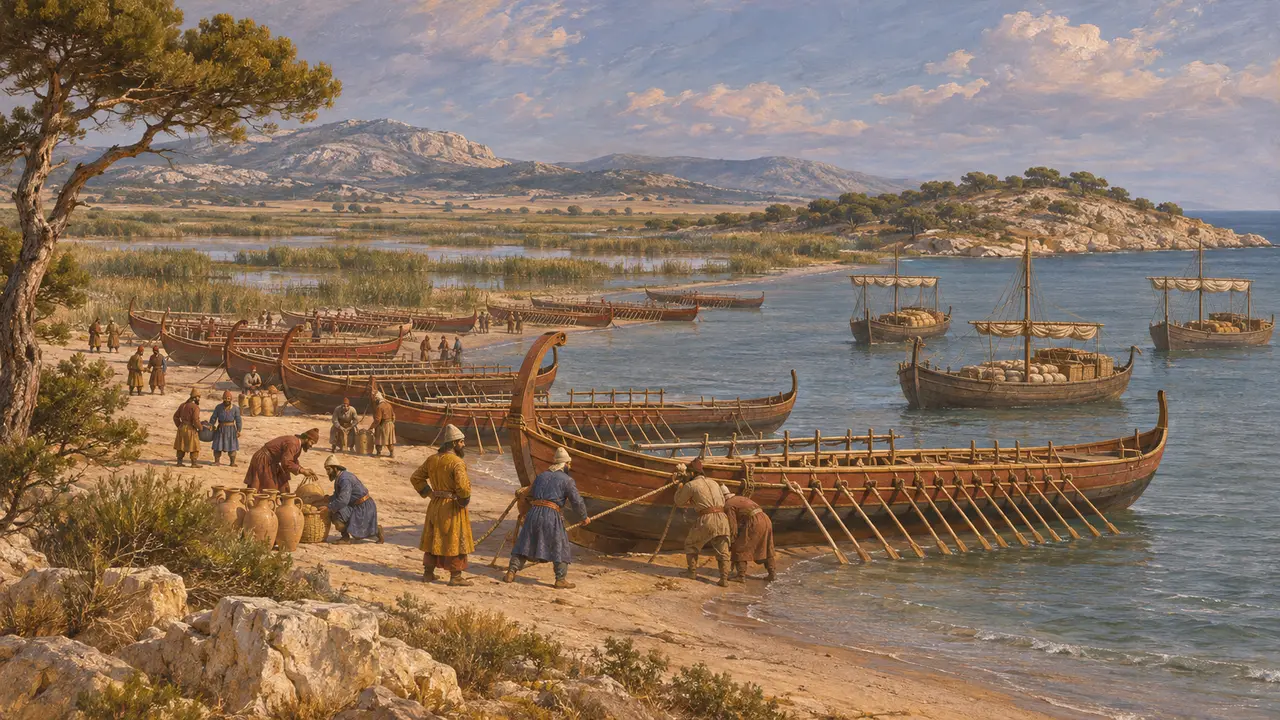
Where the ships lay
DisputedNo ancient writer fixes the spot. Many historians place the fleet at the sheltered north-east end of the bay near Schinias, behind the Cynosura headland, with the Great Marsh between it and the plain. Others argue for a more central beach. A note in the Suda, a tenth-century Byzantine lexicon, claims the Persian horsemen were absent when the Athenians attacked, perhaps because they were being loaded back onto the ships, but this is still argued over.
Suda, s.v. choris hippeis; P. Krentz, The Battle of Marathon, 2010
The fight at the ships
Ancient accountHerodotus says the Athenians chased the broken Persians to the sea, called for fire and laid hold of the ships. The polemarch Callimachus died there, and Cynegirus, son of Euphorion, had his hand cut off by an axe as he gripped a ship's stern; later writers make him the brother of the poet Aeschylus. The Athenians took seven ships; the rest pushed off, collected the Eretrian captives left on the island of Aegilia and sailed round Sunium.
Herodotus 6.113-116
Ghosts and mangers
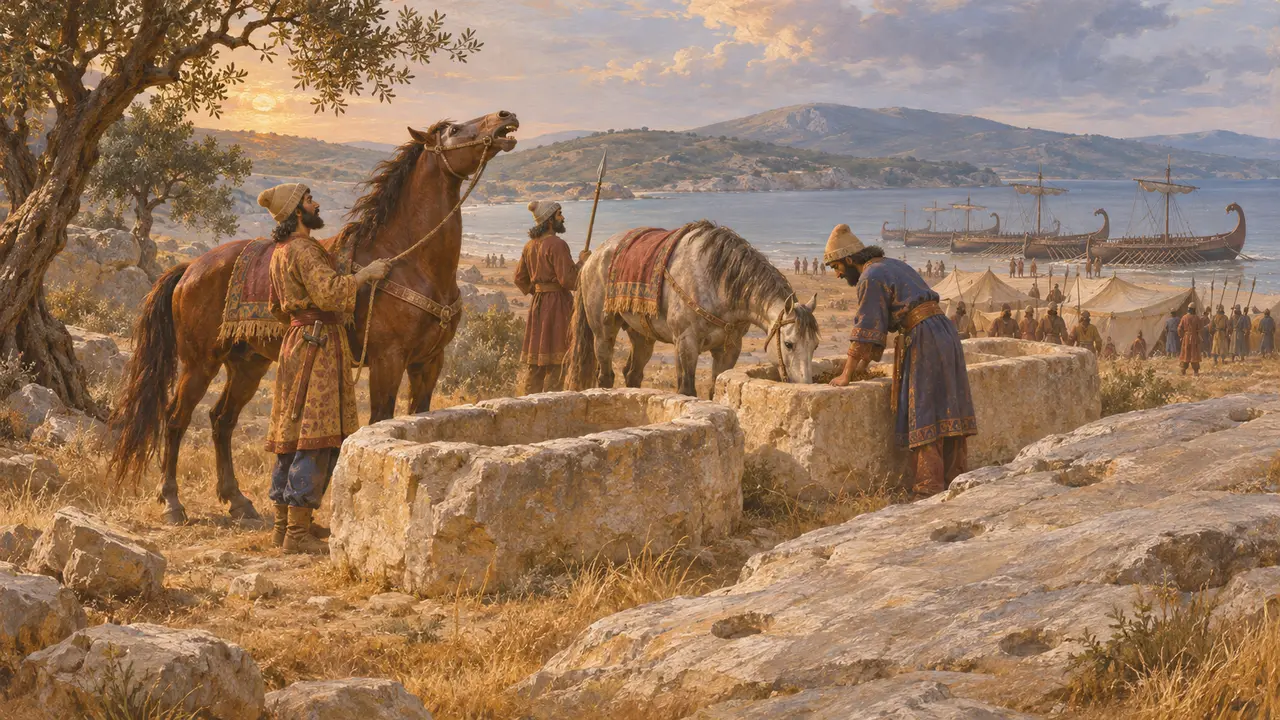
Later legendWriting more than six centuries later, Pausanias says that every night at Marathon people heard horses neighing and men fighting. He also reports stone mangers said to belong to the horses of Artaphernes and marks on a rock said to show where his tent had stood. These are local tales told to visitors, not evidence for the camp.
Pausanias 1.32.4, 1.32.7
Sources
- Herodotus 6.94-117
- Herodotus 9.96-97
- P. Krentz, The Battle of Marathon, 2010
- J. F. Lazenby, The Defence of Greece 490-479 BC, 1993
- Pausanias 1.32
- P. Briant, From Cyrus to Alexander, 2002