Encyclopedia › Soldiers and ships
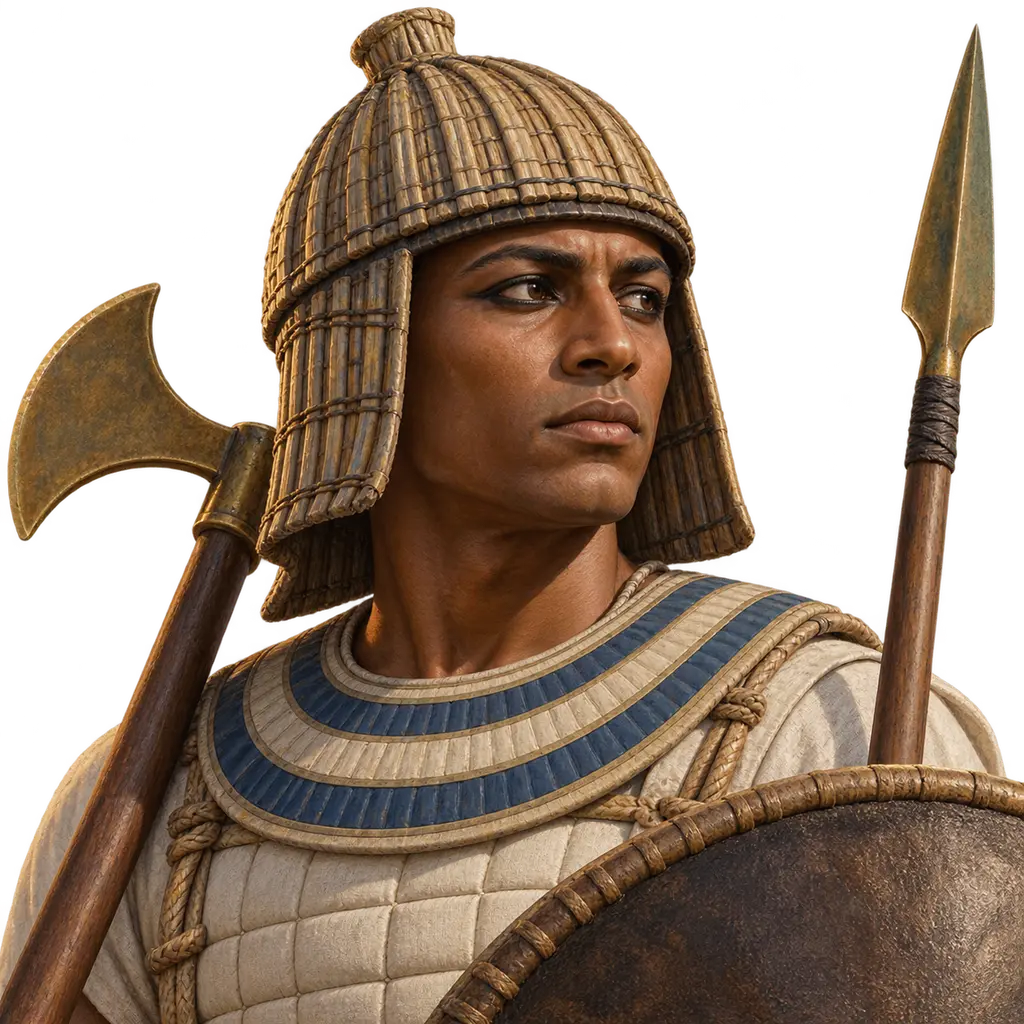
Egyptian Marine
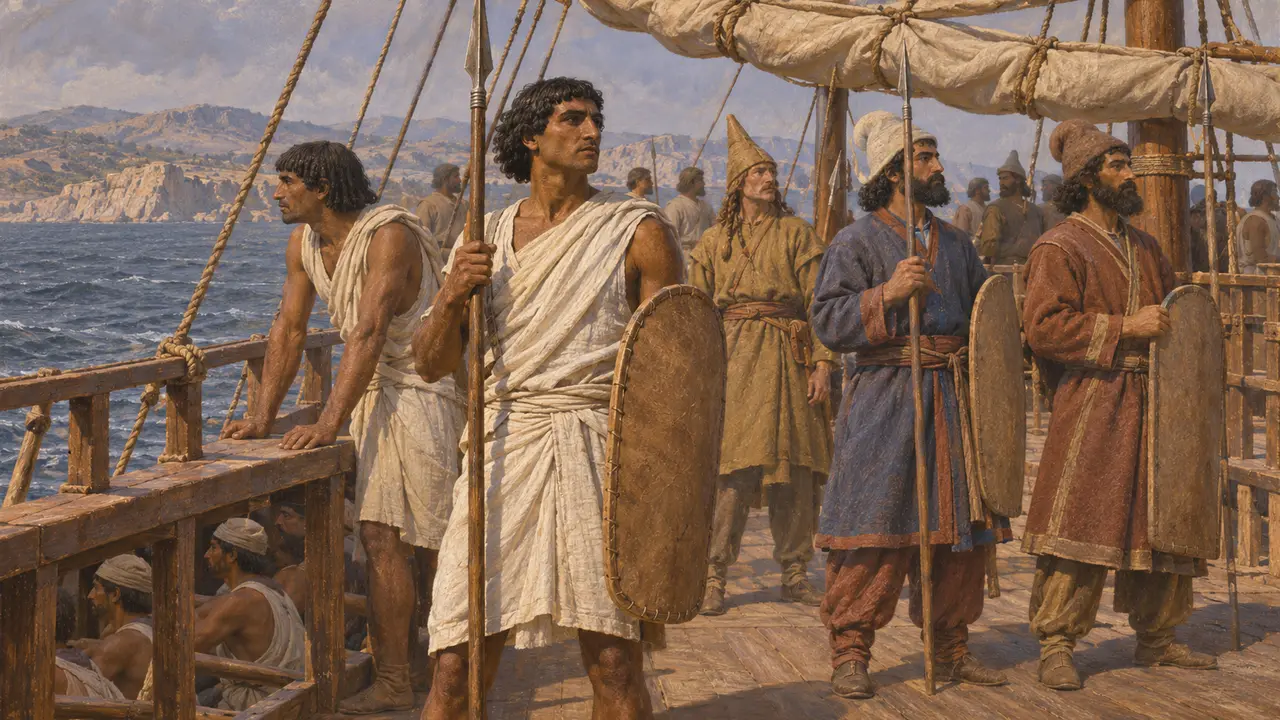
Armed fighters of the Egyptian squadron in Xerxes' fleet, 480-479 BCE
In the game: Level 10: The Hot Gates
Egypt sent ships and fighting men to the fleet Xerxes led against Greece in 480. Herodotus describes their arms closely and singles them out as the best fighters on the King's side at Artemisium. After Salamis some of them were put ashore and fought on land at Plataea in 479.
In the game: The game shows a heavy shield unit with corslet, broad-rimmed shield, boarding spear and great axe, as Herodotus describes. He also mentions plaited helmets and long knives. The edge against shield men is a game rule, not history.
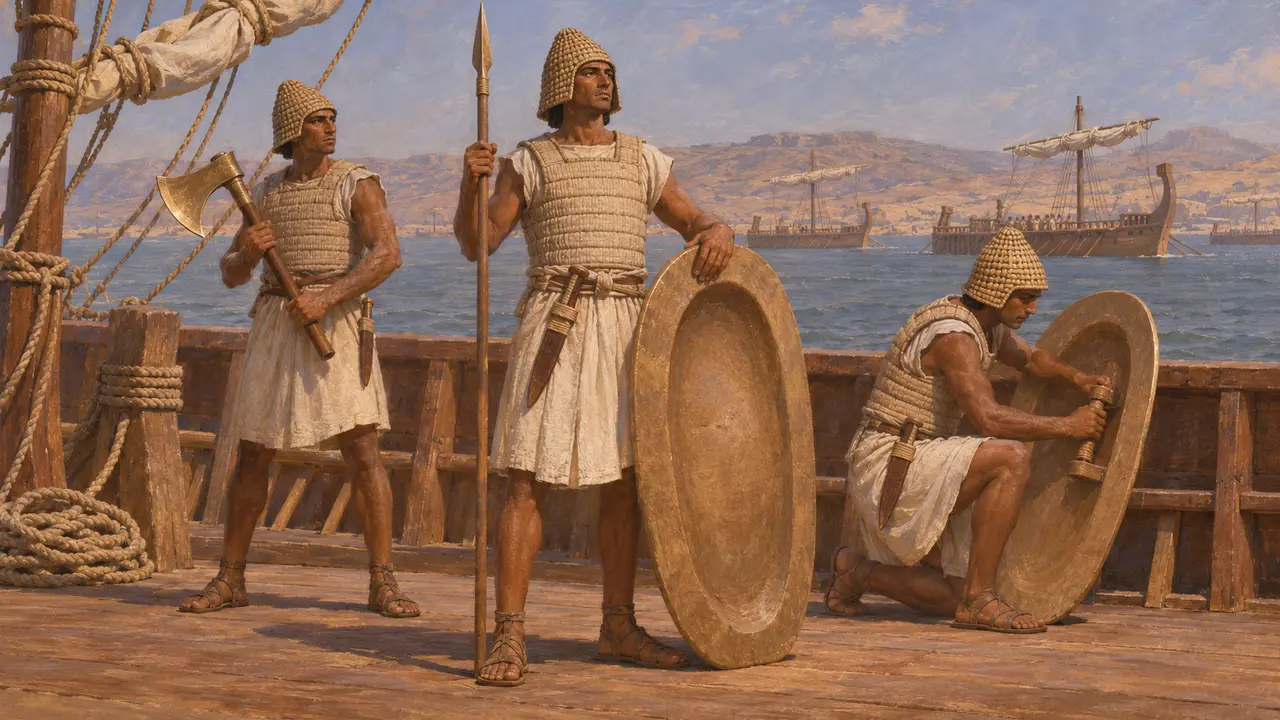
Arms in Herodotus's list of the fleet
Ancient accountIn his catalogue of Xerxes' fleet, Herodotus says Egypt supplied 200 ships. Its men wore plaited helmets and carried hollow shields with broad rims, spears made for sea fighting and large axes. He adds that most of them wore corslets and carried long knives. The squadron served under Achaemenes, Xerxes' brother, whom Xerxes had made governor of Egypt.
Herodotus 7.89; 7.97; 7.7
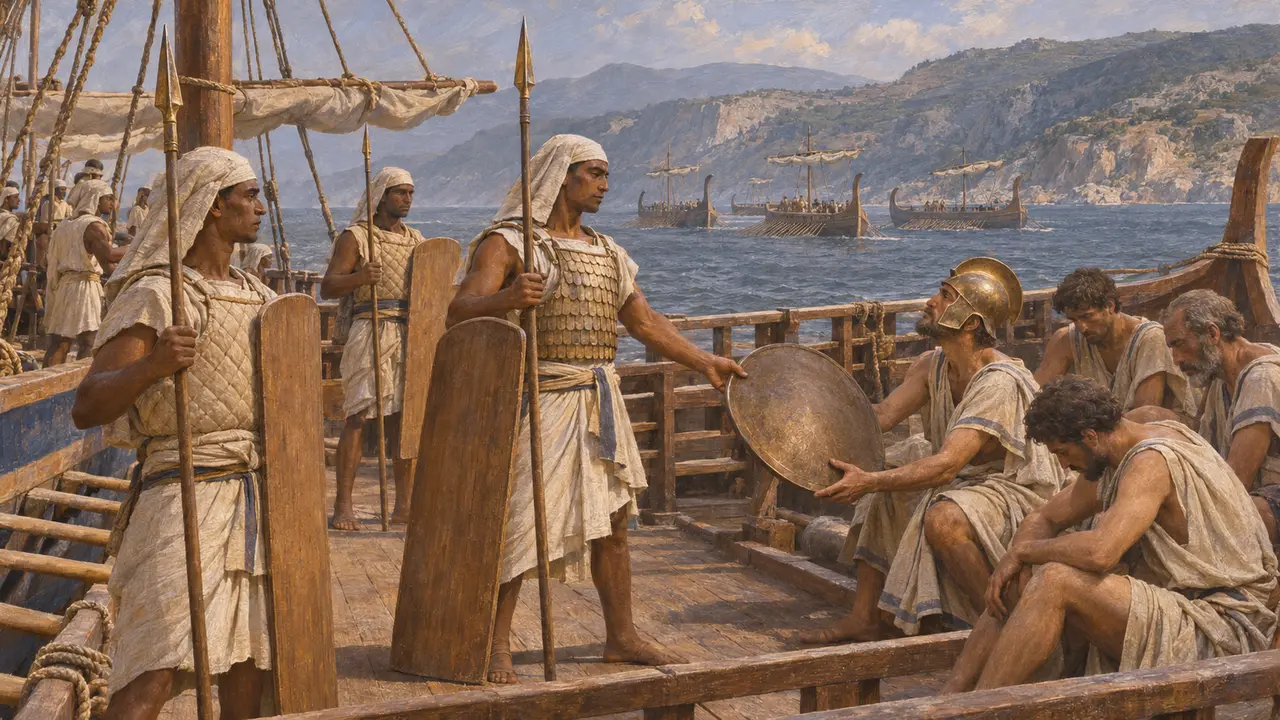
Praise at Artemisium, blame after Salamis
Ancient accountHerodotus says the Egyptians fought best of Xerxes' forces at Artemisium, capturing five Greek ships together with their crews. In a speech he gives to Artemisia before Salamis, the Egyptians are named with the Cypriots, Cilicians and Pamphylians as worthless allies. After the defeat, Mardonius blames the Phoenicians, Egyptians, Cypriots and Cilicians. These speeches are probably largely Herodotus's own composition.
Herodotus 8.17; 8.68; 8.100
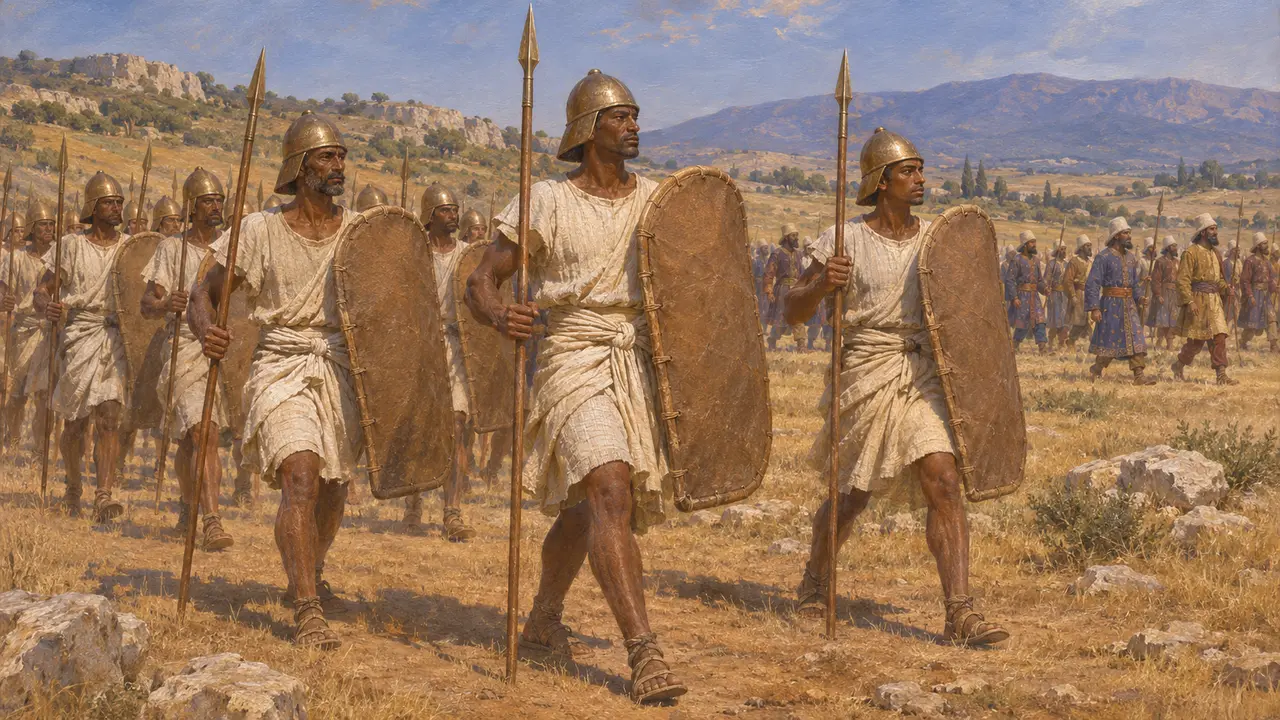
Fighting on foot at Plataea
Ancient accountHerodotus says Mardonius took the Egyptian fighters off the ships at Phaleron and kept them with his land army for 479, since they had not marched with Xerxes' army to Athens. At Plataea he lists them among Mardonius's troops and identifies them with Egypt's hereditary warrior classes, the Hermotybies and Calasirians. Elsewhere he describes these classes as men barred from any trade except war.
Herodotus 9.32; 2.164-168
Who actually fought aboard the ships
DisputedHerodotus says every ship in the fleet carried Persians, Medes and Saka as fighting men, and elsewhere counts thirty of them per ship in addition to each people's own fighters. Historians debate how many armed men each ship really carried and how duties were shared between the native fighters and the Iranian ones. Some scholars think the Iranians were placed aboard partly to watch the loyalty of the subject crews.
Herodotus 7.96; 7.184; H. T. Wallinga, Xerxes' Greek Adventure, 2005
Sources
- Herodotus 7.89; 7.96-97
- Herodotus 8.17; 8.68; 8.100
- Herodotus 9.32; 2.164-168
- Herodotus 7.184
- H. T. Wallinga, Xerxes' Greek Adventure: The Naval Perspective, 2005
- P. Briant, From Cyrus to Alexander, 2002