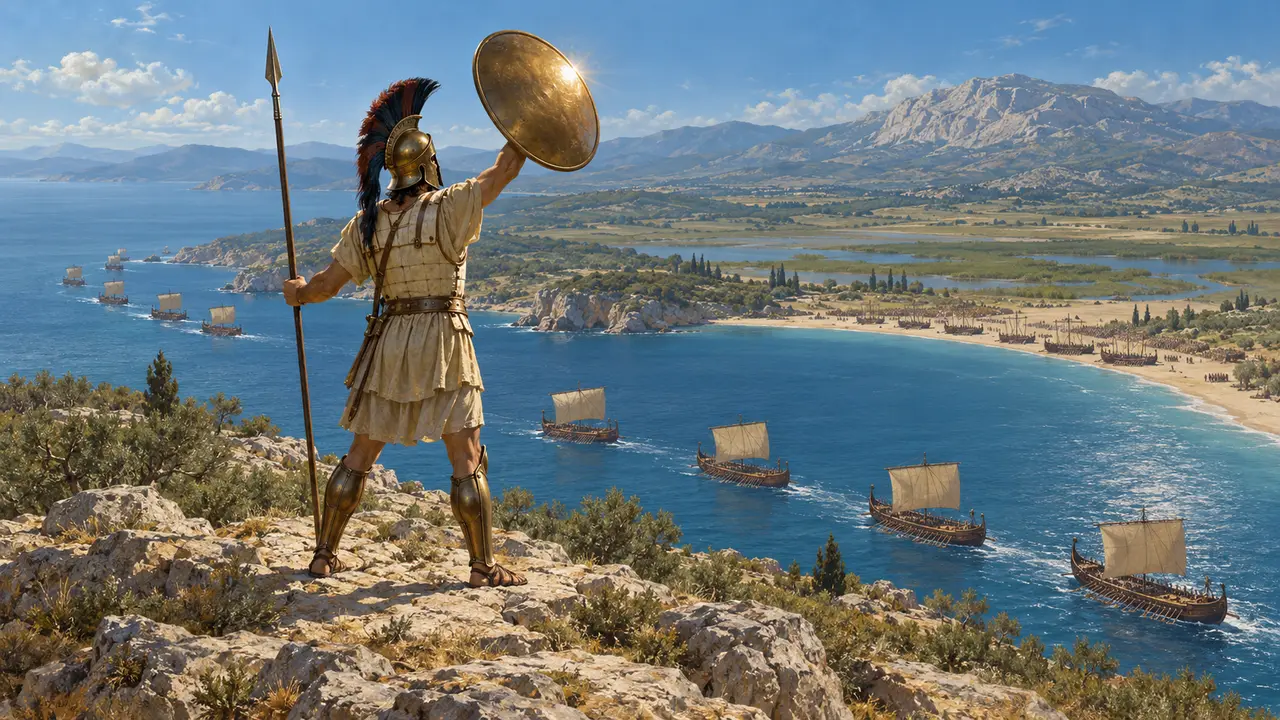
Phaleron
The open bay that was the port of Athens before Piraeus, where the King's fleet came in 490 and 480 BCE
Phaleron was the wide sandy bay south-west of Athens, the city's harbour until Themistocles fortified the Piraeus. After Marathon the Persian fleet rounded Sunium and lay off Phaleron before sailing home. In 480 Xerxes' fleet gathered there before Salamis.
In the game: Phaleron is the end of the sea race in the Marathon level's second front, where the fleet sails round Sunium to reach Athens before its army.
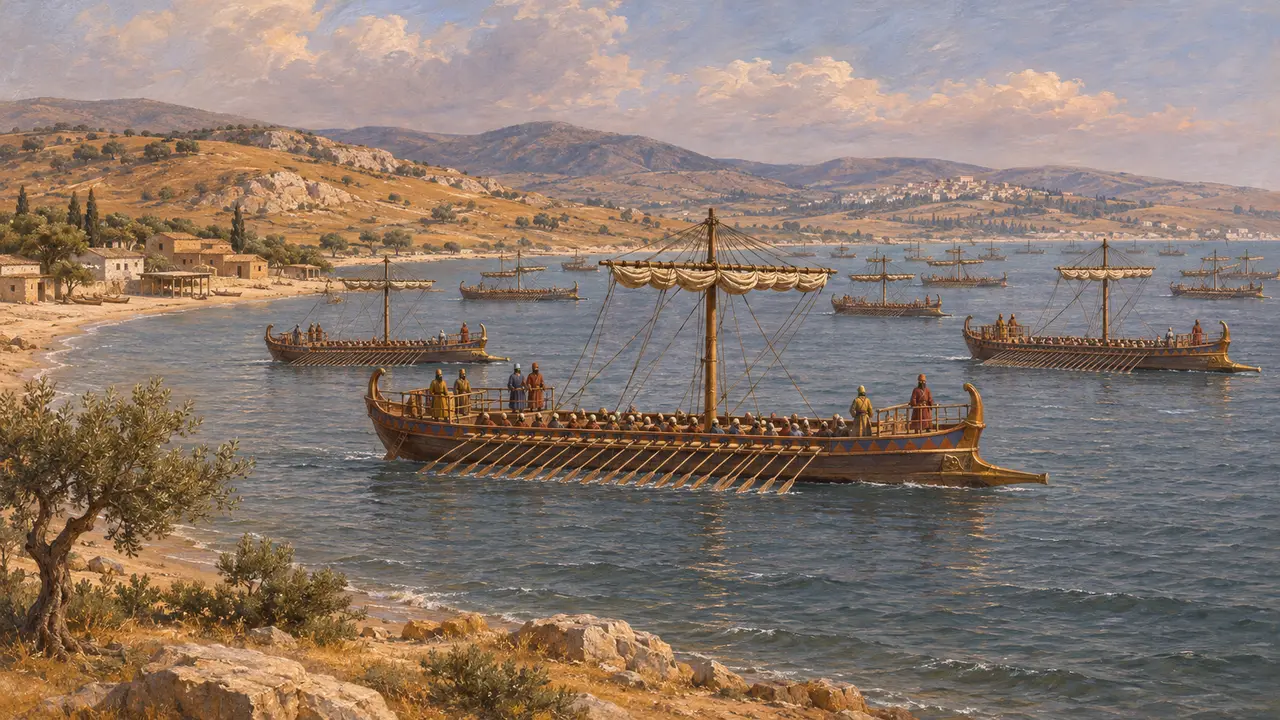
The race round Sunium
Ancient accountAfter the battle of Marathon the Persian fleet sailed round Sunium, hoping to reach Athens first. The Athenians marched home as fast as they could and camped at the precinct of Heracles at Cynosarges. Herodotus says the fleet lay off Phaleron, then the Athenians' seaport, for a time and sailed back to Asia.
Herodotus 6.115-116
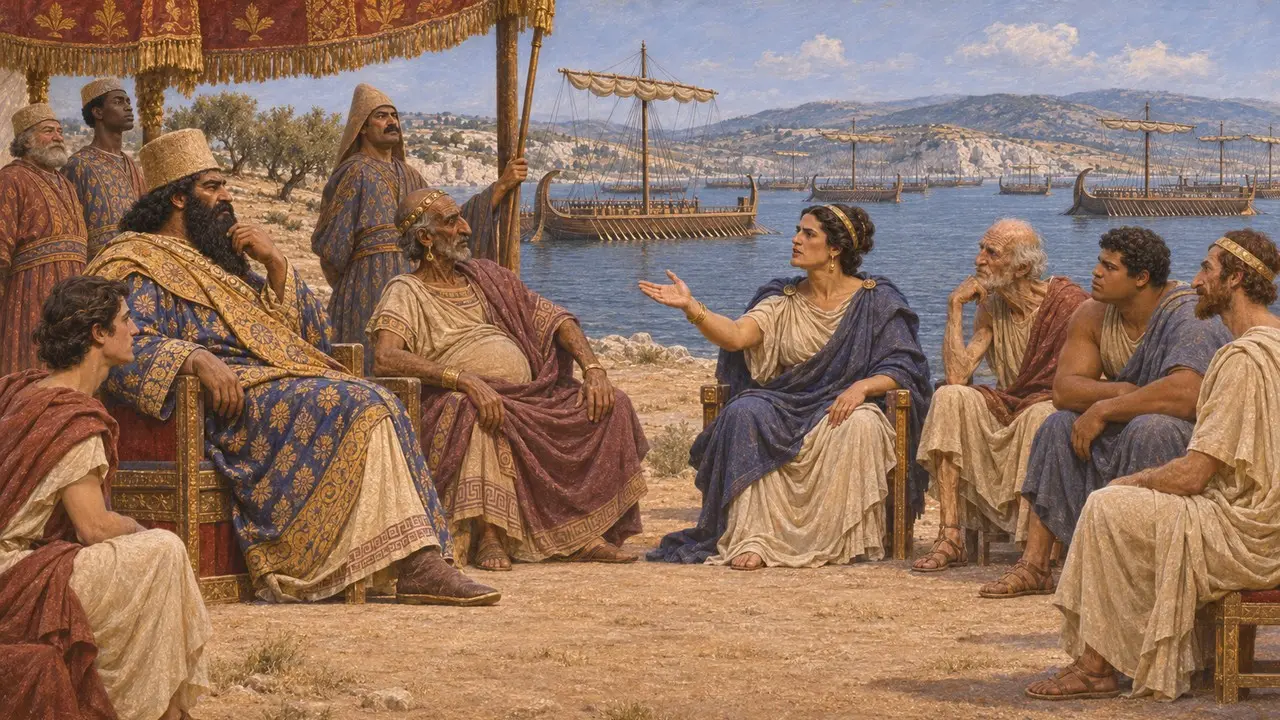
Xerxes' fleet in the bay
Ancient accountIn 480, after Artemisium, the King's fleet came to Phaleron. Herodotus says Xerxes came down to the ships and held a council there, with the king of Sidon in the first seat, and only Artemisia advised against fighting at sea.
Herodotus 8.66-69
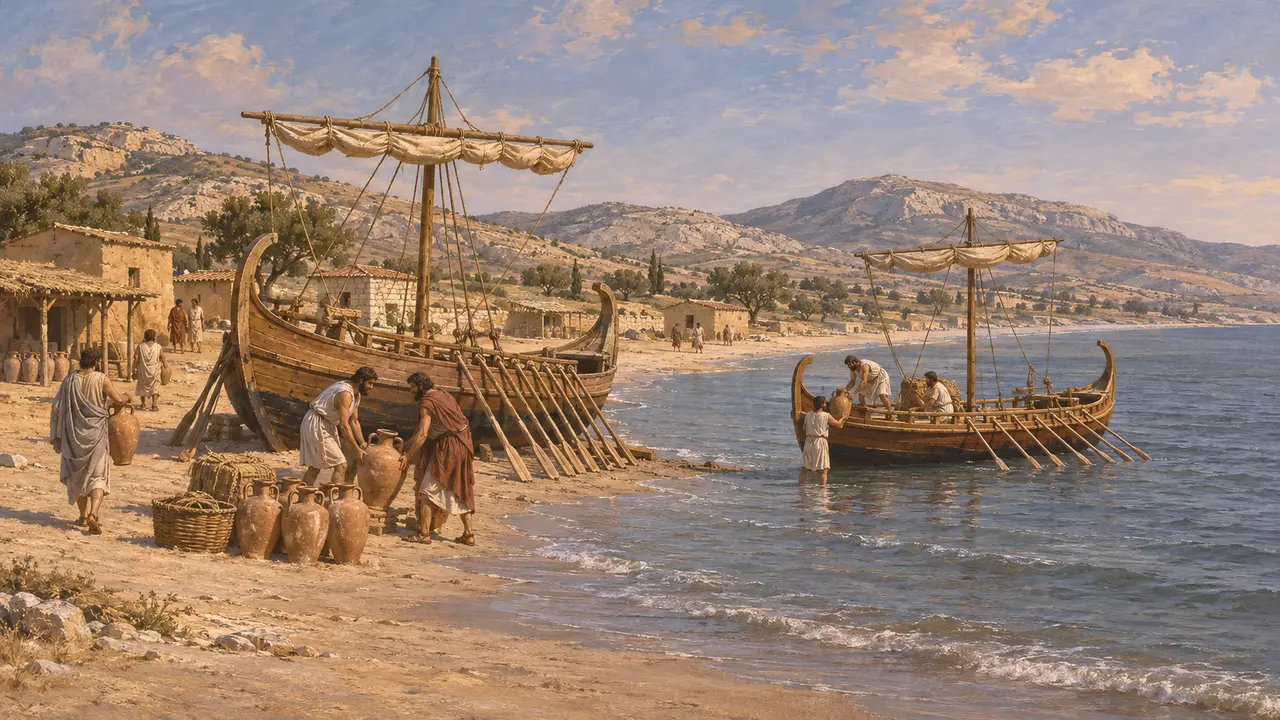
Before the Piraeus
Ancient accountHerodotus calls Phaleron the Athenians' seaport in 490. Thucydides says Themistocles began fortifying the Piraeus in his archonship, usually dated 493/2, and the city's harbour moved there after the Persian wars. The open beach at Phaleron was hard to defend.
Herodotus 6.116; Thucydides 1.93
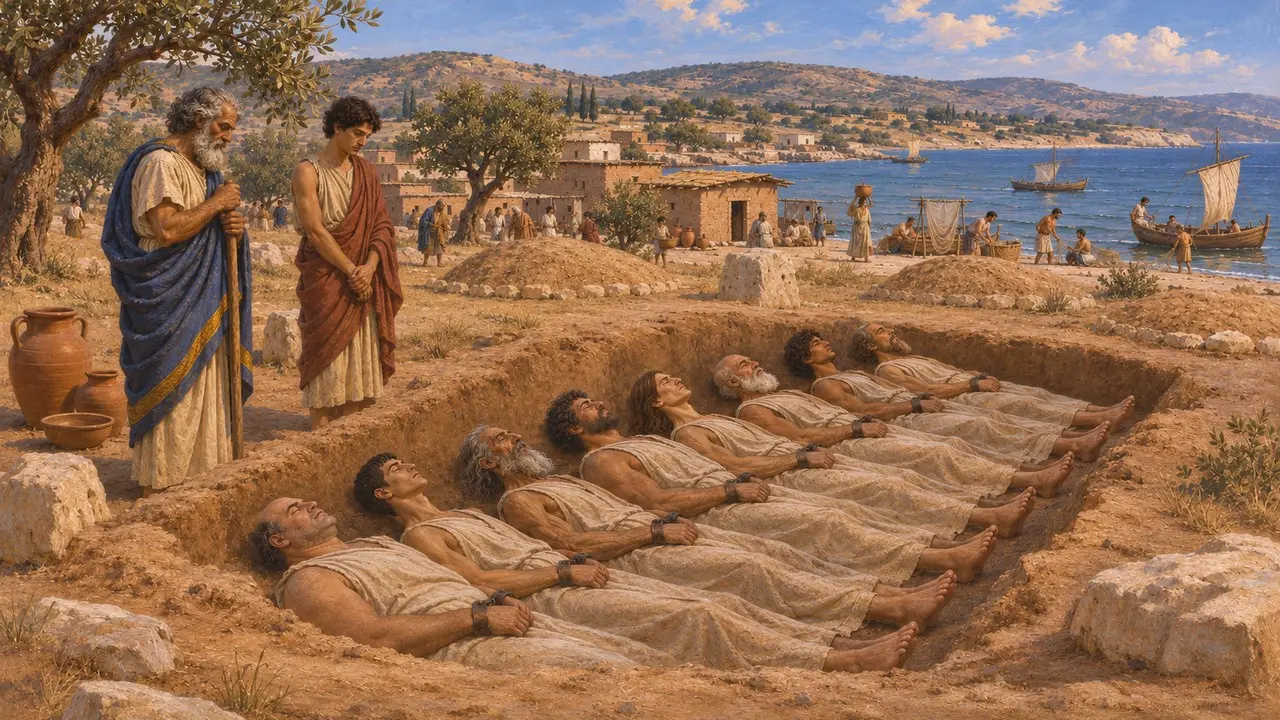
Graves at the bay
In the recordExcavations at the Phaleron cemetery since 2012 have found many burials of the seventh and sixth centuries, among them men buried shackled in rows. Their identity is argued, but the cemetery shows a busy shore community long before the Piraeus.
Phaleron Delta excavations, Greek Archaeological Service
Sources
- Herodotus 5.63, 6.115-116, 8.66-69
- Thucydides 1.93