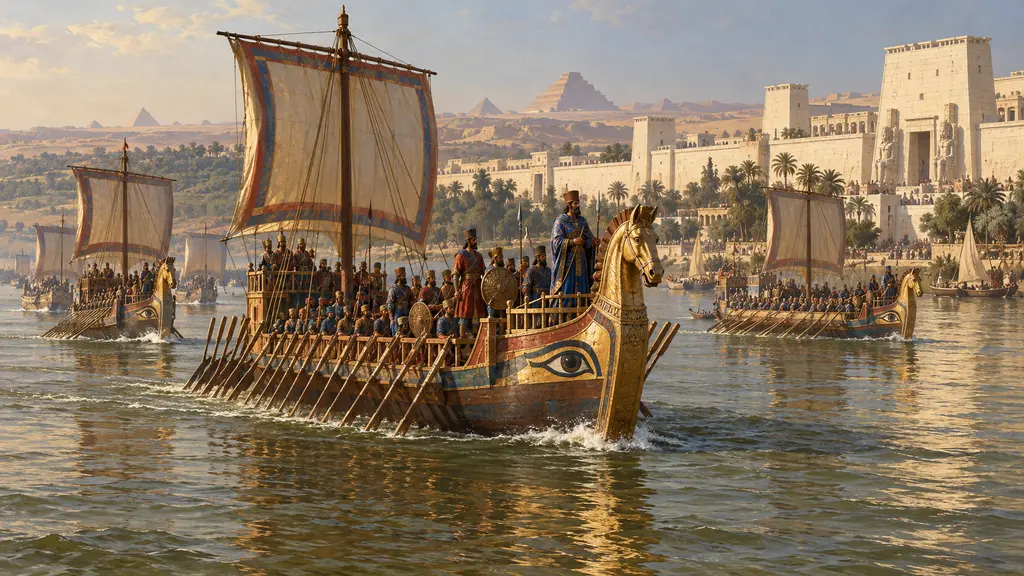
Sidon
Phoenician port city whose ships led the King's fleet, 6th-5th century BCE
Sidon, on the coast of Lebanon, was one of the great Phoenician cities with Tyre and Byblos. Under the Persians its kings commanded the best ships of the royal fleet. Herodotus says the Sidonians won the boat race Xerxes held at Abydos, and the king of Sidon took the first seat in his council.
In the game: Sidon is named in the Memphis and Sardis trade partners' caravans, in the Phoenicians' notes and in sailors' chatter in the fleet levels.
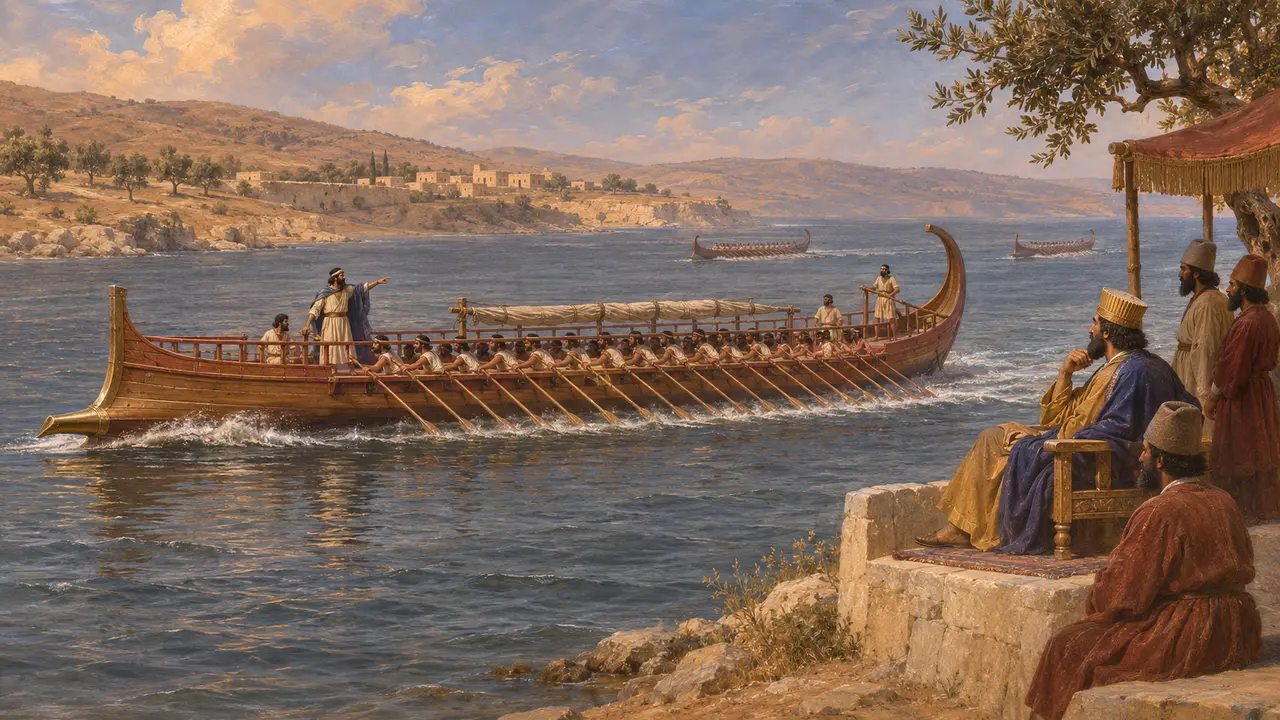
First of the fleet
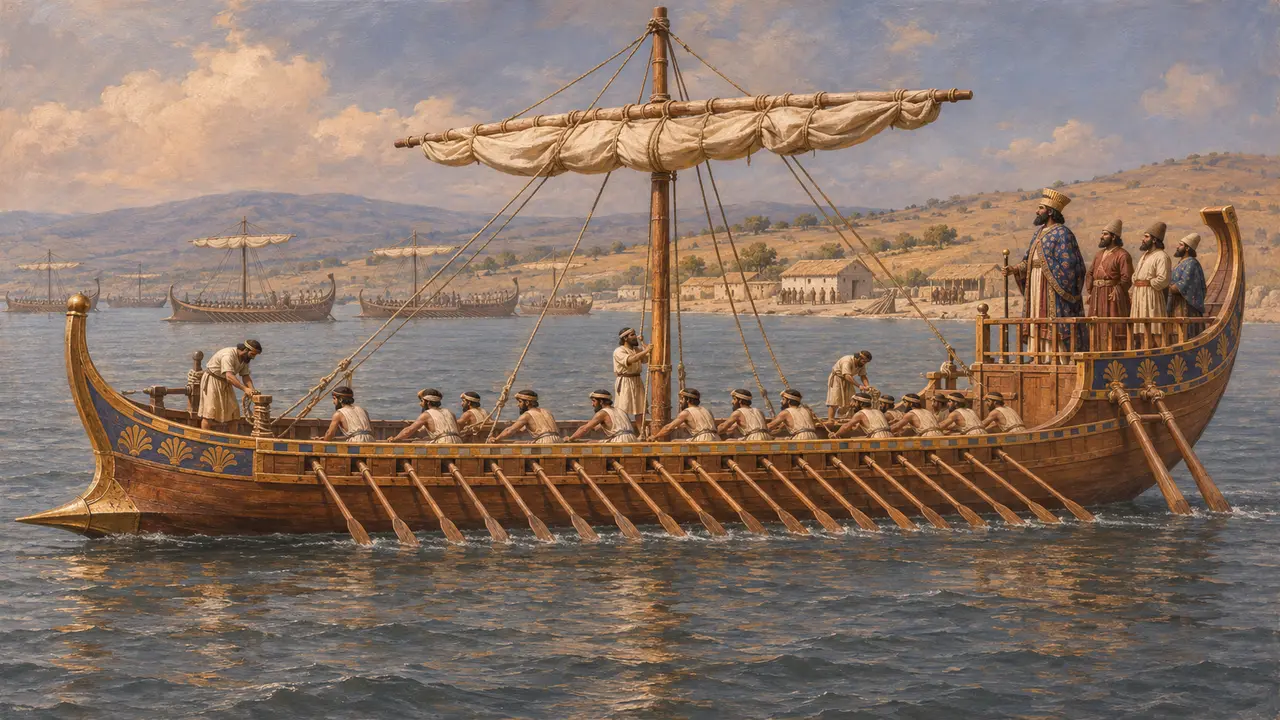
Ancient accountAt Abydos Xerxes watched a race between the ships, and the Phoenicians of Sidon won. Before Salamis the commanders sat in the order the King gave them, first the king of Sidon, then the king of Tyre. Herodotus names Tetramnestus son of Anysus as the Sidonian commander.
Herodotus 7.44, 7.96, 7.98, 8.67
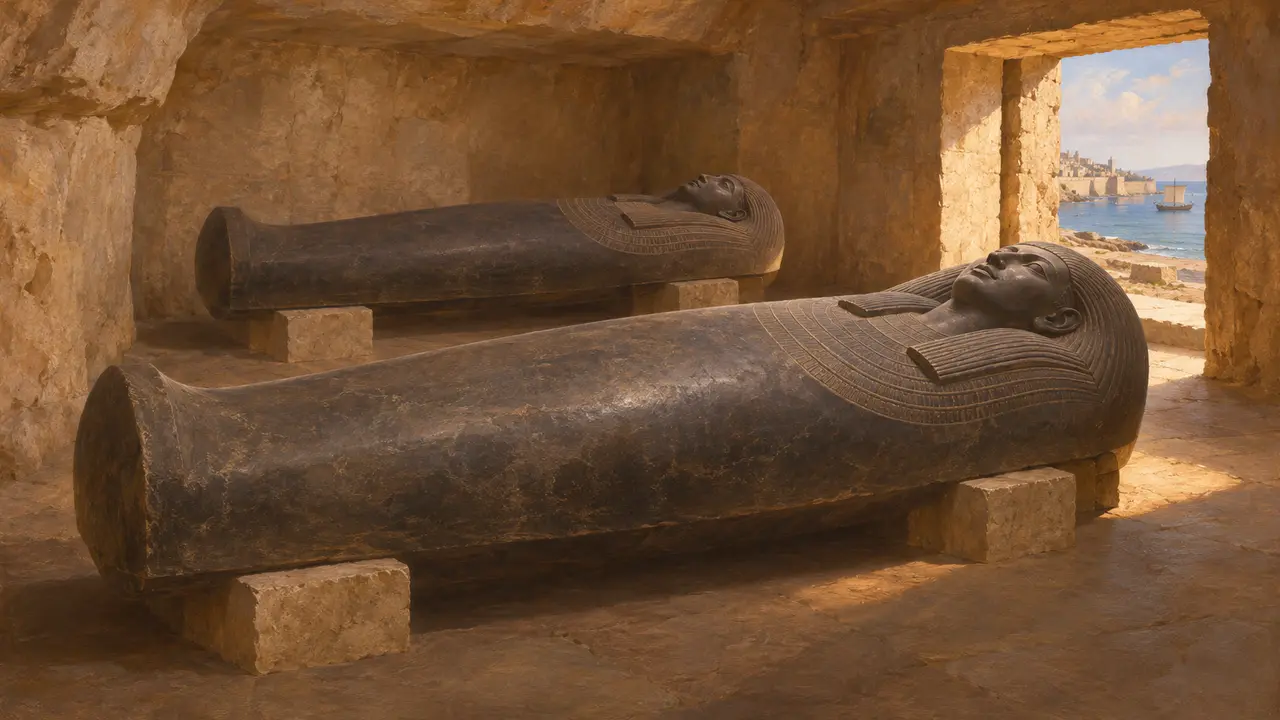
The kings and their tombs
In the recordInscribed sarcophagi of Sidonian kings of the Persian period survive, among them Tabnit and his son Eshmunazar II, of the late sixth or fifth century. Eshmunazar's inscription says the Lord of Kings gave him Dor and Joppa, probably a grant from the Persian king for naval service.
Eshmunazar II sarcophagus inscription (Louvre)
Purple and glass
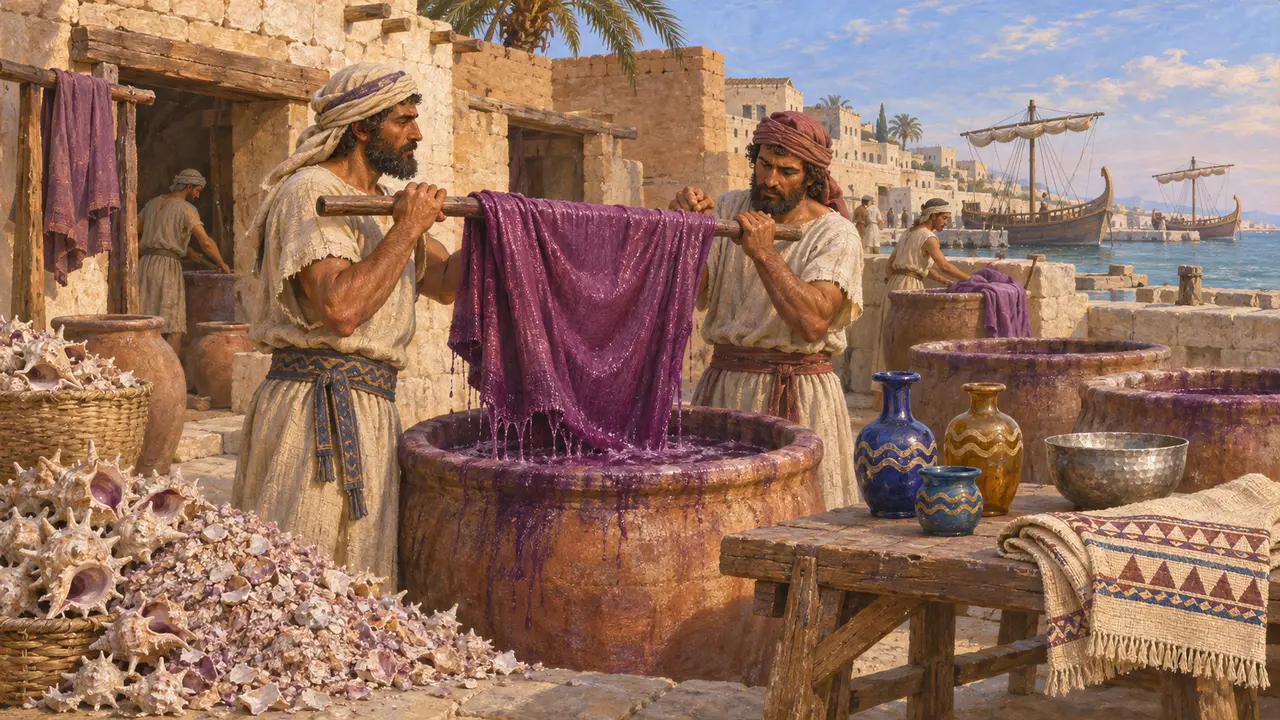
Ancient accountSidon and Tyre were famous for murex purple dye and for fine glass and metalwork. In Homer, Sidonian craftsmen make silver bowls and embroidered robes. The dye-works with their heaps of crushed shells have been found at Sidon.
Homer, Iliad 6.289-292, 23.743
Sources
- Herodotus 3.136, 7.44, 7.96-100, 8.67
- Eshmunazar II sarcophagus inscription
- J. Elayi, Sidon, cité phénicienne aux périodes perse et hellénistique, 1989