Encyclopedia › Battles and events
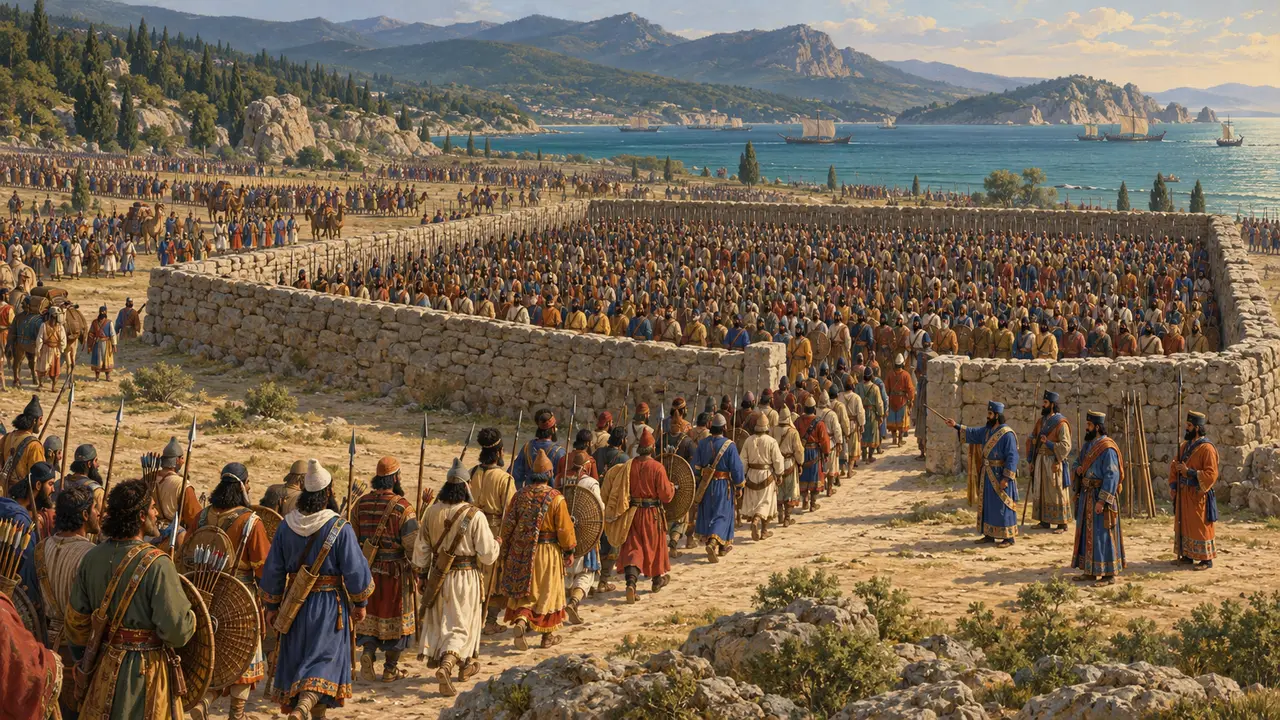
The review at Doriscus
Xerxes' count and inspection of his army and fleet in Thrace, 480 BCE
In the game: Level 10: The Hot Gates
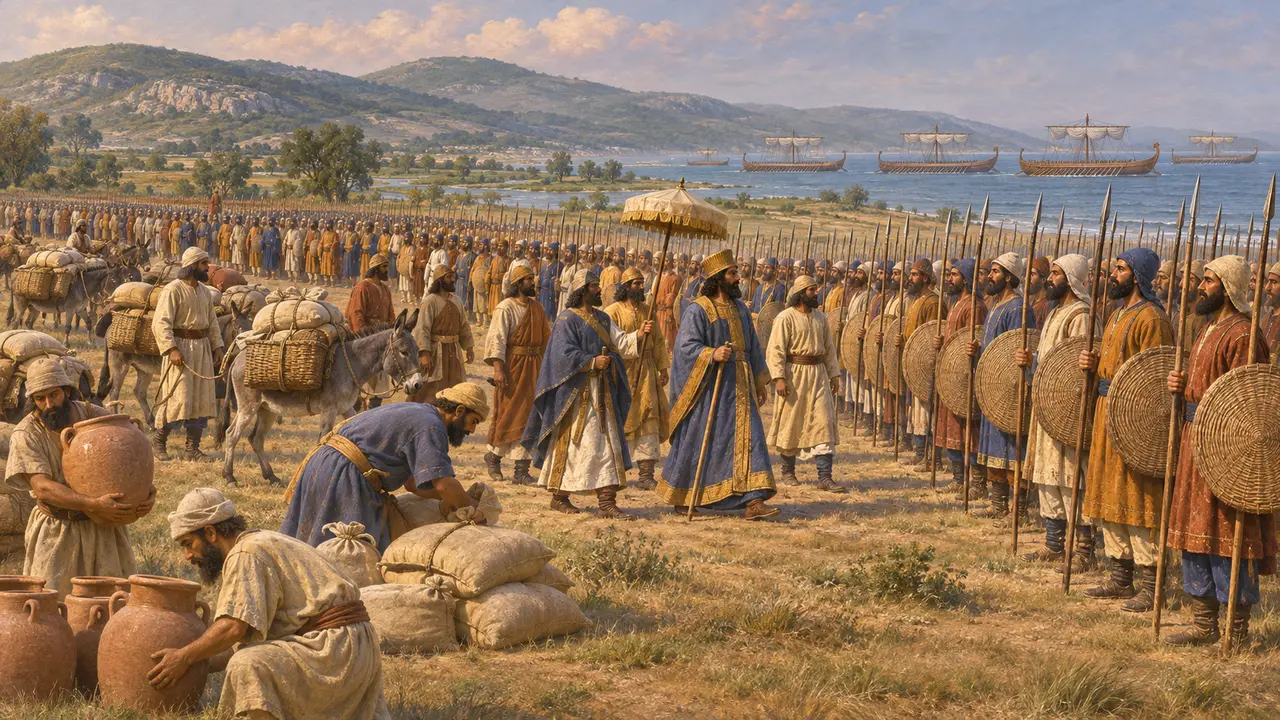
In 480, after crossing the Hellespont, Xerxes halted on the plain of Doriscus in Thrace and had his army counted and his fleet reviewed. Herodotus uses the halt to list every people in the King's host. His total of 1,700,000 foot soldiers is the best-known number of the war, and almost no modern historian accepts it.
In the game: The Chronicle tells of the count made by filling a pen for ten thousand men again and again, gives Herodotus's 1,700,000 foot, and notes that modern historians put the real army at a tenth of that or less.
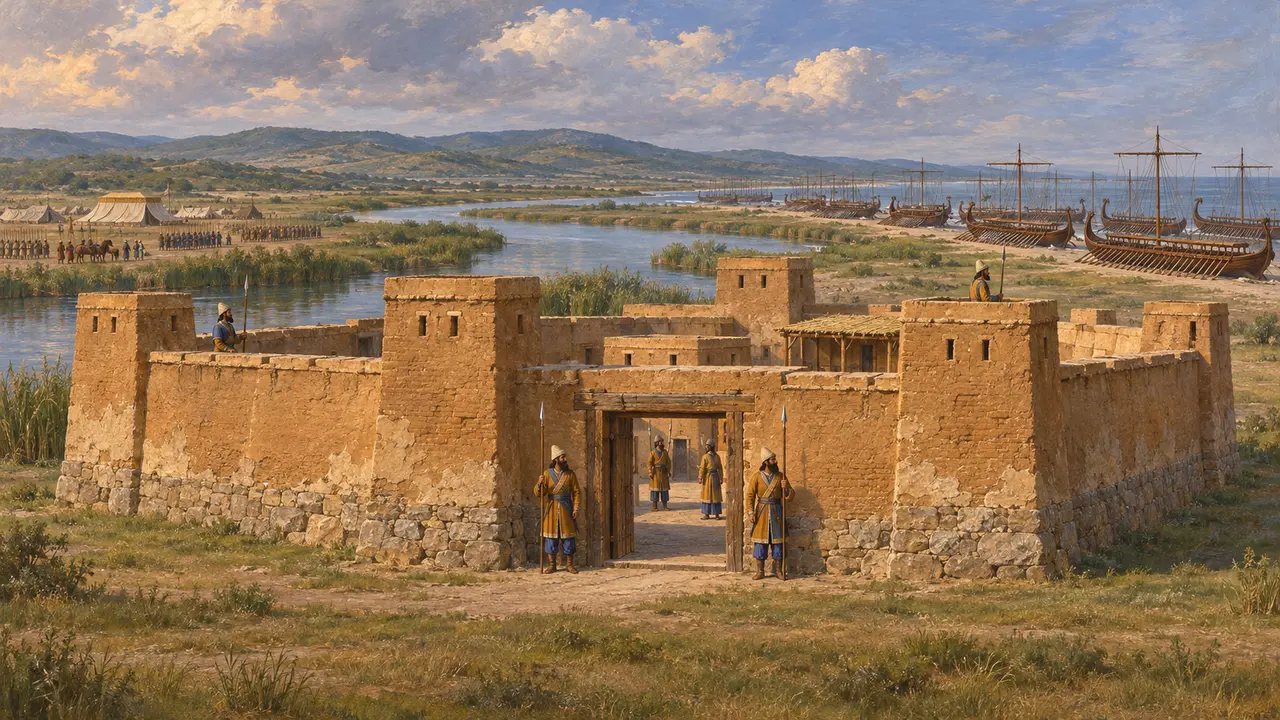
Darius's fort on the Hebrus
Ancient accountHerodotus describes Doriscus as a stretch of Thracian coast and a wide plain through which the Hebrus runs to the sea. Darius had built a royal fort there during his Scythian campaign and left a Persian garrison. Xerxes halted there in 480, and the fleet was beached on the shore nearby. Herodotus adds that Mascames, the governor Xerxes left there, held the fort long after the war and could not be dislodged.
Herodotus 7.58-59; 7.105-106
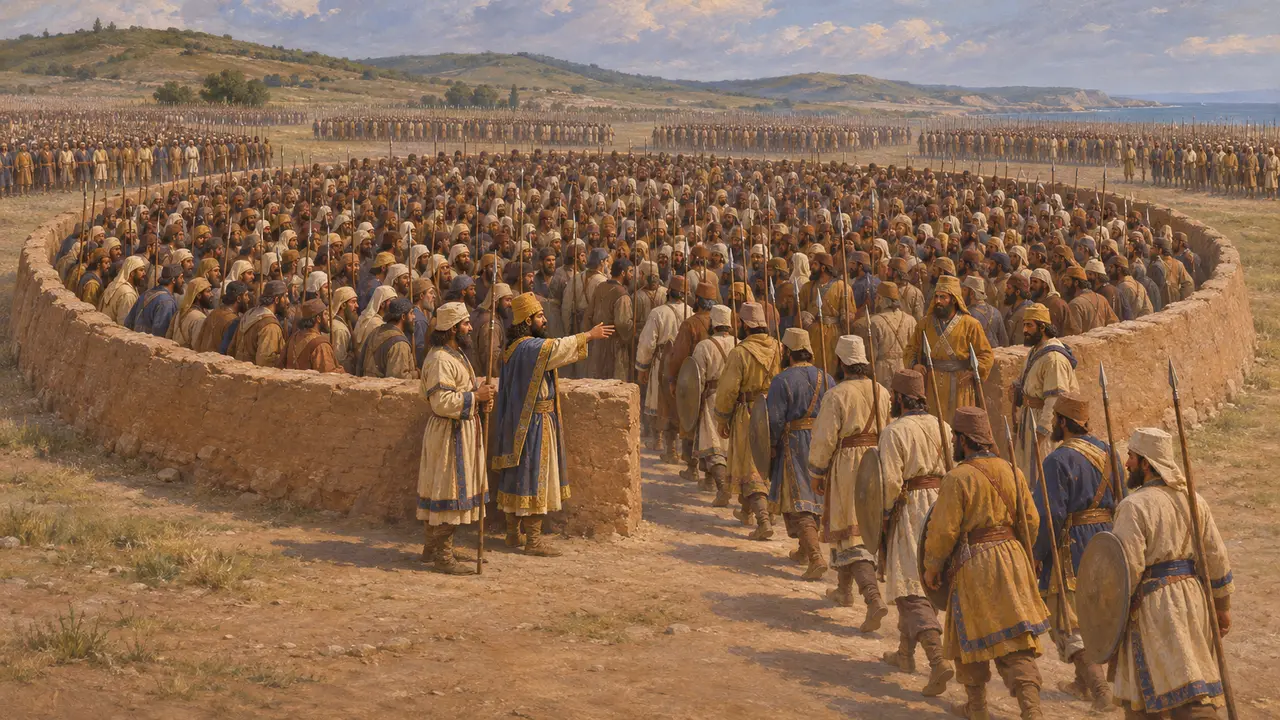
Counting by the pen
Ancient accountHerodotus says that ten thousand men were packed together as tightly as possible and a line was drawn round them. A wall about navel high was then built on the line. The rest of the army was marched into the enclosure in batches until every man had been counted, and the total came to 1,700,000 foot. He gives no figure for each nation, saying that no one recorded it.
Herodotus 7.60
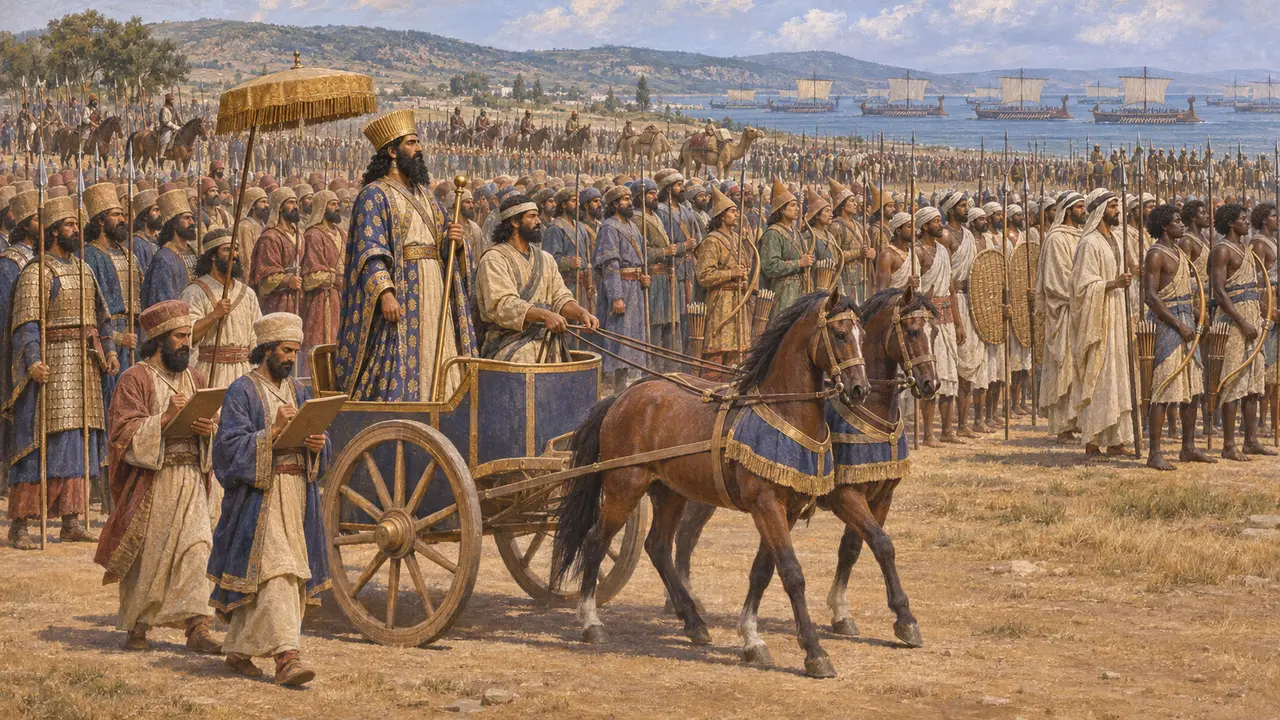
The nations under arms
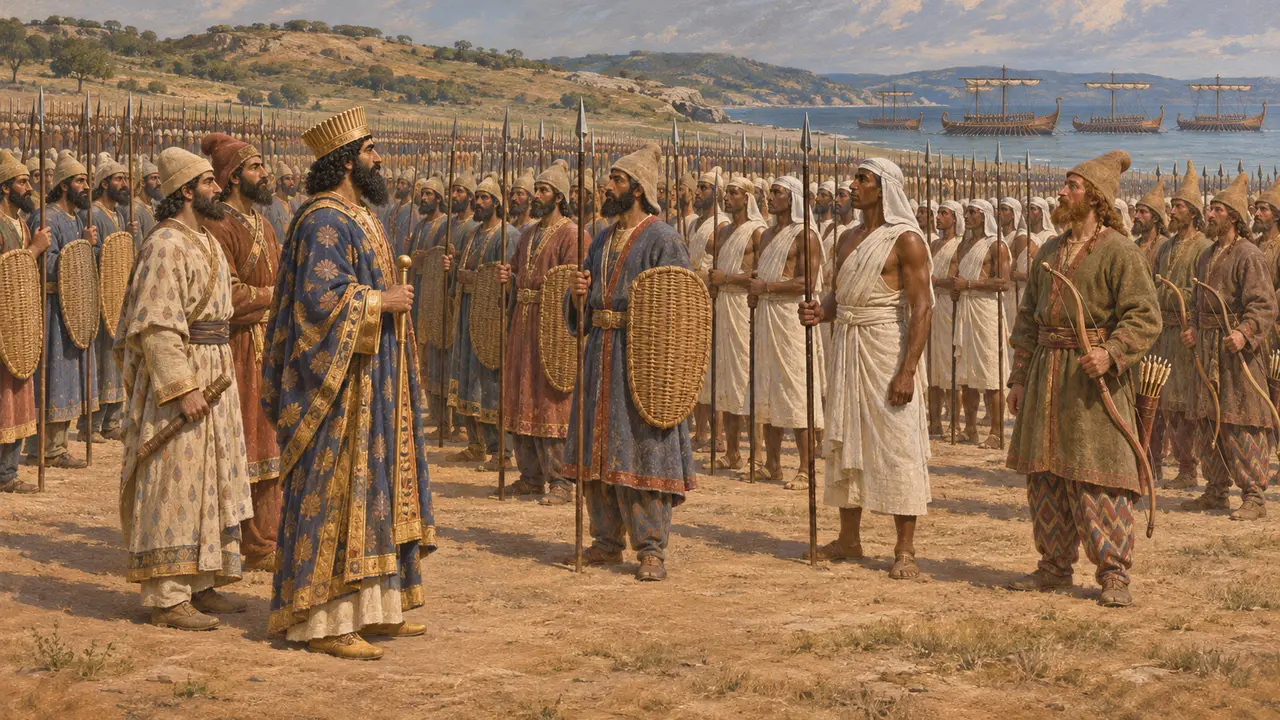
Ancient accountHerodotus then lists the peoples one by one, with their dress, weapons and commanders. The list runs from Persians in felt caps and scale armour to Medes, Cissians, Bactrians, Saka, Indians, Arabs, Ethiopians and many others. He counts 80,000 horse besides camels and chariots, and 1,207 triremes, the same fleet total Aeschylus gives. Xerxes, he says, drove past the ranks in a chariot while scribes took notes, then sailed past the ships' prows in a Sidonian vessel.
Herodotus 7.61-100; Aeschylus, Persians
How large the army really was
DisputedNo modern historian accepts the figure, chiefly because they judge that 1.7 million men could not have been fed or watered on the march. Herodotus himself raises the total to 2,641,610 fighting men by Thermopylae and doubles it for camp followers. Most modern estimates for the land army fall between about 100,000 and 200,000, and some go lower. The fleet total is argued over less, though many historians reduce it too.
Herodotus 7.185-186; J. F. Lazenby, The Defence of Greece 490-479 BC, 1993
A Persian list behind the Greek
DisputedHerodotus's catalogue, arranged by peoples, recalls the lists of lands in Darius's inscriptions and the rows of subject peoples carved holding up the King's throne on his tomb. Some historians think he drew on a Persian muster list, or on the army's units of a thousand and ten thousand. O. K. Armayor argued instead that the catalogue owes more to Greek literary tradition. No Persian text mentions the review at Doriscus.
DNa; XPh; Herodotus 7.81; O. K. Armayor, Herodotus' Catalogues of the Persian Empire in the Light of the Monuments and the Greek Literary Tradition, 1978
Sources
- Herodotus 7.58-106
- J. F. Lazenby, The Defence of Greece 490-479 BC, 1993
- P. Briant, From Cyrus to Alexander, 2002
- O. K. Armayor, Herodotus' Catalogues of the Persian Empire in the Light of the Monuments and the Greek Literary Tradition, TAPA 108, 1978
- C. Hignett, Xerxes' Invasion of Greece, 1963