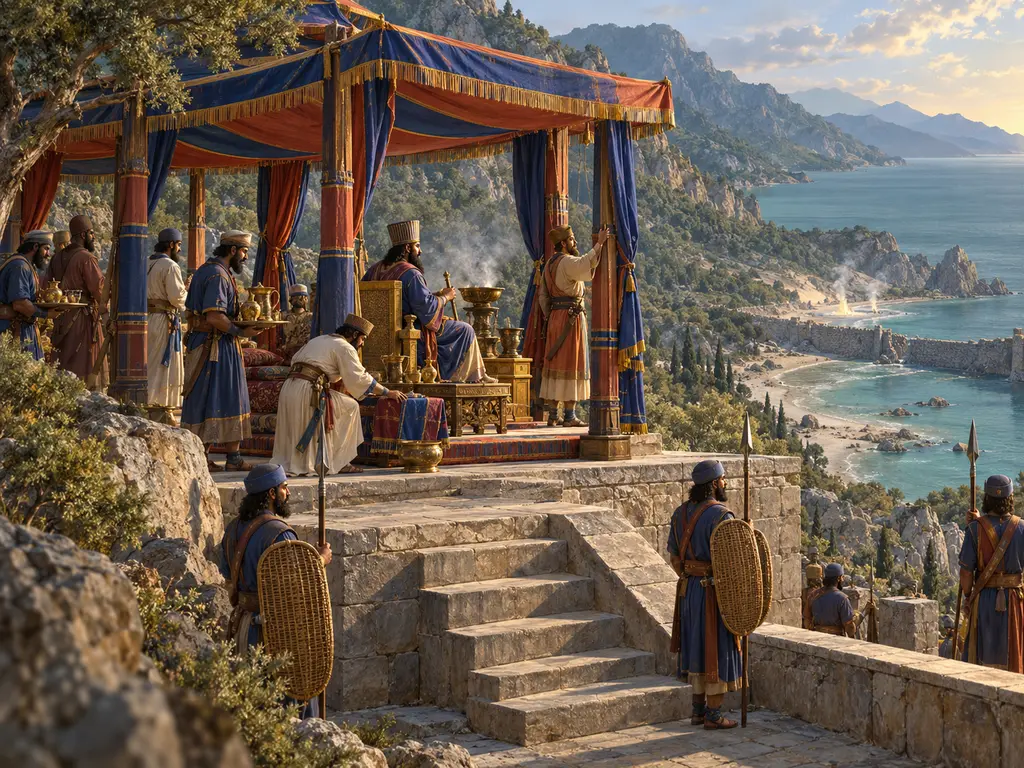
King's Pavilion
The royal seat from which Xerxes watched the fighting at Thermopylae, 480 BCE
In the game: Level 10: The Hot Gates
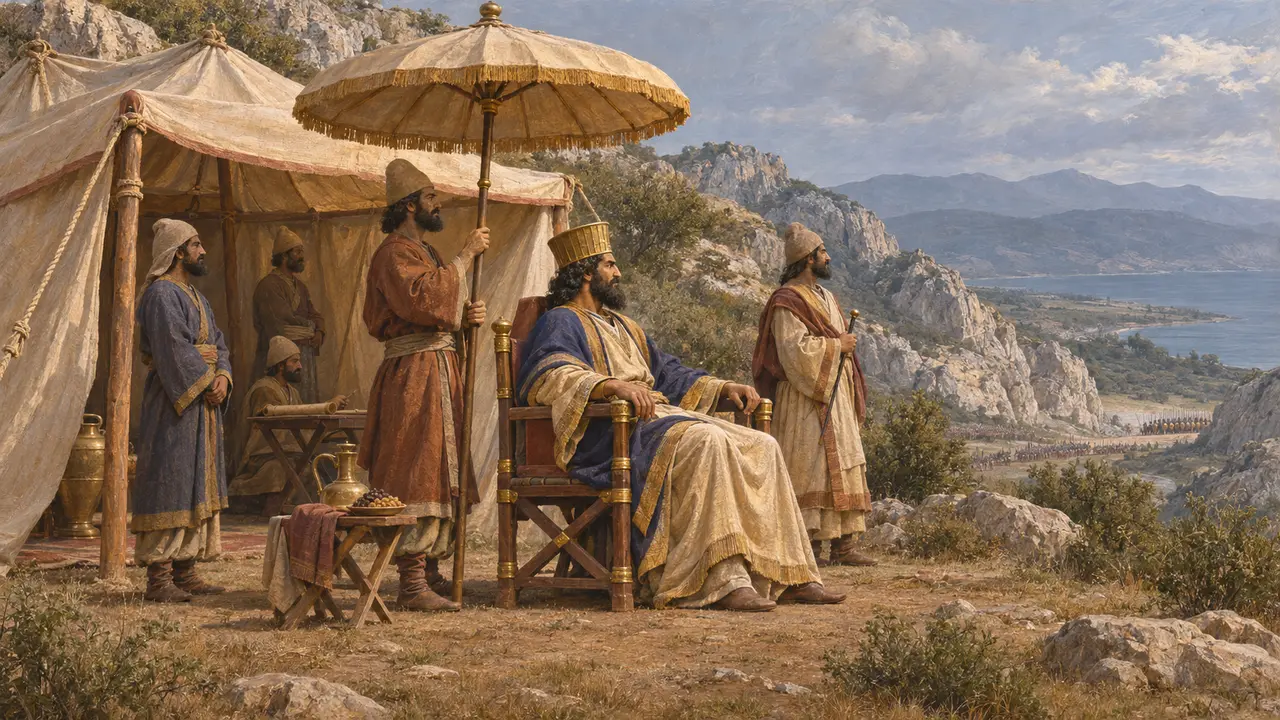
Herodotus says that Xerxes watched the fighting at Thermopylae in 480 from a royal seat, and that he was said to have sprung up from it three times in fear for his troops. The Persian kings travelled with thrones, canopies and richly hung tents, and the seated King under his canopy was a central image of royal power. Nothing of the seat at Thermopylae survives, and its form is unknown.
In the game: Built only at Thermopylae, it takes limestone for platform and stair, timber for its painted posts and Sardis cloth for its hangings. No source describes such a building; a tent and portable throne are likelier.
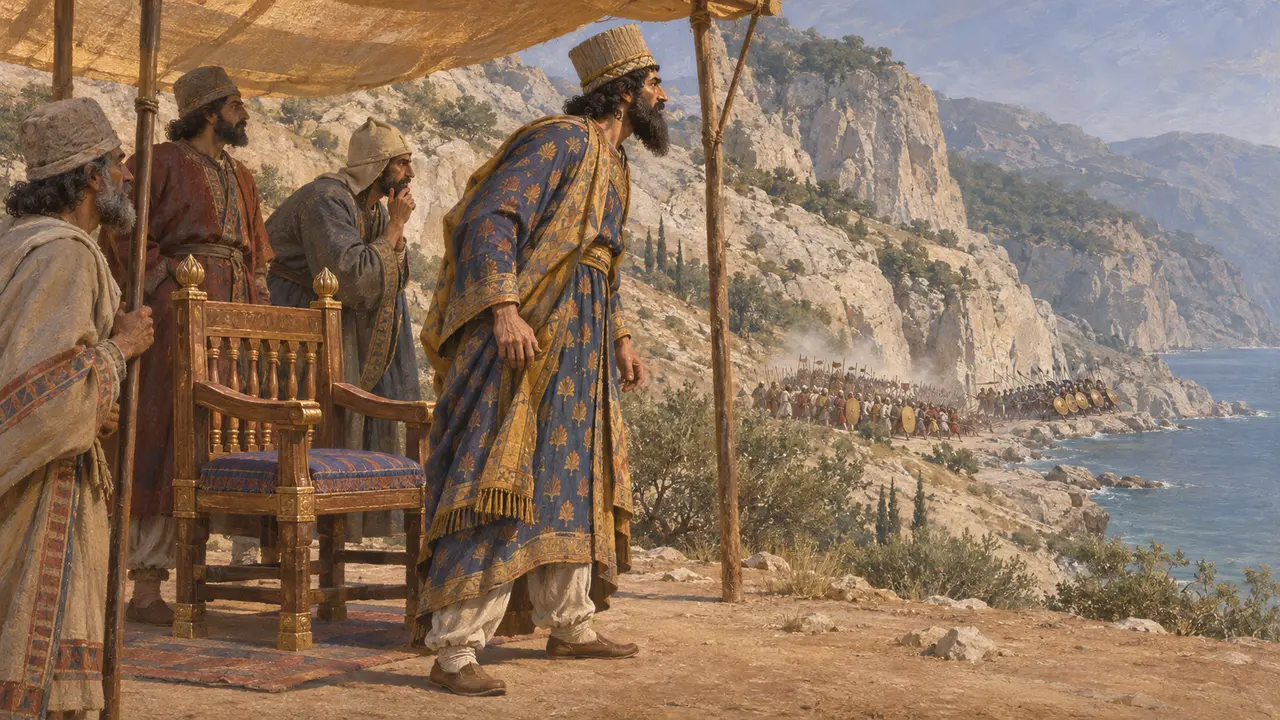
Xerxes watches the pass
Ancient accountHerodotus says Xerxes waited four days at Thermopylae, expecting the Greeks to withdraw, before sending in the Medes and Cissians. During the fighting the King watched from a throne. Herodotus reports the story that he leapt up from it three times in fear for his army. He does not describe the seat or what stood around it, and he does not say exactly where it was.
Herodotus 7.210-212
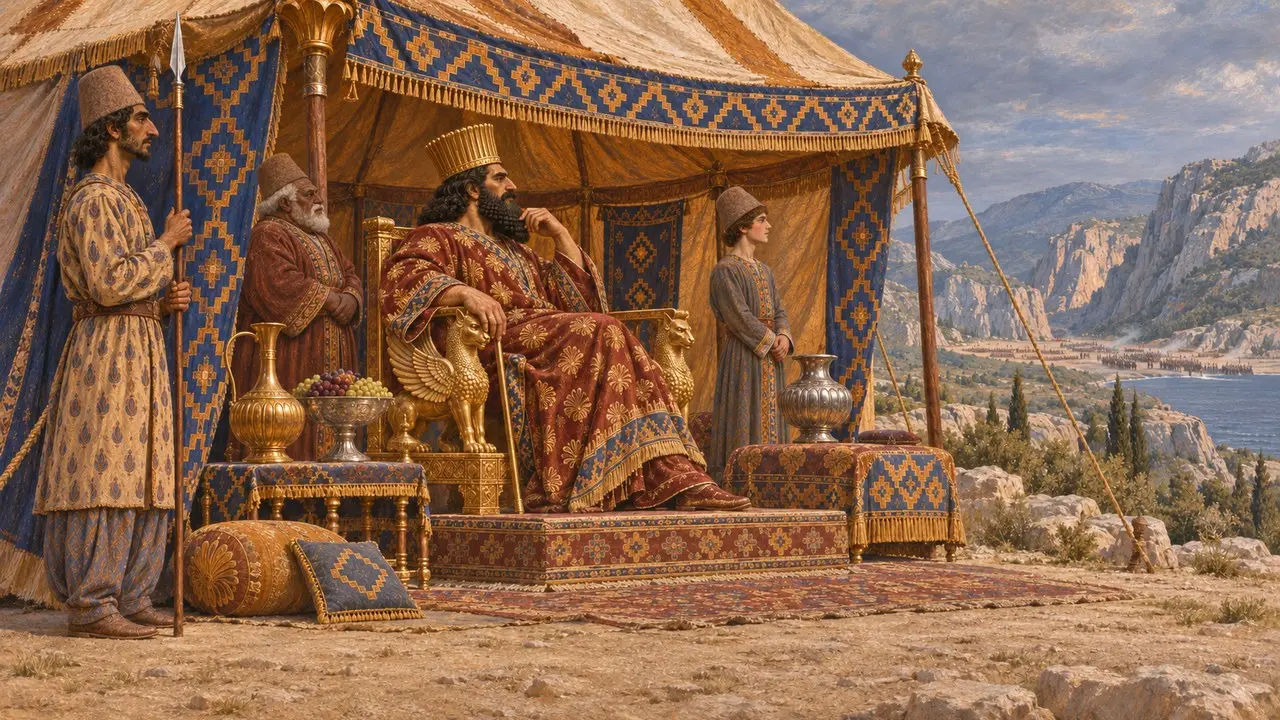
A throne and a tent on campaign
Ancient accountHerodotus places Xerxes on a seat at other moments of the campaign. At Abydos he sat on a throne of white stone set on a hill to view his army and fleet. At Salamis he watched from below Mount Aegaleos while scribes noted who fought well. Herodotus also describes the royal tent left to Mardonius and captured after Plataea, furnished with gold and silver and embroidered hangings.
Herodotus 7.44; 8.90; 9.82
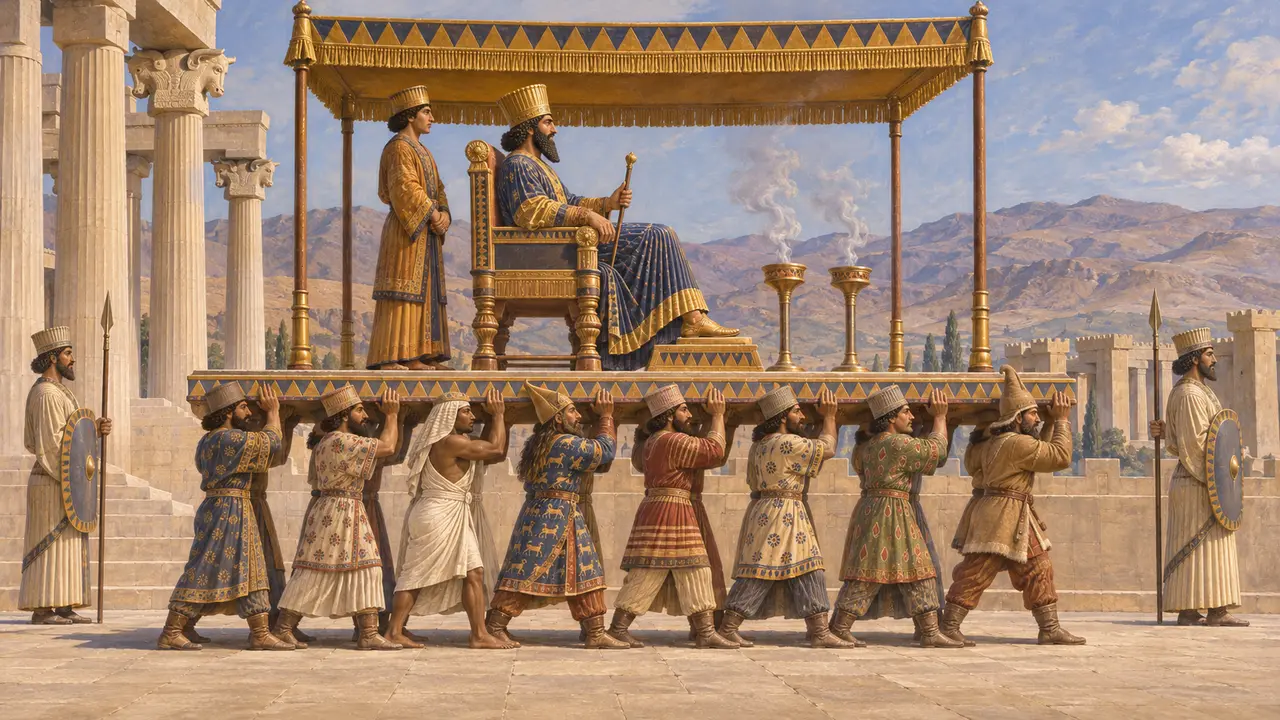
The enthroned King in Persian art
In the recordThe Persian record says nothing about Thermopylae, but it shows how the King wished to be seen when seated. The audience reliefs found in the Persepolis Treasury show the King on a high-backed throne with his feet on a footstool, a figure usually taken as the crown prince behind him and incense burners before him. Doorway reliefs at Persepolis show the King enthroned beneath a fringed canopy, his throne held up by figures of the subject peoples.
E. F. Schmidt, Persepolis I, 1953
What really stood at Thermopylae
DisputedNo remains of a royal seat or pavilion have been found at Thermopylae, and its site is unknown. An army halted for a few days would most likely have used a tent, a portable throne and a parasol rather than a built stone platform. Some historians see Herodotus's frightened, leaping King as a Greek literary motif. On that view the scene tells more about how Greeks imagined Xerxes than about Persian practice.
P. Briant, From Cyrus to Alexander, 2002
The tent that became the Odeion
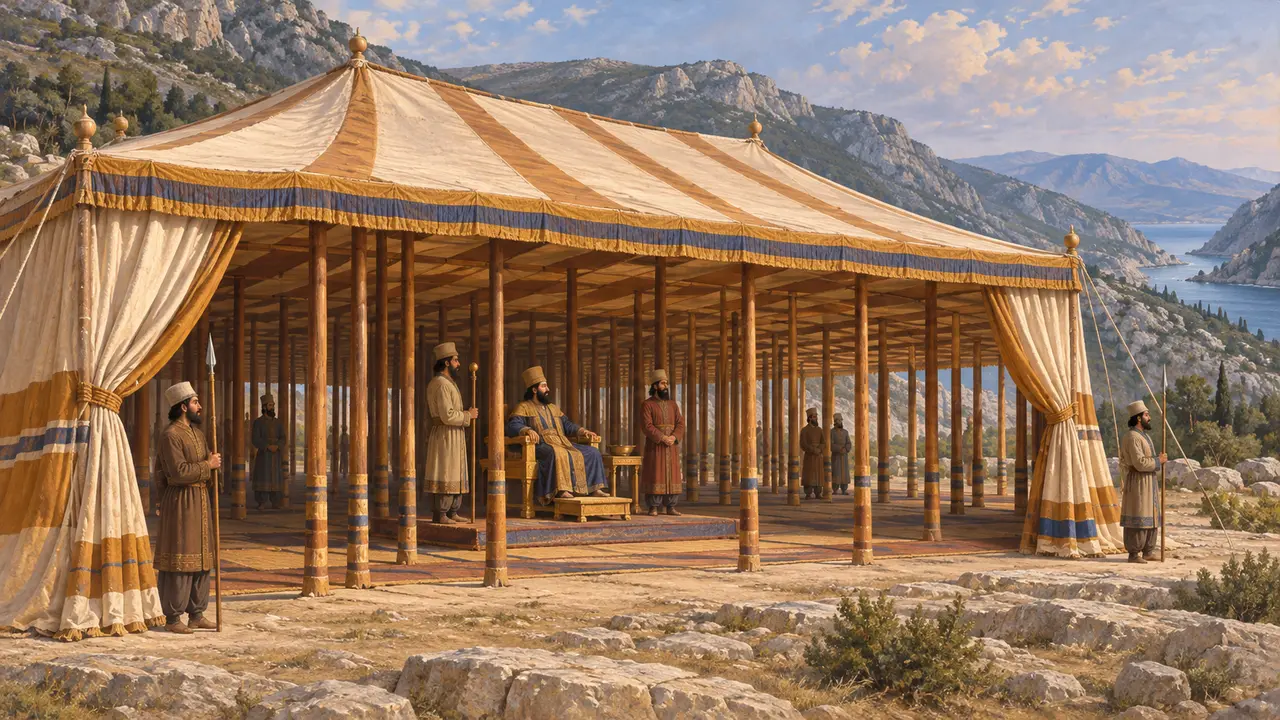
Later legendWriters of the Roman period reported that Pericles' Odeion in Athens, a roofed hall of many columns, imitated the King's tent. Pausanias the travel writer and Plutarch both pass this on as something that was said. They wrote some six centuries after the war, and the story cannot be checked. M. C. Miller has argued that captured Persian tents may indeed have influenced Athenian building.
Pausanias 1.20.4; Plutarch, Pericles 13
Sources
- Herodotus 7.210-212
- Herodotus 7.44; 8.90; 9.82
- E. F. Schmidt, Persepolis I, 1953
- P. Briant, From Cyrus to Alexander, 2002
- M. C. Miller, Athens and Persia in the Fifth Century BC, 1997
- Pausanias 1.20.4; Plutarch, Pericles 13