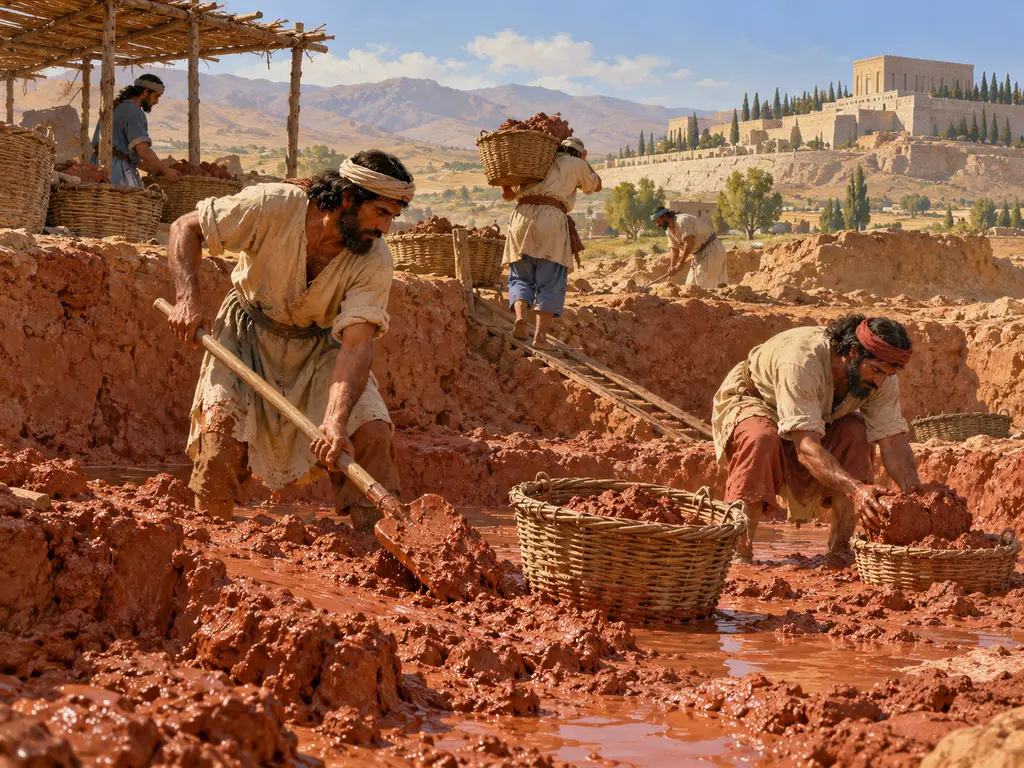
Clay Pit
Digging earth and clay for brick, pots and tablets, Persian empire, 6th-5th century BCE
Earth dug from the ground was the most common building material of the Persian empire. Stone platforms and columns survive at Pasargadae and Persepolis, but most walls were of mud brick. Clay also made pots, baked bricks and the tablets on which the King's scribes kept their accounts.
In the game: In the game the Clay Pit is an industry that digs river clay and must stand within four cells of water. Real builders often dug local earth near the site. Water was needed to mix it, so the river rule simplifies a real need.
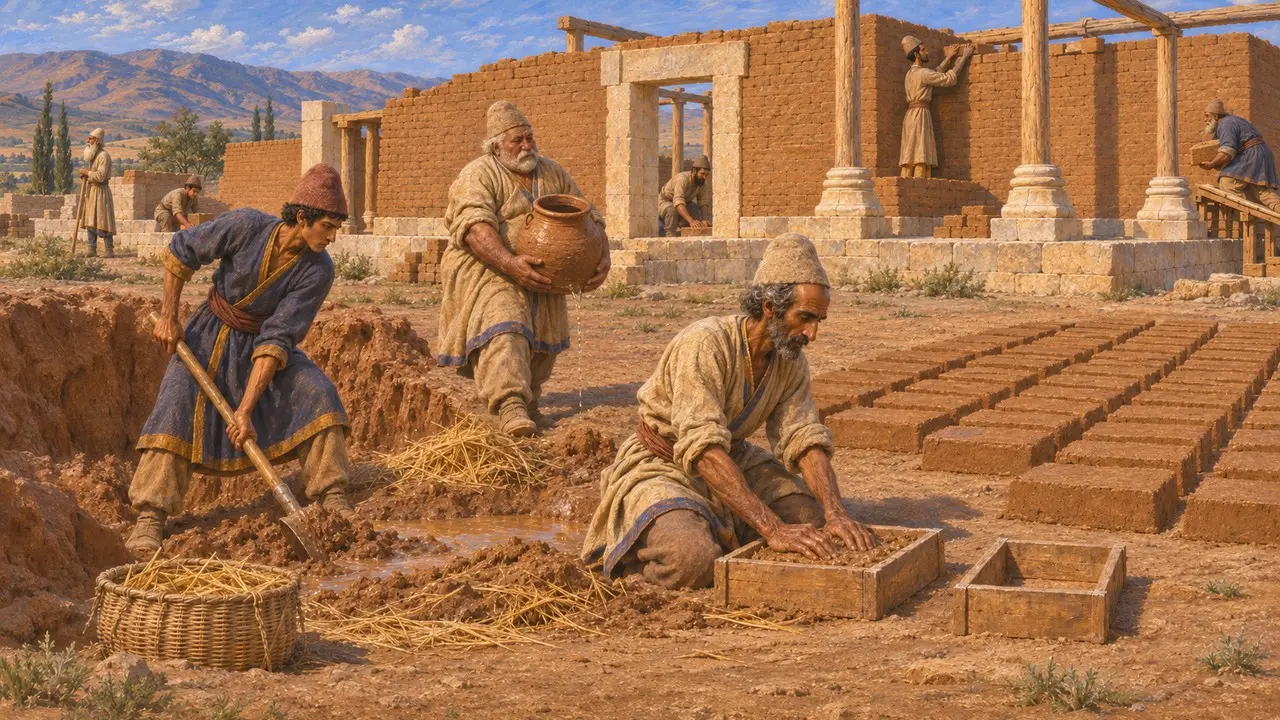
Mud brick behind the stone
In the recordExcavations at Pasargadae and Persepolis show that the stone platforms, column bases and doorframes were joined by thick walls of sun-dried mud brick. Such brick needed only earth, water and usually a temper such as chopped straw, pressed into moulds and dried in the sun. Because mud brick crumbles once roofs fall, the stone parts are what visitors see today.
E. Schmidt, Persepolis I, 1953; D. Stronach, Pasargadae, 1978
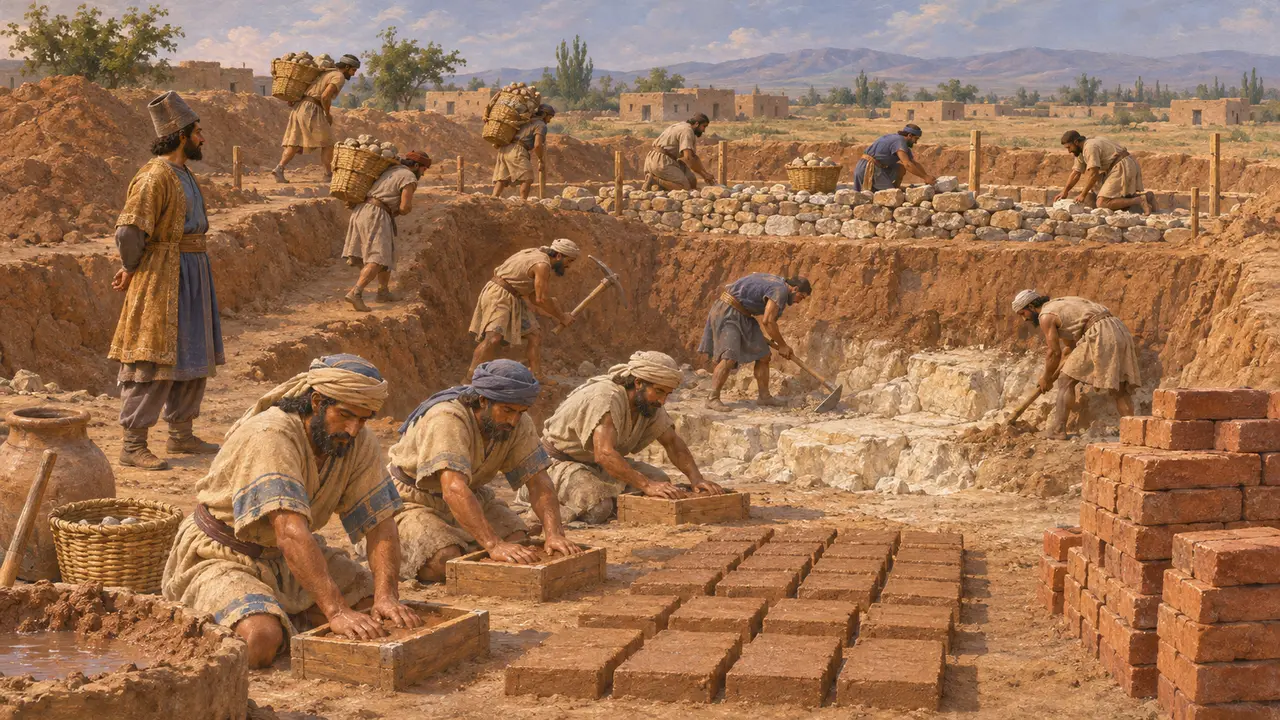
Darius on digging the foundations at Susa
In the recordIn his foundation charter for the palace at Susa, Darius says that the earth was dug down until rock was reached. Rubble was then packed in to raise the base. He adds that the baked brick was moulded by Babylonians, a people with a long tradition of brickmaking. The charter presents earthwork and brick as royal work alongside timber, gold and stone.
DSf
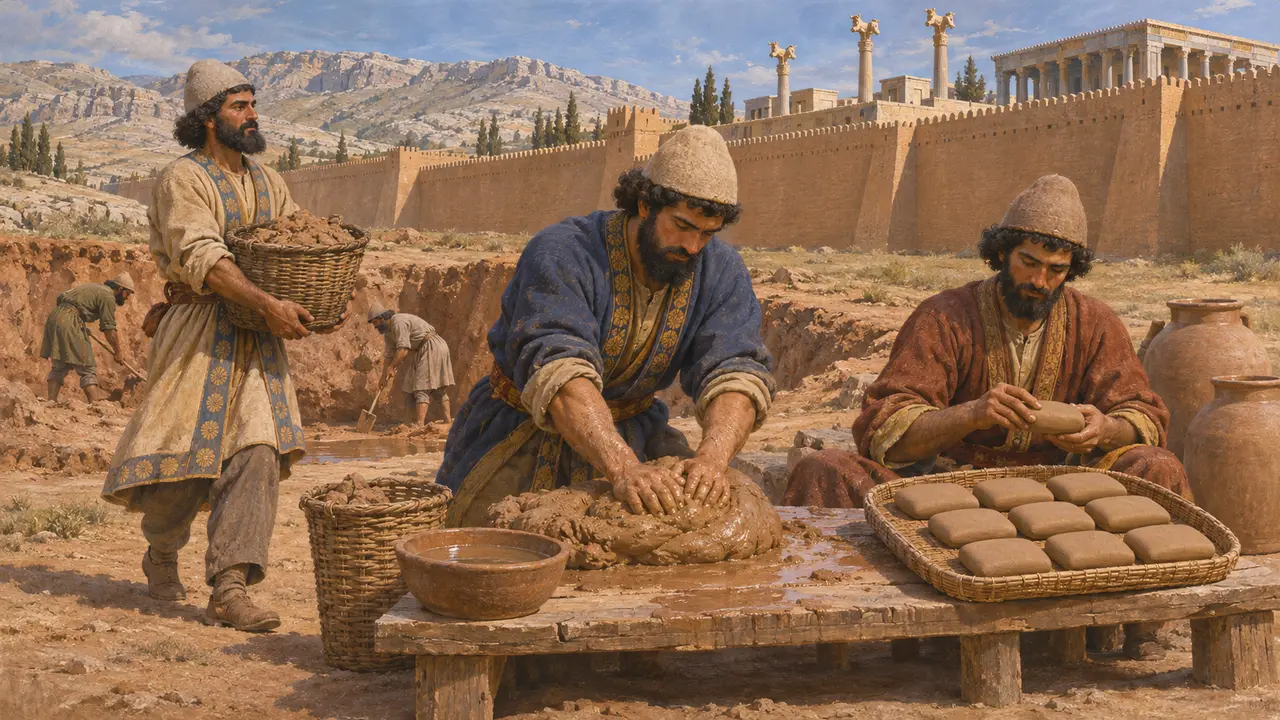
Clay for the scribes
In the recordThousands of unbaked clay tablets were found in the fortification wall at Persepolis. They date from about 509 to 493 and are written mostly in Elamite. They record rations of grain, wine and beer issued to workers and officials in Persis, including the labour groups who built for the King. The administration of the heartland depended on a steady supply of good clay.
R. Hallock, Persepolis Fortification Tablets, 1969
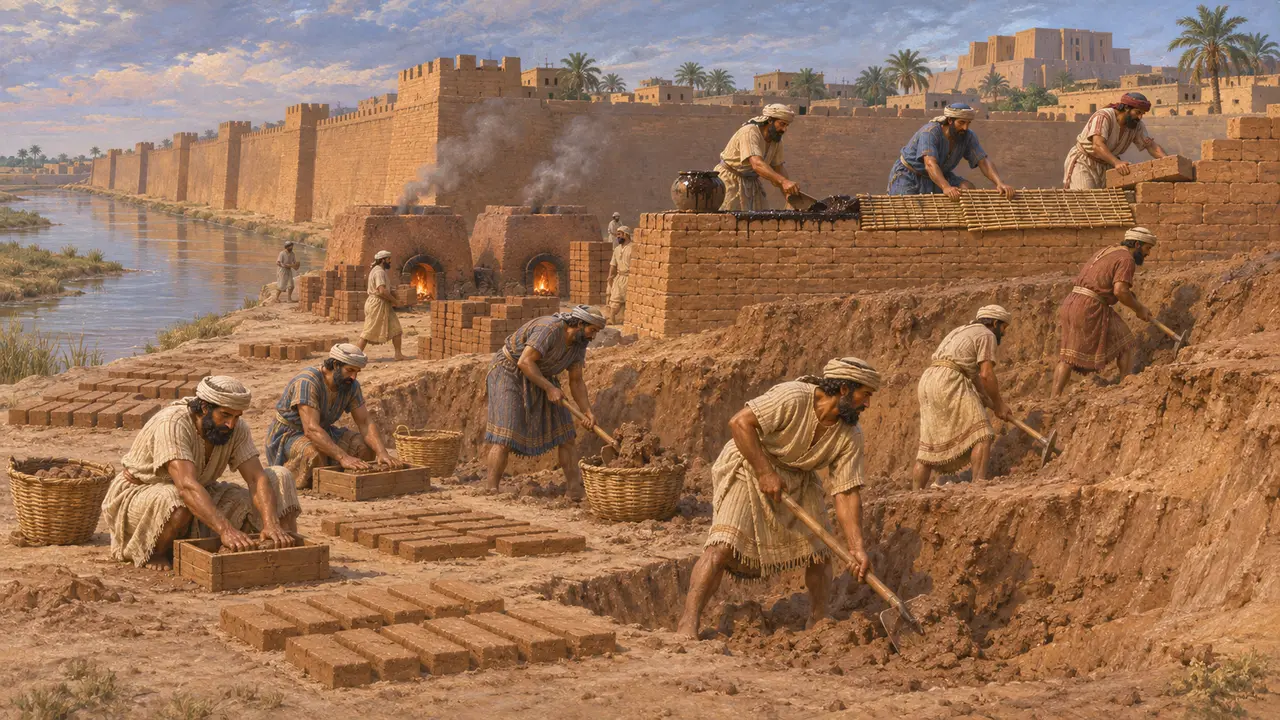
Herodotus on the bricks of Babylon
Ancient accountHerodotus says that the Babylonians dug a moat around their city and made the dug earth into bricks. They fired the bricks in kilns and laid them in hot bitumen. At every thirtieth course they added a layer of woven reeds. His description fits the Mesopotamian practice that Persian kings drew on.
Herodotus 1.179
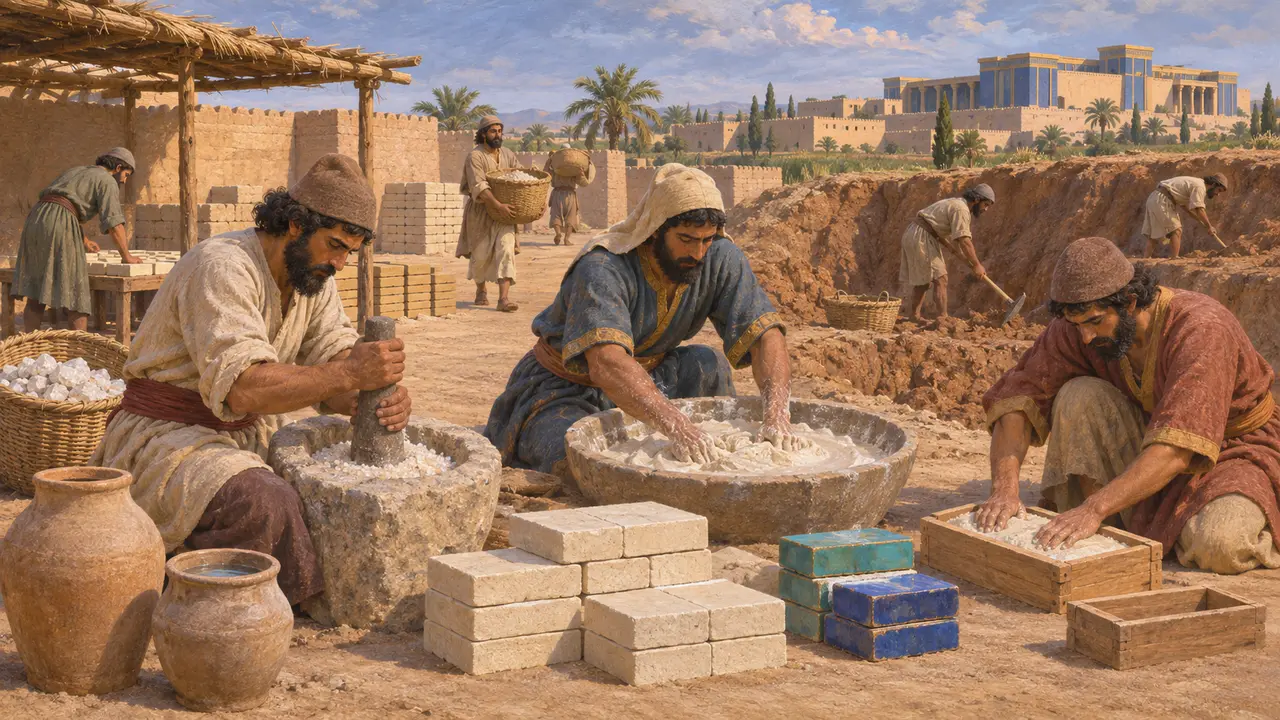
Real workshop or royal picture
DisputedHistorians debate how literally to read the list of peoples and materials in Darius's Susa charter. Some take it as a record of who worked where, while others see it mainly as royal ideology showing the whole empire serving the King. Studies of the Susa glazed bricks add a complication, since many were made from a siliceous paste of crushed sand rather than ordinary clay. Brick at Susa was therefore not one simple product of the clay pit.
P. Briant, From Cyrus to Alexander, 2002; J. Perrot (ed.), The Palace of Darius at Susa, 2013
Sources
- DSf
- R. Hallock, Persepolis Fortification Tablets, 1969
- Herodotus 1.179
- D. Stronach, Pasargadae, 1978
- E. Schmidt, Persepolis I, 1953
- P. Briant, From Cyrus to Alexander, 2002