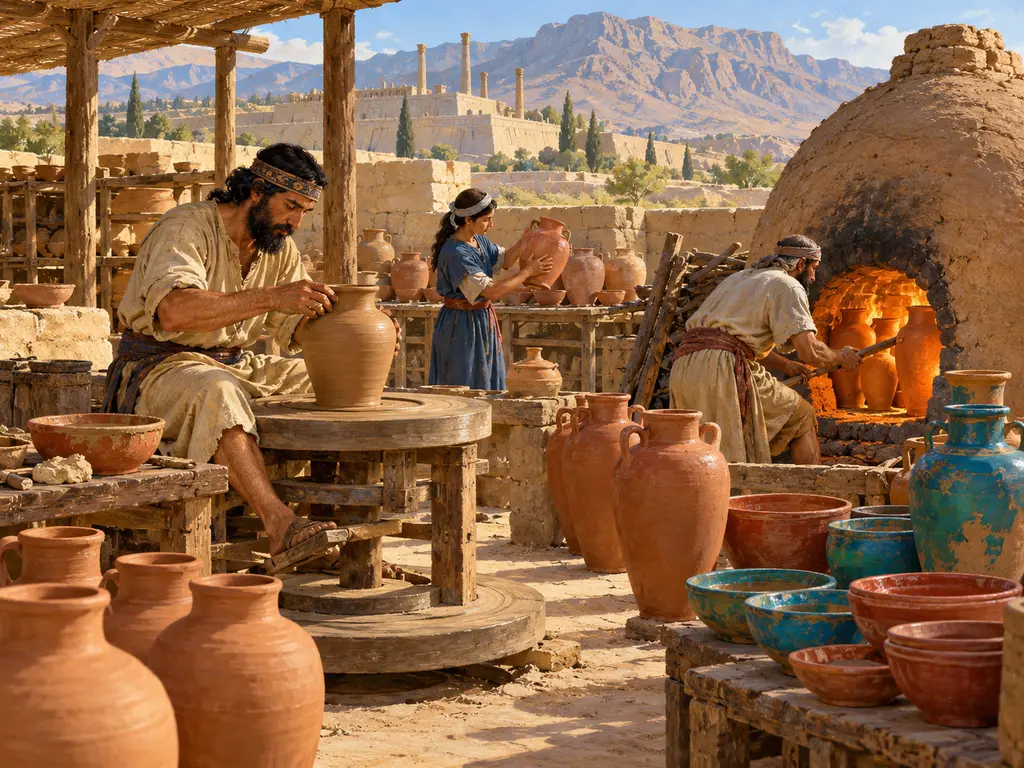
Potter's Yard
Workshops making everyday and storage pottery in the Persian empire, 6th-5th century BCE
Potters supplied the jars, bowls and jugs that every household, temple and royal storehouse depended on. In the Persian empire the potter's wheel and kiln were old, local crafts that carried on under the new rulers, and much of the empire's wine, beer and oil was stored and carried in clay jars.
In the game: The Potter's Yard turns clay into pottery, which Courtyard Houses want. The game reduces a varied craft to one good; real potters also made the large jars used to store and carry wine, beer and oil.
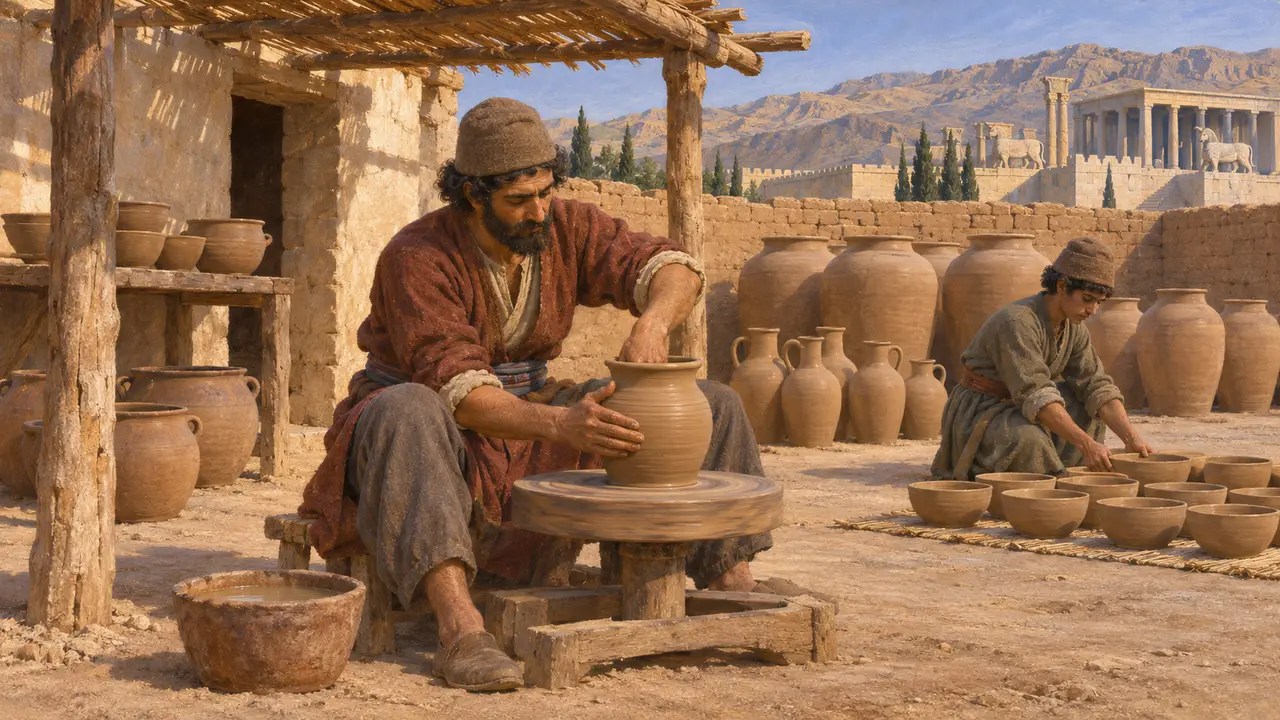
Wheel-made wares at the royal centres
In the recordExcavations at Pasargadae and Persepolis have produced plenty of plain, wheel-made pottery: storage jars, jugs, cooking pots and bowls. Most of it is practical rather than decorated, which suggests local workshops making the vessels that builders, guards and court staff needed day to day. Painted wares are uncommon at these sites compared with earlier periods in western Iran.
D. Stronach, Pasargadae, 1978; E. Schmidt, Persepolis II, 1957
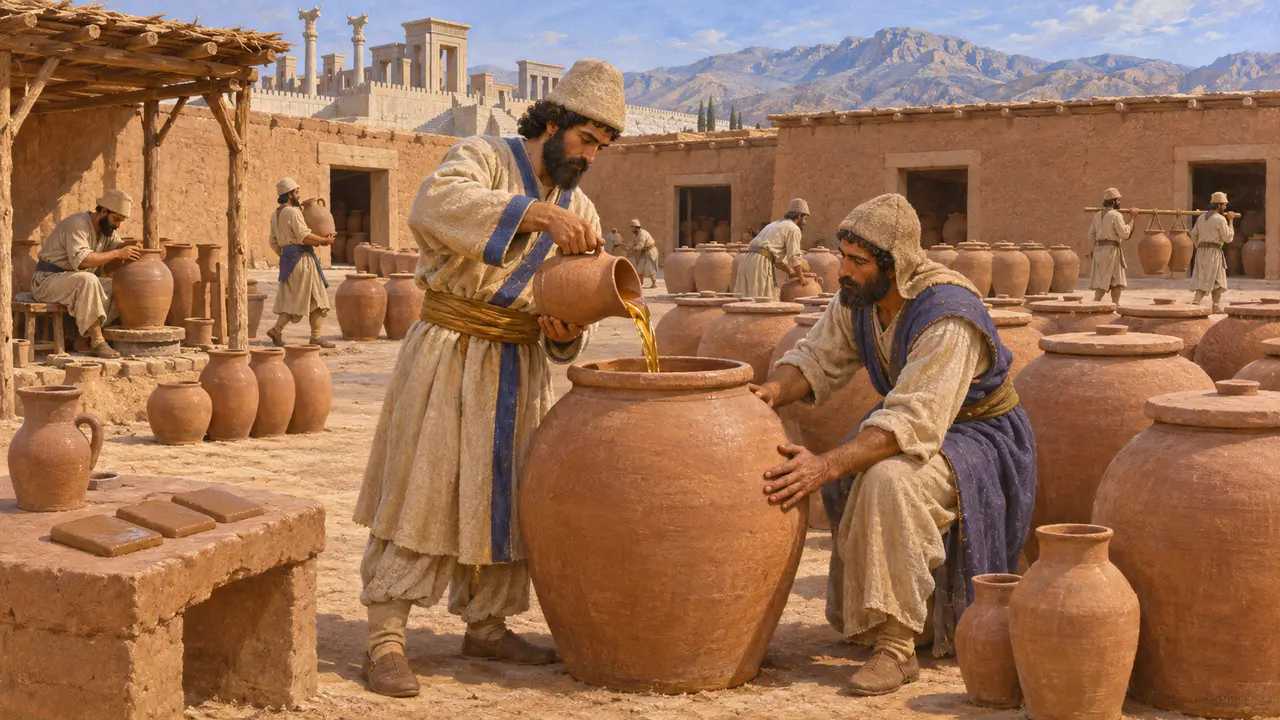
Liquids in the royal accounts
In the recordThe Persepolis Fortification tablets record wine, beer and oil issued to workers, travellers and officials, counted in fixed capacity units such as the quart and the marriš. The tablets rarely name the containers, but liquids on this scale had to be stored and moved in vessels, and clay jars were the cheapest and most common kind. The tablets themselves were mostly unbaked clay, a sign of how basic the material was to the administration.
R. Hallock, Persepolis Fortification Tablets, 1969
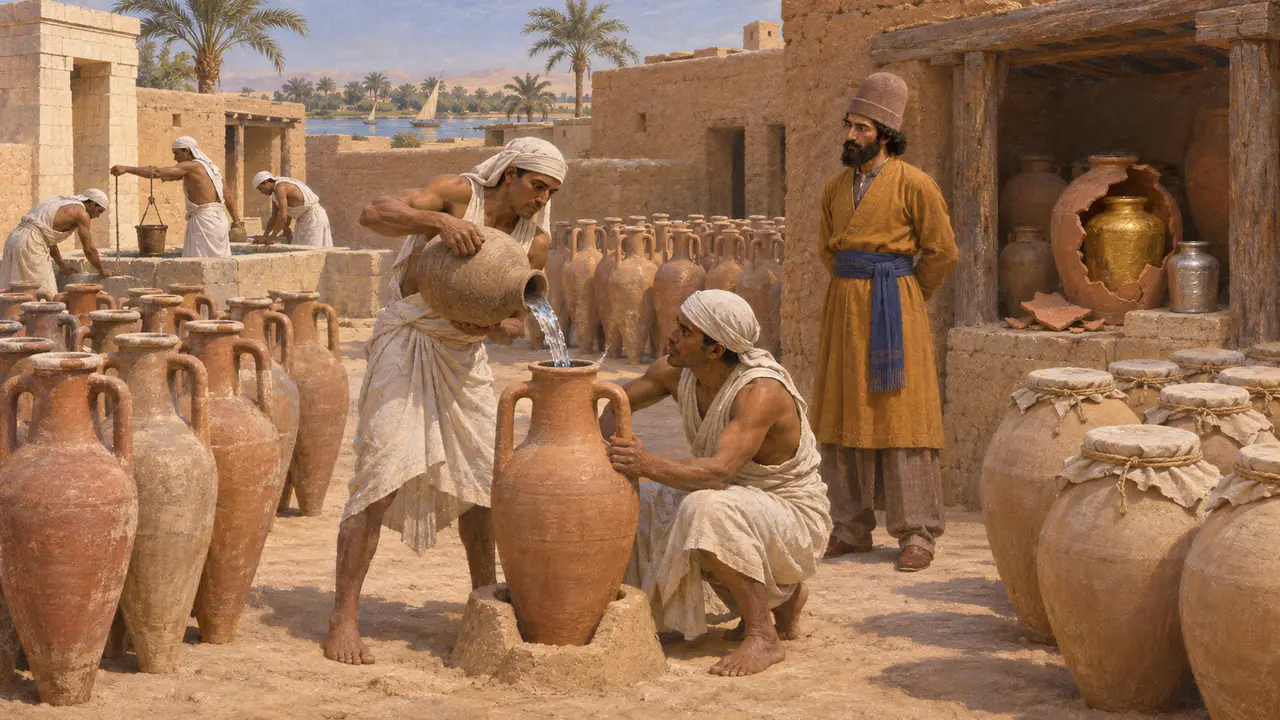
Water jars for the desert and gold in clay
Ancient accountHerodotus says that the wine jars shipped into Egypt twice a year from Greece and Phoenicia were gathered at Memphis once empty, filled with water and sent to the waterless country on the road to Syria, an arrangement he credits to the Persians after their conquest. He also says Darius stored tribute by pouring molten gold and silver into earthenware jars, then breaking the clay away and cutting off metal as needed.
Herodotus 3.6-7; Herodotus 3.96
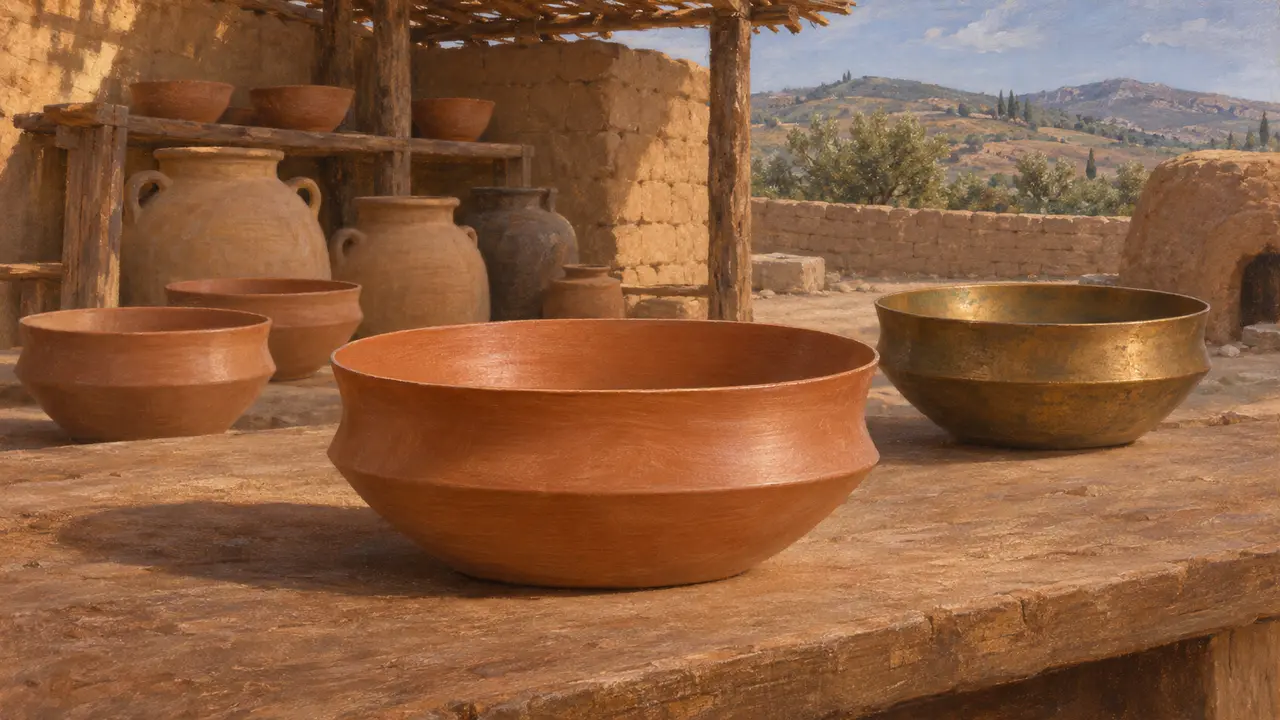
Metal shapes copied in clay
DisputedA thin, carinated drinking bowl modelled on metal vessels spread through many provinces in this period, from Anatolia to the Iranian plateau. Historians debate what it means: some see local elites copying court dining habits, others stress that regional pottery traditions mostly continued unchanged and that the shape spread through ordinary fashion and trade.
E. Dusinberre, Aspects of Empire in Achaemenid Sardis, 2003
Sources
- D. Stronach, Pasargadae, 1978
- E. Schmidt, Persepolis II, 1957
- R. Hallock, Persepolis Fortification Tablets, 1969
- Herodotus 3.6-7; 3.96
- E. Dusinberre, Aspects of Empire in Achaemenid Sardis, 2003
- P. Briant, From Cyrus to Alexander, 2002