Housing Plot
Ordinary homes of the Achaemenid empire, about 559-479 BCE
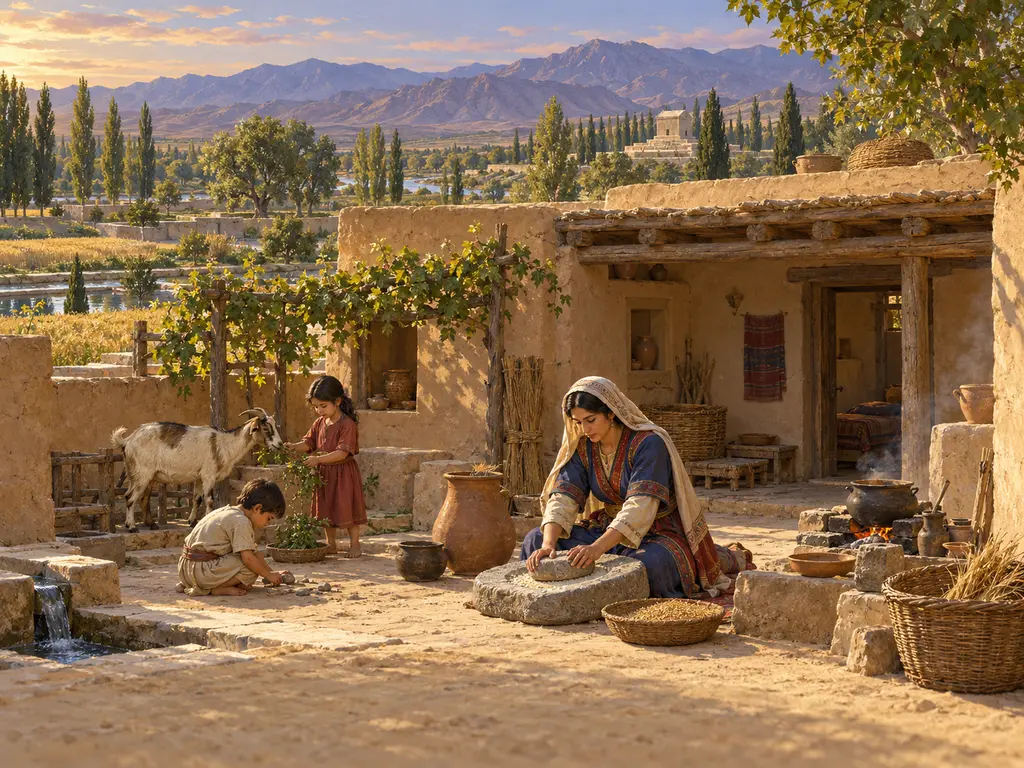
Most people in the Persian empire lived in simple houses of mud brick, reed and timber, often built around a yard and roofed flat with beaten earth. Kings left stone palaces and inscriptions. The homes of farmers, craftsmen and labourers are known mainly from a handful of excavations, from business contracts, and from a few remarks by Greek writers.
In the game: Settlers build a hut, and it grows as water, food, faith and health reach it. This is a game simplification: real houses did not upgrade through services, and a family's home depended on land, income and its duties to the King.
Mud brick, reed and timber
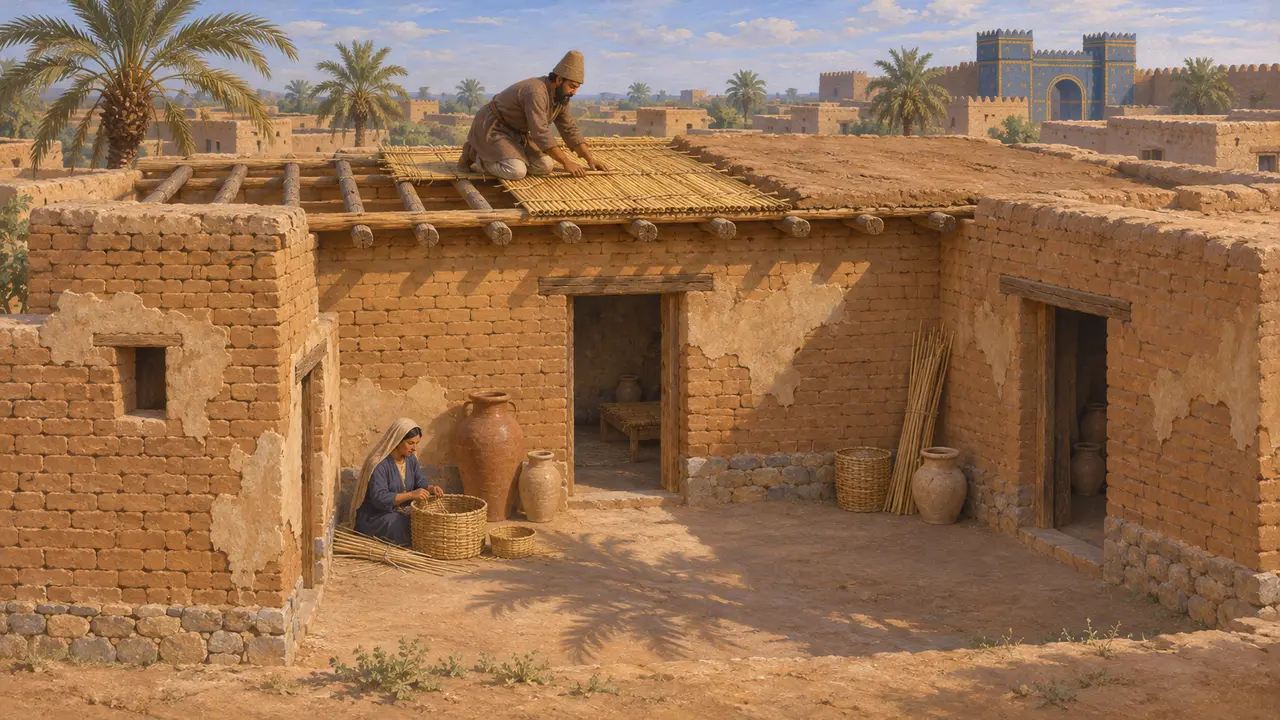
In the recordExcavations show that ordinary houses were built of sun-dried mud brick, often on a low stone footing, with wooden beams and reed matting under a flat earth roof. At Susa, Roman Ghirshman dug a quarter of modest houses that he dated to the Persian period, though later study has questioned how much of it is that early. In the Merkes quarter of Babylon, houses were built around an inner courtyard that gave light and air to the rooms.
R. Ghirshman, Village perse-achéménide, 1954
Houses in Babylonian contracts
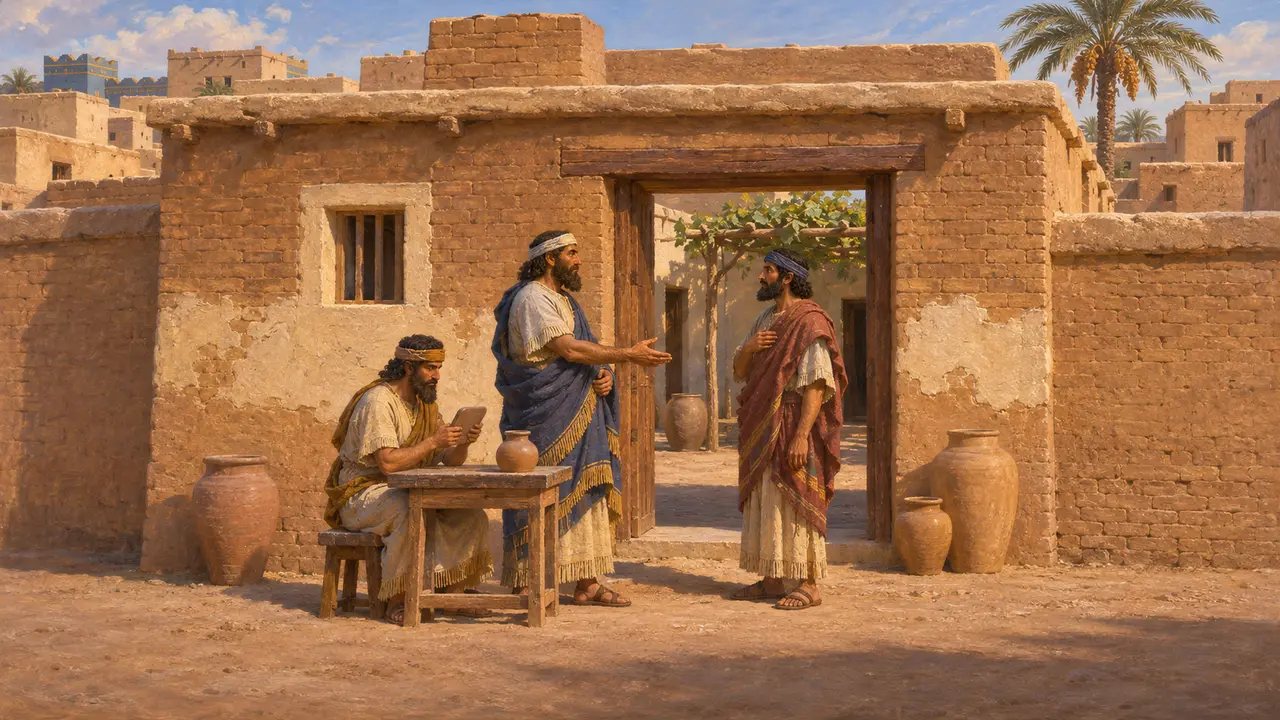
In the recordClay tablets from Babylonian family archives, such as that of the Egibi family, record houses being sold, leased and pledged as security for loans under Cyrus, Cambyses and Darius. The contracts give rents, boundaries and the names of neighbours. They show that a house in a large city was property that could be bought, rented out or inherited.
K. Abraham, Business and Politics under the Persian Empire, 2004
The reed houses of Sardis
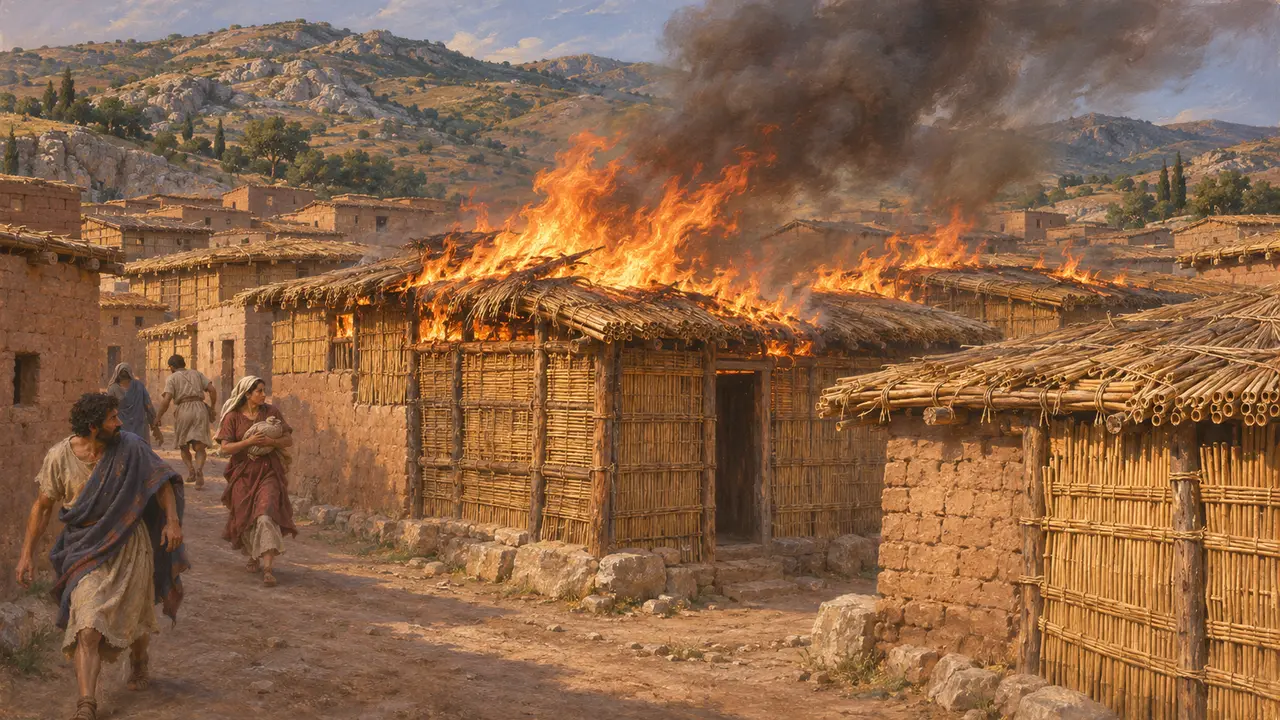
Ancient accountHerodotus says that Ionian raiders and their Athenian and Eretrian allies burned Sardis in 498. He explains that the fire spread quickly because most houses in the city were made of reeds, and even the brick ones had reed roofs. In his telling, a single house set alight was enough for the flames to run from roof to roof across the town.
Herodotus 5.101
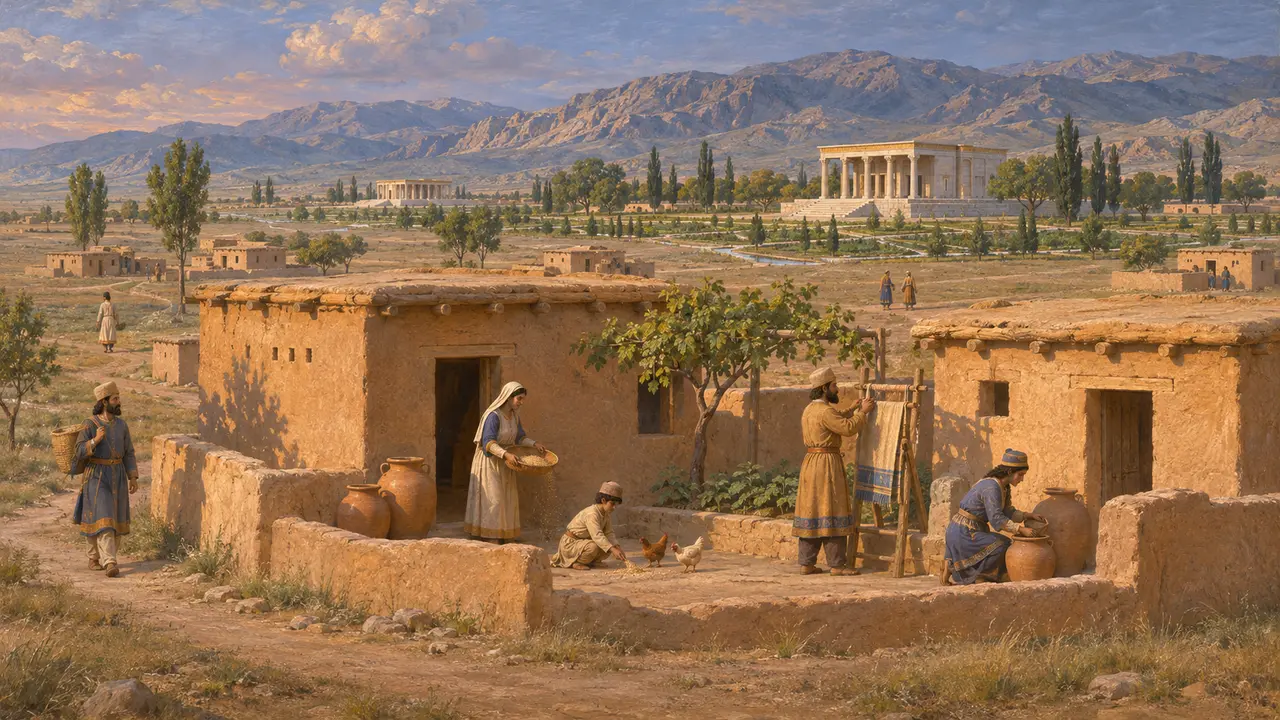
Where the people of the royal cities lived
DisputedPasargadae and Persepolis are known for palaces, but where their workers and residents lived is less clear. David Stronach saw Pasargadae as a spread of palaces and gardens with only scattered settlement. Later surveys have found traces of wider occupation around both sites, and historians still debate how large and how dense these towns were.
D. Stronach, Pasargadae, 1978
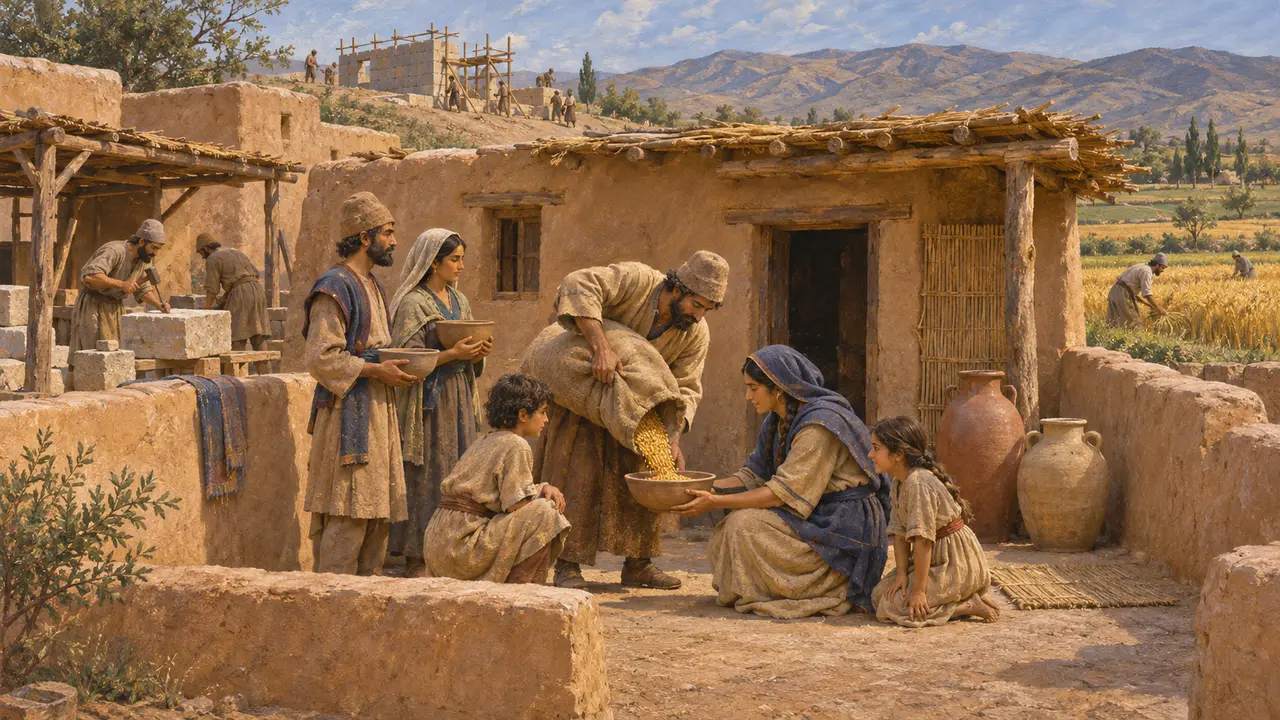
Workers on rations
In the recordThe Persepolis Fortification tablets record grain, wine and beer issued to groups of workers, including men, women and children, across Persis and neighbouring Elam. They say almost nothing about where these workers slept. Their homes were probably simple and close to the farms, workshops and building sites where they worked.
P. Briant, From Cyrus to Alexander, 2002
Sources
- R. Ghirshman, Village perse-achéménide, 1954
- K. Abraham, Business and Politics under the Persian Empire, 2004
- Herodotus 5.101
- D. Stronach, Pasargadae, 1978
- R. T. Hallock, Persepolis Fortification Tablets, 1969
- P. Briant, From Cyrus to Alexander, 2002