Encyclopedia › Battles and events
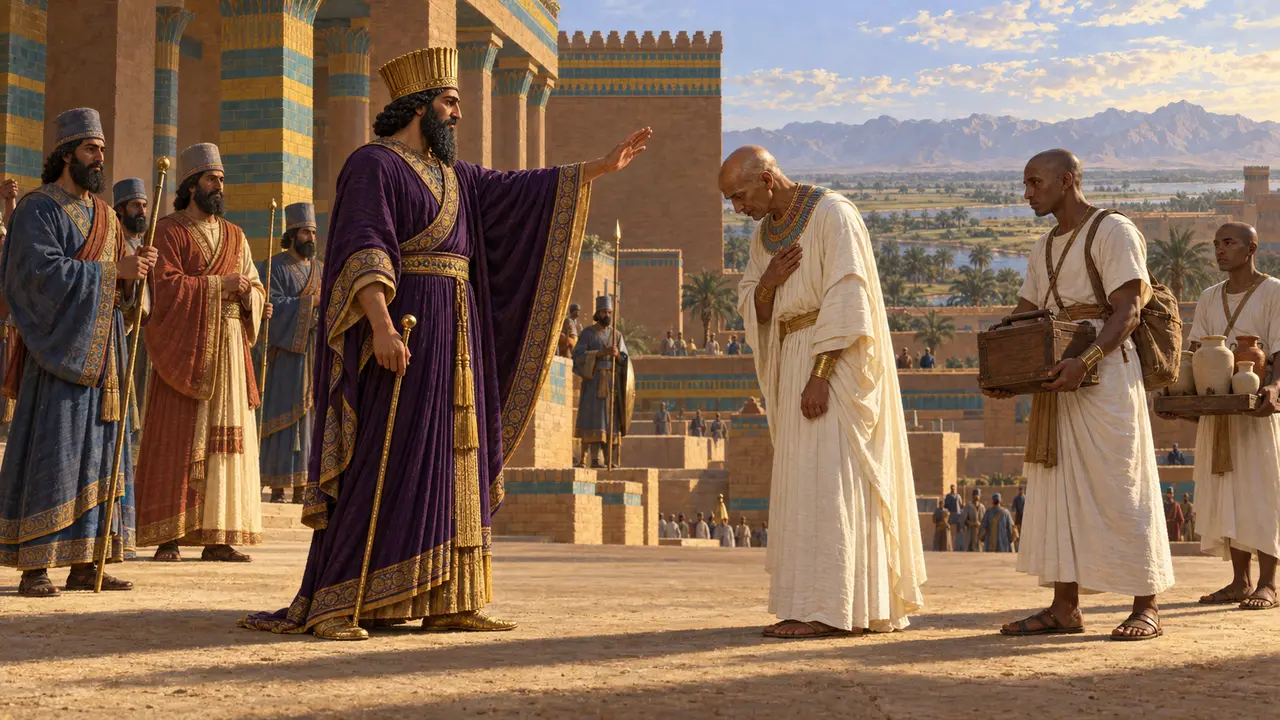
Darius's restoration of the House of Life at Sais
Royal order to revive the House of Life, probably at Sais in Egypt, about 519-518 BCE
In the game: Level 5: The Charter
Early in his reign Darius ordered the Egyptian official Udjahorresnet to leave the Persian court and restore the House of Life, probably the one at Sais, a temple institution of sacred writing and medicine that had fallen into decay. The order is known almost entirely from Udjahorresnet's own inscribed statue, which also shows how Persian kings worked with Egyptian temple elites to govern Egypt.
In the game: The game shows this as a decree of 518 sending Udjahorresnet home. The statue gives no year, so 518 is a modern estimate, and the House of Life was a temple scriptorium of sacred learning rather than simply a school.
The statue and its text
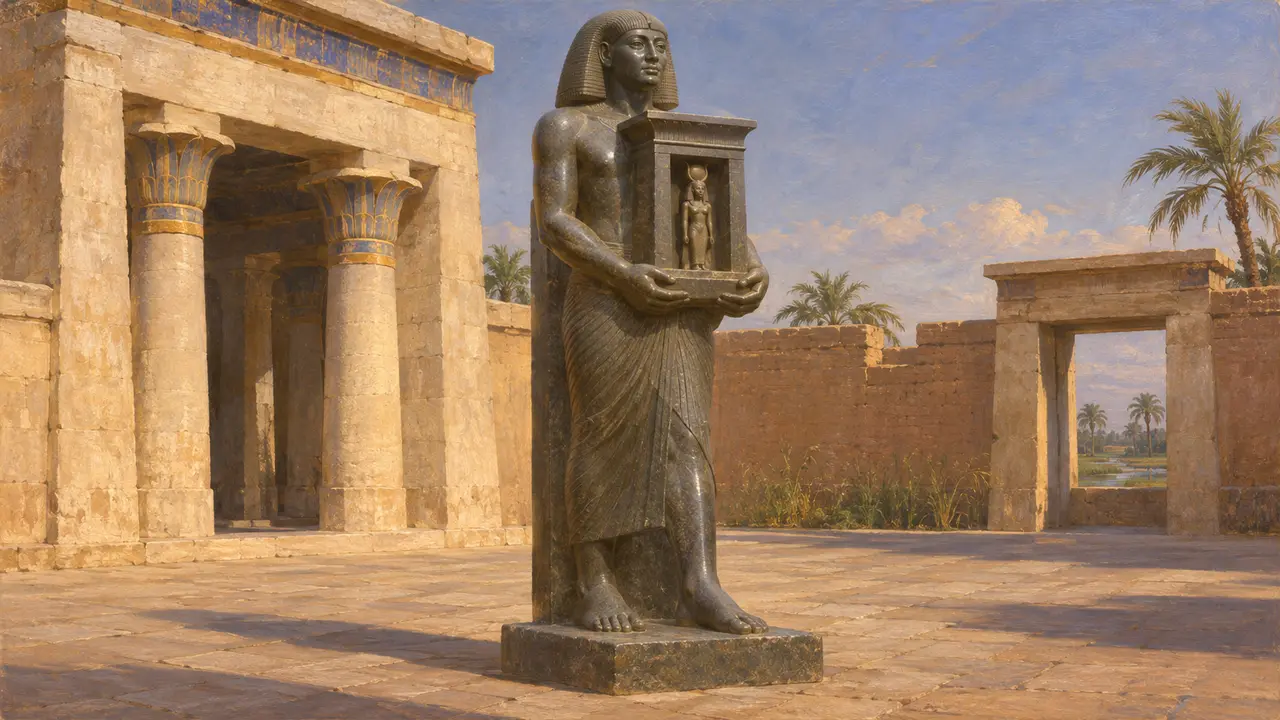
In the recordUdjahorresnet had served as a naval commander under the last Saite kings, Amasis and Psamtik III. After Cambyses conquered Egypt in 525 he became chief physician and a court companion, and he composed the King's Egyptian throne name. His career is told in hieroglyphs carved on a statue of him holding a small shrine. It is now in the Vatican Museums, probably brought to Italy in Roman times.
Naophorous statue of Udjahorresnet, Vatican Museums
Darius's order
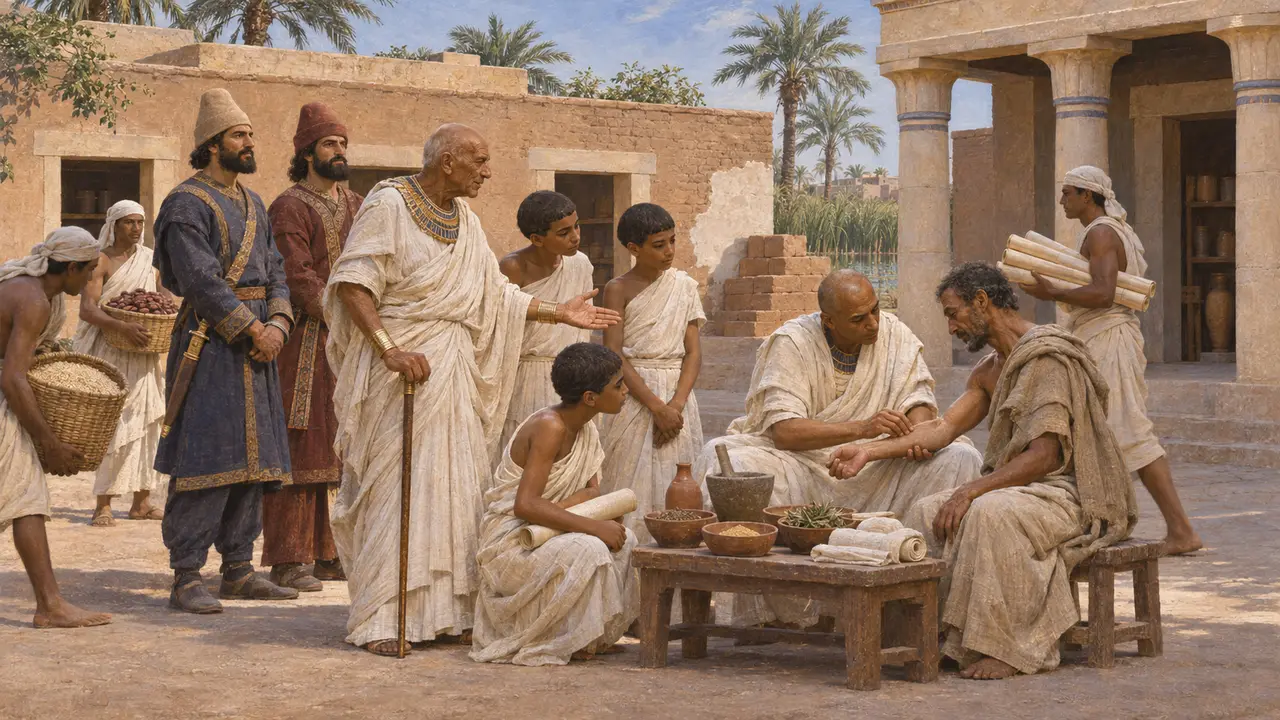
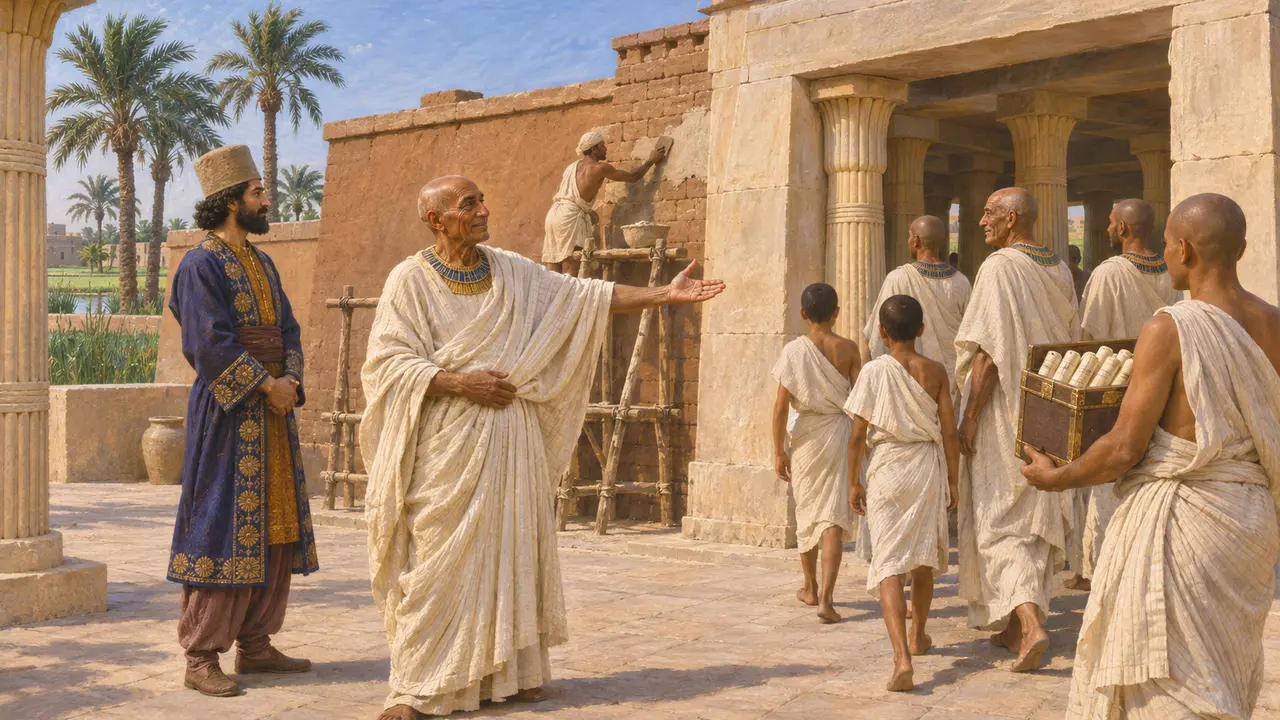
In the recordThe inscription says that Darius, while he was in Elam, ordered Udjahorresnet to go to Egypt and restore the House of Life after it had decayed. Foreigners escorted him from land to land. He says he staffed it with students from respected families, set them under learned men and supplied all their needs. He adds that the King acted because he knew the value of this craft for keeping the sick alive.
Naophorous statue of Udjahorresnet; A. Kuhrt, The Persian Empire, 2007
What a House of Life was
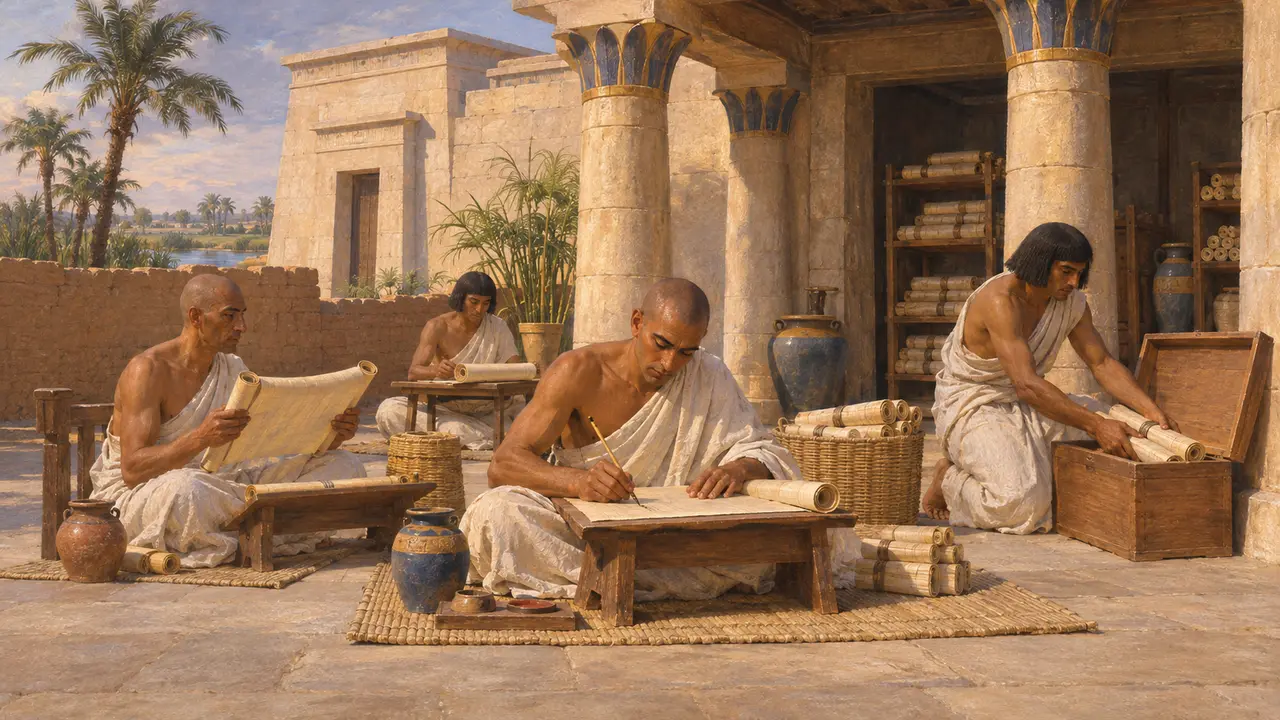
In the recordEgyptian texts from many periods name the House of Life as a body attached to temples where scribes copied, studied and kept sacred books on ritual, medicine and magic. It was less a school in the modern sense than a workshop of written knowledge. The statue does not name the town, but scholars usually place this one at Sais, beside the temple of Neith, whose cult Udjahorresnet had already persuaded Cambyses to protect.
Naophorous statue of Udjahorresnet; A. H. Gardiner, "The House of Life", Journal of Egyptian Archaeology 24, 1938
Egyptian doctors at the Persian court
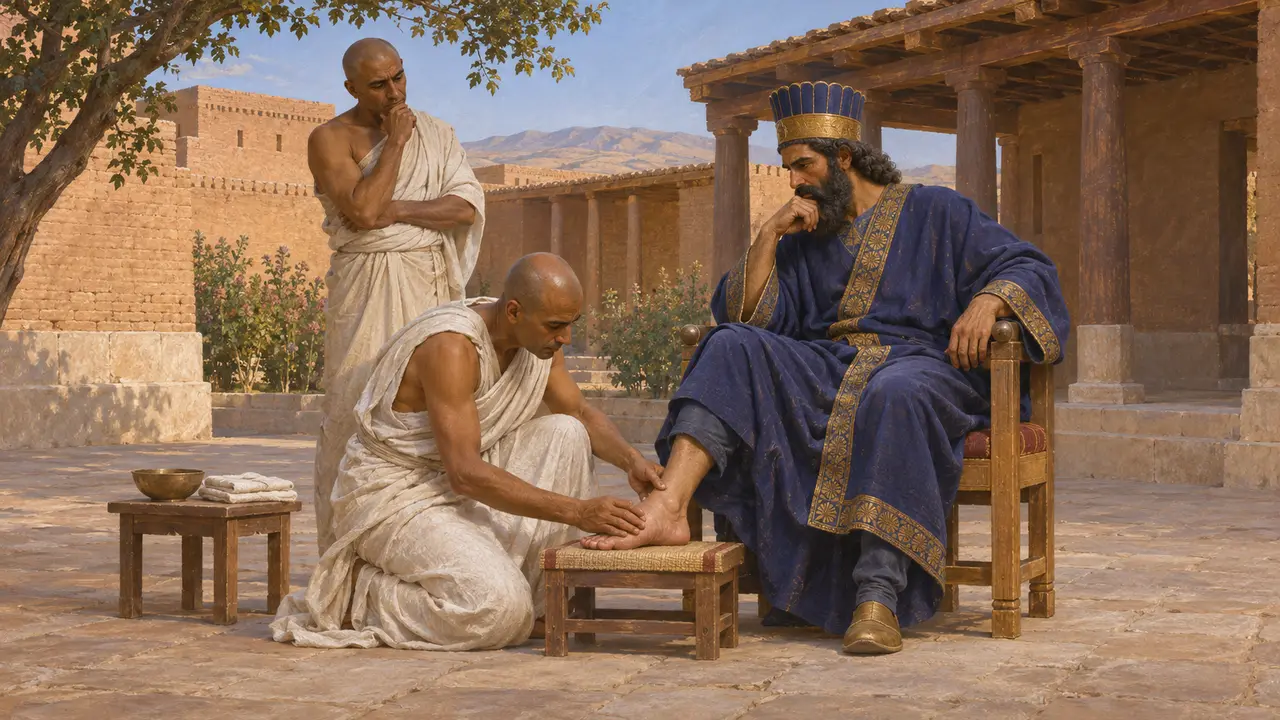
Ancient accountHerodotus tells that Amasis sent an Egyptian eye doctor to Cyrus at the King's request. He also says Darius kept Egyptian physicians at court, reckoned the best in medicine, though they failed to treat his twisted ankle until the Greek Democedes cured it. Whatever the truth of the details, his stories fit the statue's claim that Darius valued Egyptian medicine.
Herodotus 3.1; Herodotus 3.129-132
Collaborator, patriot or both
DisputedHistorians disagree on how to read Udjahorresnet. Some see a collaborator excusing his service to the conquerors; others a local notable protecting his temple and town as best he could. His picture of Cambyses honouring Neith clashes with Herodotus's sacrilegious Cambyses. Scholars also debate the date of the order, usually placed in 519 or 518, and whether the great turmoil he mentions means the conquest of 525 or the revolts of 522.
A. B. Lloyd, "The Inscription of Udjahorresnet: A Collaborator's Testament", JEA 68, 1982; P. Briant, From Cyrus to Alexander, 2002
Sources
- Naophorous statue of Udjahorresnet, Vatican Museums
- A. Kuhrt, The Persian Empire: A Corpus of Sources from the Achaemenid Period, 2007
- A. B. Lloyd, "The Inscription of Udjahorresnet: A Collaborator's Testament", Journal of Egyptian Archaeology 68, 1982
- G. Posener, La première domination perse en Égypte, 1936
- A. H. Gardiner, "The House of Life", Journal of Egyptian Archaeology 24, 1938
- P. Briant, From Cyrus to Alexander, 2002