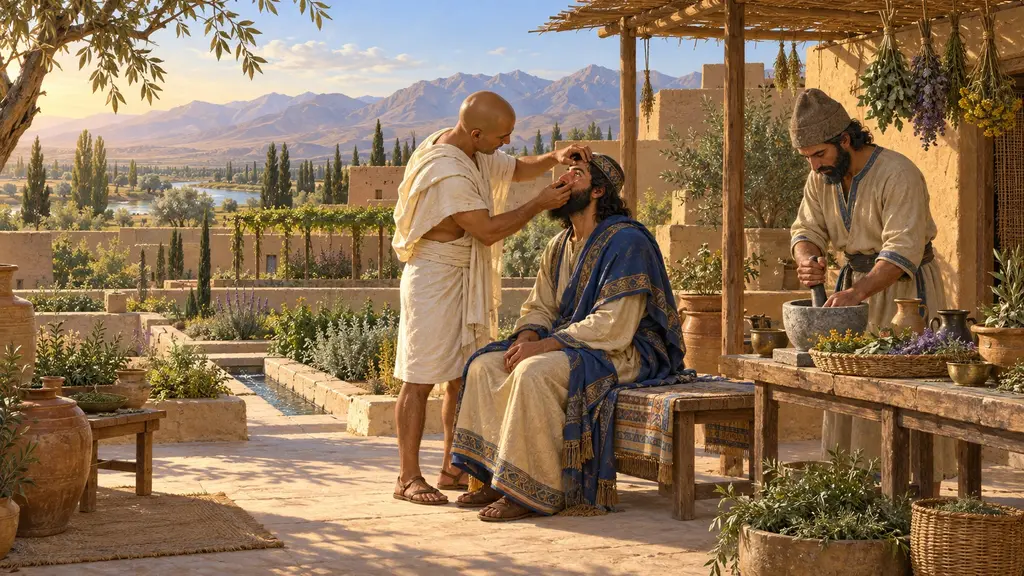
Physician's House
Egyptian physicians in the service of the Persian kings, about 540-500 BCE
Egyptian doctors had a high reputation across the ancient Near East, and the Persian kings sent for them. Herodotus tells of an eye doctor sent to Cyrus, and the Egyptian chief physician Udjahorresnet served Cambyses and Darius. Their presence at court shows how the empire drew skilled people from its provinces into the King's service.
In the game: An Egyptian physician walks the streets and cures the sickness he passes, each healing one disease as Herodotus describes. Real royal physicians mostly treated the court, and the one-disease rule is overstated.
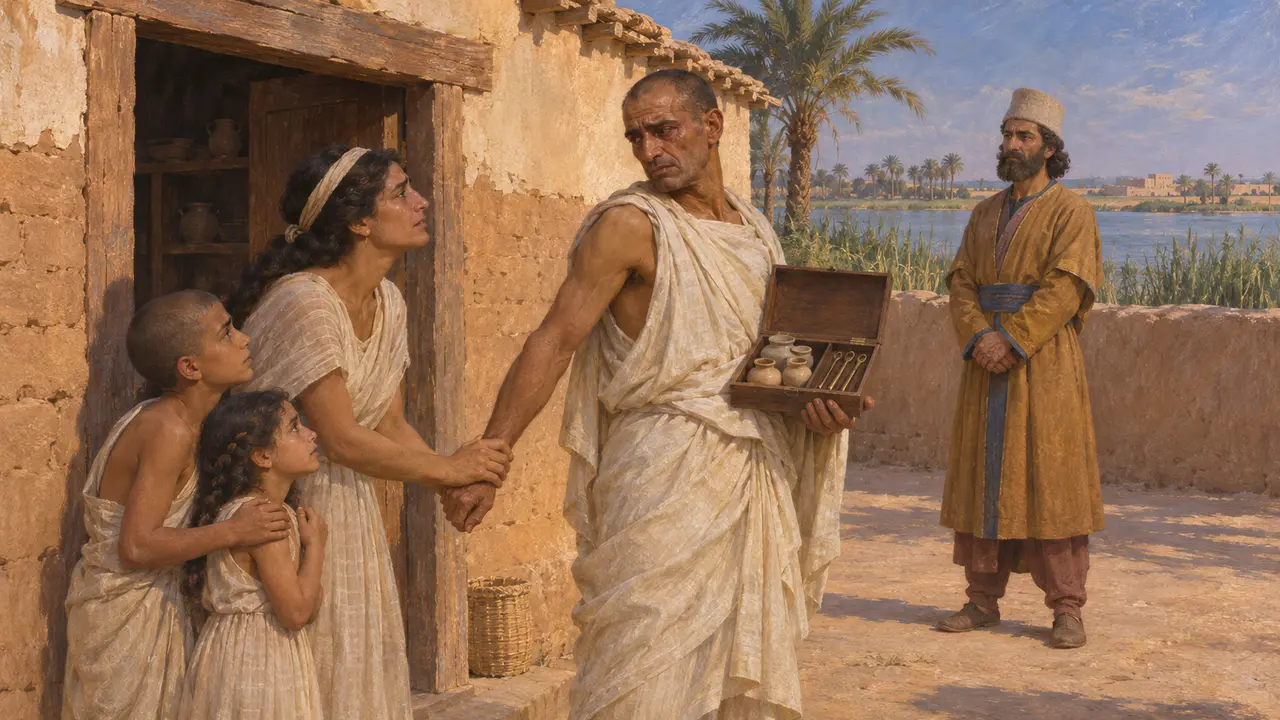
Cyrus's eye doctor
Ancient accountHerodotus says that Cyrus asked Amasis, king of Egypt, for the best eye doctor in the country. Amasis sent one, parting him from his wife and children, and the doctor bore a grudge. In Herodotus's telling he later urged Cambyses to ask for Amasis's daughter in marriage, knowing the request would cause offence. Herodotus presents this as one cause of the Persian invasion of Egypt in 525.
Herodotus 3.1
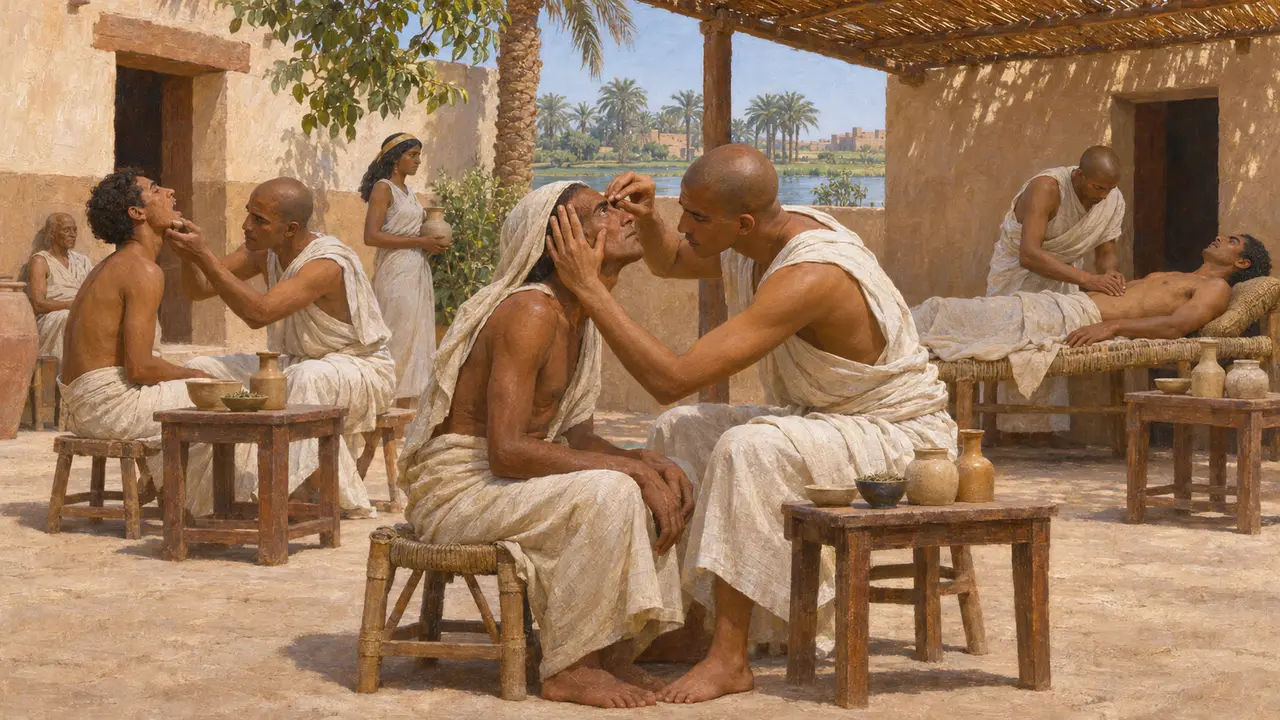
One disease to each doctor
DisputedHerodotus writes that in Egypt each physician treated one disease only, so the country was full of doctors for the eyes, head, teeth, belly and hidden ailments. Egyptian titles do name specialists, such as physicians of the eyes and of the belly. But the surviving medical papyri, such as the Ebers and Edwin Smith papyri, cover many conditions, and many doctors held general titles, so historians think Herodotus overstated the rule.
Herodotus 2.84; J. F. Nunn, Ancient Egyptian Medicine, 1996
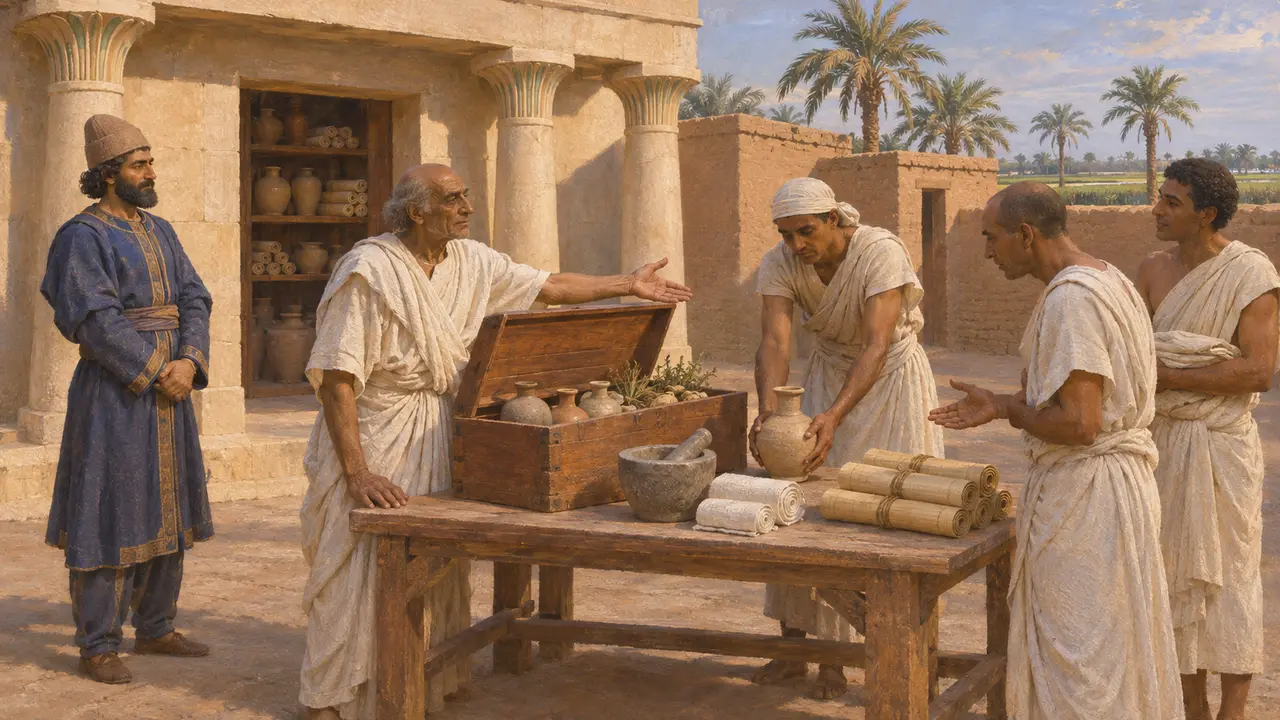
Udjahorresnet and the House of Life
In the recordThe statue of Udjahorresnet, now in the Vatican, carries his own account of his career. He served as chief physician under Cambyses and Darius. He says Darius, while in Elam, sent him back to Egypt to restore the House of Life, a temple institution for learned texts including medicine, probably at Sais, and to furnish it with staff and equipment. The text shows a Persian king supporting Egyptian medical learning.
Statue of Udjahorresnet; A. B. Lloyd, The Inscription of Udjahorresnet, JEA 68, 1982
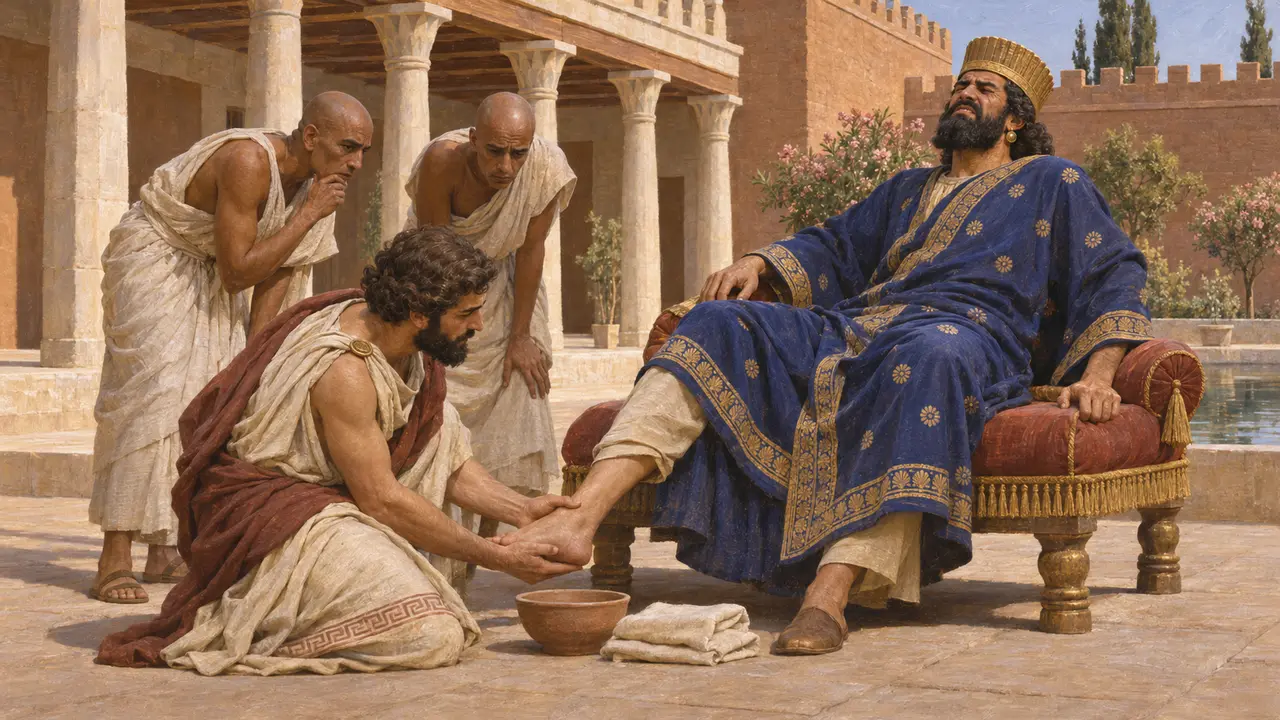
Darius's twisted ankle
Ancient accountHerodotus tells that Darius twisted his ankle leaping from his horse while hunting. The Egyptian doctors at court wrenched the foot and made it worse, until a Greek captive, Democedes of Croton, eased it with gentler treatment. Darius meant to impale the Egyptians, but Democedes pleaded for them. The story flatters Greek medicine, and only Greek sources tell it.
Herodotus 3.129-132
Sources
- Statue of Udjahorresnet (Vatican)
- Herodotus 3.1
- Herodotus 3.129-133
- Herodotus 2.84
- A. B. Lloyd, The Inscription of Udjahorresnet: A Collaborator's Testament, Journal of Egyptian Archaeology 68, 1982
- J. F. Nunn, Ancient Egyptian Medicine, 1996