Greek Surgery
A Greek physician's workroom, in the Greek world, about 520-479 BCE
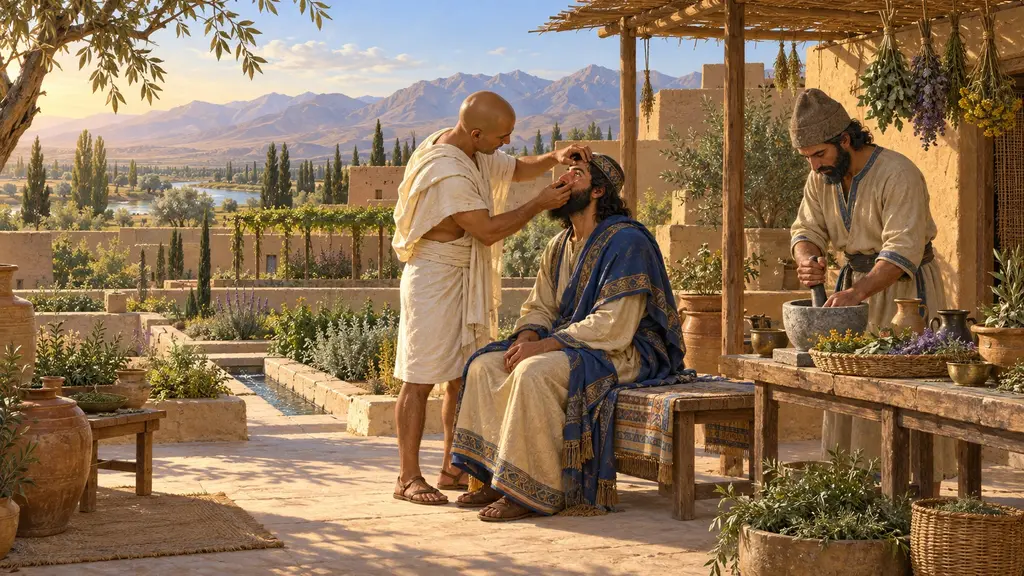
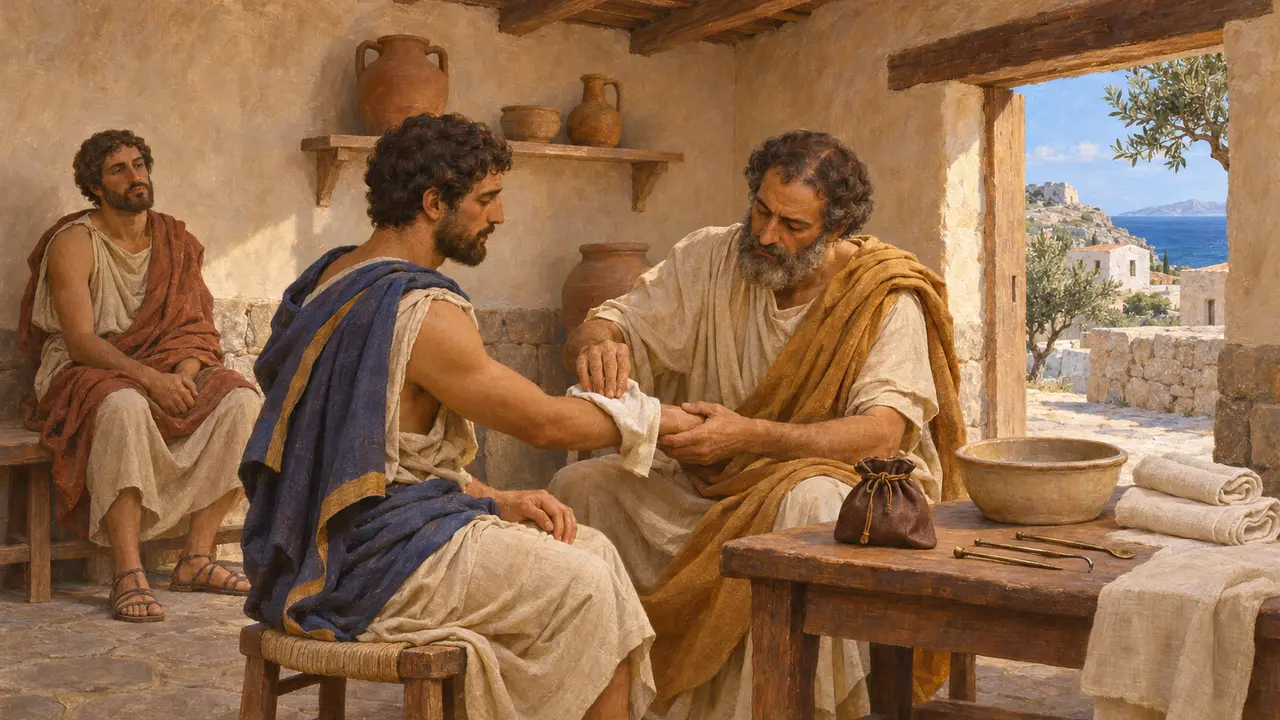
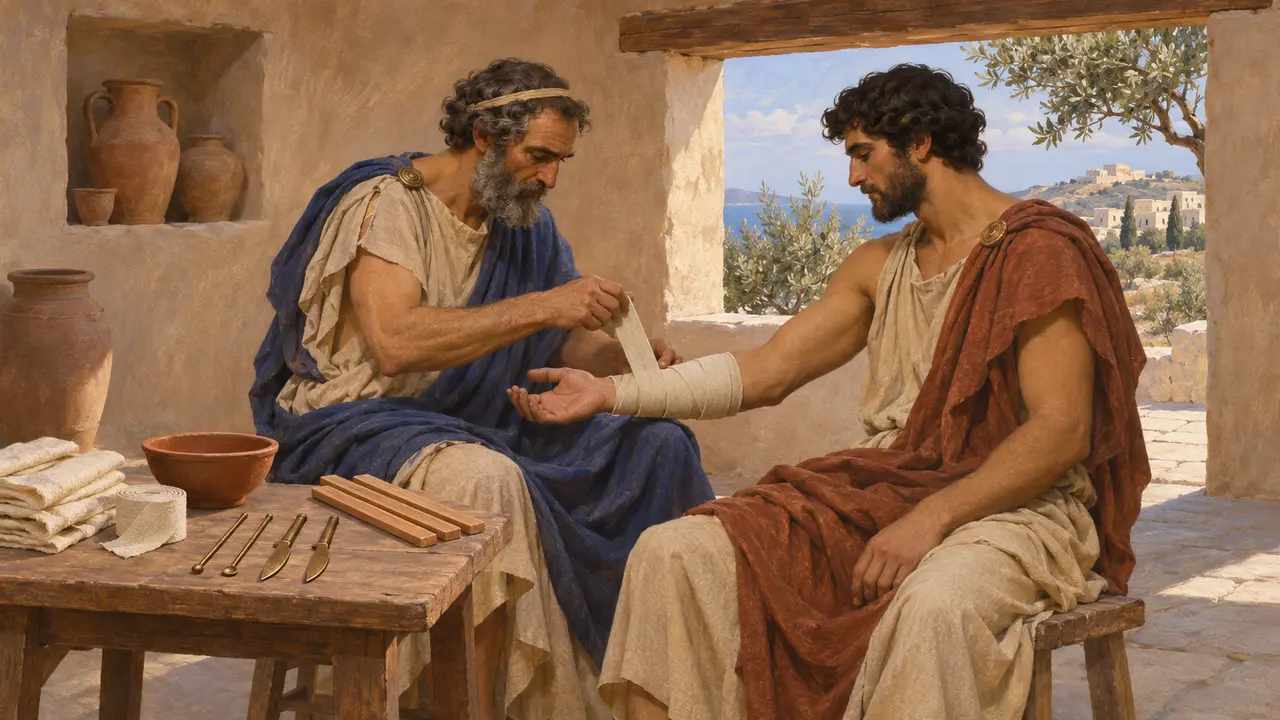
A Greek surgery, or iatreion, was the room where a physician saw patients, set bones and dressed wounds. Herodotus says some Greek cities of this period paid a doctor a yearly fee from public funds to keep him in town. Greek doctors also served the Persian kings, most famously Democedes of Croton at the court of Darius.
In the game: The game's yearly city fee follows Herodotus on Democedes. A doctor who cures whatever sickness he passes is a simplification: Greek physicians treated patients in the surgery or at home, and many illnesses they could not cure.
Democedes and the price of a doctor
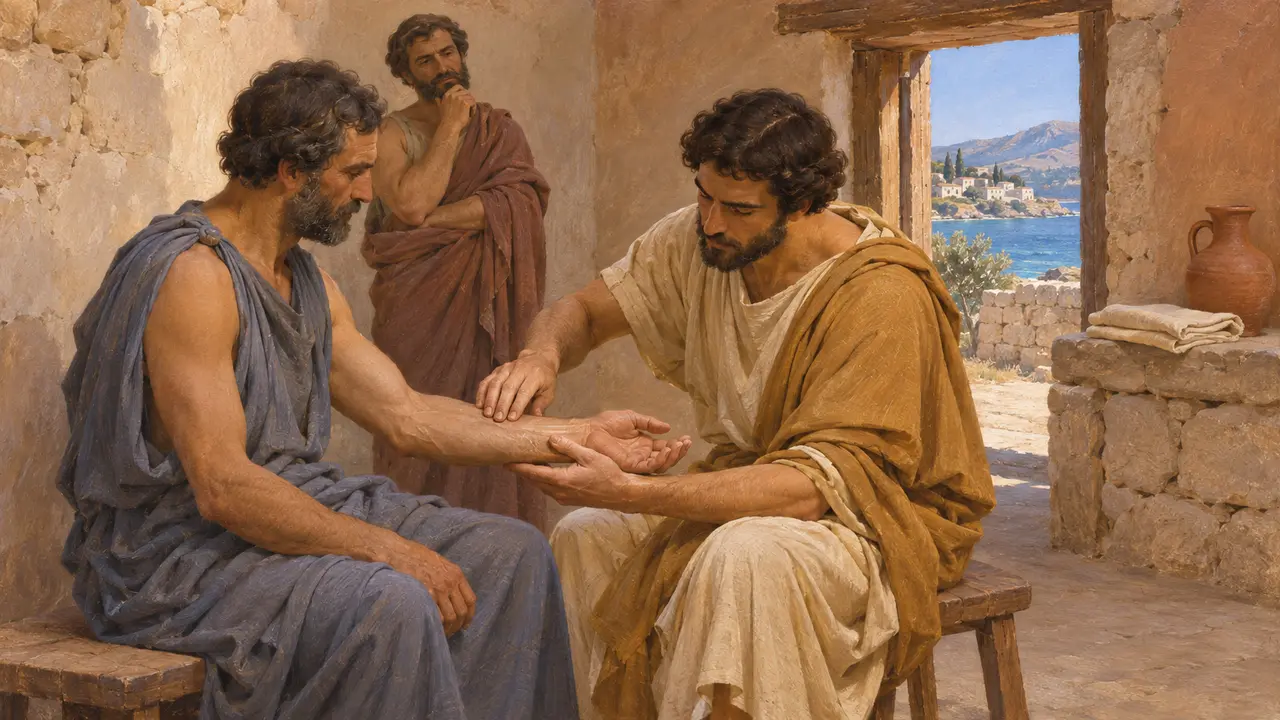
Ancient accountHerodotus says Democedes left Croton and settled in Aegina, where in his first year he outdid the established physicians even though he had no instruments. In the second year the Aeginetans hired him for a talent of public money, in the third the Athenians paid him 100 minas, and in the fourth Polycrates of Samos paid two talents. Herodotus adds that the doctors of Croton were then thought the best among the Greeks.
Herodotus 3.131
A Greek doctor at the Persian court
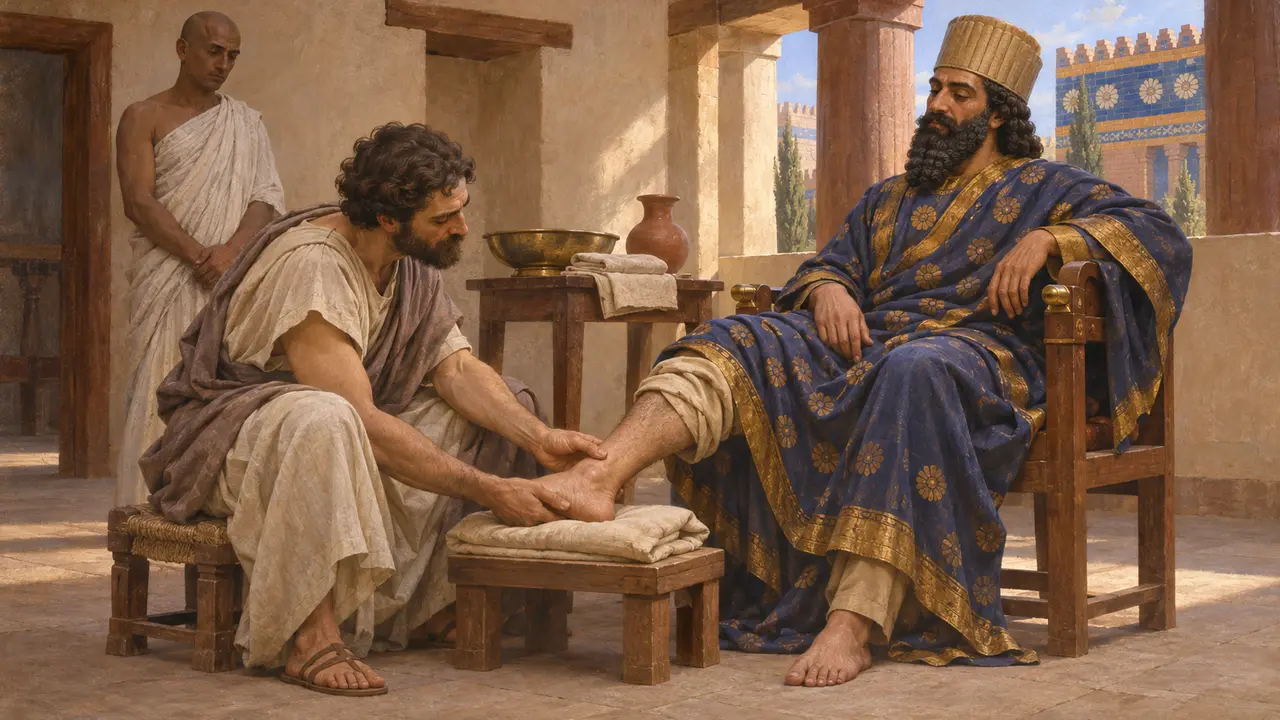
Ancient accountAfter the satrap Oroetes had Polycrates killed, about 522, Democedes was seized among his followers and later brought to Susa. Herodotus says Darius twisted his ankle leaping from his horse while hunting, his Egyptian doctors made it worse, and Democedes cured him with gentler Greek treatment. The King rewarded him richly. No Persian document mentions Democedes, so the story rests chiefly on Herodotus.
Herodotus 3.125; 3.129-132
The Idalion tablet
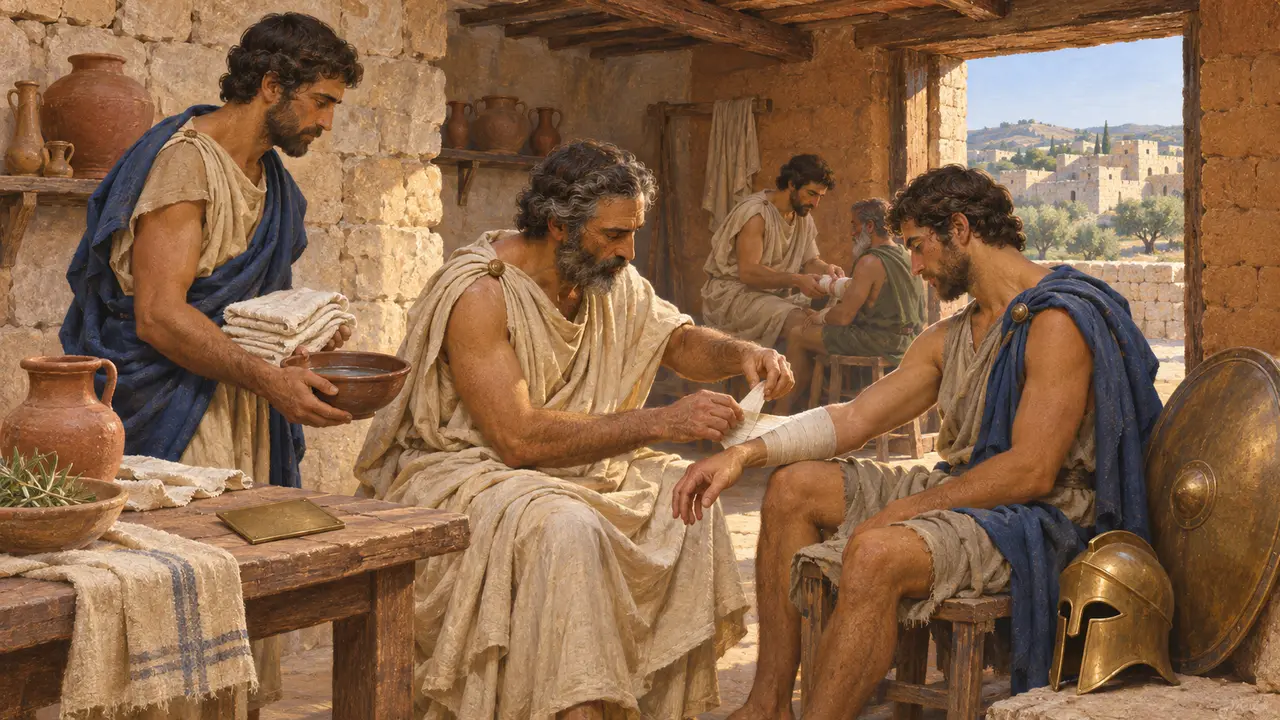
In the recordA bronze tablet from Idalion in Cyprus, written in the Cypriot syllabic script and probably dating to the first half of the 5th century, records a contract with a doctor. When the Medes, meaning the Persians, and the Kitians besieged the city, the king Stasikypros and the city engaged the physician Onasilos and his brothers to treat the wounded without charging them. Instead of the promised silver, the city granted them land.
Idalion bronze tablet (ICS 217)
What a public fee bought
DisputedHerodotus does not say what Aegina expected for its talent. L. Cohn-Haft argued that such fees paid a doctor to settle in a city and that he still charged his patients. Other historians think some citizens were treated free. Most evidence for public physicians comes from inscriptions of the 4th century and later, so how common the arrangement was around 500 is uncertain.
L. Cohn-Haft, The Public Physicians of Ancient Greece, 1956
Inside the surgery
Ancient accountThe Hippocratic treatise In the Surgery describes the physician's workroom: good light, ready instruments, and careful rules for bandaging and splinting. Other Hippocratic writings show doctors also visiting patients in their homes. These texts were probably written in the late 5th or 4th century, so they describe practice somewhat later than the game's levels.
Hippocratic Corpus, In the Surgery
Sources
- Herodotus 3.125-137
- O. Masson, Les inscriptions chypriotes syllabiques, 1961 (ICS 217)
- L. Cohn-Haft, The Public Physicians of Ancient Greece, 1956
- Hippocratic Corpus, In the Surgery
- V. Nutton, Ancient Medicine, 2004
- J. Jouanna, Hippocrates, 1999