Encyclopedia › Battles and events
Darius's Susa charter
Darius I's building inscription for his palace at Susa, probably late 6th century BCE
In the game: Level 5: The Charter
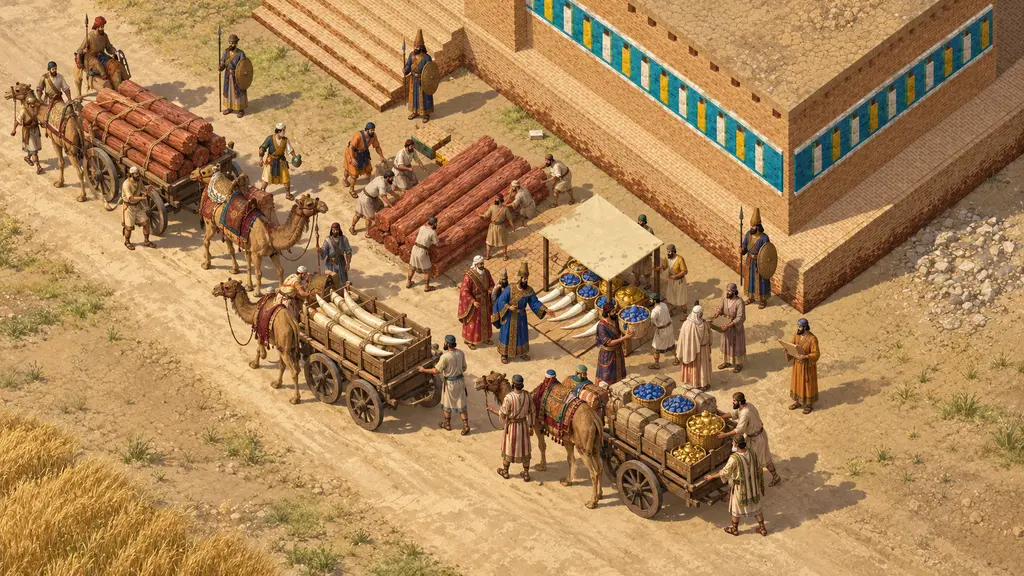
Darius's Susa charter (DSf) is a building inscription in Old Persian, Elamite and Babylonian that records how his palace at Susa was made. It names the lands that sent timber, gold, stone and ivory and the peoples who worked them. It is the fullest picture Darius left of the whole empire labouring on one royal project.
In the game: The game treats the charter as a decree of about 517 and builds the Susa level around the palace. In fact DSf is a building record, not an order, and its date is not known; 517 is an approximation.
Copies on clay, stone and glazed tile
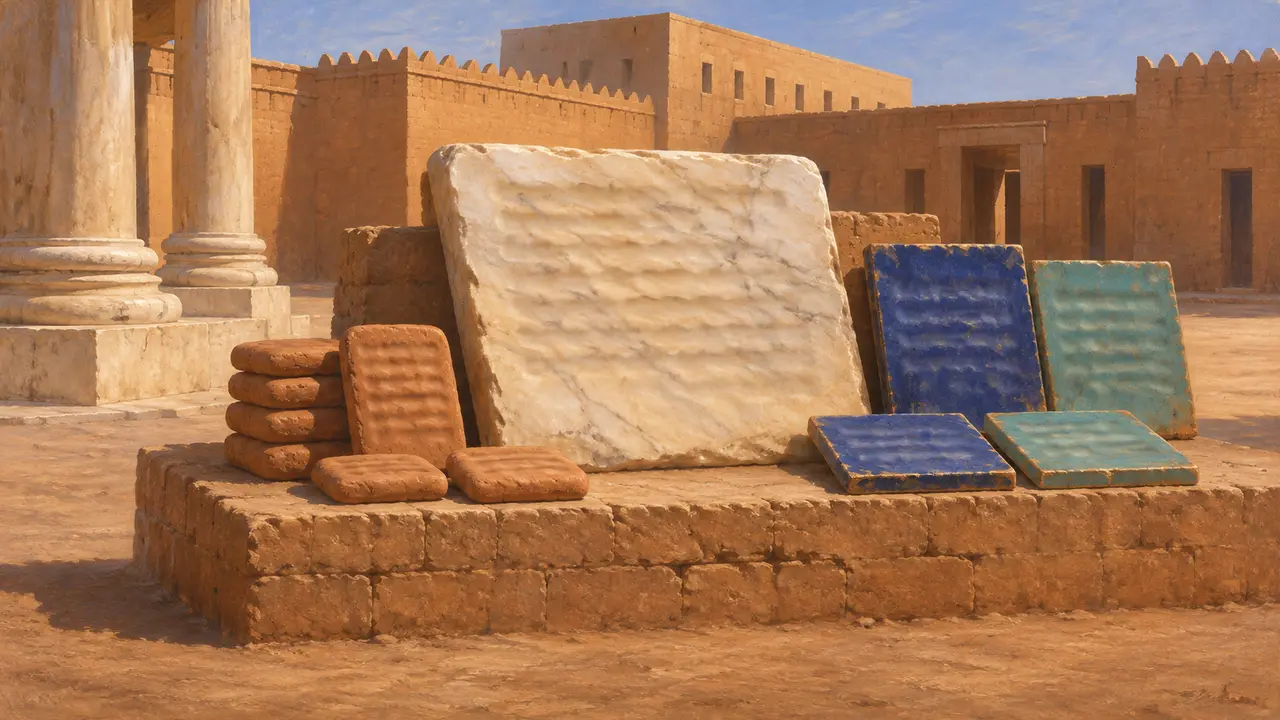
In the recordFrench excavators at Susa began recovering copies and fragments of the text in the late 1920s, and later digs added more. The copies were written on clay tablets, marble slabs and glazed tiles, in the three royal languages: Old Persian, Elamite and Babylonian. A closely related version, known as DSz, repeats much of the same content.
DSf; DSz; J. Perrot (ed.), The Palace of Darius at Susa, 2013
Digging down to rock
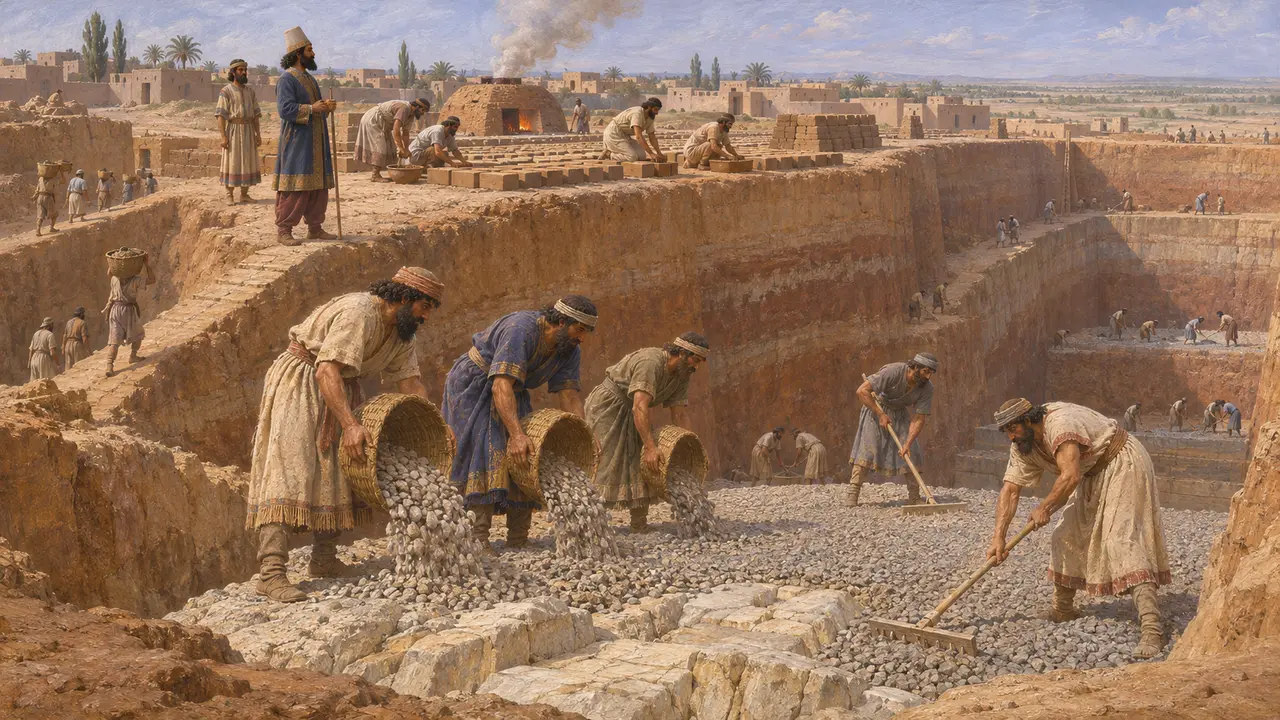
In the recordDarius says the earth was dug out until rock was reached. The pit was then filled with gravel, in some places 40 cubits deep and in others 20, and the palace was raised on it. Babylonians moulded and baked the bricks. The text also states that his father Hystaspes and grandfather Arsames were both living when Auramazda made him king.
DSf
Materials from the ends of the empire
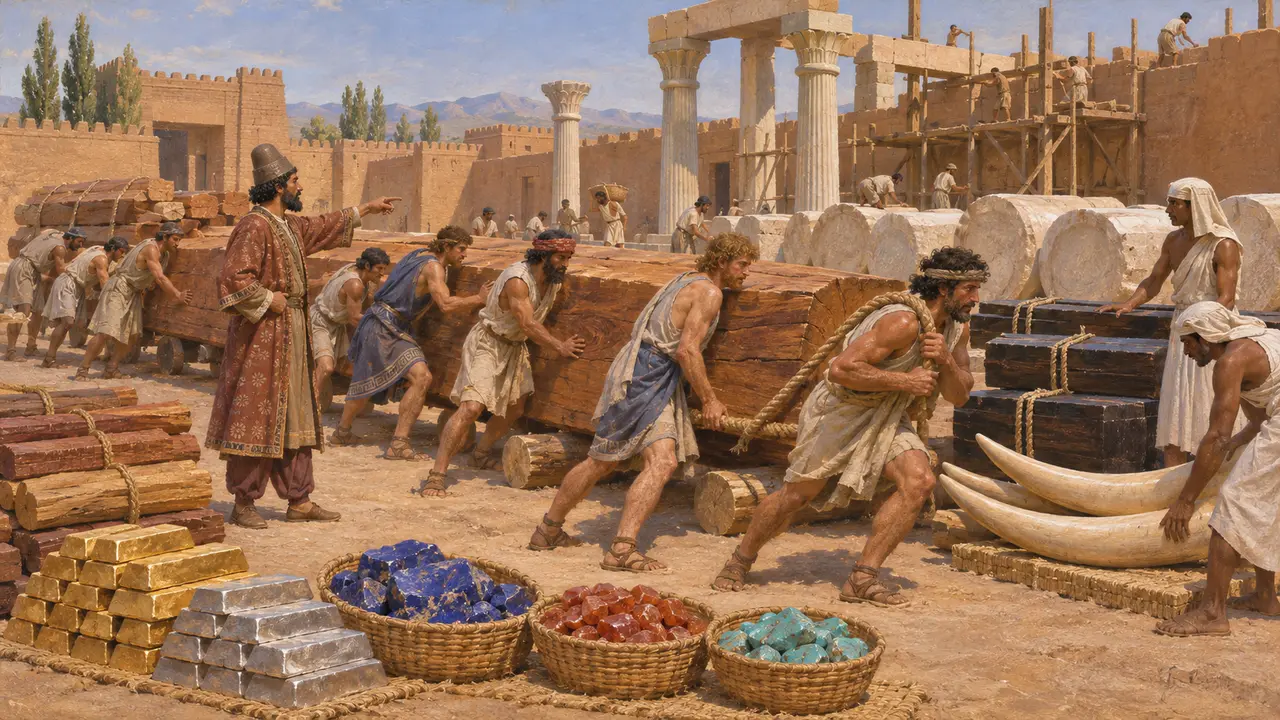
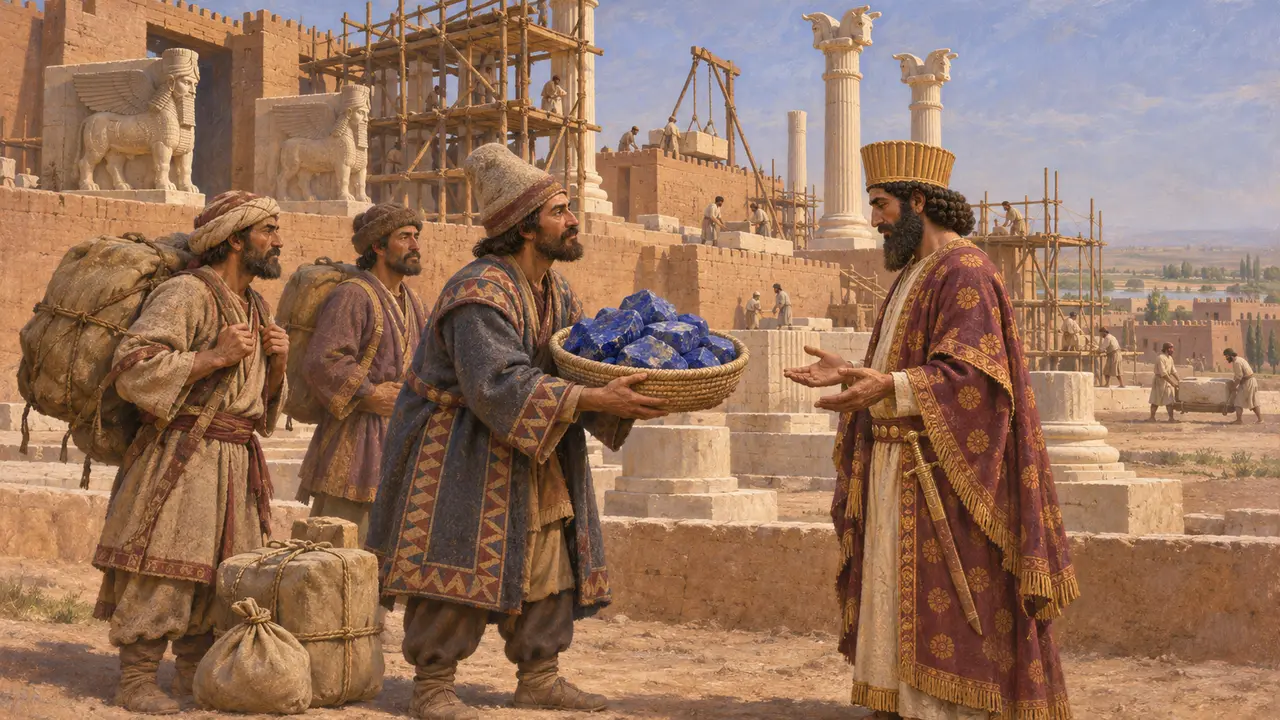
In the recordCedar came from the mountain called Lebanon: the Assyrians carried it to Babylon, and Carians and Ionians brought it on to Susa. Yaka wood came from Gandara and Carmania, gold from Sardis and Bactria, and lapis lazuli and carnelian from Sogdiana. Turquoise came from Chorasmia, silver and ebony from Egypt, and ivory from Kush, India and Arachosia. The stone columns were cut at a village called Abiradu in Elam.
DSf
The craftsmen who worked them
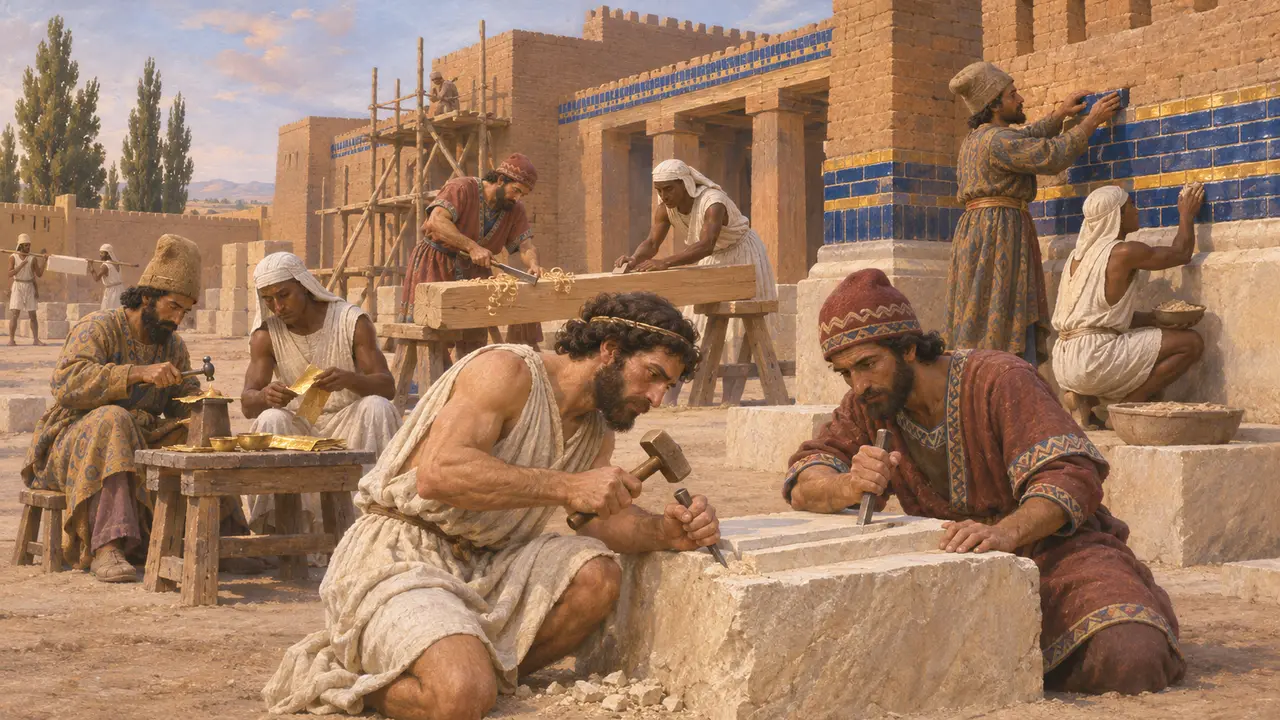
In the recordThe charter says the stonecutters were Ionians and Sardians. The goldsmiths were Medes and Egyptians, the woodworkers Sardians and Egyptians, and the men who decorated the walls Medes and Egyptians. The Persepolis Fortification tablets record rations for workers from many lands, including Egyptians, Ionians and Sardians, which shows that mixed work groups served on the King's projects in Persis too.
DSf; Persepolis Fortification tablets
Date and purpose
DisputedThe charter carries no date: some historians tie the building to the years just after the Elamite revolts of 522-519, while others place it later in the reign. Scholars also debate how literal the list is, since it may reflect real supply routes but is arranged, like the lists of lands at Behistun and Naqsh-e Rostam, to show every corner of the empire serving the King. The lapis, for instance, was probably mined in Badakhshan and may have reached Susa by way of Sogdiana.
P. Briant, From Cyrus to Alexander, 2002; A. Kuhrt, The Persian Empire, 2007
Sources
- DSf
- A. Kuhrt, The Persian Empire: A Corpus of Sources from the Achaemenid Period, 2007
- R. G. Kent, Old Persian: Grammar, Texts, Lexicon, 1953
- J. Perrot (ed.), The Palace of Darius at Susa, 2013
- P. Briant, From Cyrus to Alexander, 2002
- P. Lecoq, Les inscriptions de la Perse achéménide, 1997