The Indians
Peoples of Hindush, the Indus lands of the Persian empire, after about 520 BCE
In the game: Level 5: The Charter
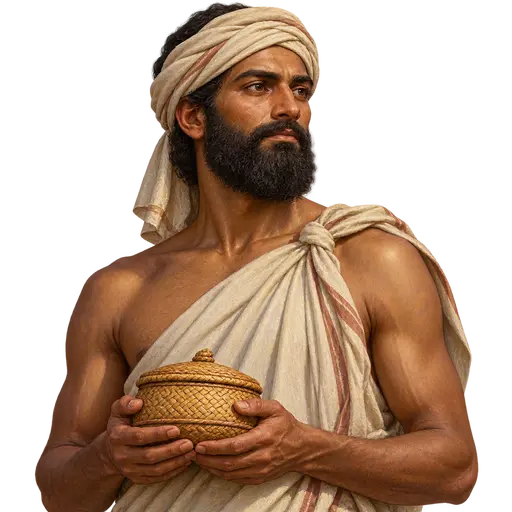
The Persians called the lands along the Indus river Hindush, and its people the Indians. Darius probably brought the region into the empire some years after 520, and it became the empire's south-eastern edge. Indians sent gold, ivory and soldiers to the King, and Greek writers knew them as a distant people around whom marvels gathered.
In the game: The game treats the Indians as a trade partner and includes Indian archers in the King's army. The archers match Herodotus, but after Darius's conquest Hindush was a subject land paying tribute, not an outside partner, so this is a simplification.
Hindush in the royal inscriptions
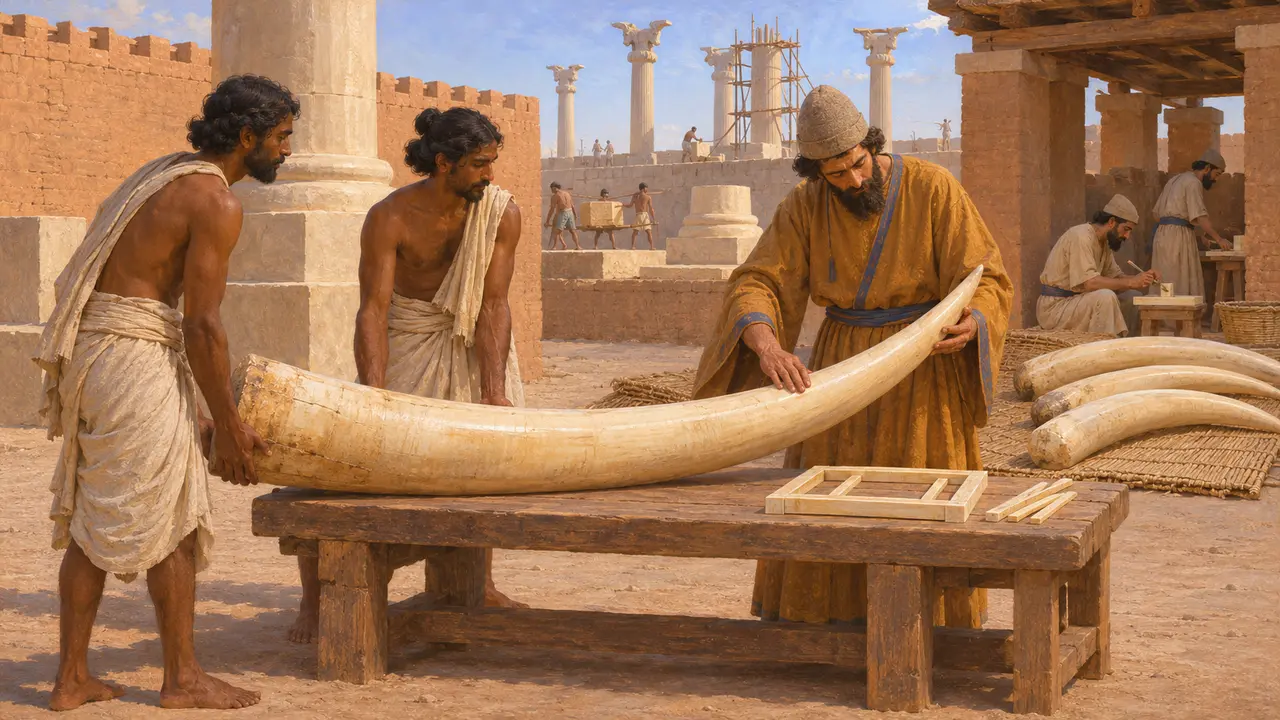
In the recordHindush is the Old Persian form of the river name the Indians called Sindhu. It is missing from the list of lands at Behistun, carved about 520, but appears among the King's lands in later texts such as Darius's tomb inscription DNa and Xerxes' XPh. In his Susa building charter DSf, Darius says that the ivory worked in the palace came from Kush, Hindush and Arachosia.
DB §6; DNa; DSf; XPh
Envoys on the stairways and the tomb
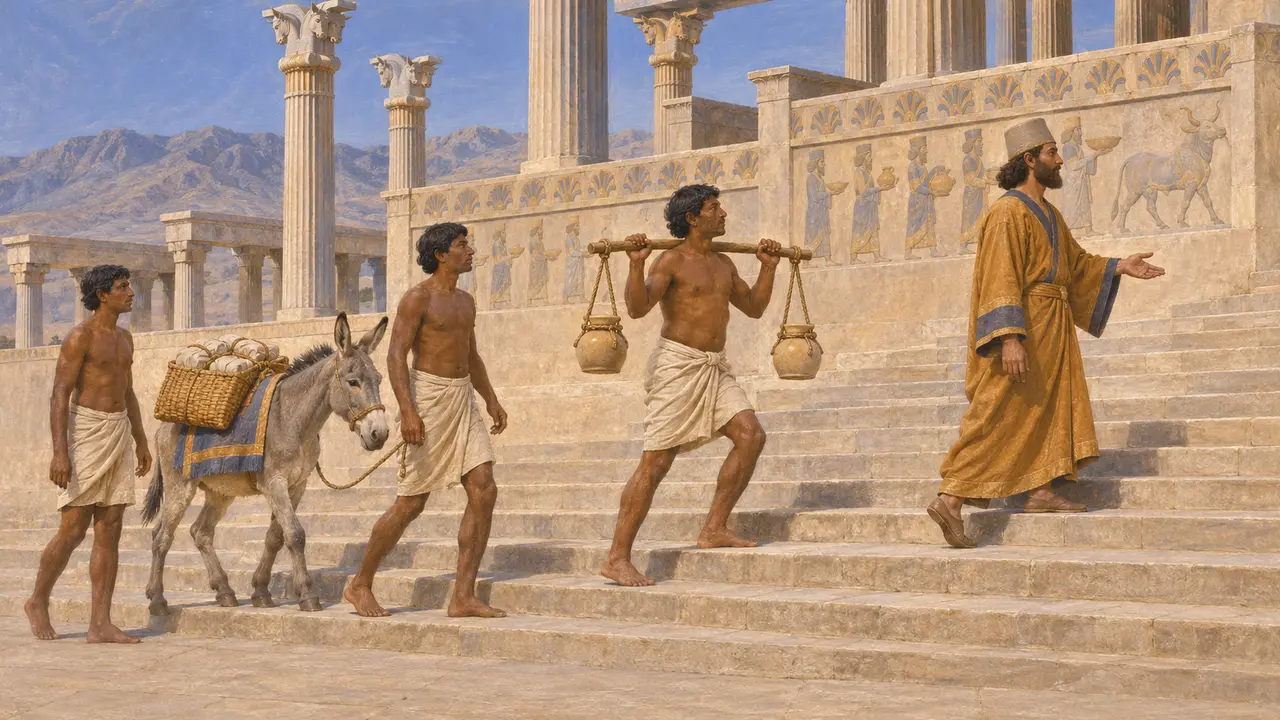
In the recordOn the Apadana stairways at Persepolis, a delegation usually identified as Indians walks lightly dressed, carrying jars on a yoke, probably filled with gold dust, and leading a donkey. An Indian also appears among the labelled throne-bearers on Darius's tomb at Naqsh-e Rostam. The Persepolis Fortification tablets record rations for parties travelling on the roads between India and the Persian heartland.
Apadana reliefs, Persepolis; DNe; Persepolis Fortification tablets
Gold dust and cane bows in Herodotus
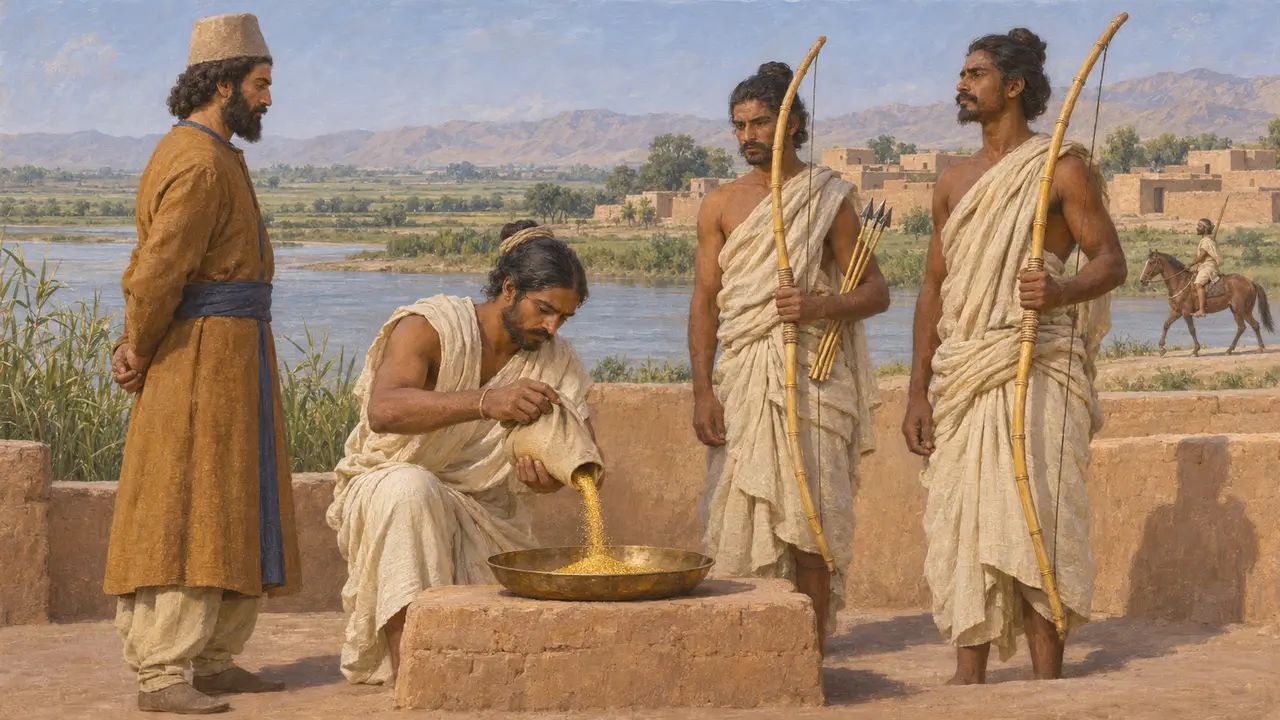
Ancient accountHerodotus calls the Indians the most numerous people he knew and says they paid 360 talents of gold dust a year, more than any other province. He says Darius sent Scylax of Caryanda down the Indus and then conquered the Indians. In Xerxes' army of 480 he describes Indians in cotton clothing with cane bows and iron-tipped cane arrows, as well as Indian horsemen and chariots.
Herodotus 3.94; Herodotus 4.44; Herodotus 7.65; Herodotus 7.86
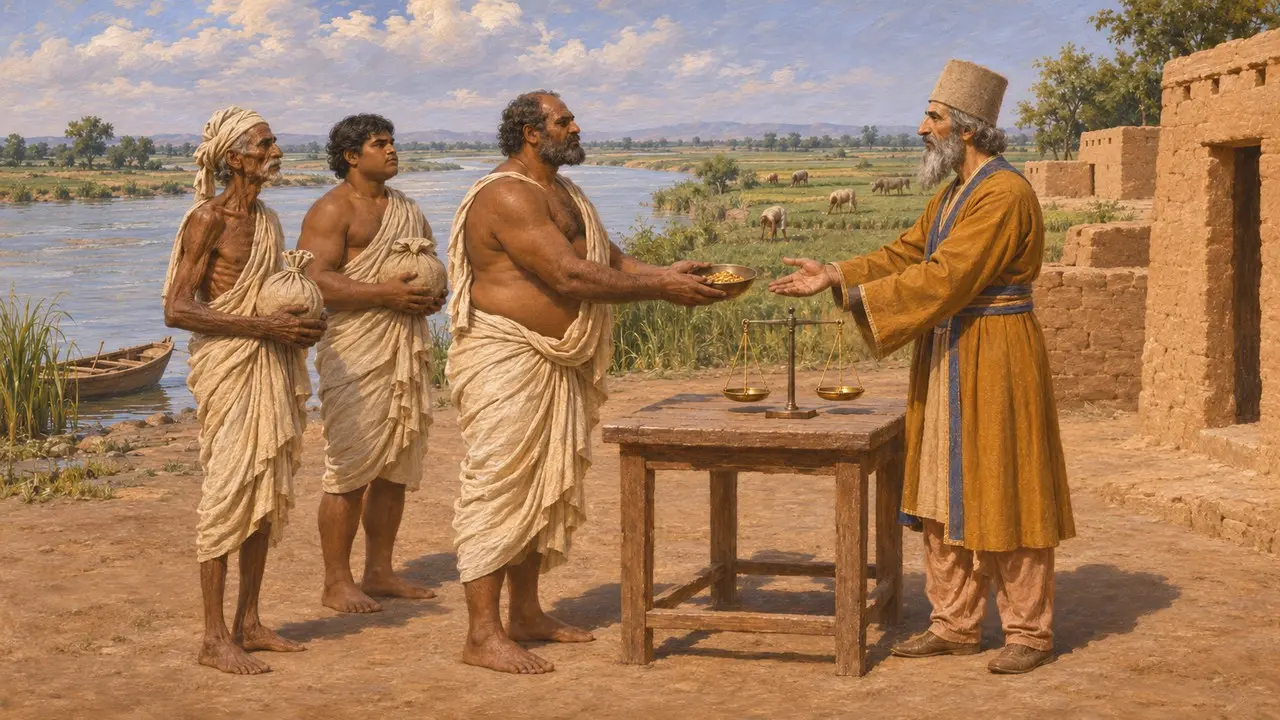
Where Hindush lay and what it paid
DisputedHistorians place Hindush along the Indus, in the lower valley or the Punjab, separate from the provinces of Gandara and Thatagush, but its limits are argued over. Its absence from Behistun suggests conquest by Darius after about 520, though the exact date is unknown. Many doubt Herodotus's gold figure, which he converts into more silver than any other province paid, and think it inflated or garbled.
P. Briant, From Cyrus to Alexander, 2002; Herodotus 3.95
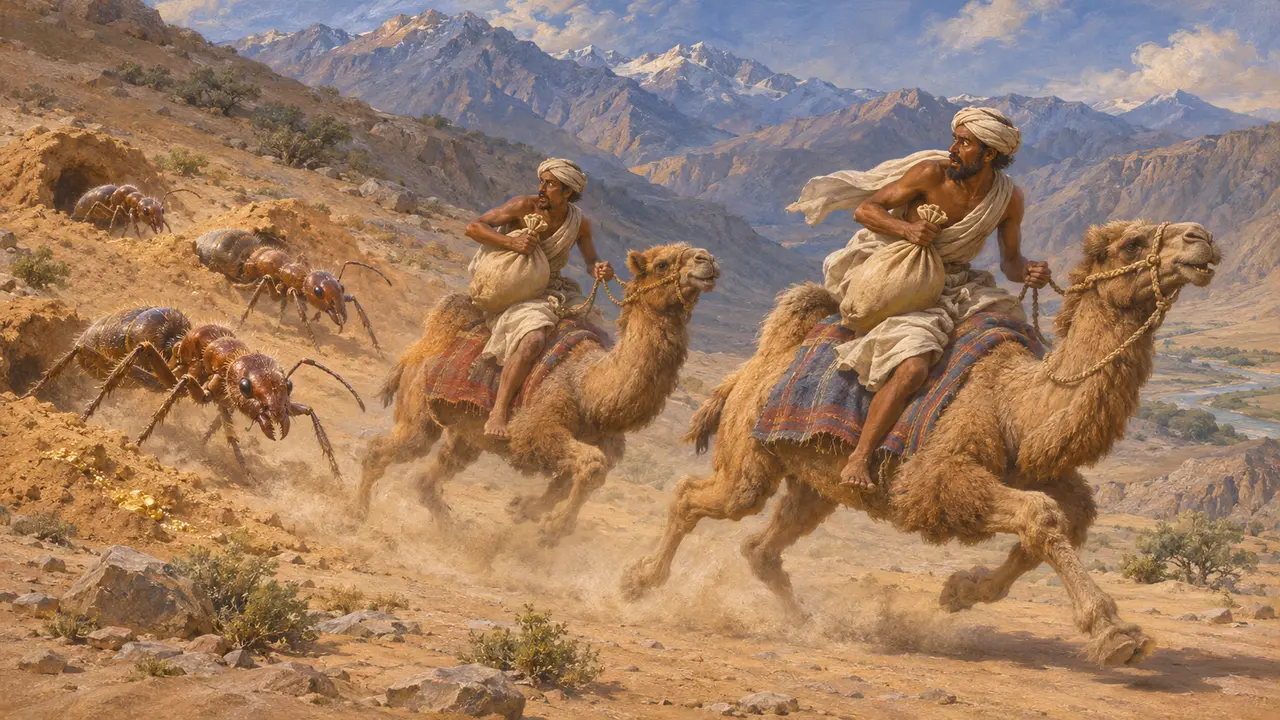
The gold-digging ants
Later legendHerodotus repeats a tale, which he says he had from the Persians, that Indians of the north gathered gold from sand dug up by ants smaller than dogs but larger than foxes, and then fled from them on fast camels. Later Greek writers such as Ctesias added further Indian marvels. Some modern scholars link the story to burrowing marmots in the mountains, but this remains guesswork.
Herodotus 3.102-105; Ctesias, Indica
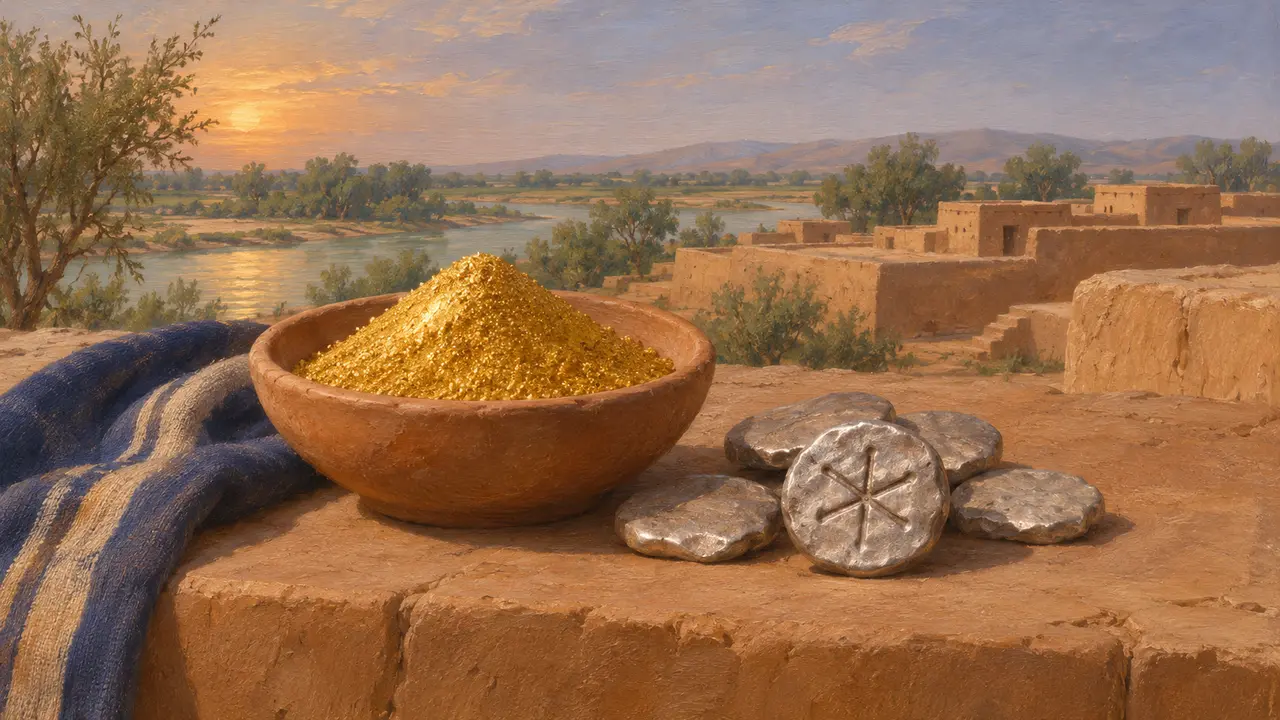
The emblem beside its name
DisputedIndia's emblem in the game is a six-armed sun from the earliest punch-marked silver coins of the subcontinent. Those coins are slightly later than the reign of Darius, so the emblem is an anachronism by a few decades, chosen as the earliest sign of the land. Herodotus says the Indians paid the largest tribute, in gold dust.
J. Cribb, Investigating the Introduction of Coinage in India, 1985; Herodotus 3.94
Sources
- Herodotus, Histories 3.94-105, 4.44, 7.65, 7.86
- Royal inscriptions DB, DNa, DNe, DSf and XPh
- P. Briant, From Cyrus to Alexander, 2002
- A. Kuhrt, The Persian Empire: A Corpus of Sources, 2007
- M. C. Root, The King and Kingship in Achaemenid Art, 1979