Encyclopedia › Wildlife and weather
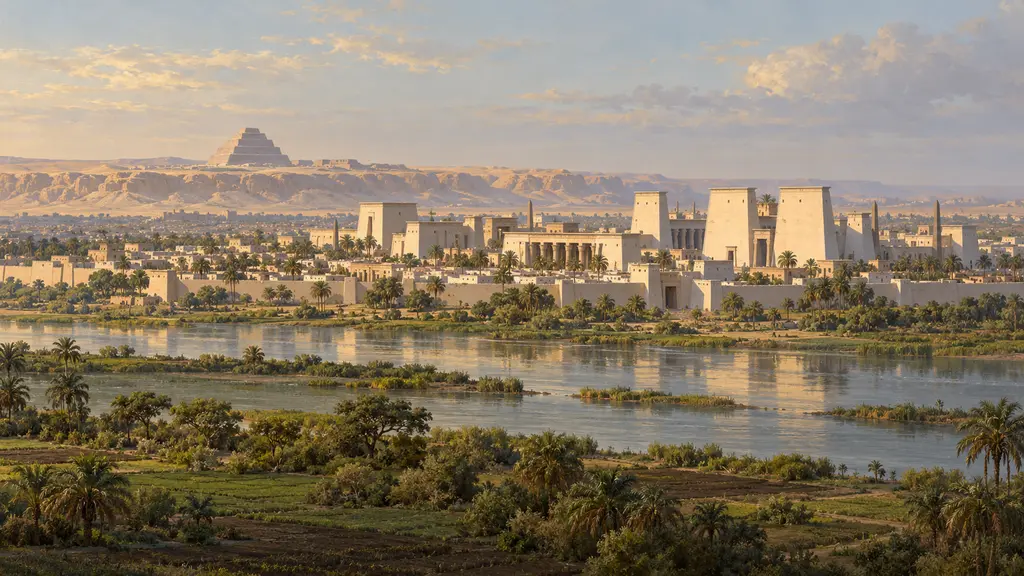
The hippopotamus
River animal of the Nile in Egypt under Persian rule, 6th-5th centuries BCE
In the game: Level 2: The Spear-bearer
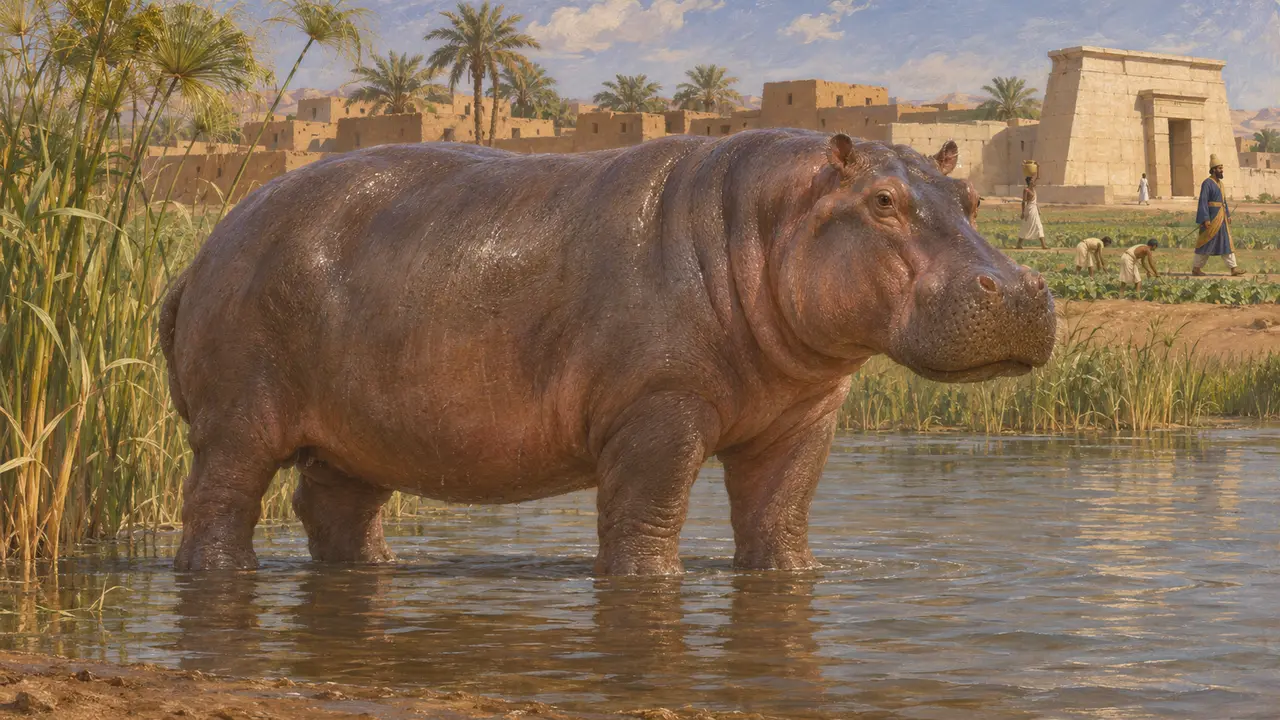
The hippopotamus lived in the Nile when Cambyses and Darius ruled Egypt, and Herodotus gave it a short description in his Egyptian book. It was a familiar animal in Egyptian art and religion, and a large and dangerous one. In the Memphis level it appears as river scenery.
In the game: The game draws the hippopotamus in the river at Memphis, as wildlife on land the town has not taken. It is scenery only and no rule reads it. Crocodiles keep to the bank and hippos to the water.
Herodotus on the river horse
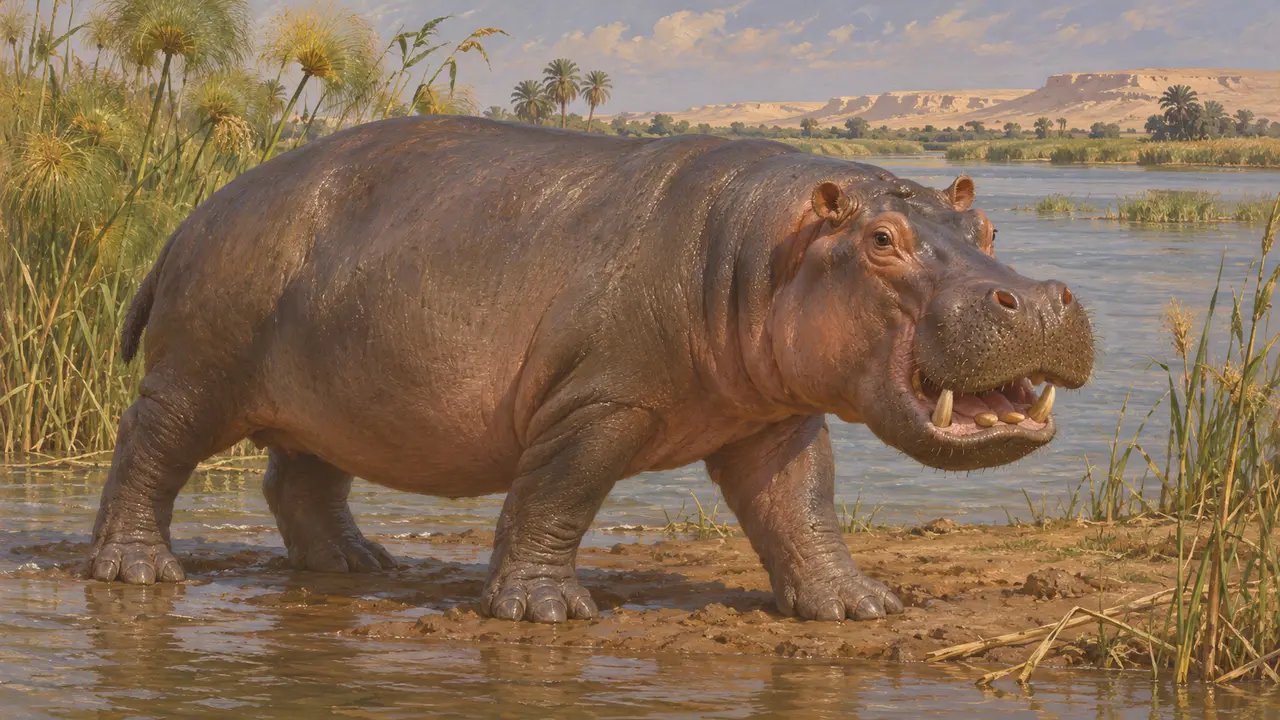
Ancient accountHerodotus describes the hippopotamus in his Egyptian book. He says it was sacred in the district of Papremis but not elsewhere in Egypt. He gives it cloven hooves, a horse's mane and tail, and large tusks, and he calls it the river horse, as its Greek name means. Some of these details are wrong, since its feet are not cloven in the way he says and it has no true mane, so his account is better read as report than as close observation.
Herodotus 2.71
The hippopotamus in Egyptian life
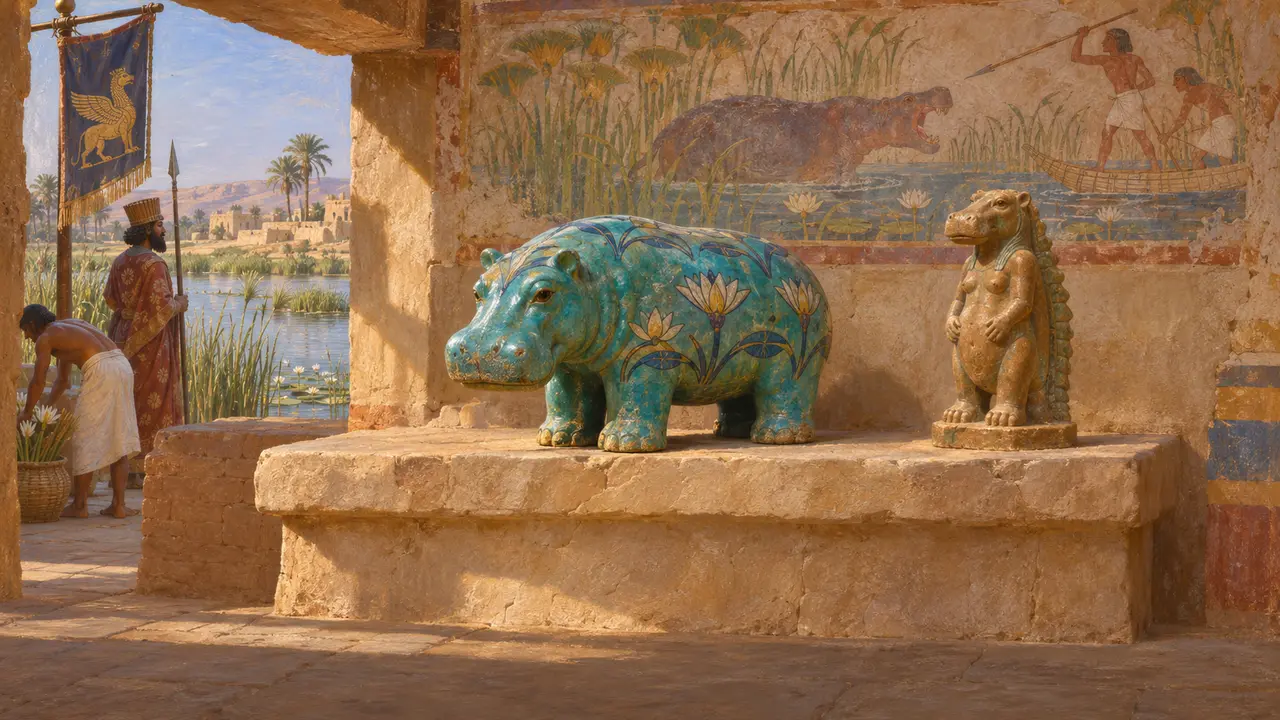
In the recordEgyptian art showed the hippopotamus for thousands of years, in marsh hunting scenes and in faience figures placed in tombs. It was both feared and revered, and the goddess Taweret, shown with a hippopotamus body, protected women in childbirth. These images come from Egyptian monuments and objects of many periods, not from the Persian period alone, but they show the animal's lasting place in the culture the Persians ruled.
Egyptian monuments and tomb objects of many periods, without a single citation
A shrinking range
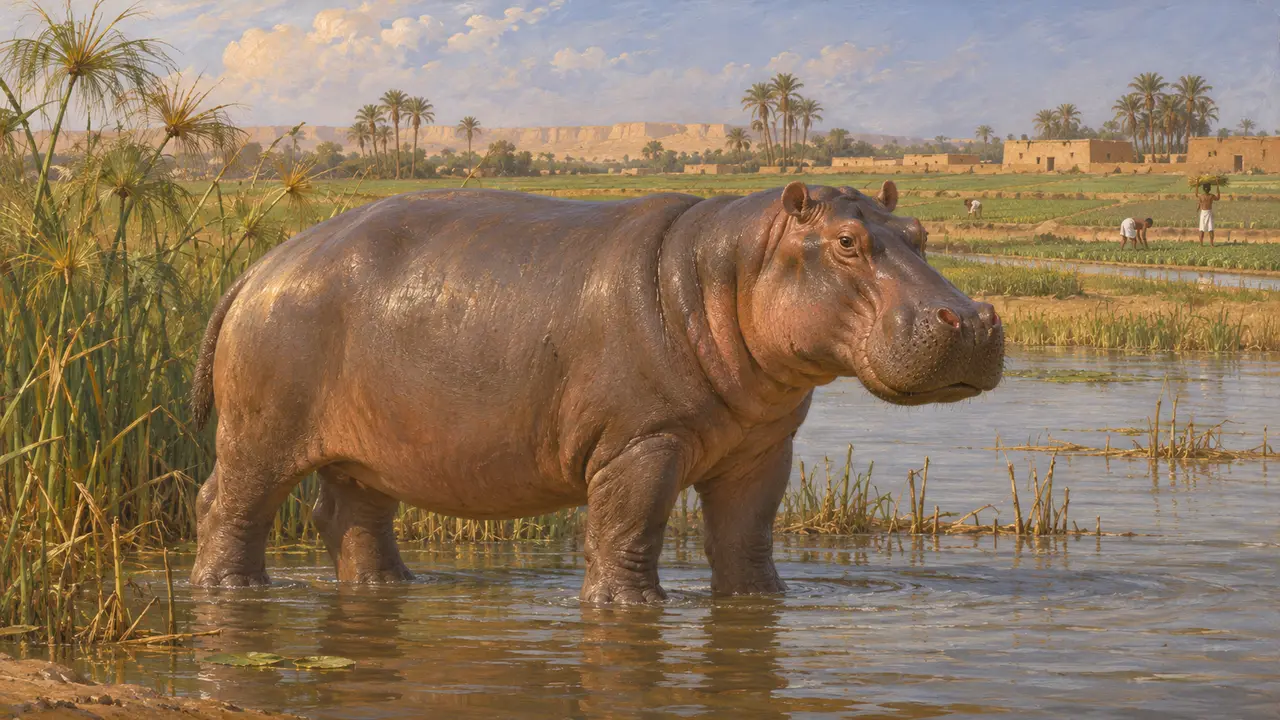
DisputedHippopotamuses lived in the Egyptian Nile in antiquity and later disappeared from Lower Egypt. Historians and zoologists do not agree on when, since hunting, drainage and farming all played a part, and texts and images do not always show living animals. Herodotus's description may mean that the animal was still known in his day, but he does not say how common it was.
Herodotus 2.71; modern studies of Egyptian fauna, without a single citation
The Persians in Egypt
In the recordCambyses conquered Egypt in 525, and Egypt became a Persian satrapy. The statue of Udjahorresnet and the Apis stelae show that Egyptian priests, officials and cults continued under Persian rule. No Persian source discusses the hippopotamus itself.
Statue of Udjahorresnet; Apis stelae of the Serapeum
Sources
- Herodotus 2.71
- Herodotus 2.68-70
- P. Briant, From Cyrus to Alexander, 2002
- Statue of Udjahorresnet
- Apis stelae of the Serapeum