Encyclopedia › Soldiers and ships
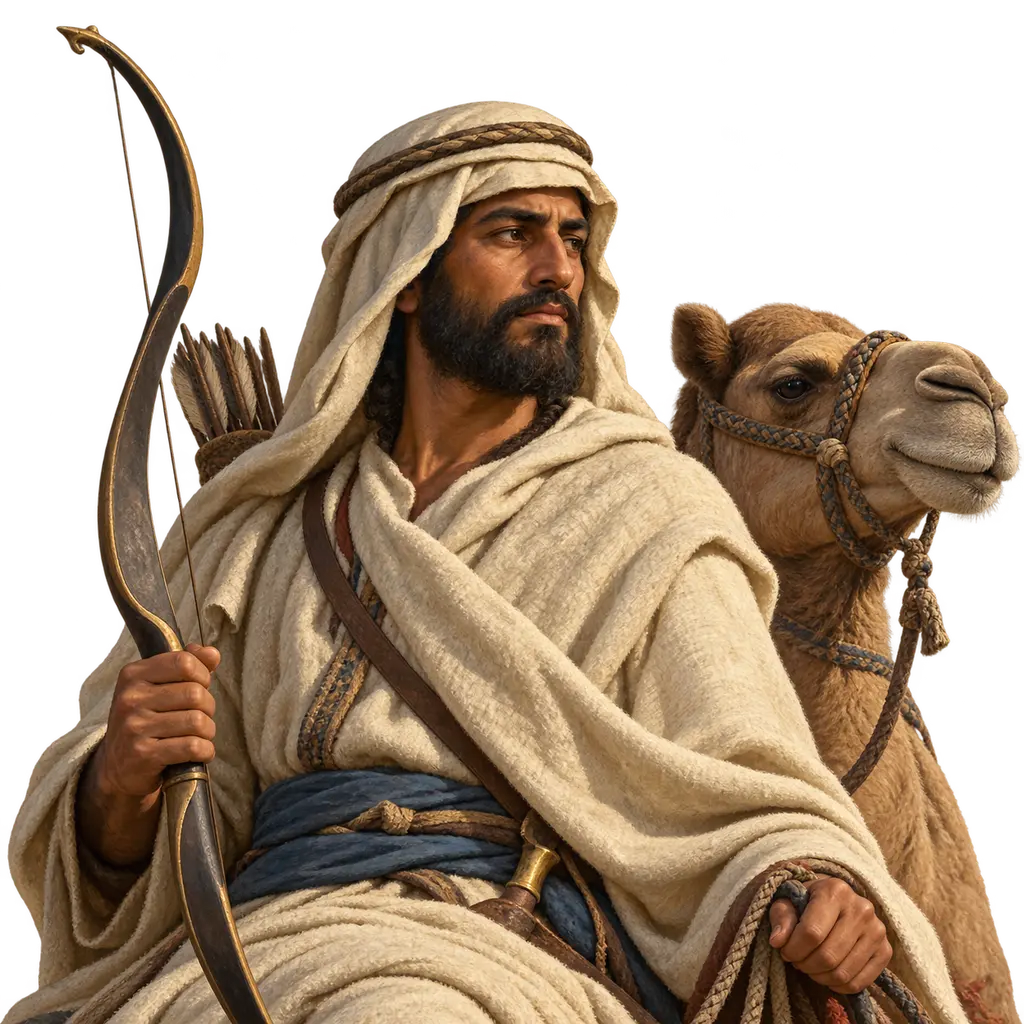
Arab Camel Rider
Arab archers mounted on camels in the Persian King's army, about 525-479 BCE
In the game: Level 2: The Spear-bearer
Arab peoples of the desert edge between Egypt, Syria and Mesopotamia helped the Persian kings and, in 480, served Xerxes as camel-mounted archers. Herodotus describes them in Xerxes' army. He also tells a separate story of camels, ridden by Cyrus's own men, frightening the Lydian horses at Sardis. Together these explain why camels had a place in Persian warfare.
In the game: In the game horses will not face him and he shoots riders down, but spearmen in the open drive him off. The idea comes from Herodotus's Sardis story. Herodotus also has Xerxes keep the camels at the rear, and no source shows them fighting in Greece.
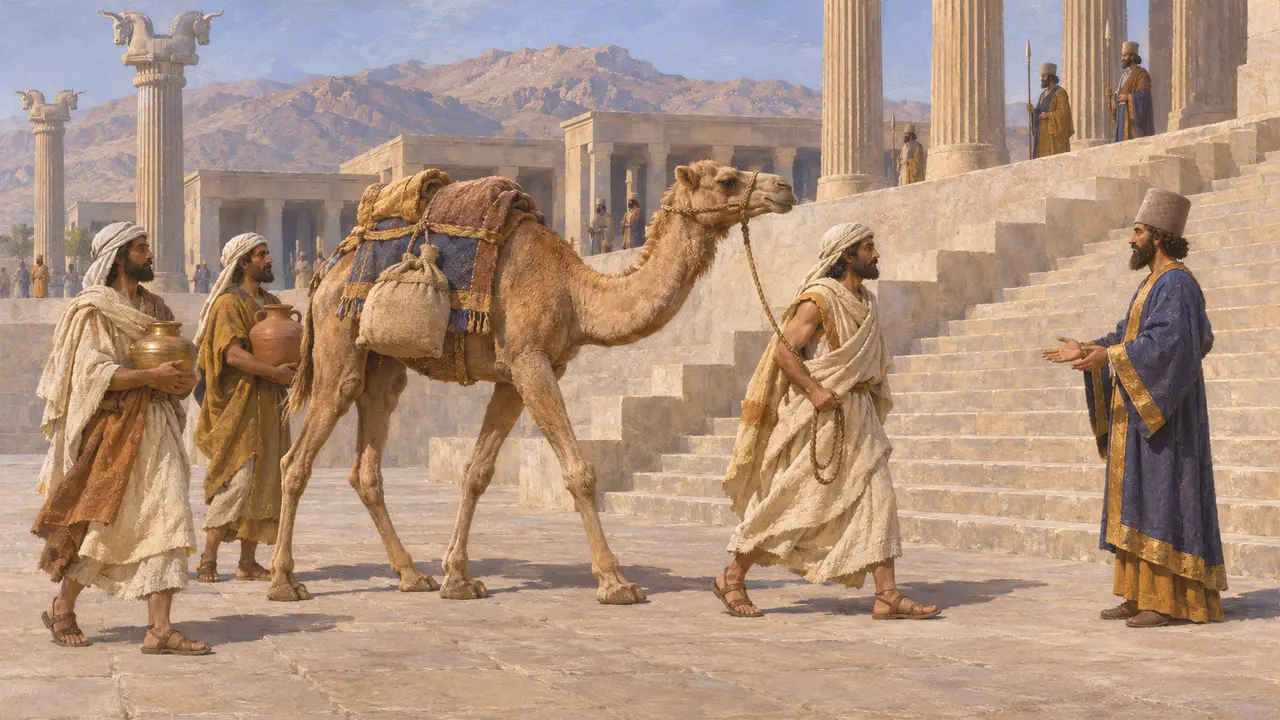
Arabs among the King's lands
In the recordDarius's inscription at Behistun names Arabia among the lands that came to him, and later royal lists such as the one at his tomb repeat the name. On the stairways of the Apadana at Persepolis, one delegation of gift-bearers leads a dromedary, and it is usually identified as Arab. The Persian record therefore counts Arabs as one of the peoples of the empire.
DB §6; DNa; Apadana reliefs, Persepolis
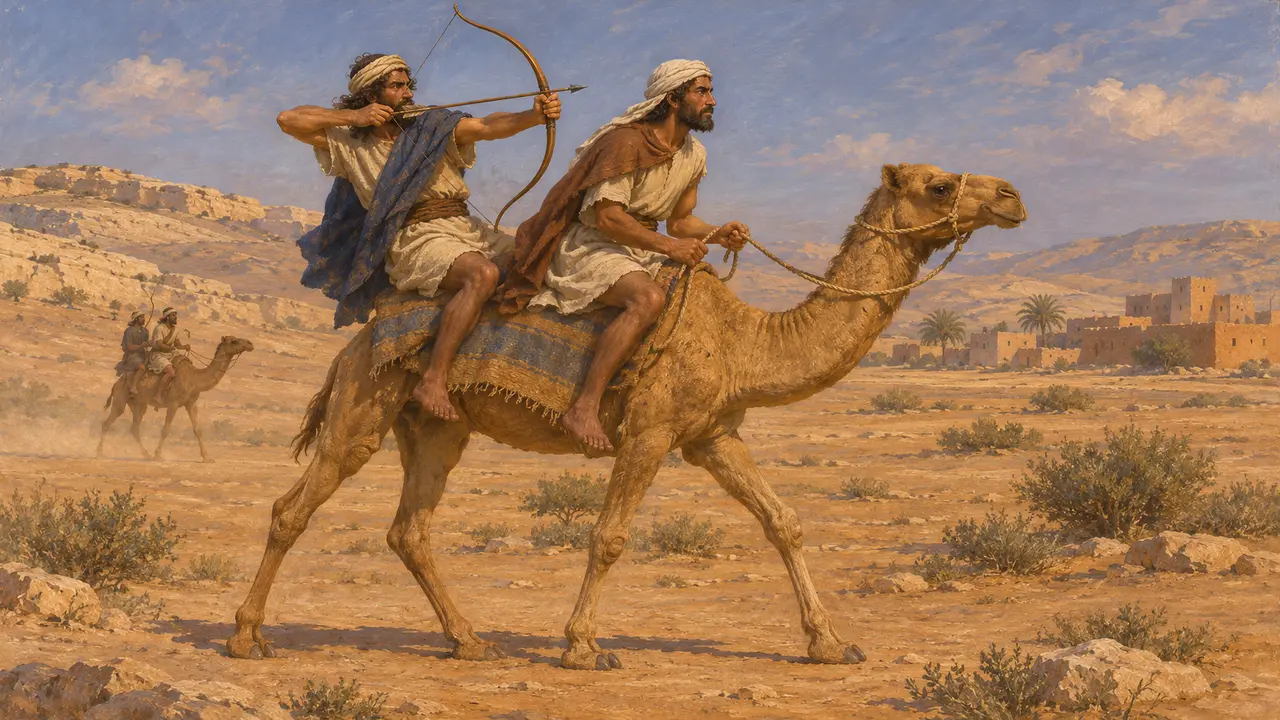
Camel archers before the Persians
In the recordArab camel warriors were known long before Cyrus. Assyrian palace reliefs from Nineveh show Ashurbanipal's wars against Arab tribes in the 600s. In them, each camel carries two men, one guiding the animal and one shooting a bow. Assyrian records also name Arab queens and chiefs who paid tribute in camels and spices.
I. Eph'al, The Ancient Arabs, 1982
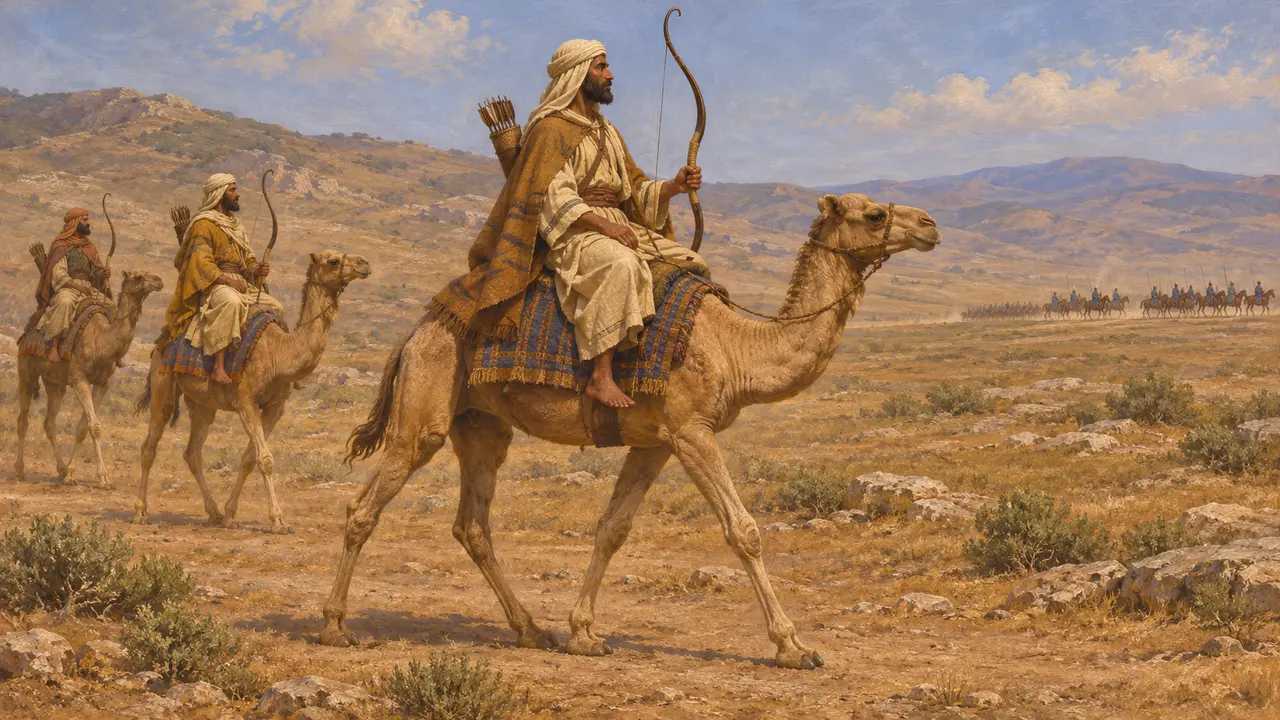
Herodotus on the Arabians of Xerxes
Ancient accountHerodotus says the Arabians in Xerxes' army wore long belted cloaks and carried long bows that curved backward. Arsames, a son of Darius, commanded them. He adds that they rode camels no slower than horses, and that they were posted at the rear so the horses would not take fright. He puts the Arabian camel riders and Libyan charioteers together at 20,000, within an army total that historians regard as greatly exaggerated.
Herodotus 7.69, 7.86-87, 7.184
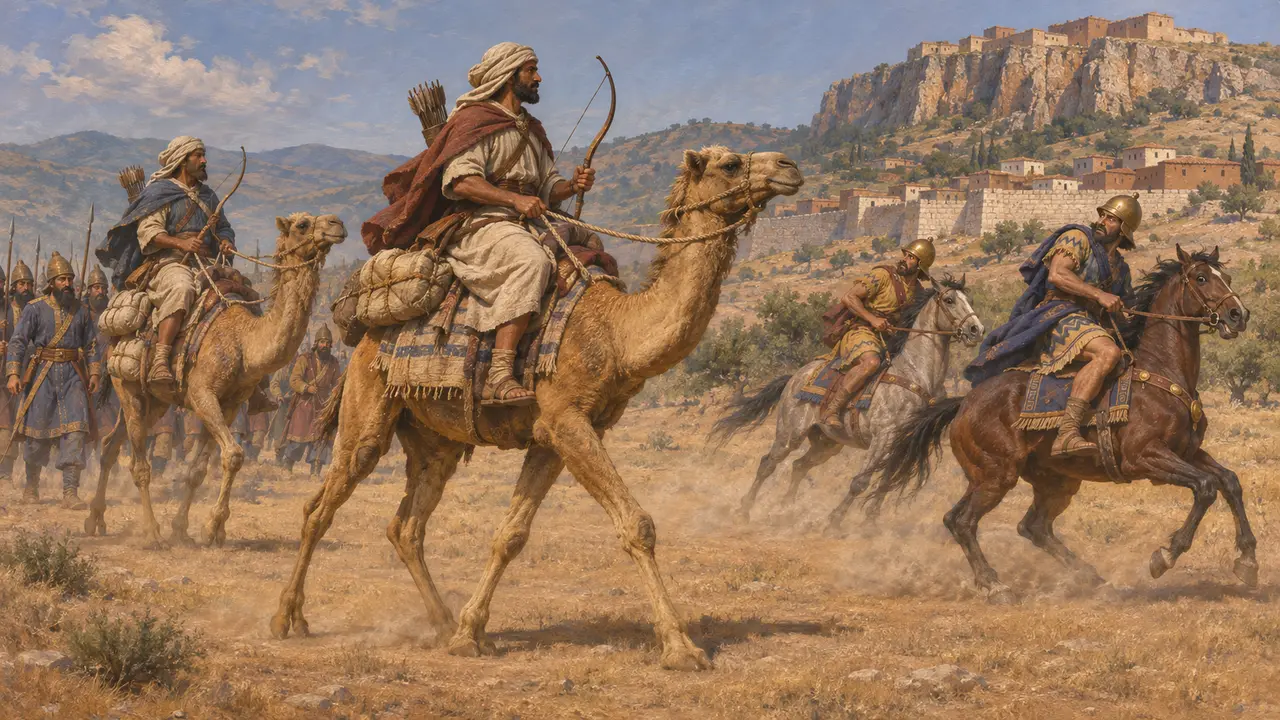
Camels against horses at Sardis
DisputedHerodotus tells how Harpagus advised Cyrus to mount men on the baggage camels and send them against Croesus's cavalry outside Sardis. The Lydian horses could not bear the sight and smell of camels and turned away. Xenophon's romance of Cyrus uses a similar camel tactic but places it in an earlier battle. Historians accept that horses unused to camels can shy, but doubt that the trick alone decided the battle.
Herodotus 1.80; Xenophon, Cyropaedia 7.1
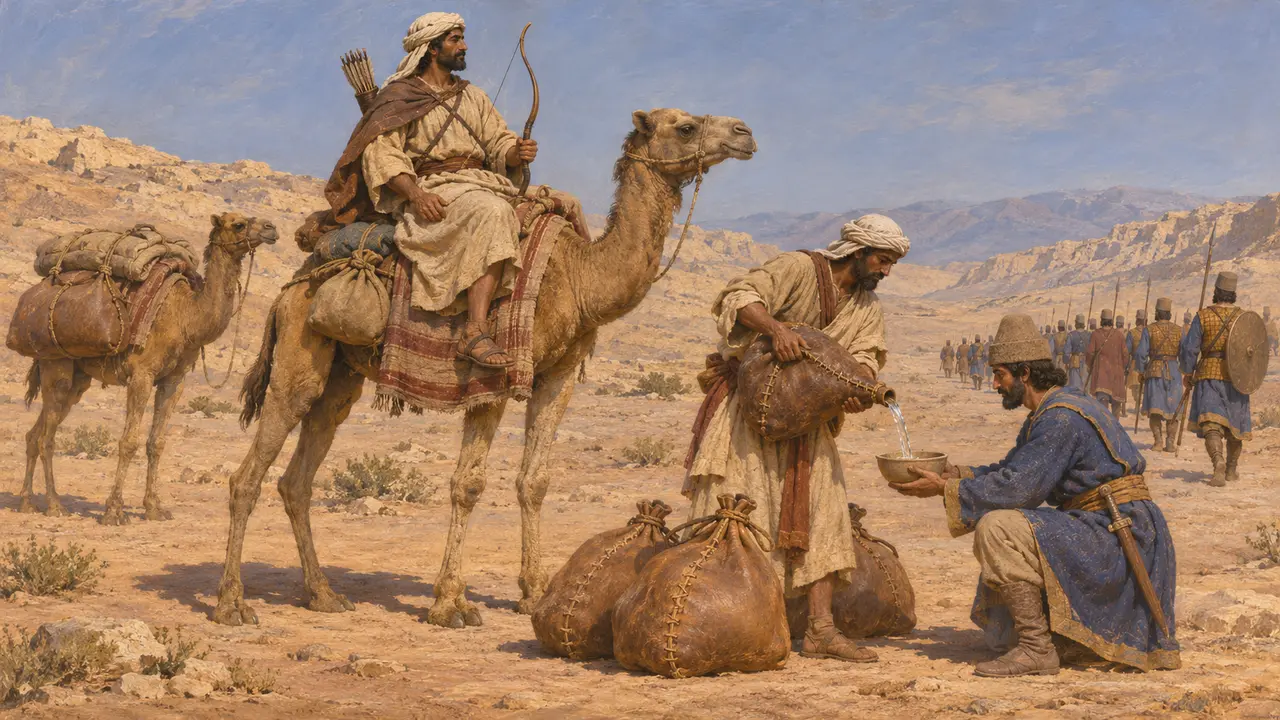
Friends rather than tribute payers
Ancient accountHerodotus says the Arabians were never reduced to subjects. He reports that an Arab king pledged safe passage to Cambyses' army on its march to Egypt in 525 and set out water in camel skins across the desert. He also says the Arabians sent the King a yearly gift of frankincense instead of tribute. Modern historians think this applied to some Arab groups, while others lived inside the satrapies.
Herodotus 3.4-9, 3.88, 3.97; P. Briant, From Cyrus to Alexander, 2002
Sources
- Herodotus 1.80, 3.4-9, 3.88, 3.97, 7.69, 7.86-87, 7.184
- DB §6; DNa
- I. Eph'al, The Ancient Arabs, 1982
- P. Briant, From Cyrus to Alexander, 2002
- R. Bulliet, The Camel and the Wheel, 1975
- Xenophon, Cyropaedia 7.1