Encyclopedia › Soldiers and ships
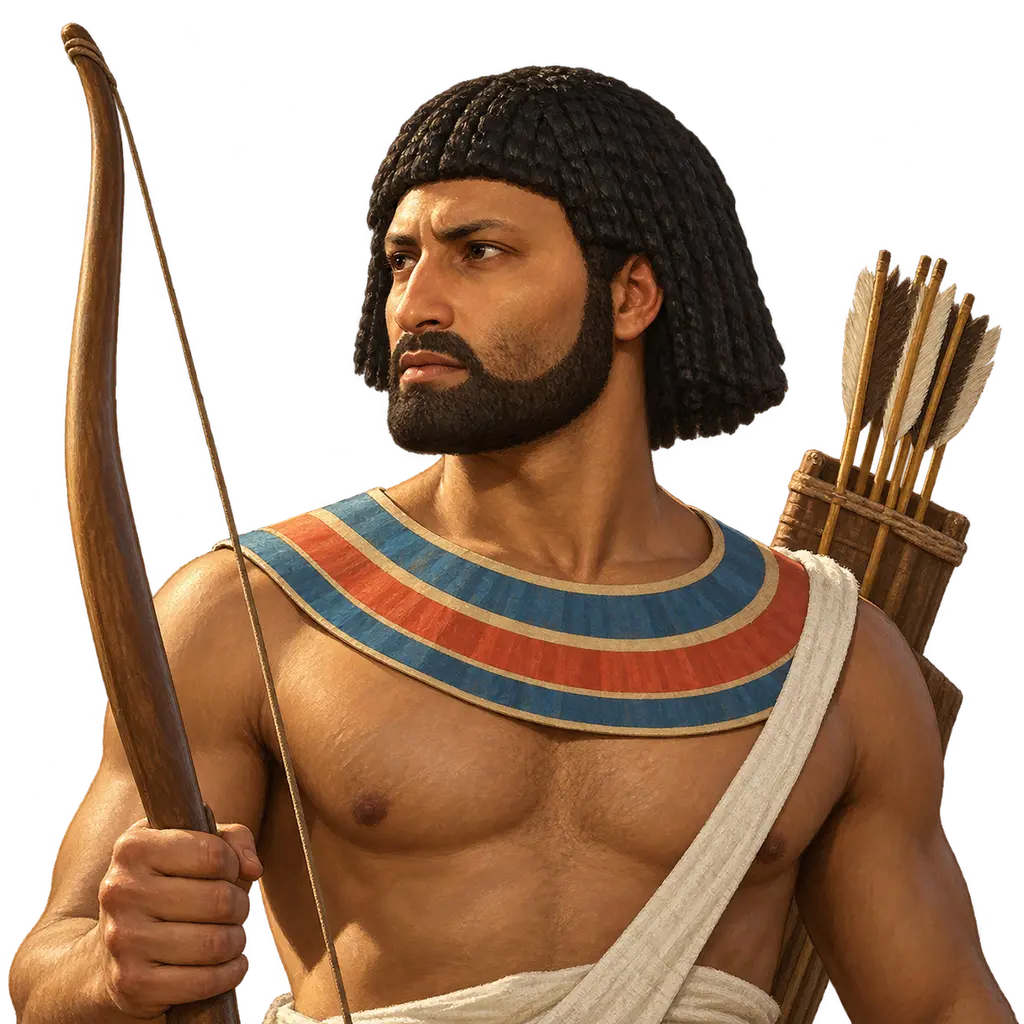
Egyptian soldiers
Native fighting men of Saite Egypt, defeated by Cambyses at Pelusium in 525 BCE
In the game: Level 2: The Spear-bearer
Egyptian soldiers defended the kingdom of the 26th (Saite) dynasty when Cambyses invaded in 525. Native warriors, whom Greek writers called machimoi, fought beside Greek and Carian mercenaries. After their defeat at Pelusium and the fall of Memphis, Egypt became a Persian satrapy, and Egyptians went on to serve in the King's garrisons and fleets.
In the game: In Memphis they appear as archers, bowmen, spearmen and levies behind tall hide shields, with a captain and 'Psamtik's Champion'. No such champion of Psamtik is known from the sources.
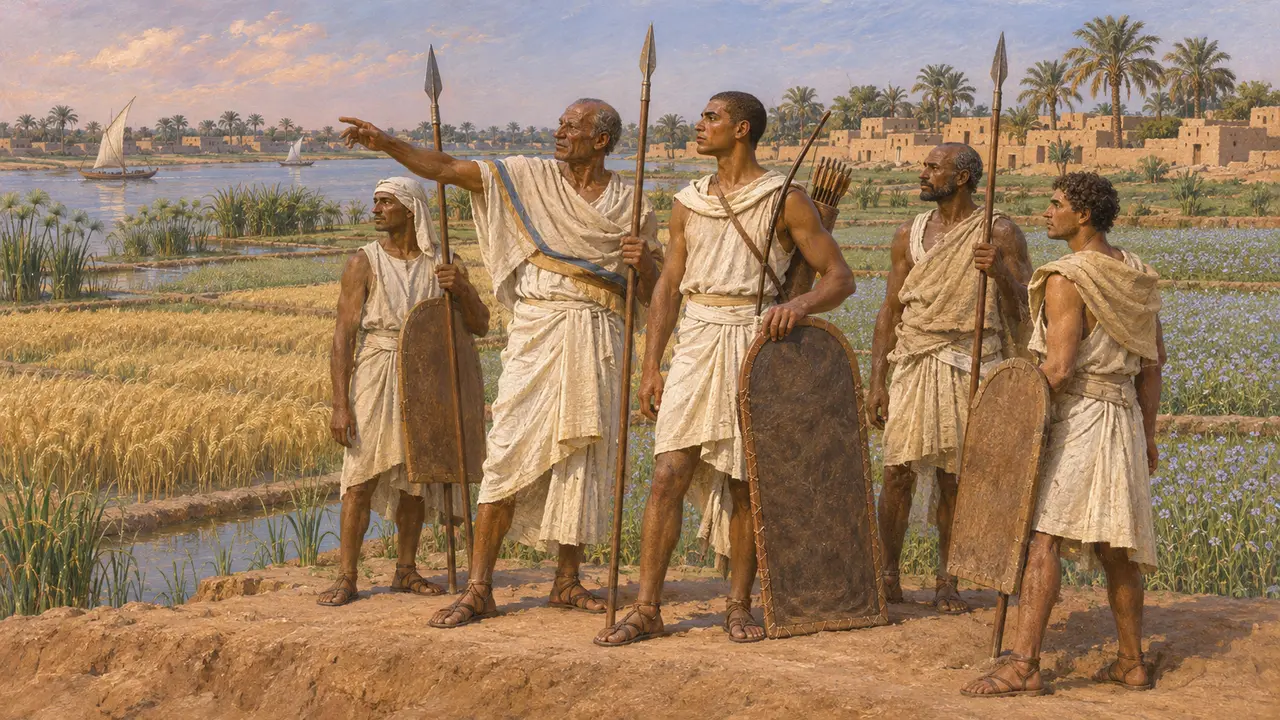
A warrior class of the Nile
DisputedHerodotus says Egypt's fighting men formed a hereditary class in two divisions, the Hermotybies and the Calasirians. Each man held a plot of land free of tax and was barred from other trades. His totals of 160,000 and 250,000 men are generally thought far too high. Historians still debate how closed this class was, and many see its core in Libyan soldiers settled in the Delta centuries earlier.
Herodotus 2.164-168; A. B. Lloyd, Herodotus Book II, 1975-1988
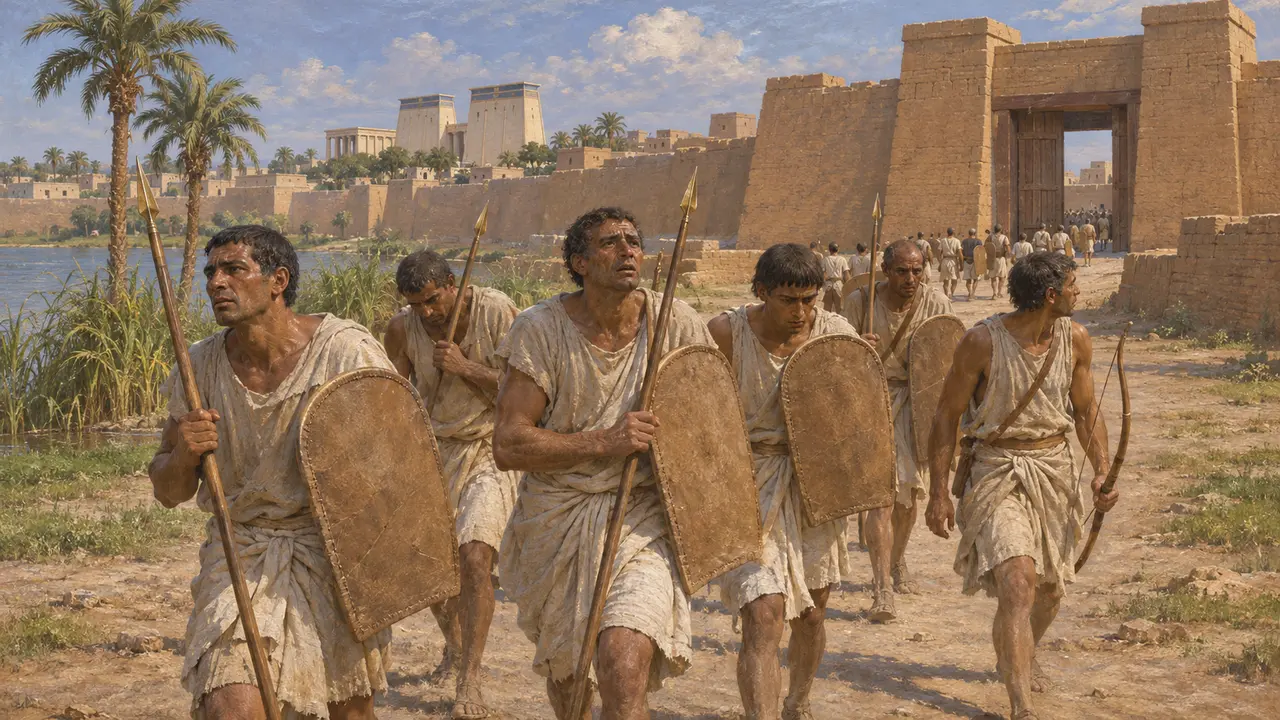
Pelusium and the fall of Memphis
Ancient accountHerodotus tells that Psamtik III, whose reign he says lasted only six months, met Cambyses at the Pelusiac mouth of the Nile. His Greek and Carian mercenaries killed the sons of Phanes, the mercenary captain who had gone over to the Persians. After a hard battle the Egyptians fled to Memphis, killed a Persian herald and the crew of his ship, and were besieged until they surrendered. Herodotus gives no figures for either army.
Herodotus 3.10-13
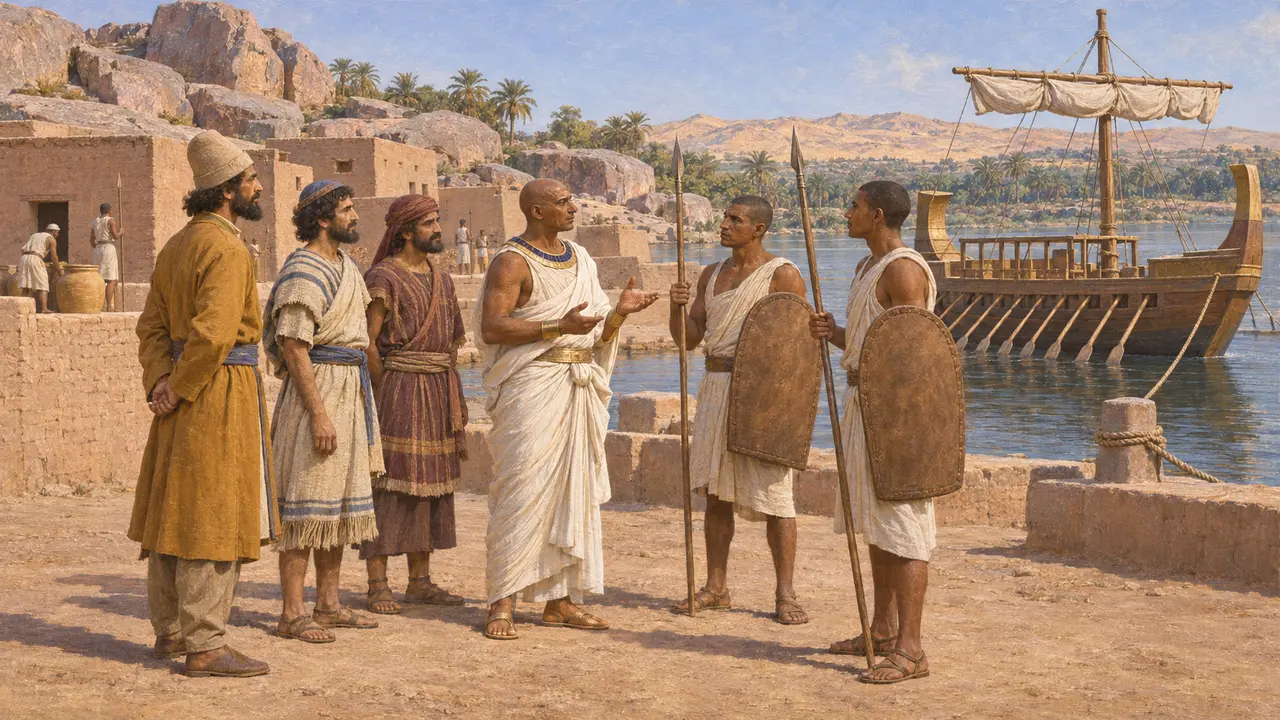
Egyptian officers under Persian rule
In the recordThe statue of Udjahorresnet records that he commanded the royal warships under Amasis and Psamtik III, then served Cambyses and Darius. It mentions a great turmoil in the land, perhaps the conquest, but describes no fighting. Aramaic papyri from Elephantine, mostly of the 5th century, show the southern frontier garrison still manned under Persian rule, partly by Judean and Aramaean soldiers.
Statue of Udjahorresnet (Vatican); Elephantine papyri
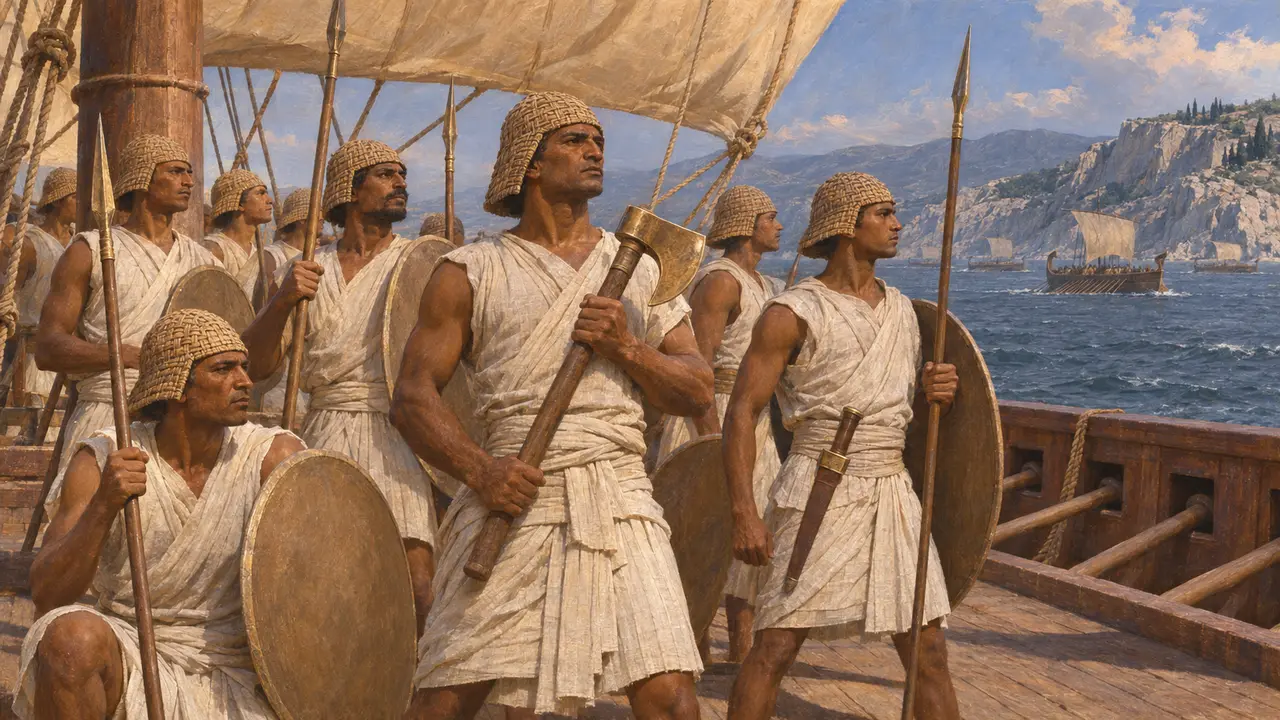
Egyptians in the wars of Xerxes
Ancient accountHerodotus says Egypt revolted at the end of Darius's reign and was retaken by Xerxes. He reports that Egypt then sent 200 ships against Greece, their men armed with plaited helmets, broad-rimmed shields, boarding spears, large axes and long knives. He judges them the best of the King's contingents at Artemisium, and says Egyptian marines were landed to fight on foot at Plataea.
Herodotus 7.1; 7.7; 7.89; 8.17; 9.32
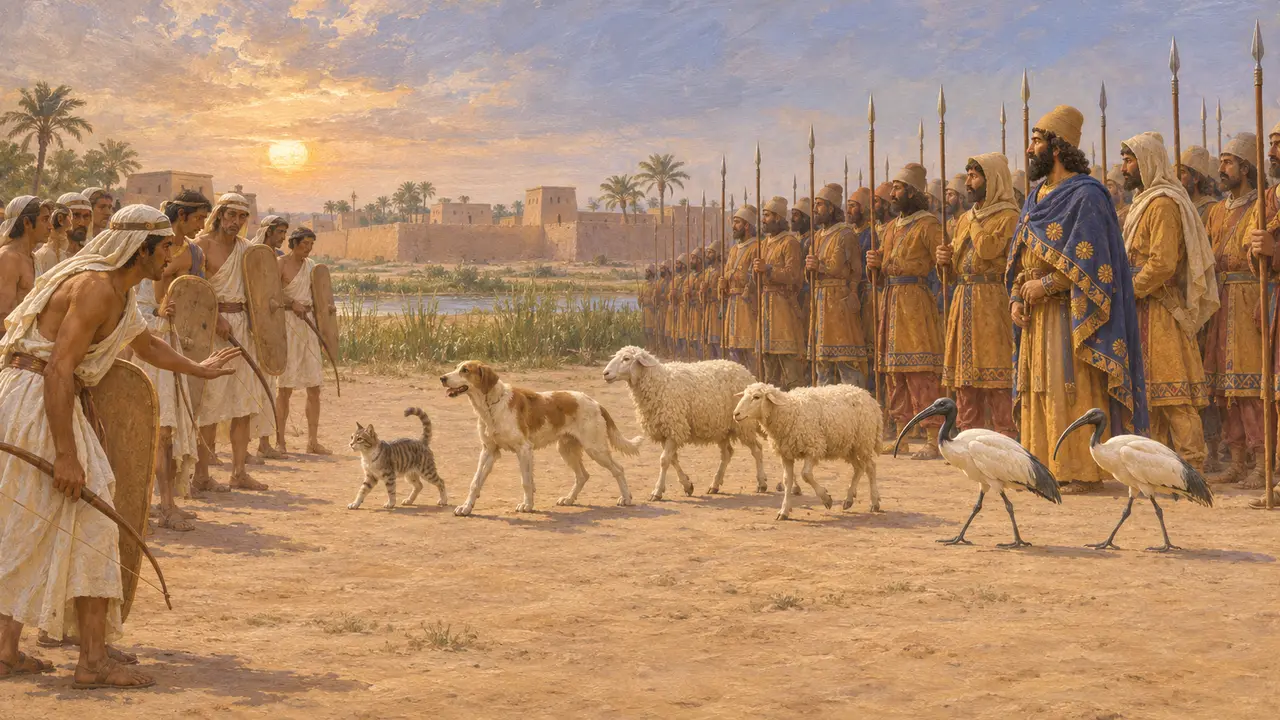
The sacred animals at Pelusium
Later legendPolyaenus, writing some seven centuries later, says Cambyses placed dogs, sheep, cats and ibises in front of his army, so that the Egyptians would not shoot for fear of harming creatures sacred to them. No earlier writer tells this story, and it reads as a stratagem anecdote rather than history.
Polyaenus, Stratagems 7.9
Sources
- Herodotus, Histories, books 2, 3, 7-9
- Statue of Udjahorresnet (G. Posener, La première domination perse en Égypte, 1936)
- P. Briant, From Cyrus to Alexander, 2002
- A. B. Lloyd, Herodotus Book II: Commentary, 1975-1988
- Polyaenus, Stratagems 7.9