Encyclopedia › Battles and events
The revolt of Arakha
Second Babylonian rising against Darius, Babylon, 521 BCE
In the game: Level 3: The Lie
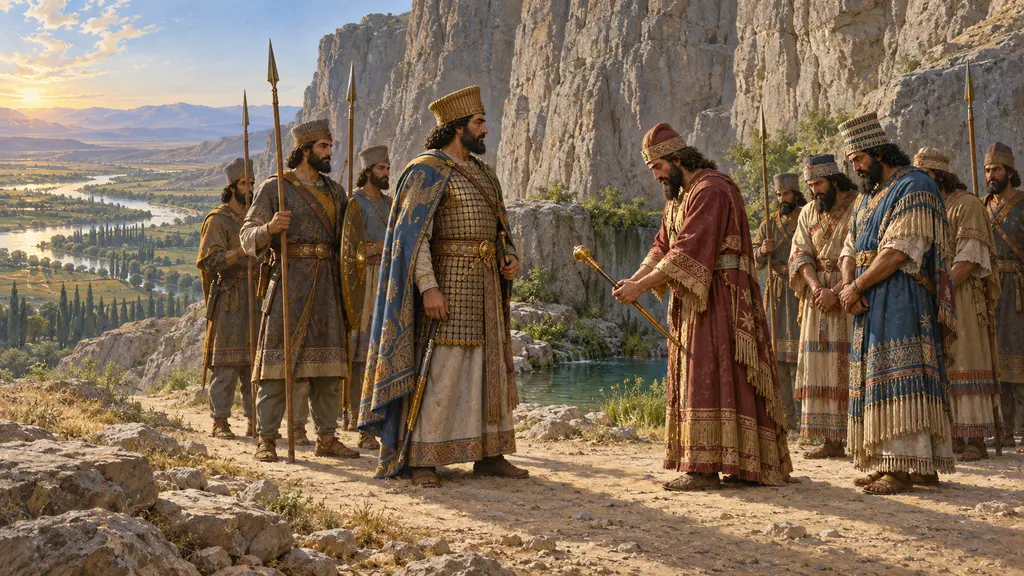
In 521 an Armenian named Arakha took power in Babylon, claiming to be Nebuchadnezzar, son of the last native king Nabonidus. It was Babylon's second rising against Darius within a year. Darius's general Vindafarna, the Greeks' Intaphernes, retook the city and Arakha was impaled, the last rebel defeated in the first year of the reign as Behistun tells it.
In the game: The game's chronicle records Babylon rising under Arakha as a second Nebuchadnezzar and the King's general retaking it, as Behistun does. It uses the Greek name Intaphernes for the Persian Vindafarna.
What Behistun says
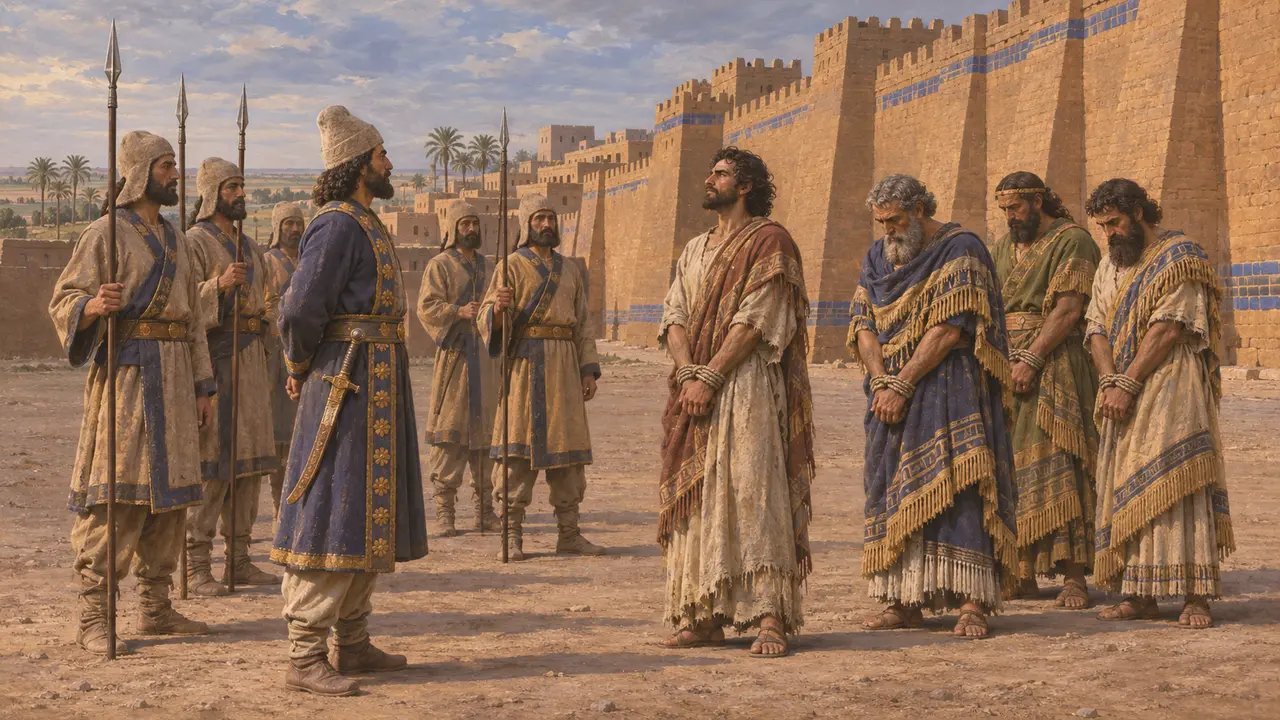
In the recordDarius's inscription names Arakha as an Armenian, son of Haldita, who rose at a place called Dubala in Babylonia while Darius was in Persia and Media. He told the people he was Nebuchadnezzar, son of Nabonidus, and Babylon went over to him. Darius sent Vindafarna, a Persian he calls his subject, with an army. Vindafarna defeated the Babylonians and captured Arakha and his leading followers, who were impaled at Babylon.
DB §49-51
Nebuchadnezzar IV in the tablets
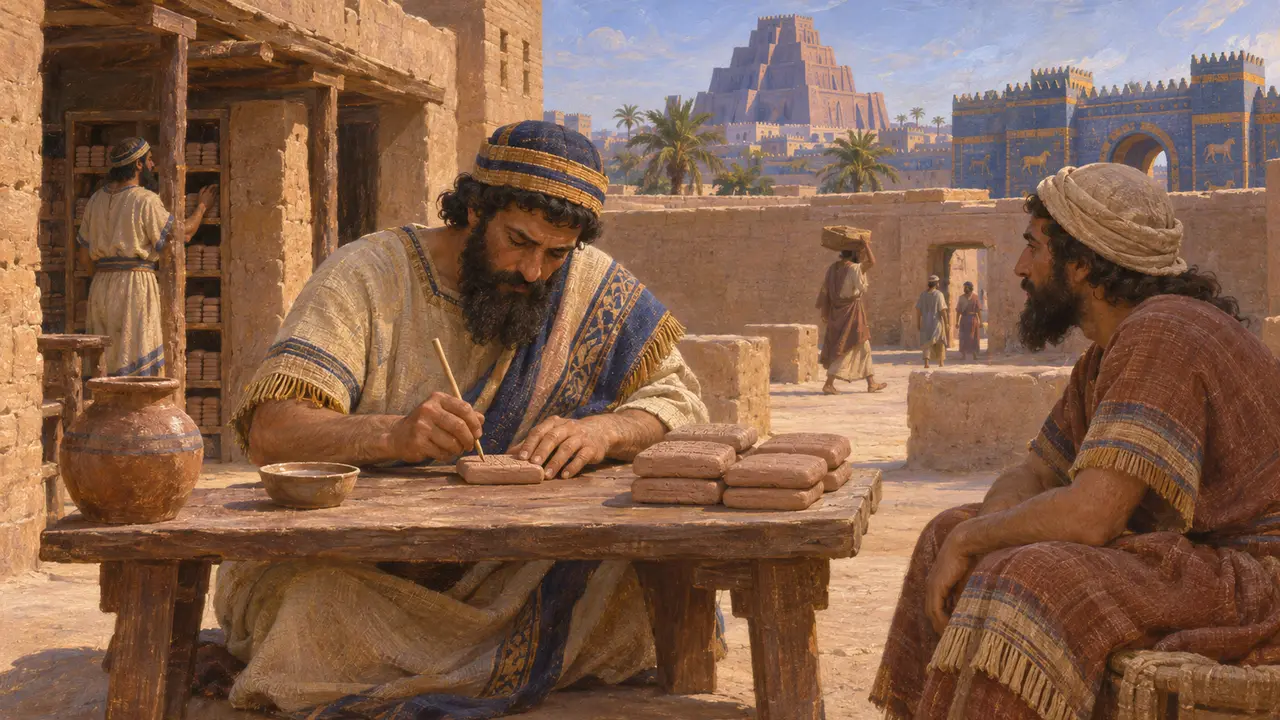
In the recordBabylonian contract tablets were dated for a few months in 521 by the reign of a king Nebuchadnezzar, the ruler modern historians call Nebuchadnezzar IV. Scribes then returned to dating by Darius. Behistun gives the day of Arakha's capture in the Persian calendar, usually converted to late November 521. Arakha is also carved among the bound rebel kings on the Behistun relief.
A. Kuhrt, The Persian Empire, 2007
Who Arakha was
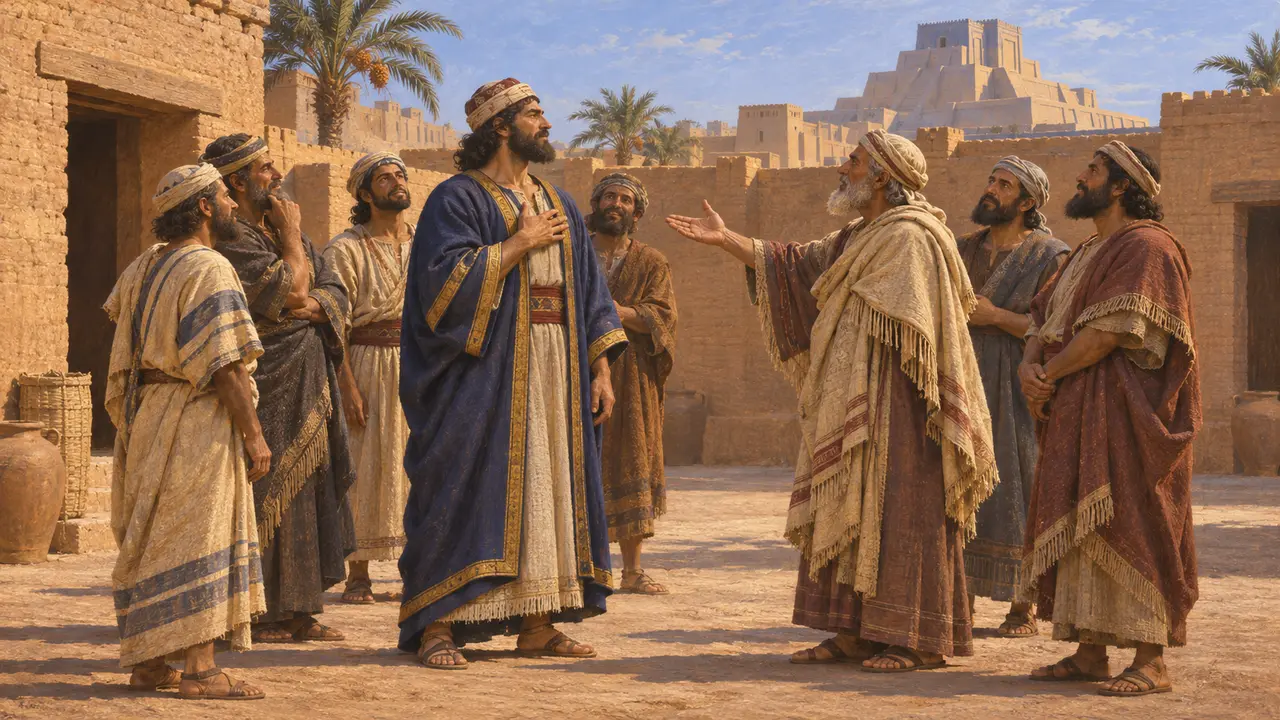
DisputedThe Old Persian text calls Arakha an Armenian, and the Babylonian version uses the old name Urartu for his homeland. Historians debate whether he came from a community of Armenian or Urartian deportees settled in Babylonia, or from abroad. Why Babylonians would follow a foreigner posing as Nebuchadnezzar is also argued. It may show how strong the wish for a native king remained after the rising of Nidintu-Bel.
P. Briant, From Cyrus to Alexander, 2002
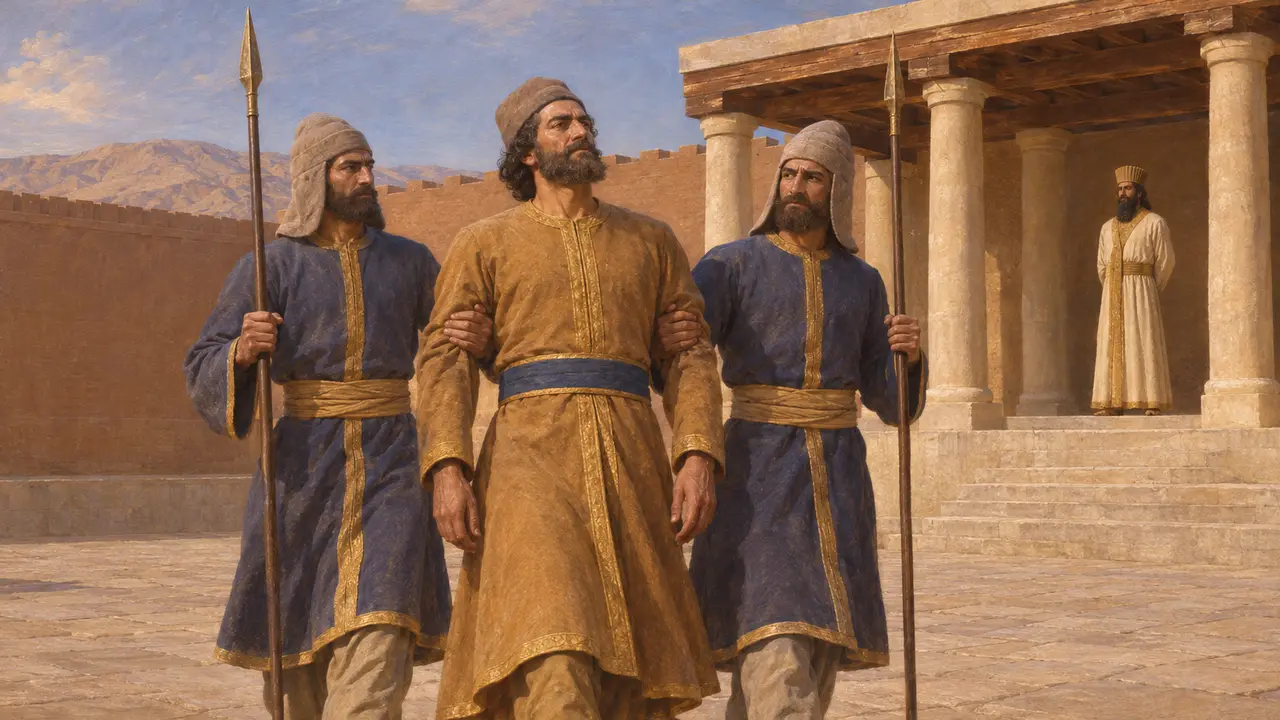
The general Intaphernes
Ancient accountHerodotus counts Intaphernes among the seven Persians who killed the man on the throne in 522, and Darius's own list of his helpers at Behistun names Vindafarna. Herodotus says Darius later put Intaphernes to death on suspicion of plotting. He does not mention Arakha or the Babylonian campaign at all.
Herodotus 3.70; Herodotus 3.118-119; DB §68
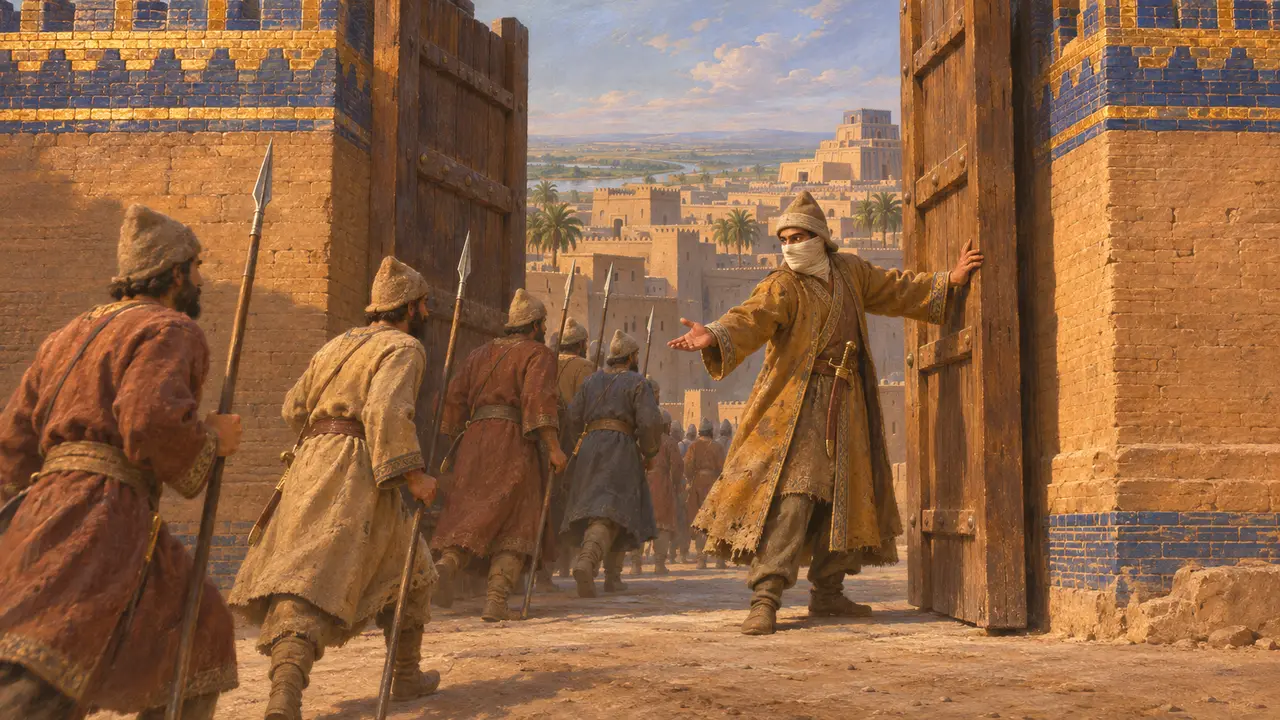
Zopyrus and the siege of Babylon
Later legendHerodotus tells of a Babylonian revolt under Darius in which the siege dragged on for a year and seven months. It ended only when a noble named Zopyrus cut off his own nose and ears, posed as a deserter and handed over the gates. The tale fits neither of the revolts in Behistun neatly and reads as a story of loyalty. Some scholars link it loosely to the risings of 522-521, others to later revolts under Xerxes.
Herodotus 3.150-160
Sources
- DB §49-51, §68
- A. Kuhrt, The Persian Empire: A Corpus of Sources from the Achaemenid Period, 2007
- P. Briant, From Cyrus to Alexander, 2002
- R. G. Kent, Old Persian: Grammar, Texts, Lexicon, 1953
- Herodotus 3.70, 3.118-119, 3.150-160