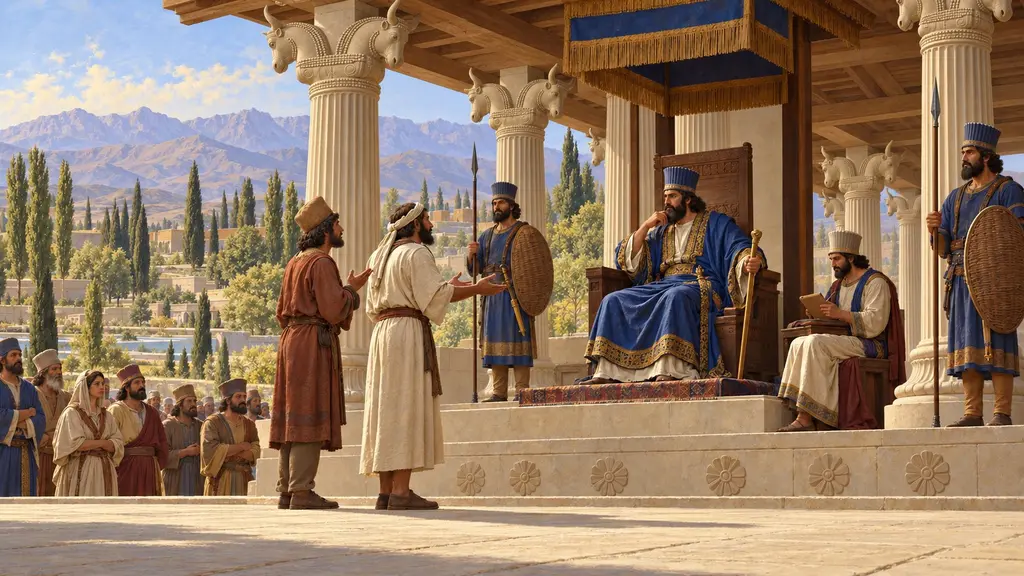
The royal judges
Judges who applied the King's law in the Achaemenid empire, 6th-5th centuries BCE
The royal judges were Persians chosen to hear cases and to explain the ancestral laws in the King's name. Herodotus says they held office for life unless found guilty of injustice, and Babylonian documents name judges with a borrowed Persian title meaning 'law-bearer'. They stood for a claim at the heart of Darius's rule: that the King upheld justice and that his law held the lands together.
In the game: The game shows the office through the Judgment Seat building. No Persian building of this kind has been found; the name echoes Herodotus's story of a seat covered in a corrupt judge's skin.
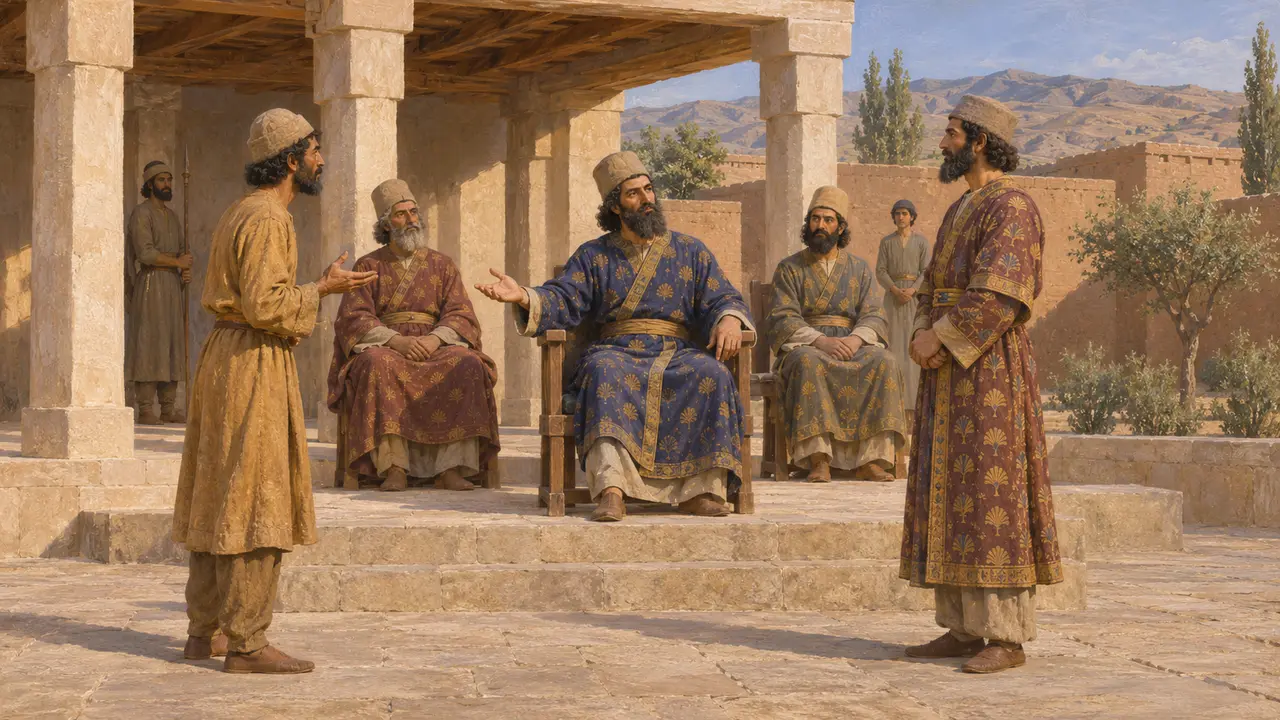
The King's law in Persian words
In the recordDarius's inscriptions present law as the King's gift and duty. At Behistun he says the lands respected his law (Old Persian data) and did as he commanded. At his tomb he states that he did not want the weak wronged by the strong, nor the strong by the weak. Historians usually see judges as the officials who put such royal claims into practice.
DB §8; DNb
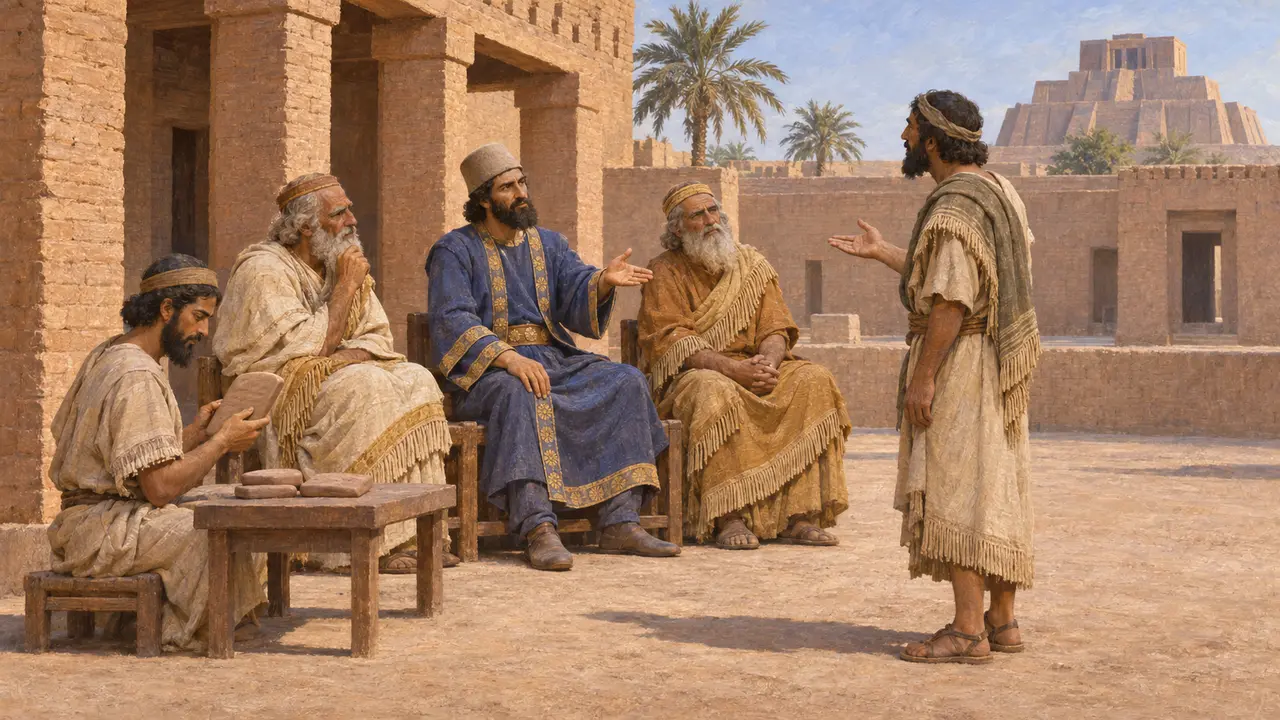
Law-bearers in Babylonian documents
In the recordBabylonian legal texts of the Persian period, including the Murashu archive from Nippur, use a Persian loanword for judges, usually reconstructed as dātabara, 'law-bearer'. These men worked alongside the older Babylonian courts and temple assemblies rather than replacing them. The documents show Persian judicial titles in daily use far from Persia, though they say little about how judges were chosen.
A. Kuhrt, The Persian Empire: A Corpus of Sources, 2007; P. Briant, From Cyrus to Alexander, 2002
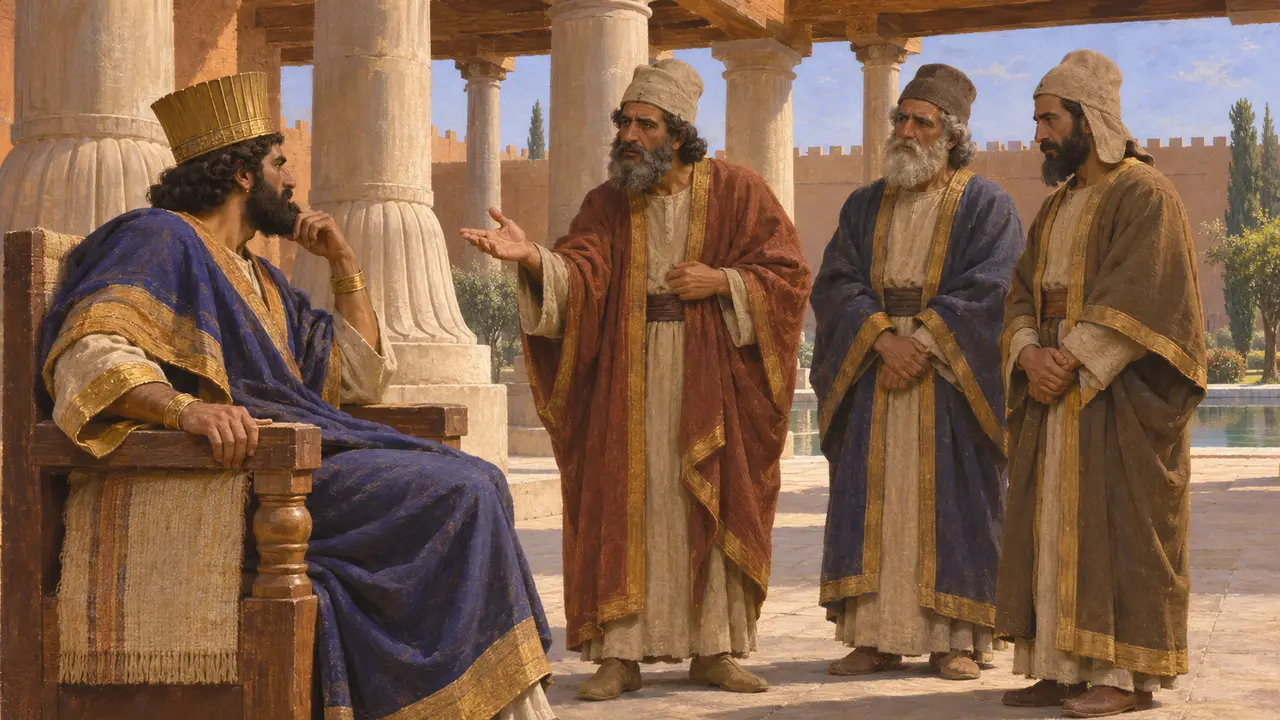
Herodotus on the royal judges
Ancient accountHerodotus says the royal judges were chosen Persians who served until death unless found guilty of injustice, and who decided cases and interpreted the ancestral laws. When Cambyses asked whether he might marry his sister, they replied that no law allowed it, but another law let the King do as he wished. Herodotus also says Darius had the judge Sandoces crucified for a bribe, then had him taken down after weighing his past services.
Herodotus 3.31; Herodotus 7.194
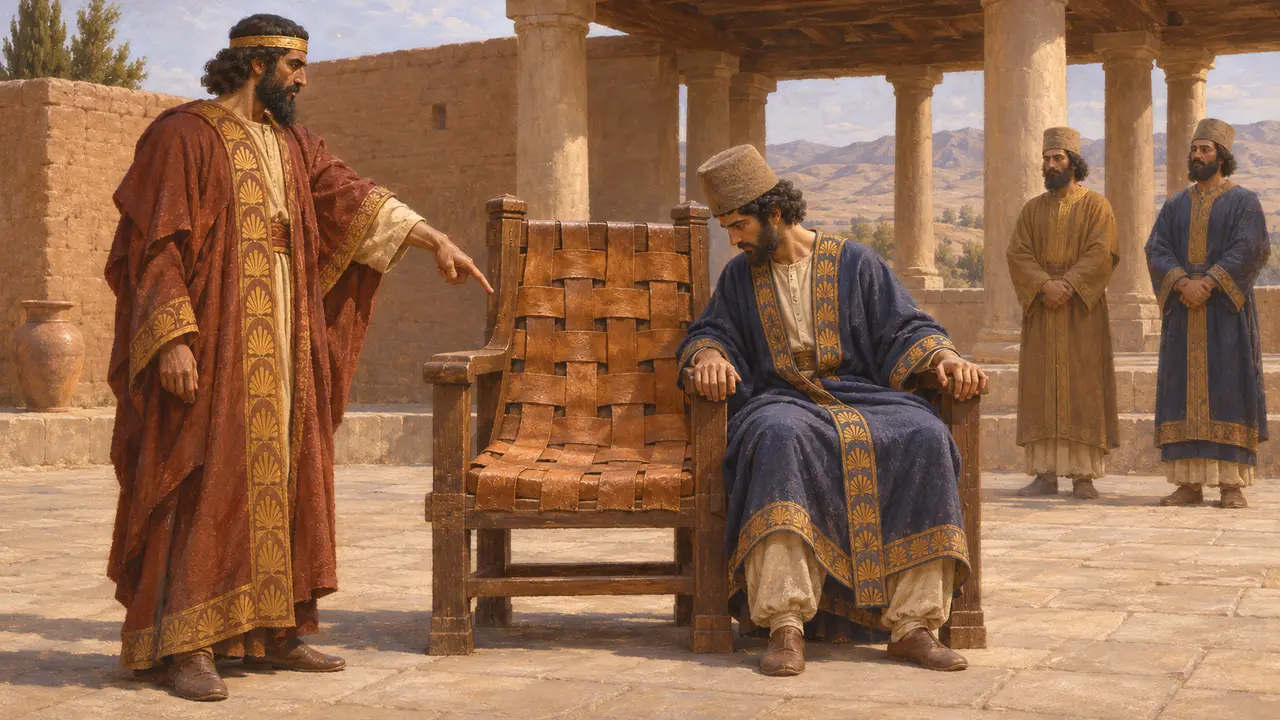
The seat of Sisamnes
Later legendHerodotus tells that Cambyses had a royal judge, Sisamnes, put to death for taking a bribe and his skin cut into strips to cover the judgment seat. He then appointed the dead man's son Otanes as judge and told him to remember on what seat he sat. The story is shaped as a warning about corruption and cannot be checked against Persian sources.
Herodotus 5.25
One law or many
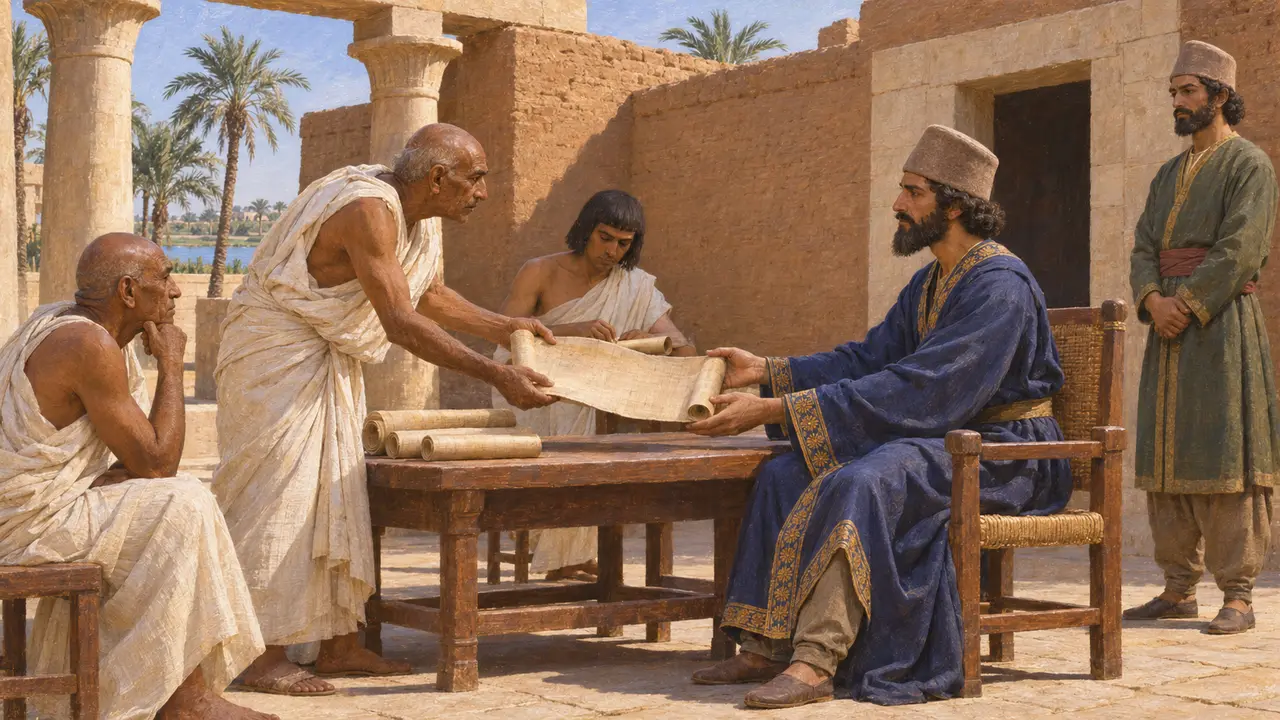
DisputedHistorians debate how far a single royal law existed. Diodorus names Darius among the lawgivers of Egypt, and a Demotic papyrus of the Ptolemaic period says he ordered Egypt's laws collected, but many scholars see Persian rule as confirming local laws rather than imposing one code. It is also unclear whether the royal judges formed a fixed college, as Herodotus implies, or were officials named as needed.
Diodorus 1.95; P. Briant, From Cyrus to Alexander, 2002; J. Wiesehöfer, Ancient Persia, 1996
Sources
- Herodotus, Histories 3.31, 5.25, 7.194
- Darius I, Behistun inscription (DB) and tomb inscription (DNb)
- P. Briant, From Cyrus to Alexander, 2002
- A. Kuhrt, The Persian Empire: A Corpus of Sources, 2007
- J. Wiesehöfer, Ancient Persia, 1996
- Diodorus 1.95