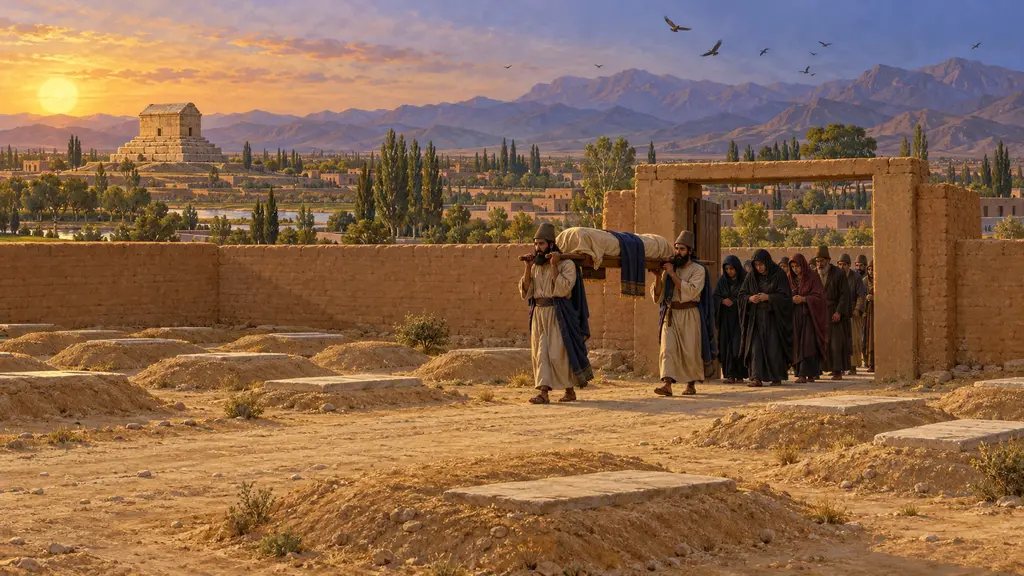
Burial Mound
Earth mound heaped over the dead, a Thracian custom met at Athos, 483-480 BCE
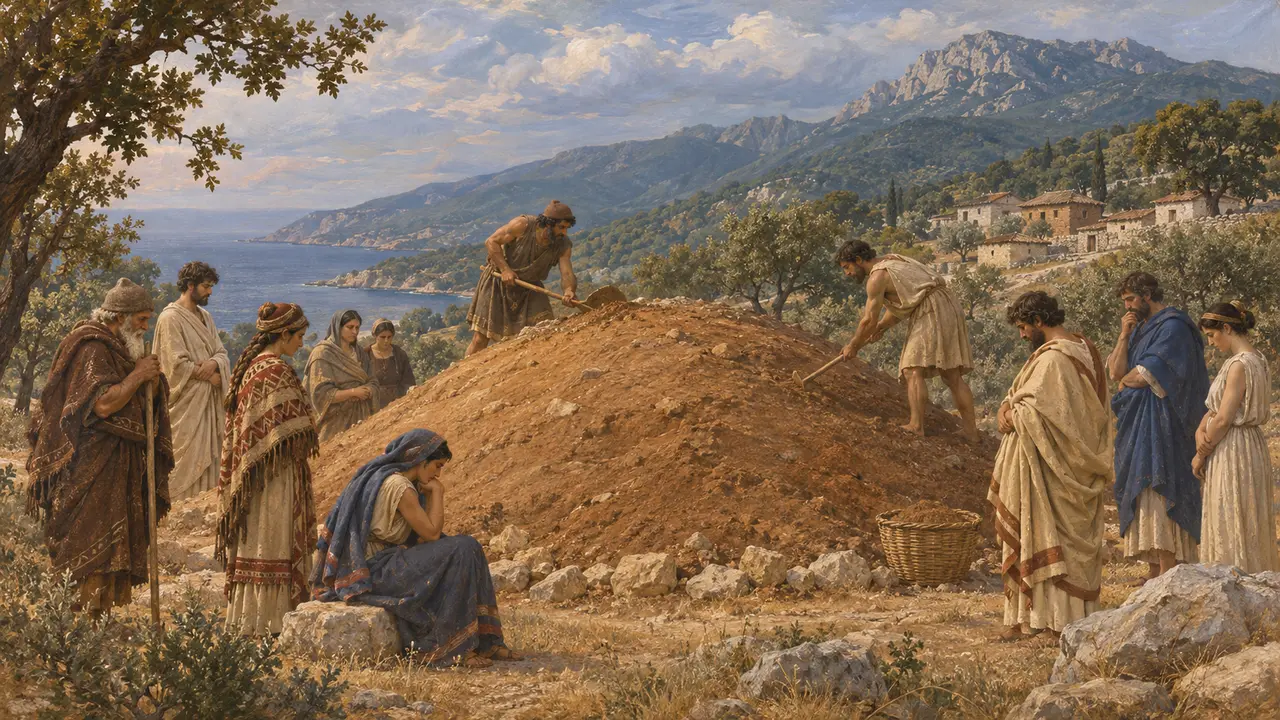
Across Thrace and the northern Aegean, important men were buried under round mounds of heaped earth, often after feasting and funeral games. Herodotus describes the custom. He also tells how at Acanthus, near Athos, in 480 Xerxes had the whole army raise a mound for Artachaees, the Persian who had overseen the canal.
In the game: In Athos the Burial Ground takes this form; bearers carry the dead to it, and unburied dead sicken nearby houses. The Thracian label fits Herodotus 5.8, but the sickness rule is a game mechanic, not a historical claim.
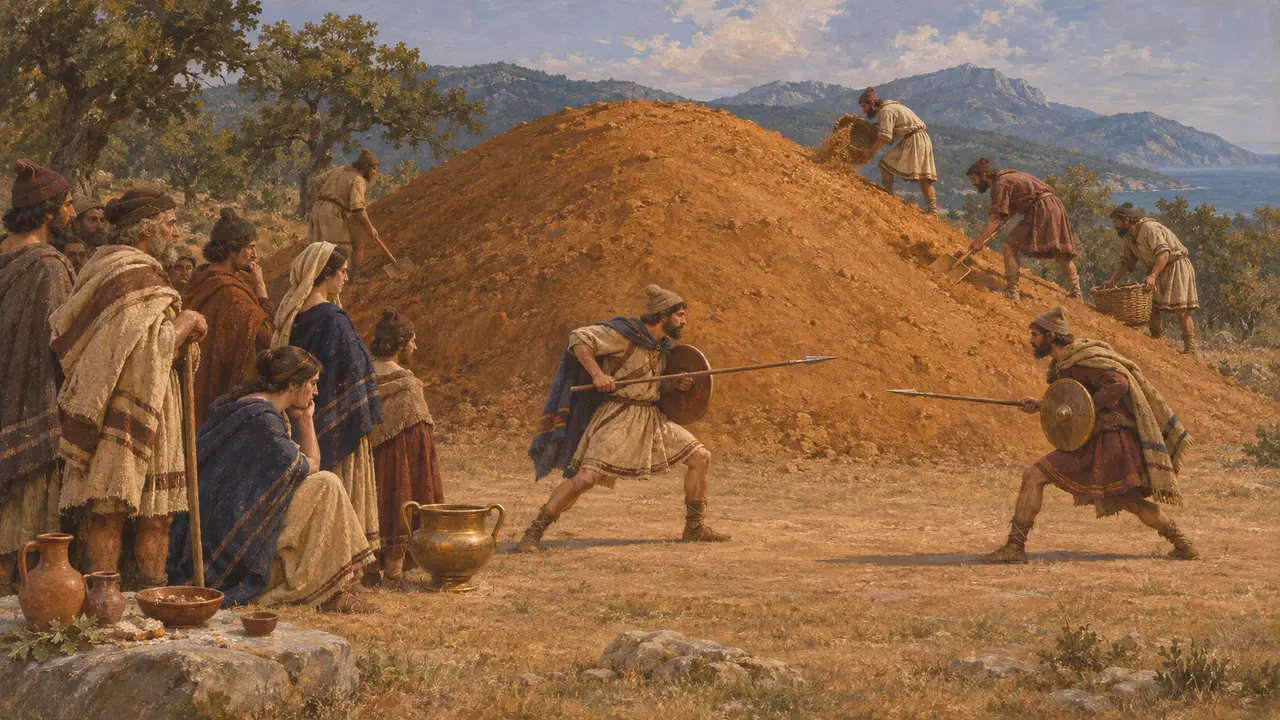
Herodotus on Thracian funerals
Ancient accountHerodotus says that wealthy Thracians laid out the body for three days, sacrificed animals of every kind and feasted after mourning. The dead man was then burned or buried in the earth, a mound was heaped over him, and games of all sorts were held, with the largest prize given for single combat.
Herodotus 5.8
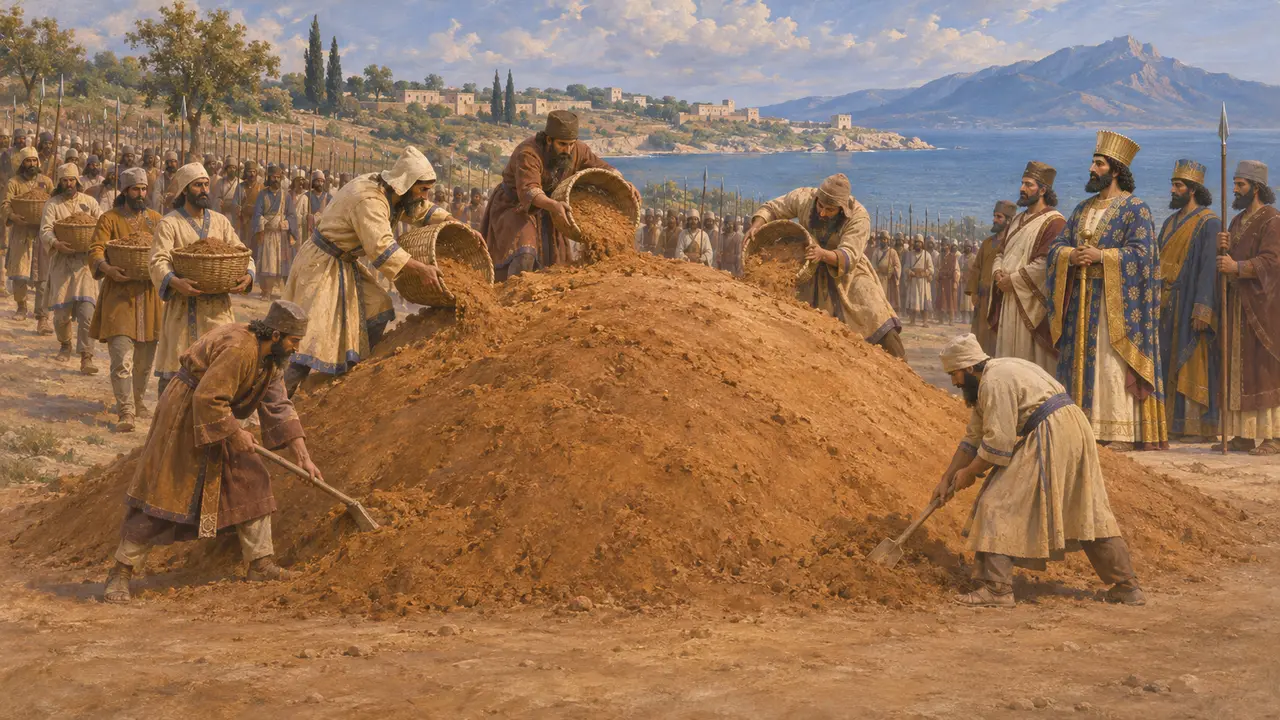
The mound of Artachaees at Acanthus
Ancient accountHerodotus reports that Artachaees, an Achaemenid who supervised the digging of the Athos canal, died at Acanthus while Xerxes was there. The King gave him a splendid funeral and the whole army heaped up a mound over his grave. On an oracle's instruction, Herodotus adds, the Acanthians sacrificed to him as a hero.
Herodotus 7.117
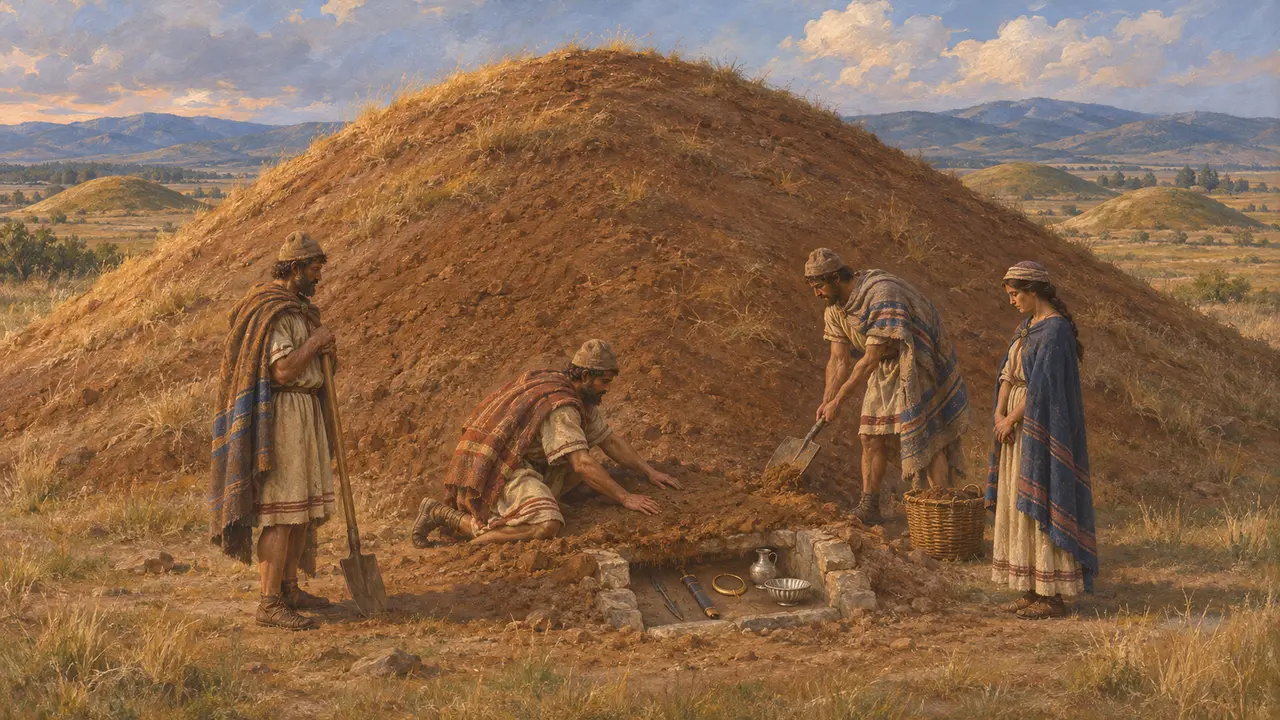
Mounds in the ground
In the recordThousands of tumuli survive across ancient Thrace, in what is now Bulgaria, northern Greece and European Turkey. Excavated mounds of the late sixth and fifth centuries, such as those at Duvanli near Plovdiv, held burials with weapons, gold ornaments and silver vessels, some in shapes copied from Achaemenid tableware. They show an elite that shared the habits Herodotus describes.
Z. Archibald, The Odrysian Kingdom of Thrace, 1998
Whose custom was it at Athos
DisputedHerodotus treats the Thracians as one people, yet lists tribes with different rites, such as those living north of the Crestonaeans, whose widows competed to die at the grave. Thucydides says the Athos towns were mixed and bilingual: Pelasgians, Bisaltians, Crestonaeans and Edonians beside a few Greeks. Herodotus does not call Artachaees' mound Thracian, so how far one custom held here is uncertain.
Herodotus 5.3-5.5; Thucydides 4.109
Sources
- Herodotus 5.8
- Herodotus 7.117
- Herodotus 5.3-5.5
- Thucydides 4.109
- Z. Archibald, The Odrysian Kingdom of Thrace, 1998