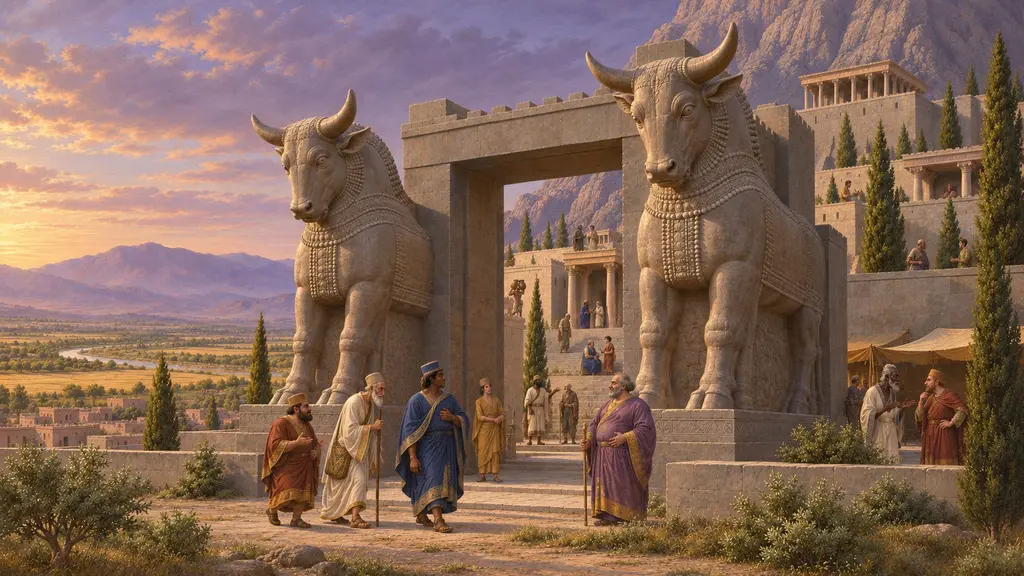
Gate Bulls
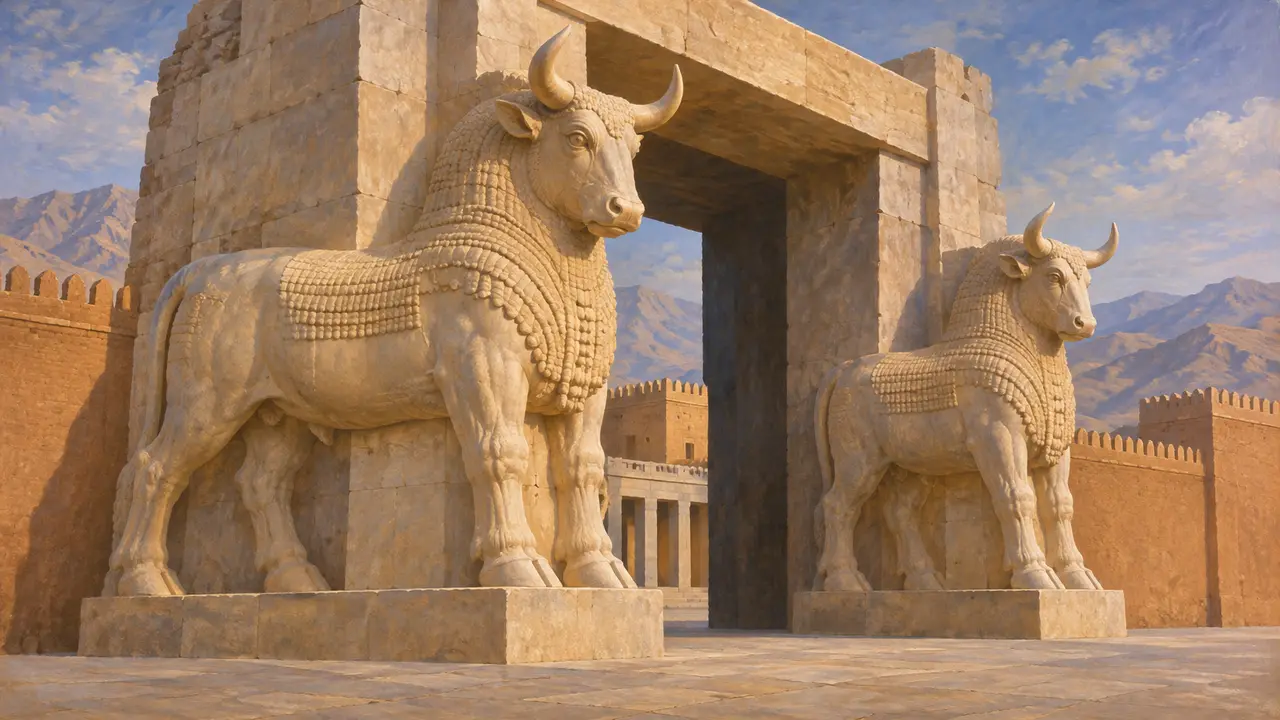
Colossal stone bulls flanking royal gateways, Pasargadae and Persepolis, about 540-450 BCE
Pairs of colossal stone bulls stood at the doorways of Persian royal gatehouses, first at Cyrus's gate at Pasargadae and later at Xerxes' Gate of All Lands at Persepolis. The Persians took the idea from the human-headed winged bulls of Assyrian palaces. The bulls probably served to mark the threshold between the outside world and the King's own ground.
In the game: The game lists Gate Bulls with its housing buildings, as a piece of gateway sculpture. Historically, such colossi stood only at royal gatehouses and palaces, never at ordinary homes or streets.
Assyrian forerunners
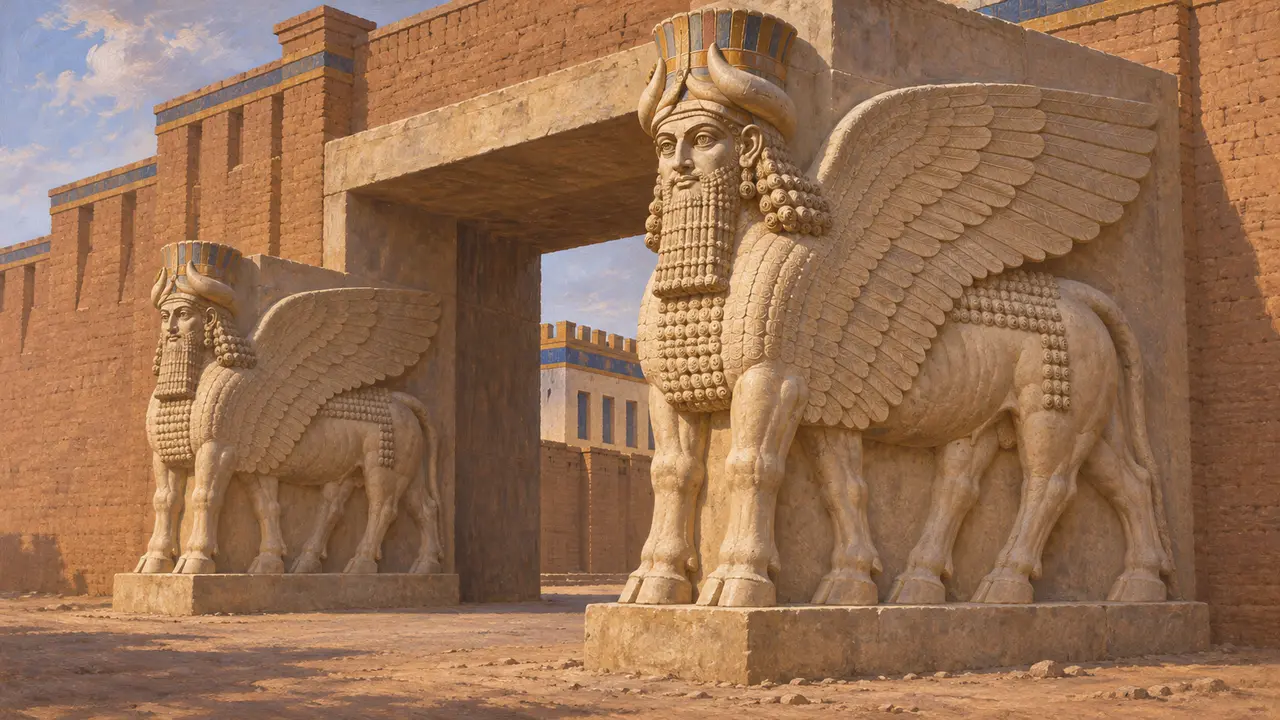
In the recordAssyrian kings of the 9th to 7th centuries set human-headed winged bulls at the gates and throne-room doors of their palaces at Nimrud, Khorsabad and Nineveh. Most were carved from a single huge block. The Assyrian versions were usually given five legs, so that they looked complete from both the front and the side. Excavators recovered many of them in the 19th century.
J. E. Reade, Assyrian Sculpture, 1983
Cyrus's gatehouse at Pasargadae
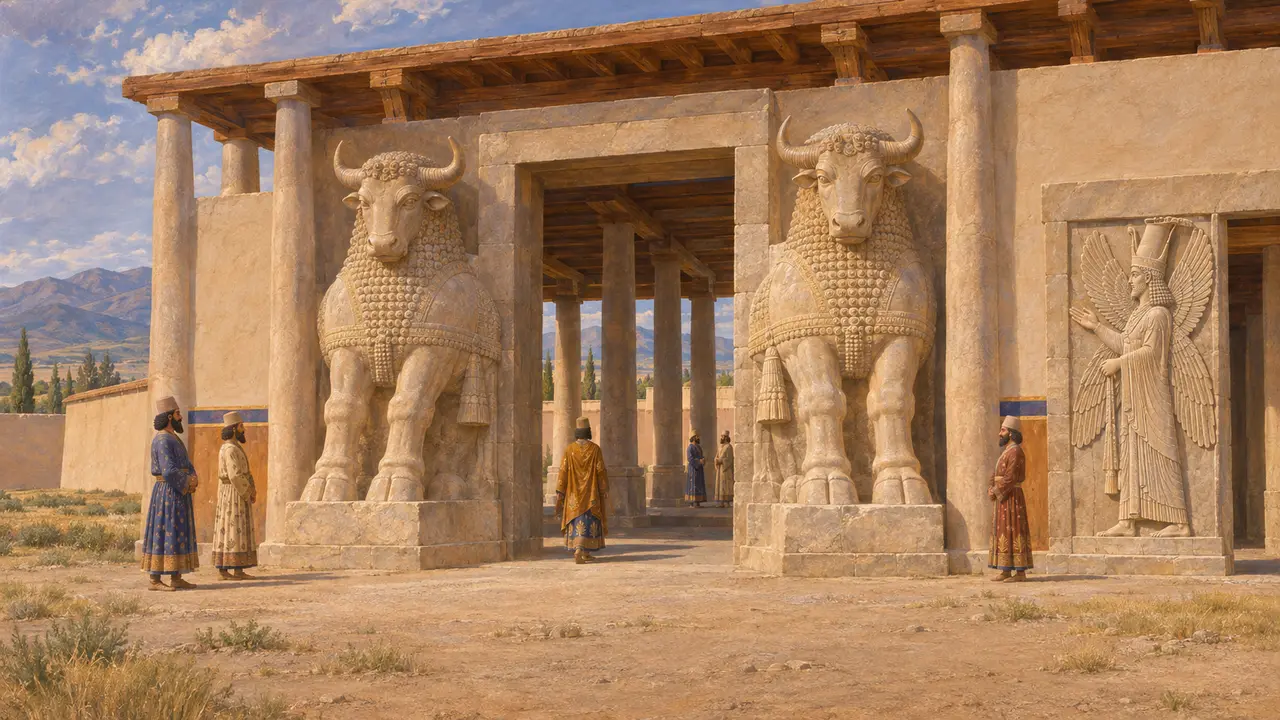
In the recordThe gatehouse at Pasargadae, known to excavators as Gate R, was a columned hall built under Cyrus. Excavation showed that colossal bulls flanked its main doorways, but only their lower parts survive. A side doorway kept a relief of a four-winged figure wearing an Egyptian-style crown. The figure mixed Assyrian, Elamite and Egyptian elements in a way typical of Cyrus's builders.
D. Stronach, Pasargadae, 1978
Xerxes' Gate of All Lands
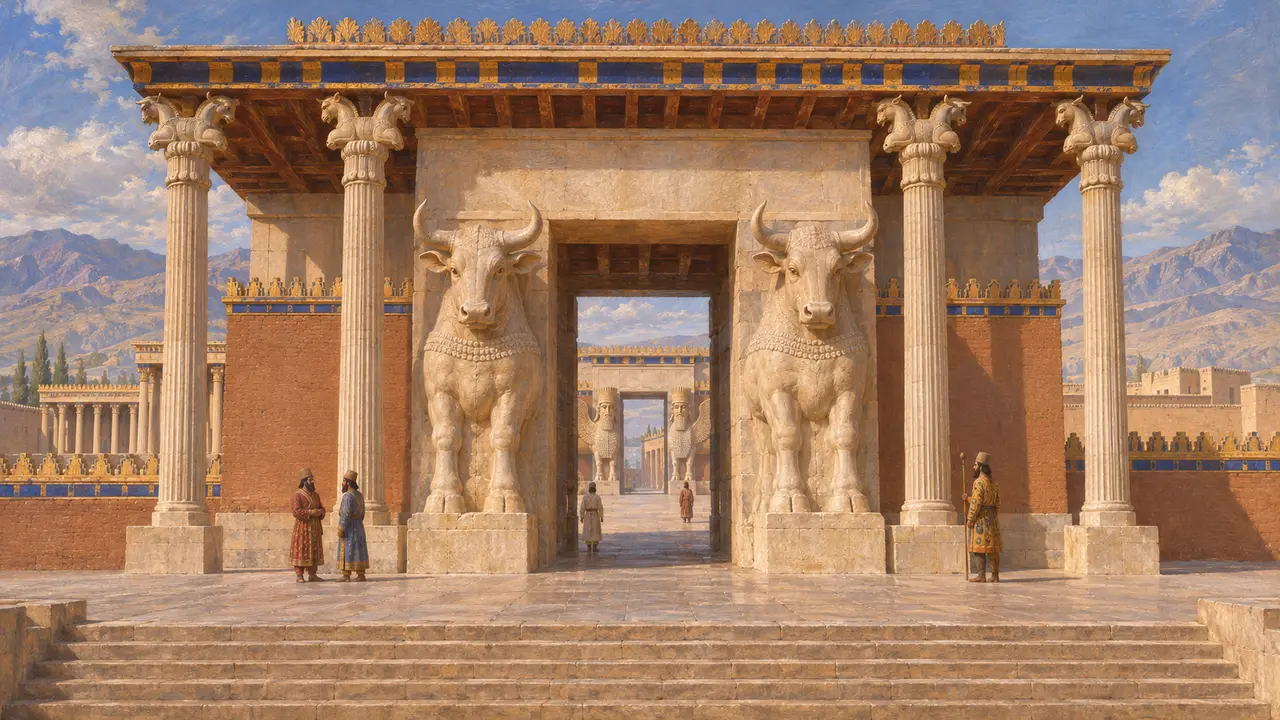
In the recordAt the top of the great stairway onto the Persepolis terrace, Xerxes built a four-columned gatehouse. Bulls without wings or human heads guard its western doorway, facing the stairs; human-headed winged bulls with horned crowns guard the eastern one. A trilingual inscription above them (XPa) says that Xerxes built this Gate of All Lands by the favour of Auramazda. Bull colossi also flanked the porch of the Hall of a Hundred Columns, finished under Artaxerxes I.
E. F. Schmidt, Persepolis I, 1953; XPa
What the bulls meant
DisputedIn Assyria such figures were protective spirits that kept evil away from the doorway. Historians still argue over whether the Persians shared that belief or used the bulls mainly as a sign of royal power borrowed from an older empire. The Persepolis bulls have four legs, not the Assyrian five. Because the heads at Pasargadae are lost, it is also uncertain whether all of Cyrus's bulls were human-headed.
J. Curtis and N. Tallis (eds), Forgotten Empire, 2005
Sources
- D. Stronach, Pasargadae, 1978
- E. F. Schmidt, Persepolis I, 1953
- XPa
- J. E. Reade, Assyrian Sculpture, 1983
- J. Curtis and N. Tallis (eds), Forgotten Empire, 2005
- P. Briant, From Cyrus to Alexander, 2002