Watch Post
Night watch, fire and repair in the towns of the Achaemenid empire, 6th-5th century BCE
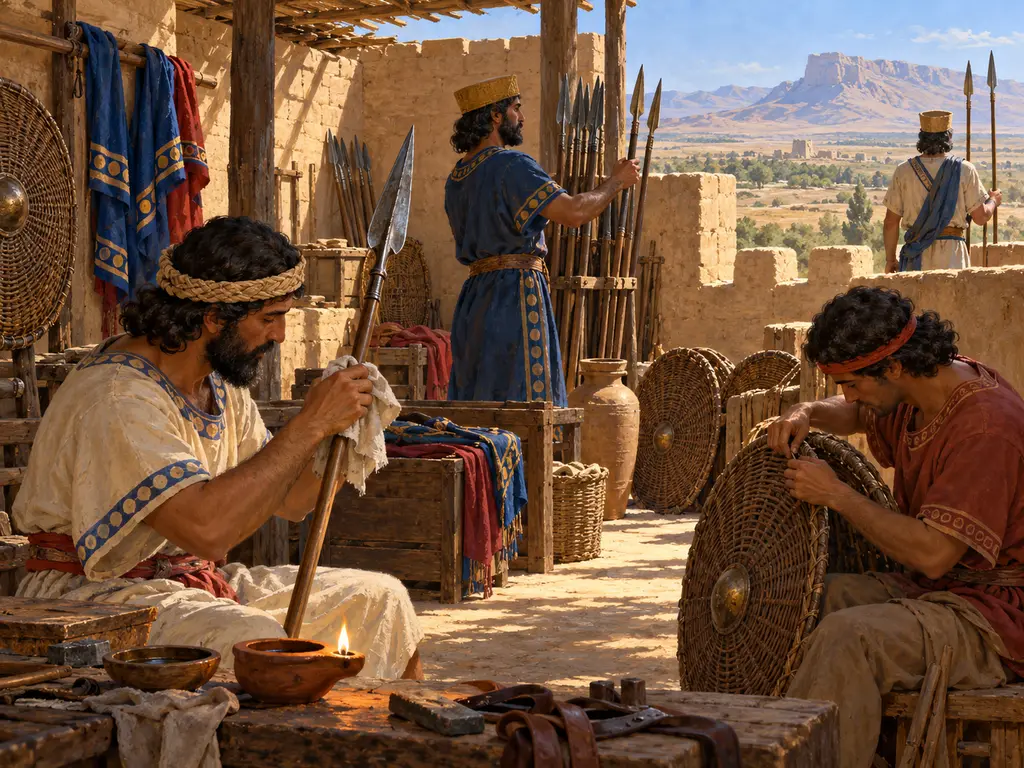
Towns of the Persian empire were built of mud brick, with roofs of timber beams, reeds and matting that burned easily. Garrisons and local officials kept guard, but no organised fire service is recorded in the period. When fire broke out, neighbours probably fought it with water jars, and the damage was repaired afterwards by hired or levied labour.
In the game: Watchmen walk the streets, put out fires and repair damaged buildings as one service. This is a dramatization: no fire brigade is recorded before Rome, and in this period neighbours probably fought fires with water jars.
Roofs that burned
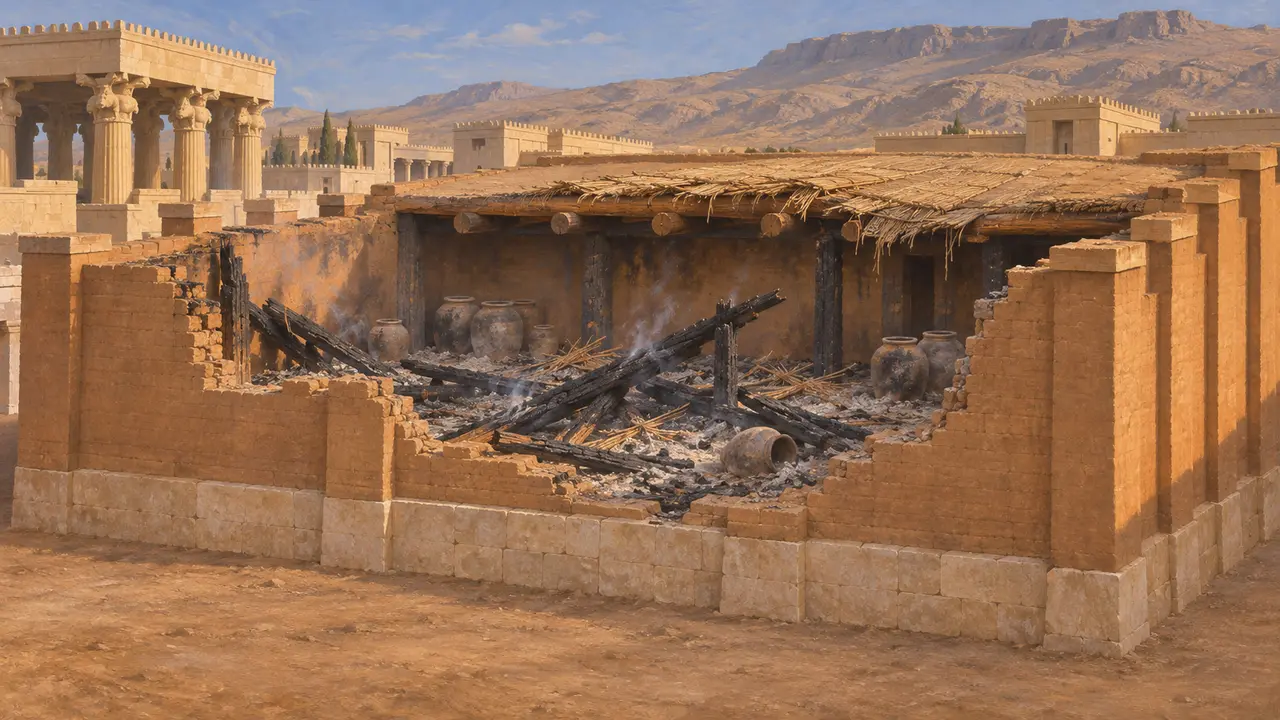
In the recordExcavation at Persepolis shows how Persian builders worked: walls of mud brick on stone footings, and flat roofs carried on wooden beams, some of cedar, covered with reeds and packed earth. The Treasury and the halls were found under thick layers of ash and charred timber from the fire of 330. Walls survived where the roofs and stored goods burned, which shows that timber was the weak point of mud-brick building.
E. Schmidt, Persepolis I, 1953; E. Schmidt, Persepolis II, 1957
Sardis burns in 498
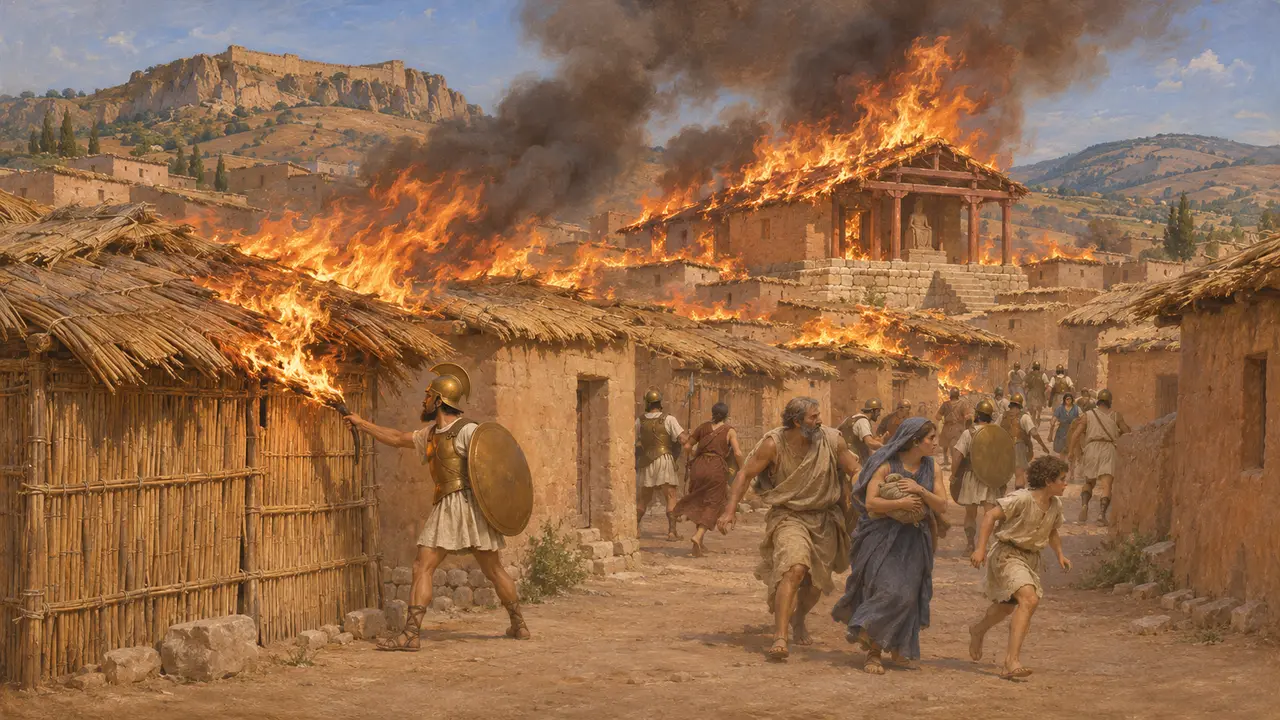
Ancient accountHerodotus says that most houses in Sardis were made of reeds, and even the brick ones had reed roofs. When the Ionians and Athenians took the lower city in 498, a soldier set one house alight. The fire ran from roof to roof across the whole town and burned the temple of the goddess Cybebe. Herodotus adds that the Persians later named this burning as their reason for burning Greek temples.
Herodotus 5.101-102
Damage and repair at Elephantine
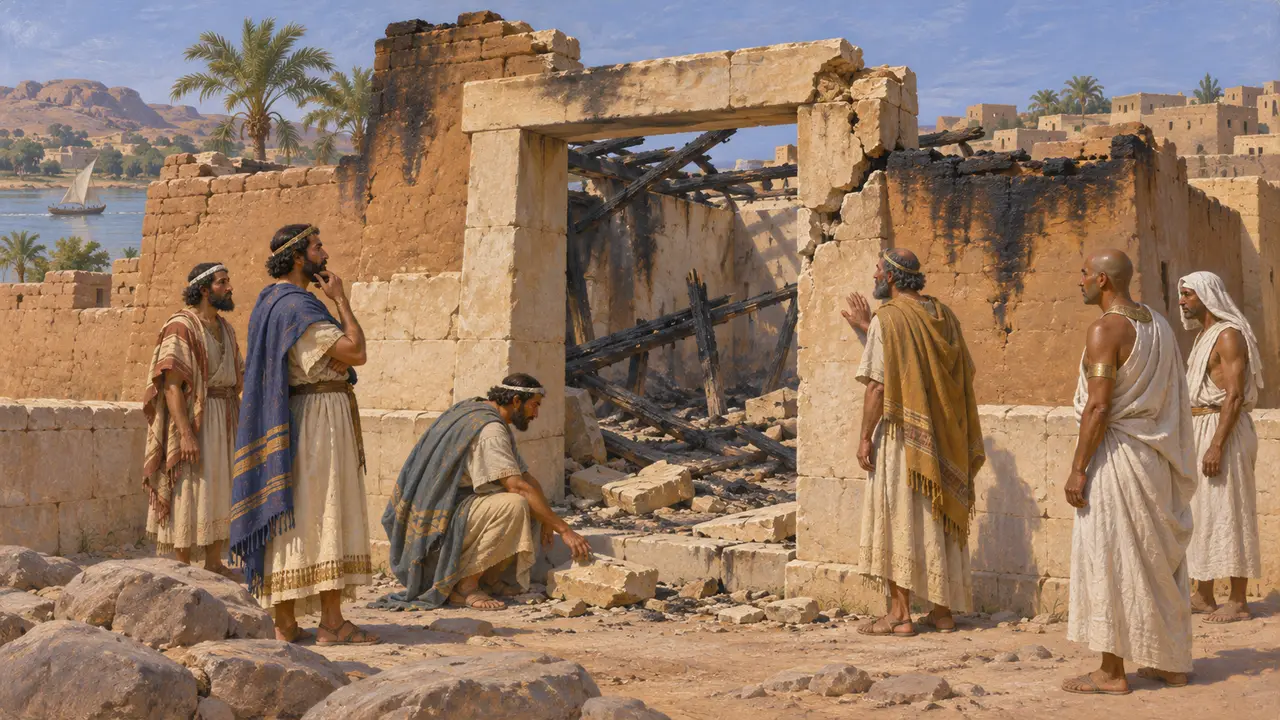
In the recordAramaic papyri from the garrison at Elephantine record that in 410 the temple of the Jewish soldiers' god Yahu was wrecked and burned by local Egyptians, backed by the Persian commander Vidranga. In 407 the community wrote to Bagavahya, governor of Judah, asking for leave to rebuild. The letters show that repair went through petitions to officials, not a standing repair service. The event falls after the game's period.
B. Porten and A. Yardeni, Textbook of Aramaic Documents from Ancient Egypt 1, 1986 (TAD A4.7)
Watchmen, not firemen
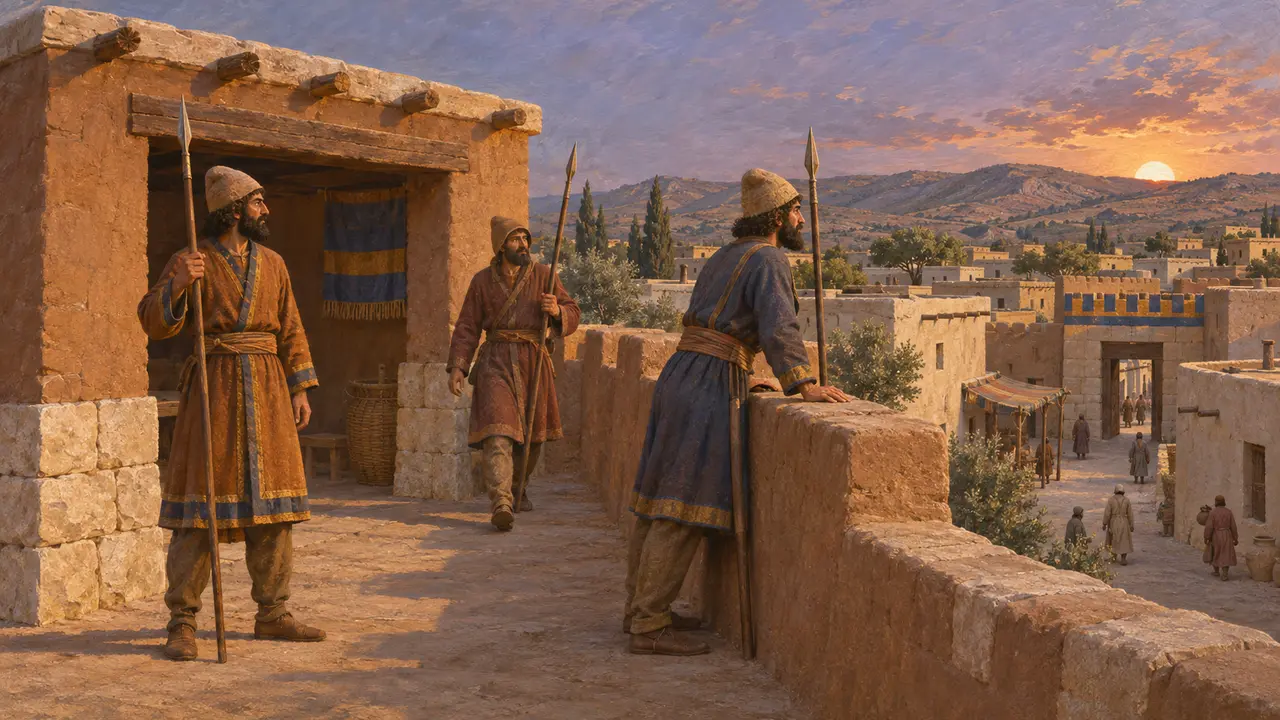
Ancient accountGreek writers describe night watches and guard posts kept against enemies and traitors. Aeneas Tacticus, writing in the 4th century, gives detailed advice on sentries and patrols in a threatened town. He also explains how to quench fires set by attackers, but describes no standing fire corps. The best-documented ancient fire brigade is the Roman vigiles, which Cassius Dio says Augustus set up in 6 CE.
Aeneas Tacticus, How to Survive under Siege; Cassius Dio 55.26
Who burned Persepolis, and why
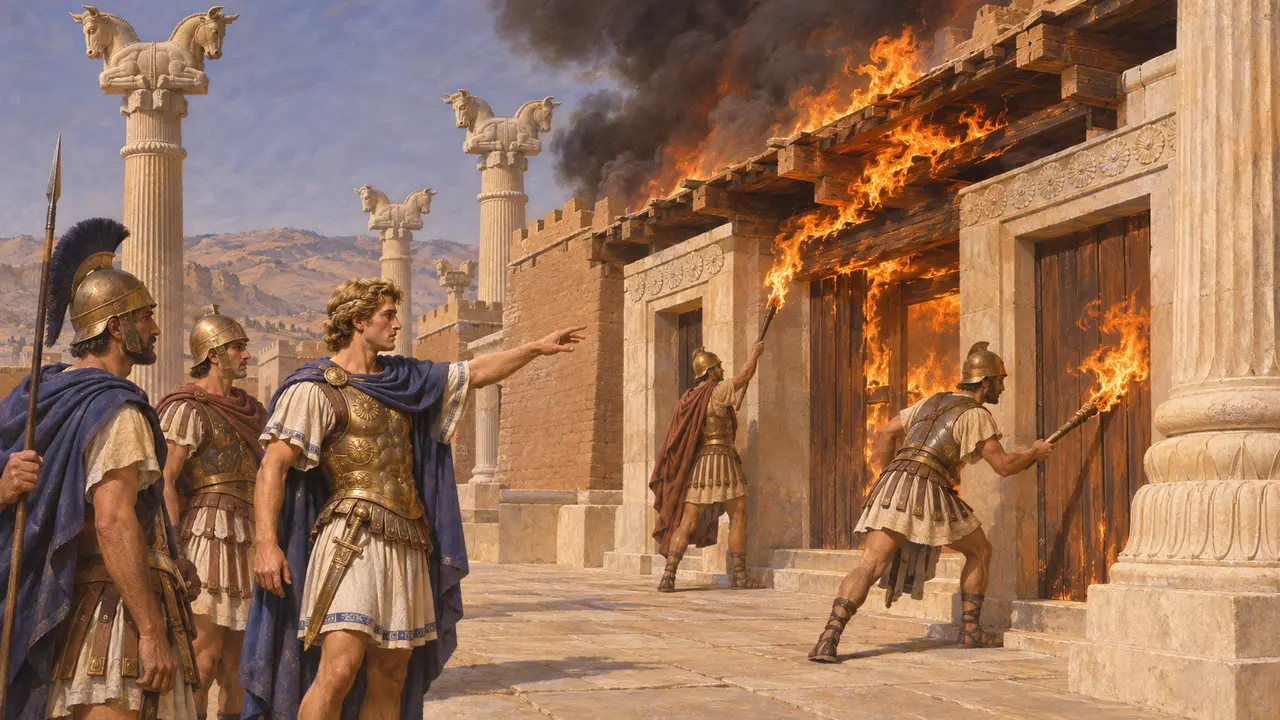
DisputedLater writers disagree about the fire of Persepolis in 330. Arrian presents it as Alexander's deliberate revenge for the Persian burning of Athenian temples in 480. Plutarch and Diodorus tell a moral tale in which the courtesan Thais urged a drunken Alexander to set the palace alight after a feast. Many historians think the burning was a political decision and treat the Thais story as later colouring.
Arrian, Anabasis 3.18; Plutarch, Alexander 38; Diodorus 17.72
Sources
- Herodotus 5.101-102
- E. Schmidt, Persepolis I, 1953
- B. Porten and A. Yardeni, Textbook of Aramaic Documents from Ancient Egypt 1, 1986 (TAD A4.7)
- Aeneas Tacticus, How to Survive under Siege
- Cassius Dio 55.26
- Arrian, Anabasis 3.18