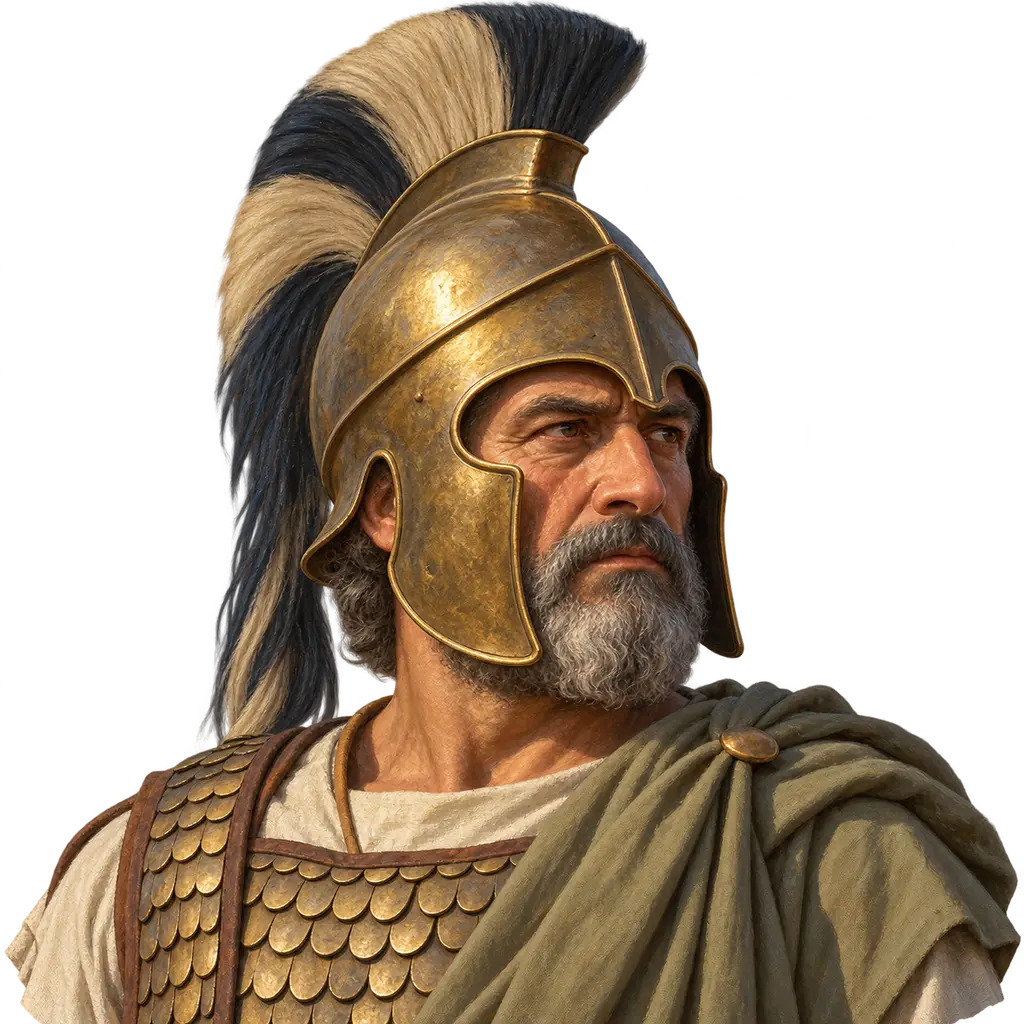
The polemarch
War archon of Athens, one of the nine yearly archons, prominent at Marathon in 490 BCE
The polemarch, or war leader, was one of the nine archons who governed Athens each year. In early Athens he commanded the citizen army. By 490 his place beside the ten elected generals was changing, and Callimachus, polemarch in the year of Marathon, was the last holder of the office known to have led Athenians in battle.
In the game: The game presents Callimachus as the Polemarch at Marathon, following Herodotus. Historically the polemarch was a yearly office that shared command with ten elected generals, and Miltiades is usually credited with the battle plan.
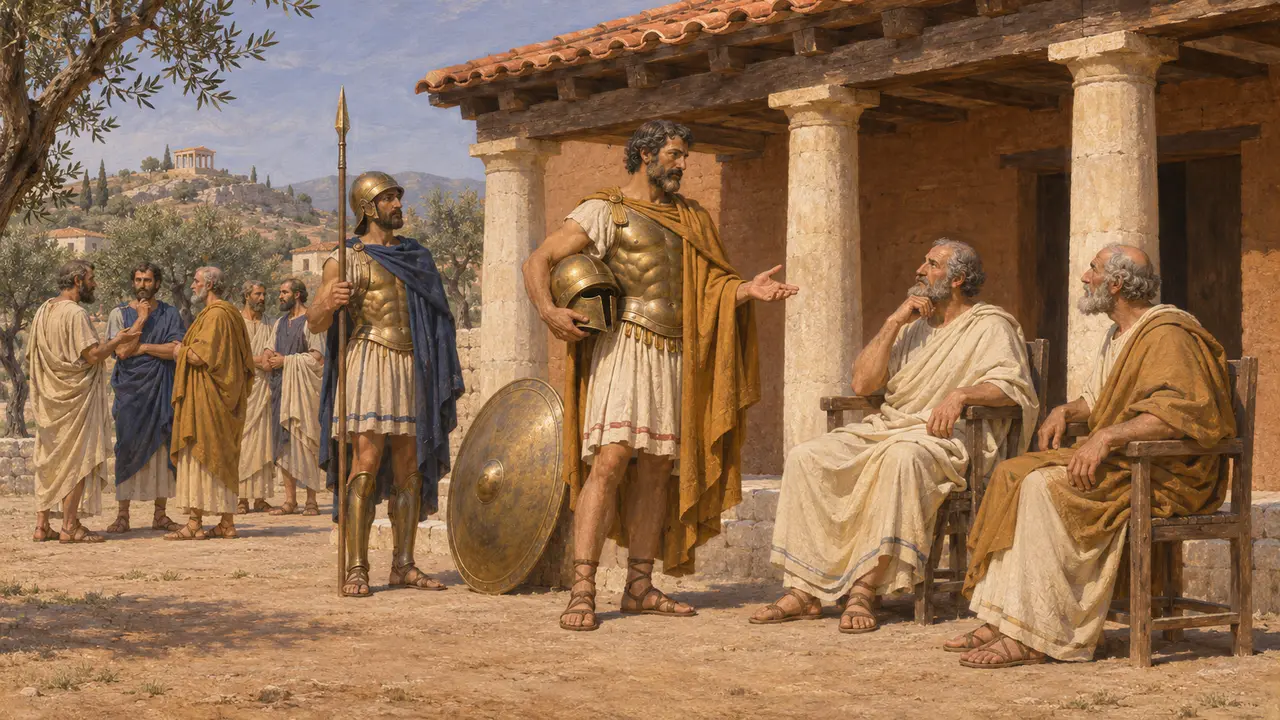
An old office of the Athenian state
Ancient accountThe Aristotelian Constitution of the Athenians says the polemarchy was the second of the great offices to be created, after the king archon, because some holders of the old royal office were weak in war. Later the archon who gave his name to the year was added, and in time six lawgivers joined them to make nine archons. This account was written in the fourth century and rests partly on reconstruction.
Aristotle, Constitution of the Athenians 3.2-4
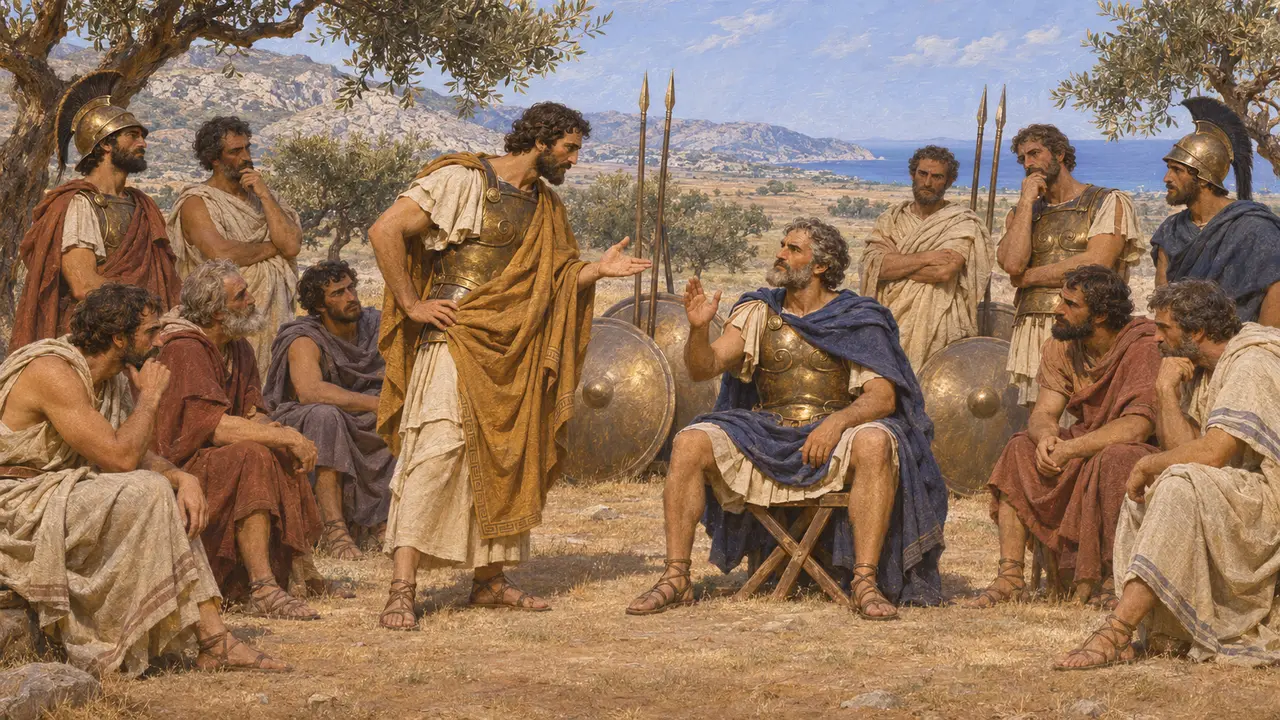
The polemarch and the ten generals
Ancient accountThe same work says that in 501/500 Athens began electing ten generals, one from each tribe, but the polemarch remained leader of the whole army. Herodotus says that at Marathon the generals were split five against five on whether to fight, and the polemarch held the deciding eleventh vote by old custom. Miltiades persuaded Callimachus to vote for battle.
Herodotus 6.109-110; Aristotle, Constitution of the Athenians 22.2
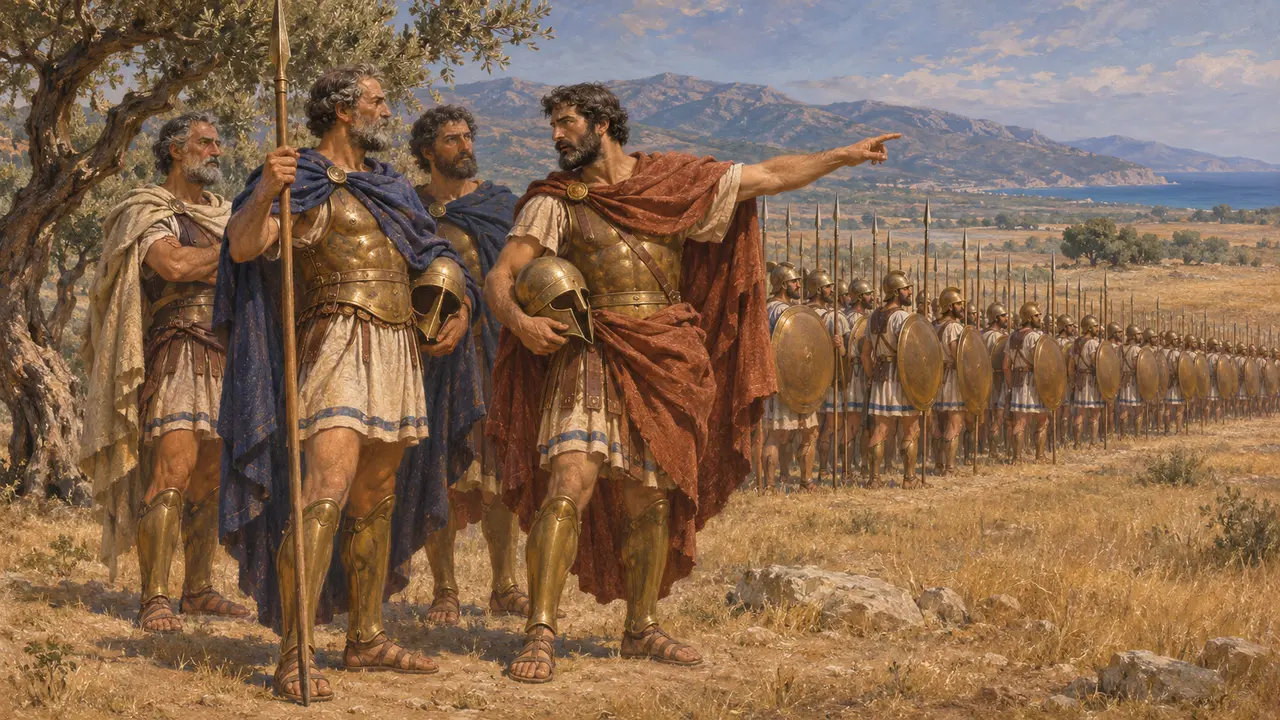
Who really commanded at Marathon
DisputedHerodotus says Callimachus was chosen by lot, but the Constitution of the Athenians dates the selection of archons by lot to 487/6, so he was probably elected. Herodotus also says the generals took turns holding command for a day, yet he credits Miltiades with the plan. Historians still argue whether Callimachus held real command or a largely formal post, with Miltiades directing the fighting.
Herodotus 6.109-110; Aristotle, Constitution of the Athenians 22.5; P. Krentz, The Battle of Marathon, 2010
Callimachus on the right wing
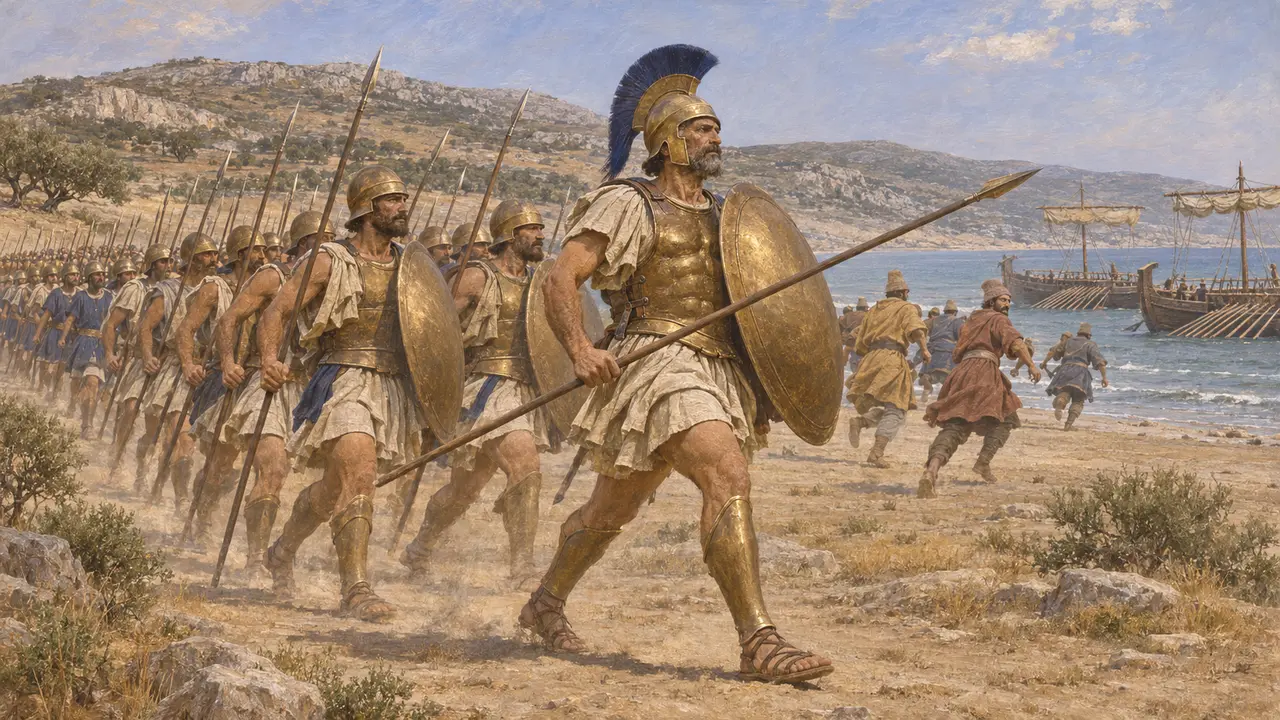
Ancient accountHerodotus says the polemarch led the right wing, the place of honour by Athenian custom, with the tribes in order and the Plataeans on the left. Callimachus was killed in the fighting at the Persian ships. Pausanias, writing centuries later, saw him shown in the painting of Marathon in the Painted Stoa at Athens.
Herodotus 6.111, 6.114; Pausanias 1.15.3
The dedication on the Acropolis
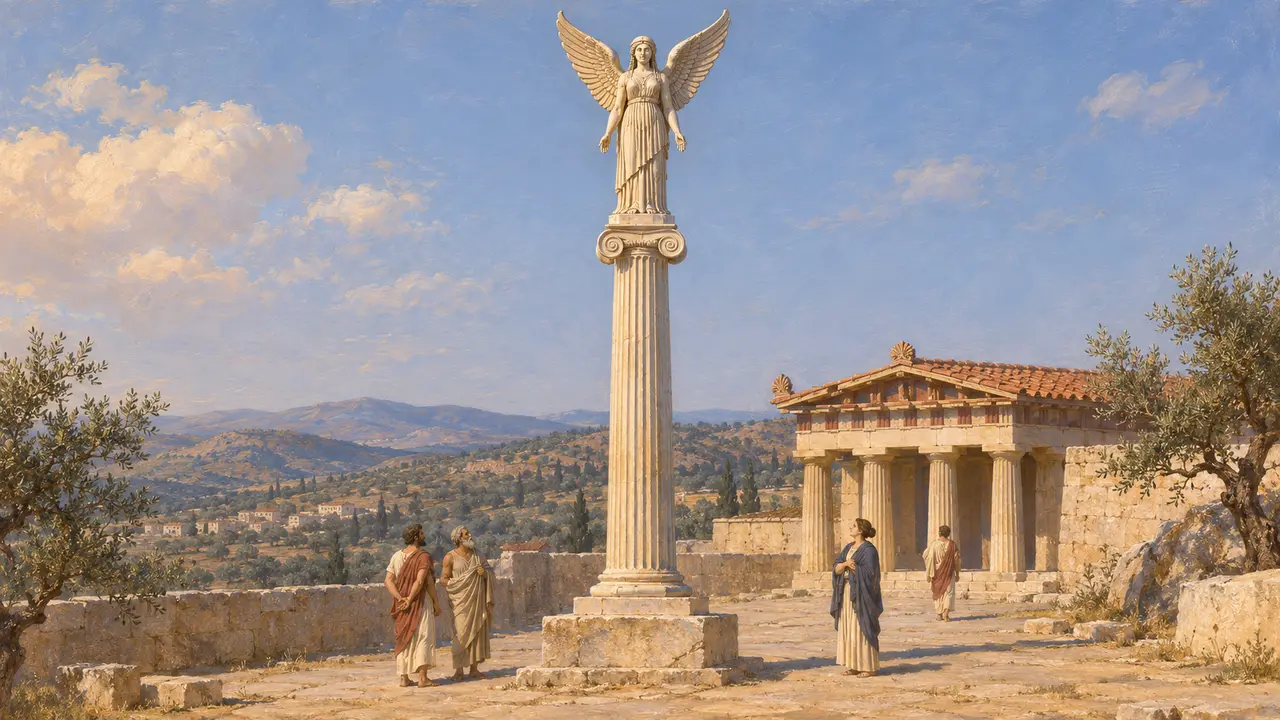
In the recordFragments of a tall Ionic column topped by a winged female figure survive from the Acropolis. They carry an inscription in which Callimachus of Aphidna offers the monument to Athena. The text is broken and its restoration is debated, but it probably called him polemarch and referred to Marathon. If so, it is contemporary evidence that the polemarch was publicly linked with the victory.
IG I³ 784
A legal and religious office afterwards
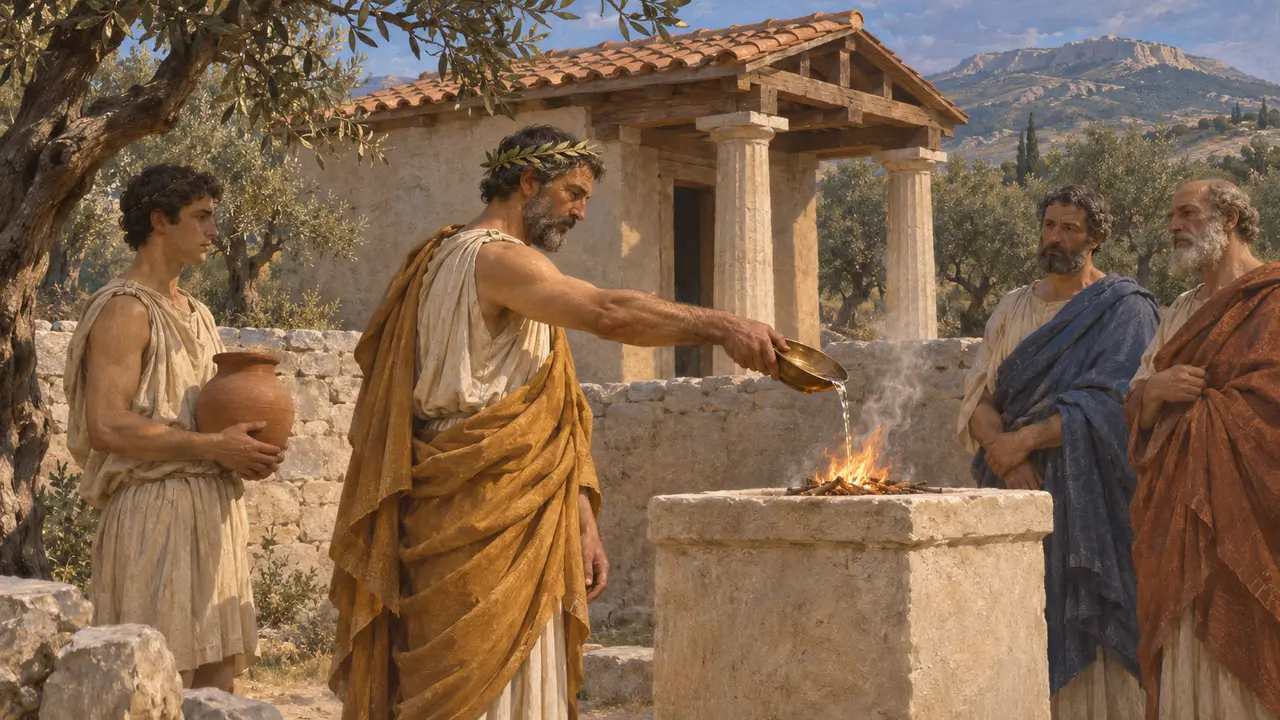
Ancient accountHistorians generally think that once archons were chosen by lot, command in war passed fully to the generals. The Constitution of the Athenians describes the later polemarch handling lawsuits involving resident foreigners and freedmen, and offering sacrifices to Artemis the Huntress and to Enyalios. He also arranged the funeral games for Athenians who had died in war.
Aristotle, Constitution of the Athenians 58
Sources
- Herodotus 6.109-114
- Aristotle, Constitution of the Athenians 3.2-4, 22.2-5, 58
- IG I³ 784
- Pausanias 1.15.3
- P. J. Rhodes, A Commentary on the Aristotelian Athenaion Politeia, 1981
- P. Krentz, The Battle of Marathon, 2010