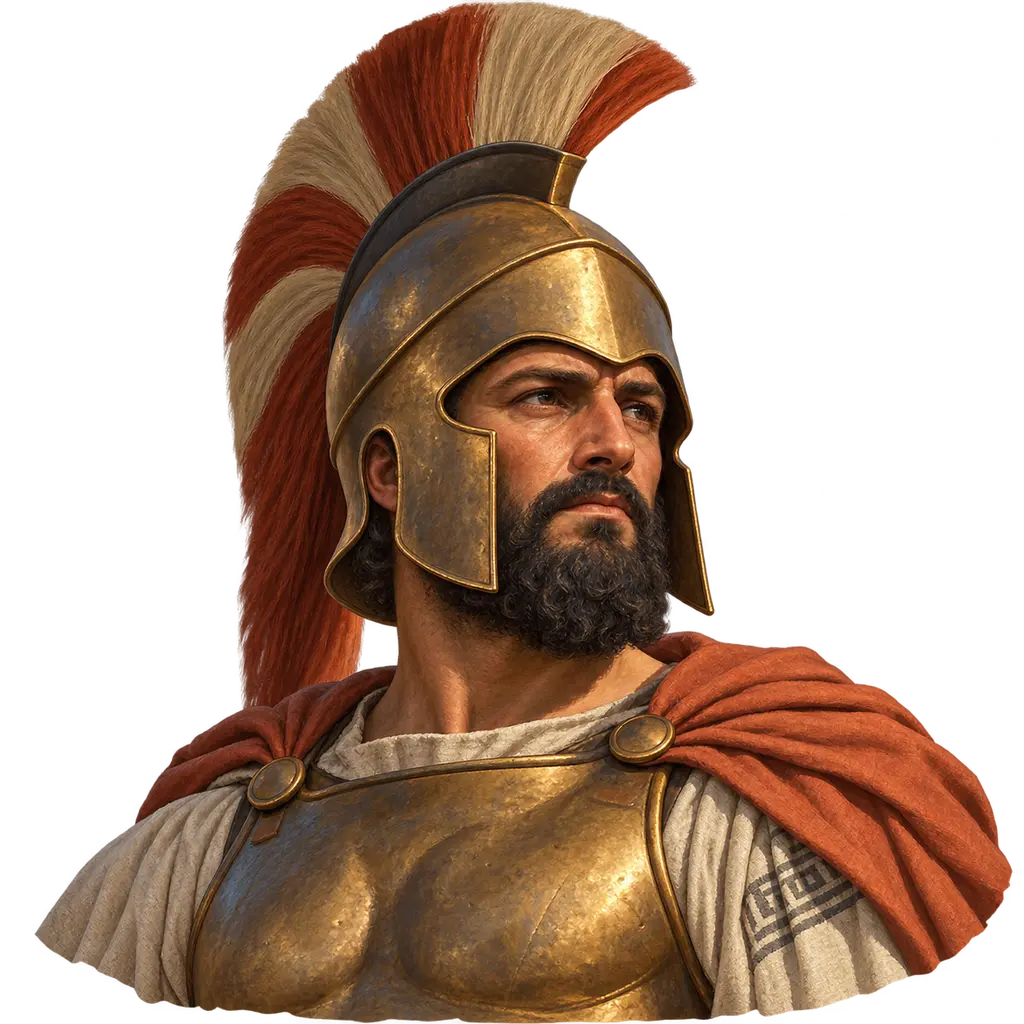
The strategoi
The board of ten elected generals of Athens, from about 501 BCE
The strategoi were the ten generals of Athens, elected each year by the citizens, at first one from each of the ten tribes created by Cleisthenes. At Marathon in 490 they shared the command with the polemarch Callimachus against the army of Datis and Artaphernes. After 487, when the archons began to be chosen by lot, the generalship probably became the leading office for men such as Themistocles, Aristides and Xanthippus.
In the game: The game shows the strategoi as the ten Athenian generals, with Miltiades singled out among them. In 490 command was in fact shared with the polemarch Callimachus, who cast the deciding vote for battle.
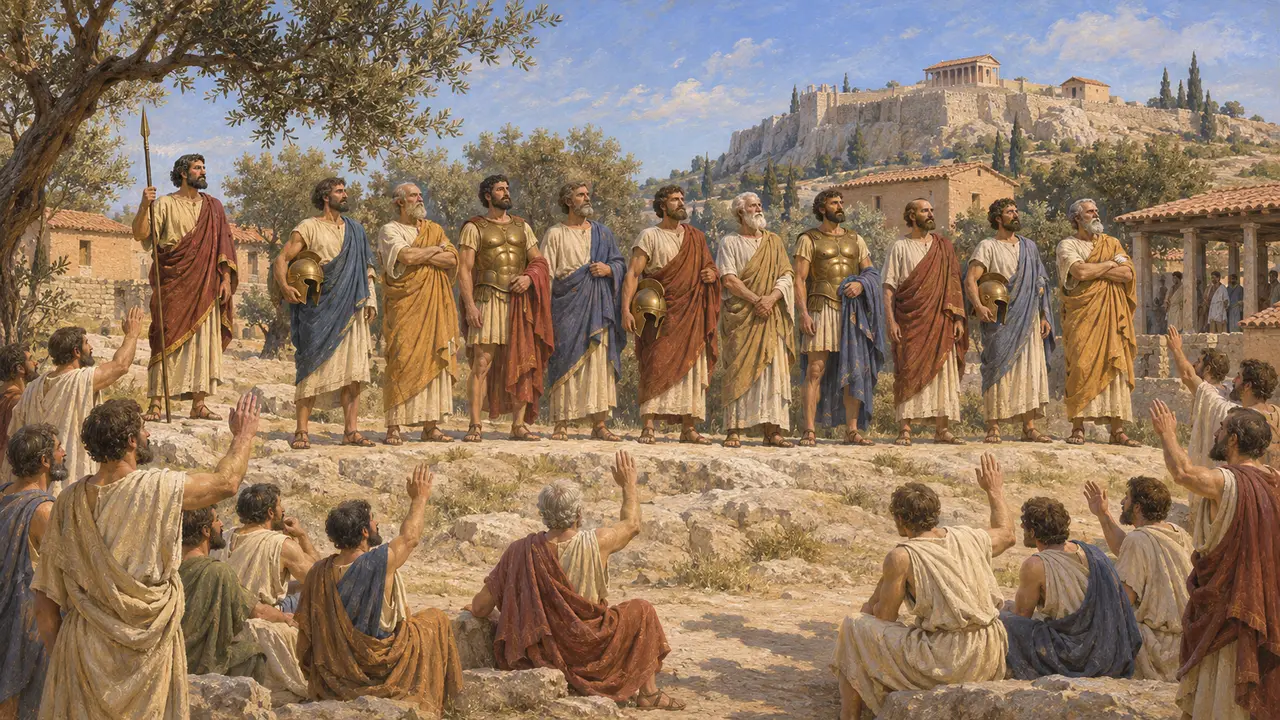
A board of ten, one for each tribe
Ancient accountCleisthenes reorganised the Athenian citizens into ten new tribes in about 508. The Athenaion Politeia, written in Aristotle's school in the 320s, dates the election of generals by tribe, one from each, to about 501, and says the polemarch still led the whole army. It also records that in its own day generals were elected by show of hands rather than by lot and could hold office again and again.
Aristotle, Athenaion Politeia 22.2; 61.1; 62.3
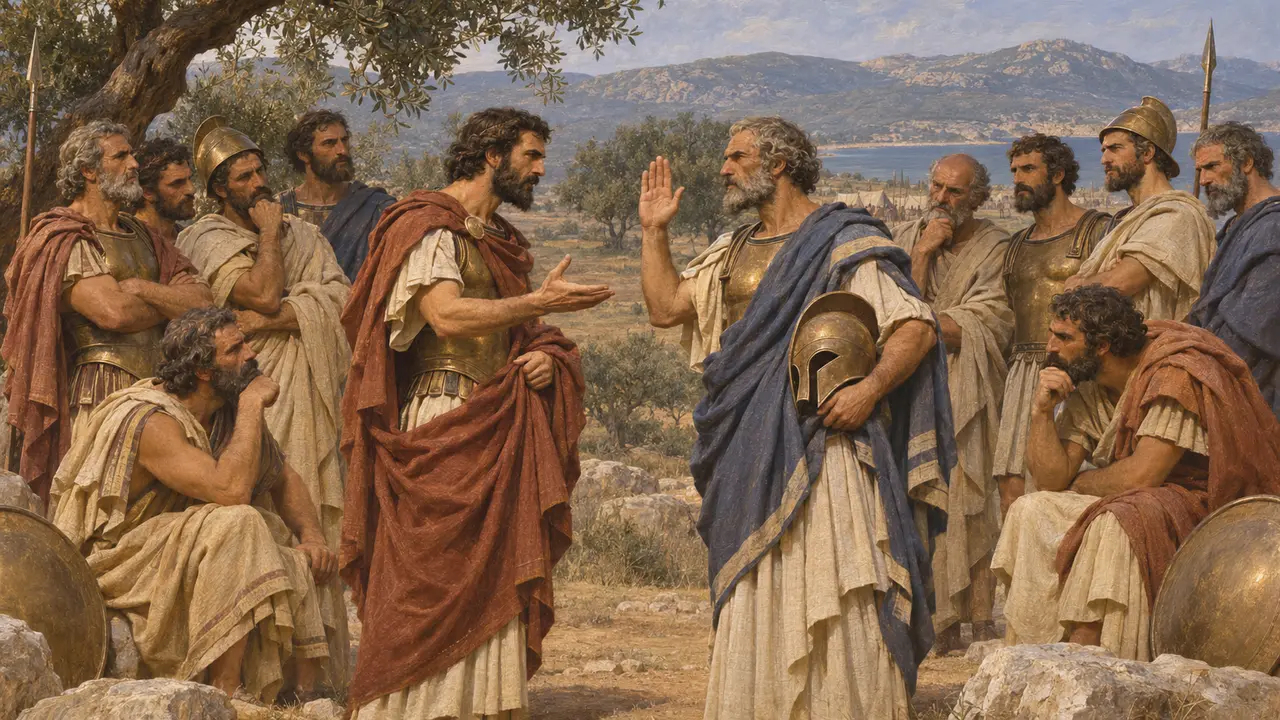
Ten generals at Marathon
Ancient accountHerodotus says the Athenians at Marathon were led by ten generals, Miltiades among them. Miltiades had ruled the Thracian Chersonese and had fled when the Phoenician fleet of the Persians came against him. At Athens he was tried for tyranny there, acquitted and then elected general. When the generals split five against five on whether to fight, Miltiades persuaded the polemarch Callimachus to cast the deciding vote for battle.
Herodotus 6.103-110
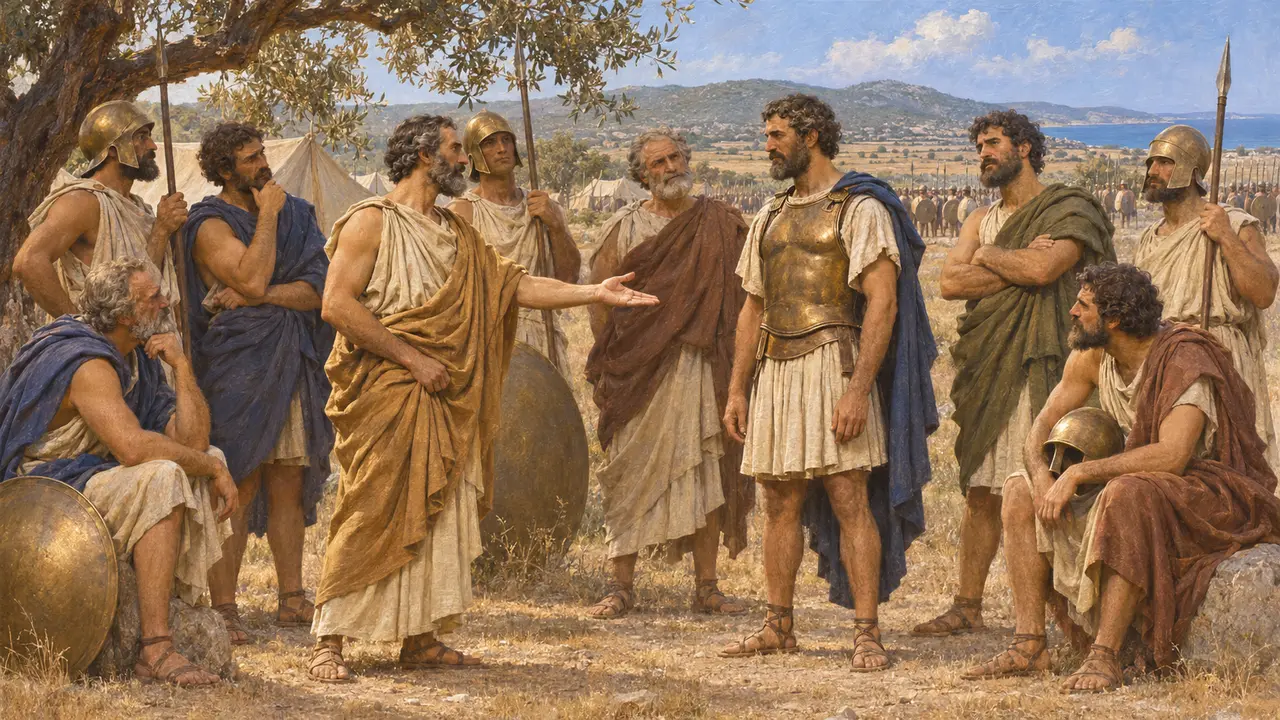
Who really commanded at Marathon
DisputedHerodotus says the presidency of the board passed from general to general day by day. In his account the generals who favoured battle gave their days to Miltiades, who still waited for his own day before attacking. Plutarch credits Aristides with giving up his day first. Historians argue whether the rotation is believable and who held real command. Herodotus's emphasis on Miltiades may reflect the family tradition of his son Cimon.
Herodotus 6.110; Plutarch, Aristides 5; P. Krentz, The Battle of Marathon, 2010
After the archons were chosen by lot
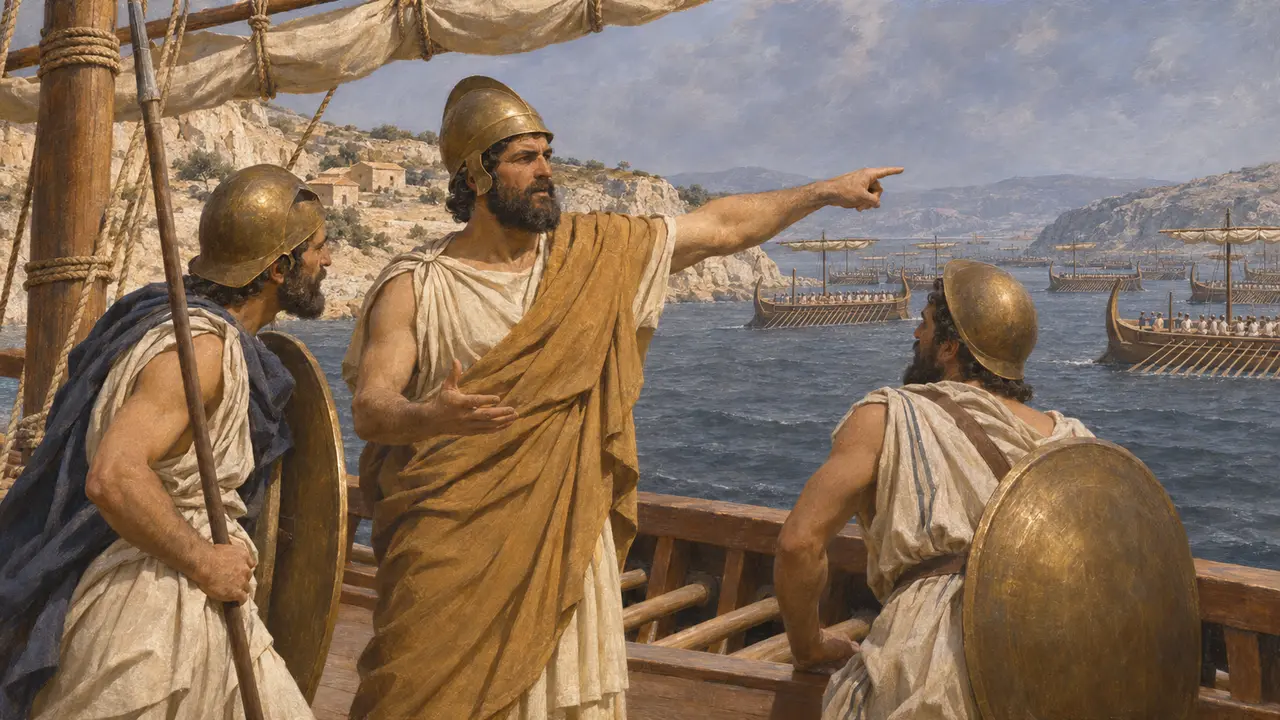
Ancient accountThe Athenaion Politeia reports that from 487 the archons were chosen by lot from a list of candidates. Historians usually conclude that ambitious men then turned to the elected generalship instead. Themistocles led the Athenian ships at Salamis in 480. In 479 Xanthippus commanded the Athenian ships in the Greek fleet, and Aristides led the Athenian hoplites at Plataea.
Aristotle, Athenaion Politeia 22.5; Herodotus 8.131; Herodotus 9.28
Answerable to the people
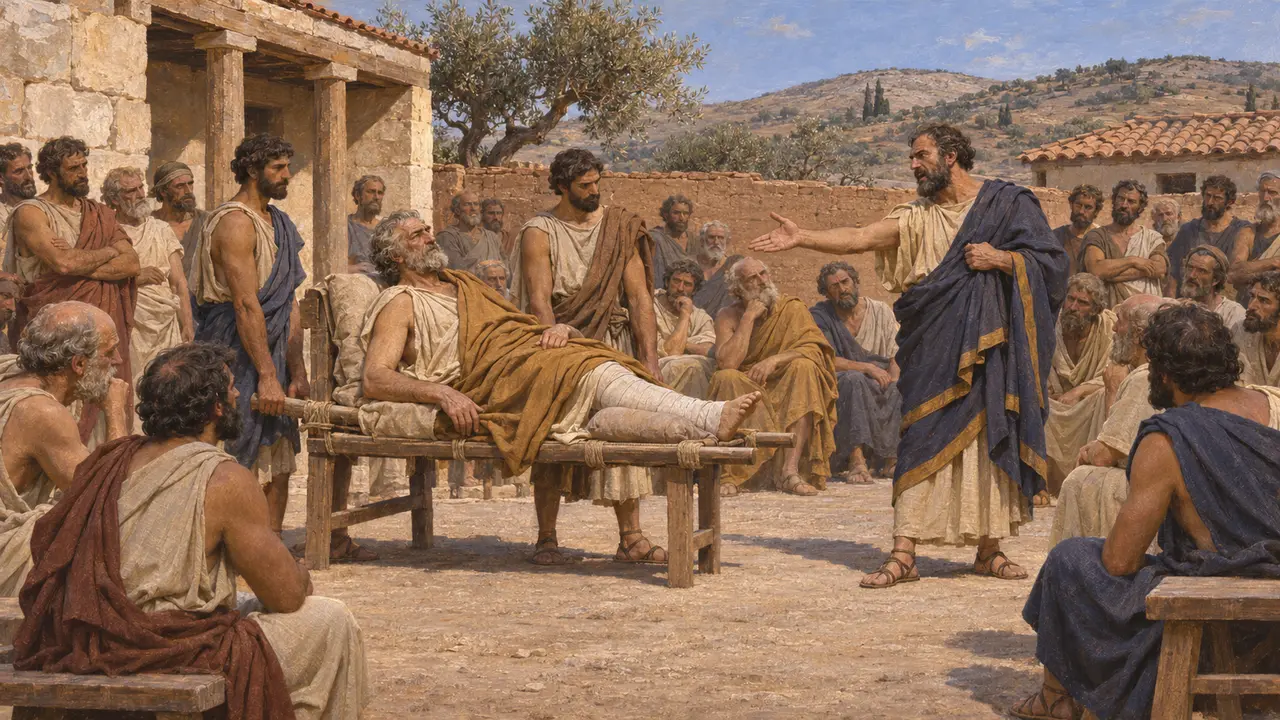
Ancient accountGenerals could be prosecuted before the citizens. Herodotus tells how Miltiades, soon after Marathon, led seventy ships against Paros and failed to take it. Xanthippus then accused him of deceiving the Athenians. Miltiades, carried into court with a wounded leg, was fined fifty talents and died of the wound, and his son Cimon paid the fine.
Herodotus 6.132-136
Sources
- Herodotus 6.103-136
- Aristotle, Athenaion Politeia 22
- Plutarch, Aristides
- C. Hignett, A History of the Athenian Constitution, 1952
- D. Hamel, Athenian Generals: Military Authority in the Classical Period, 1998
- P. Krentz, The Battle of Marathon, 2010