Encyclopedia › Soldiers and ships
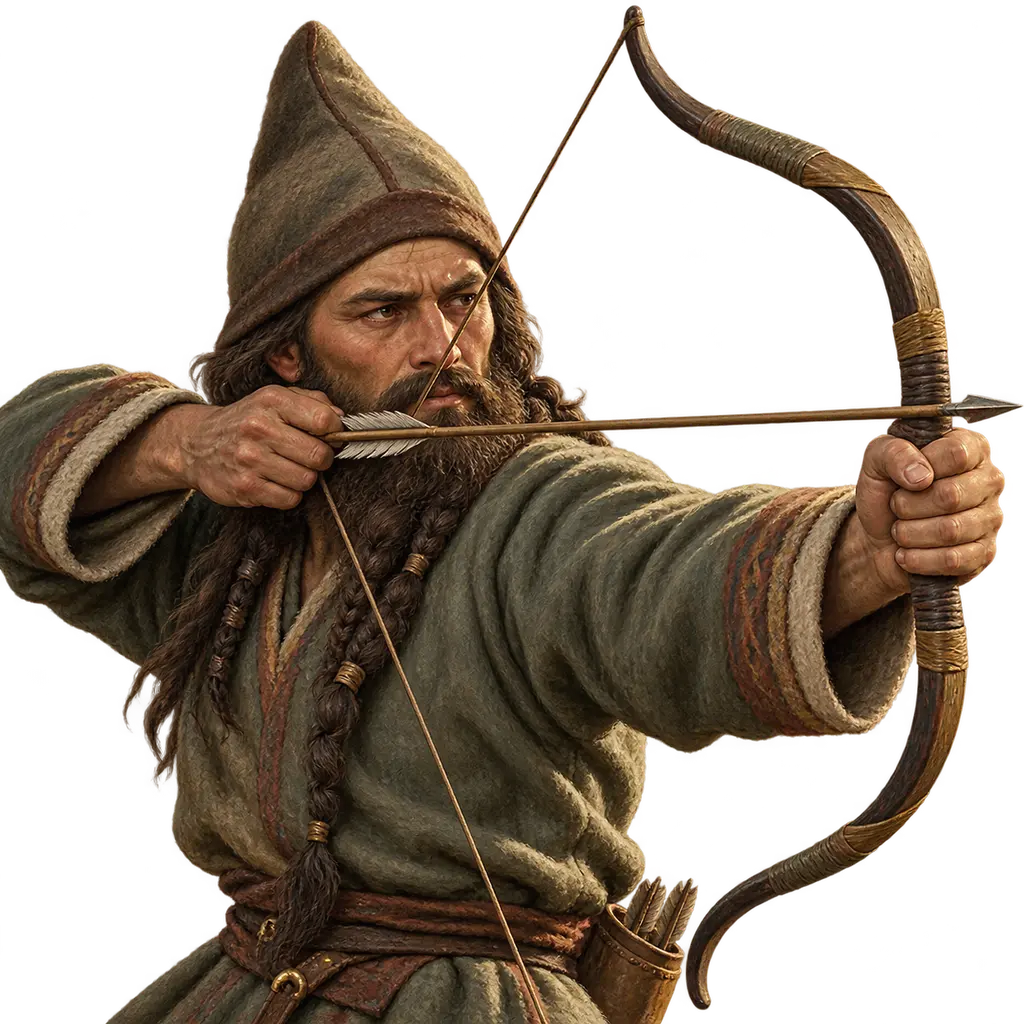
Scythian warriors
Nomad horsemen of the Pontic steppe who faced Darius's army, about 513 BCE
In the game: Level 6: The Bridge of Boats
The Scythians were Iranian-speaking nomads living on the steppe north of the Black Sea, famous as mounted archers. When Darius crossed the Ister into their land in about 513, they withdrew rather than give battle, wore down his army, and forced him back to his bridge. Their success became a lasting Greek lesson about the limits of royal power.
In the game: In The Ister, Scythians appear as archers, horse archers, spearmen, a chief and a champion. The game has Persian horsemen run down Scythian riders; Herodotus (4.128) says Scythian horse routed Persian cavalry.
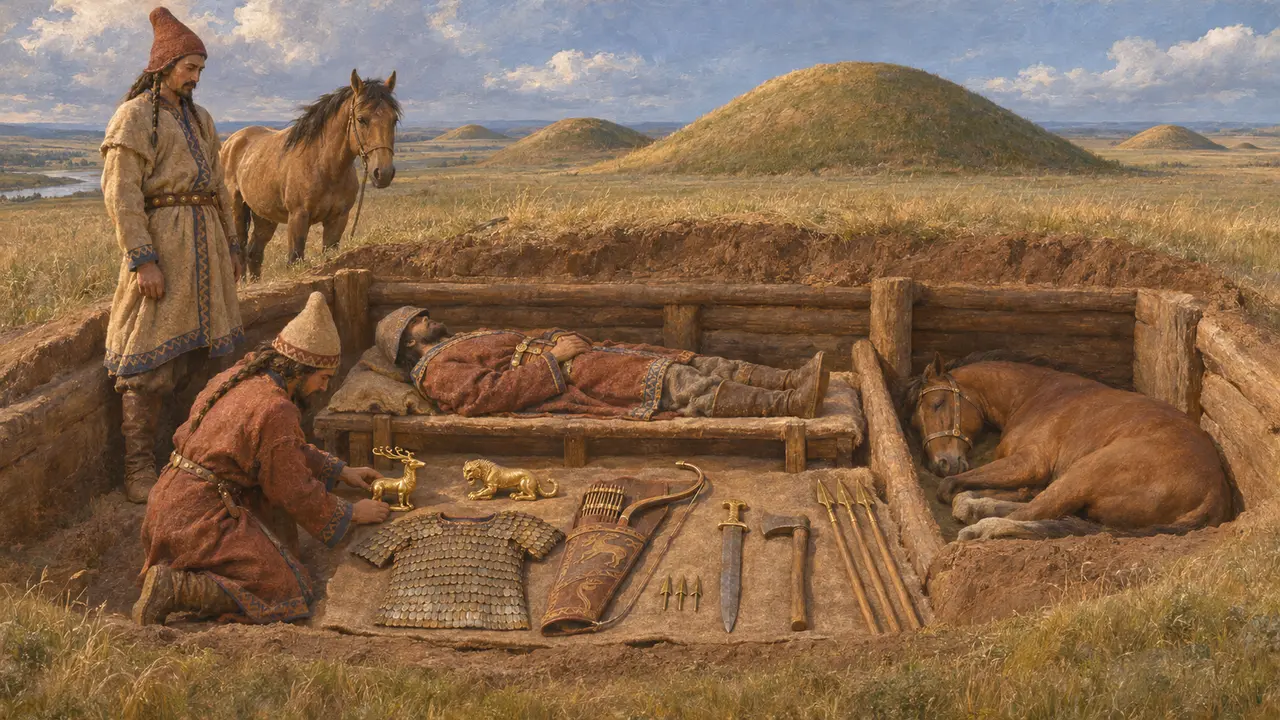
Graves of the steppe riders
In the recordBurial mounds (kurgans) north of the Black Sea and in the Kuban, such as Kelermes and the Melgunov mound of the 7th century, hold the gear of mounted warriors. Finds include composite bows carried in a combined bow and quiver case, three-bladed bronze arrowheads, short swords, battle-axes, spears and scale armour. Horses were often buried with their masters, along with gold work in animal style.
R. Rolle, The World of the Scythians, 1989
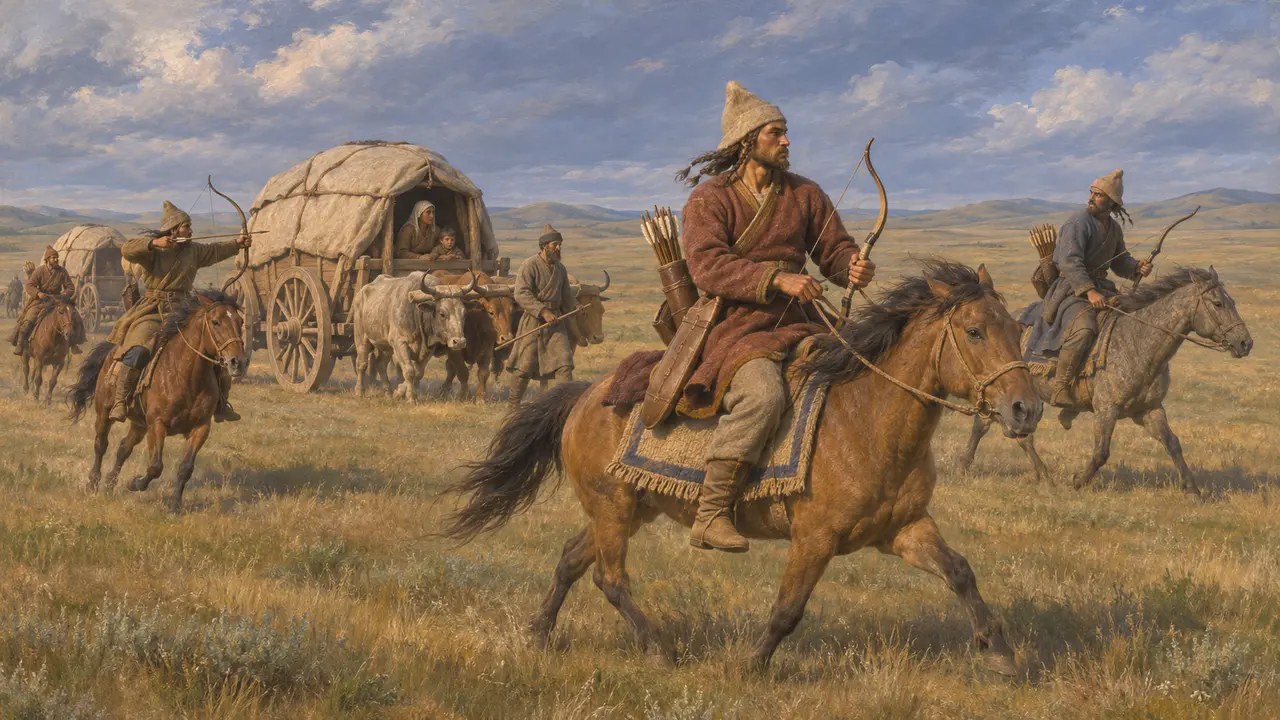
A people without towns
Ancient accountHerodotus says the Scythians had no cities or walls, lived in wagons and fought as mounted archers, so no invader could catch them. He also describes warriors taking enemy heads and scalps as trophies and making drinking cups from skulls. His long Scythian survey mixes travellers' reports with Greek assumptions and should be read with care.
Herodotus 4.46; 4.64-65
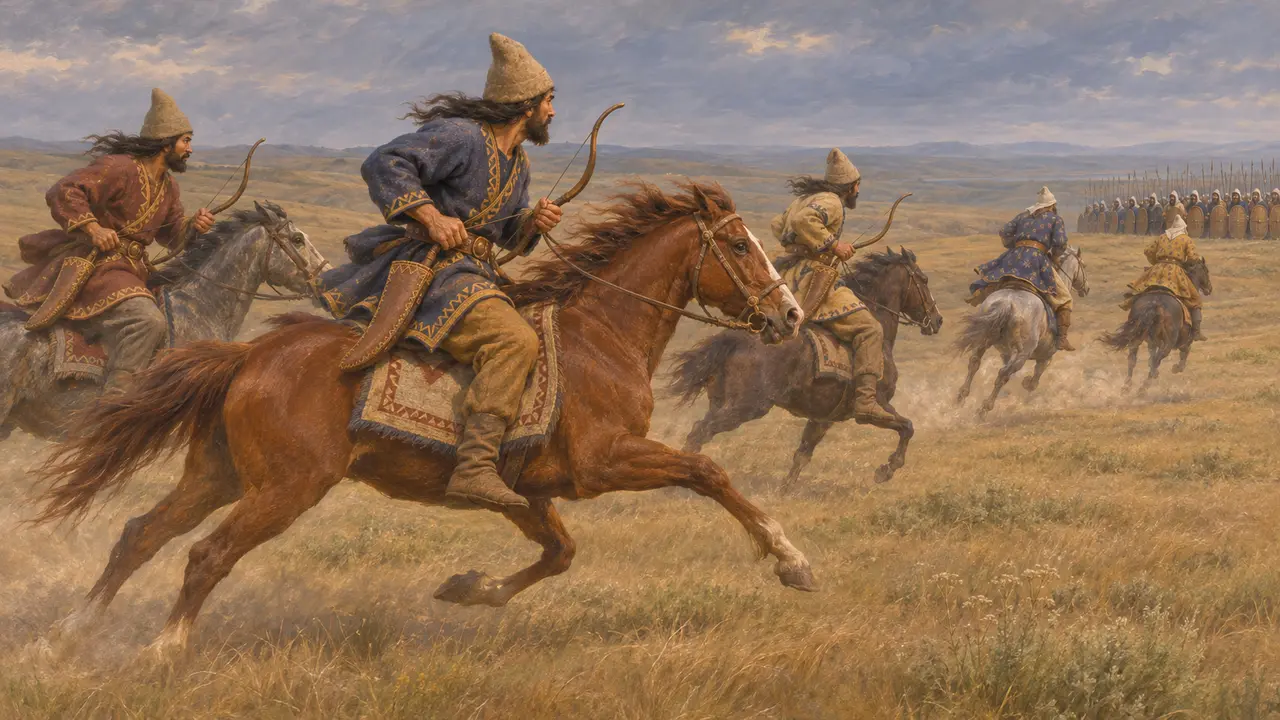
Against Darius beyond the Ister
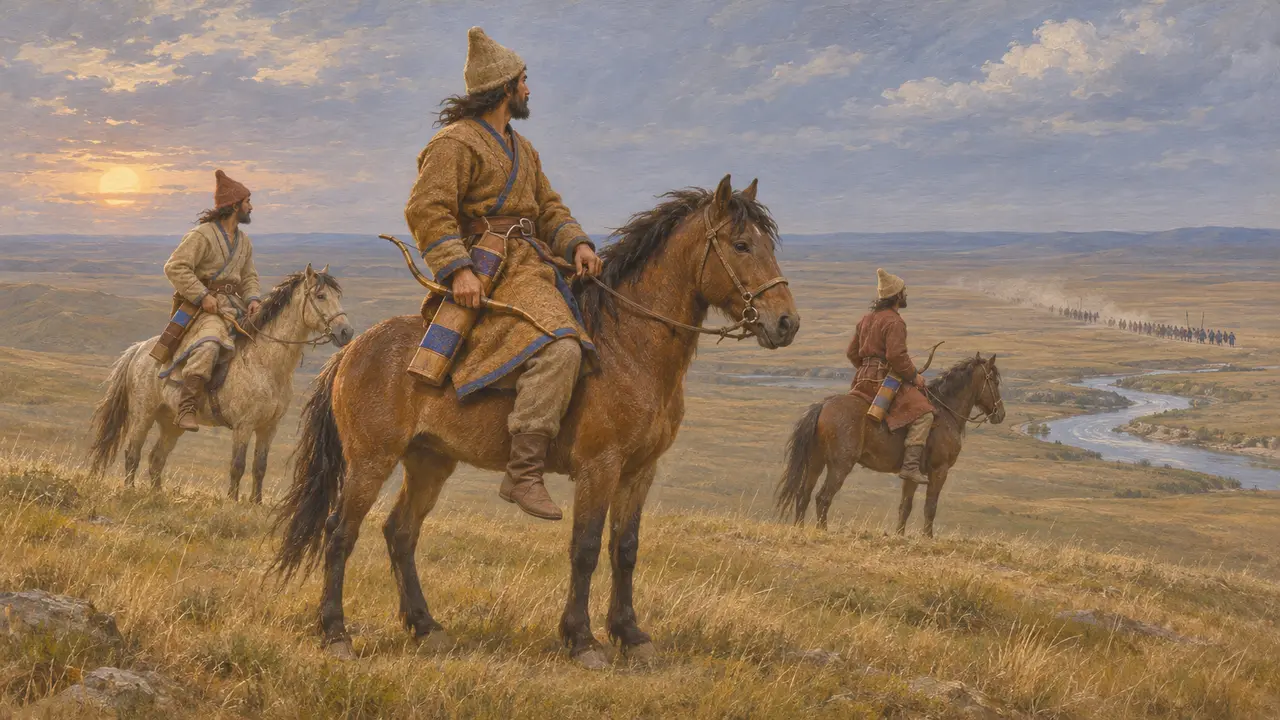
Ancient accountHerodotus says the Scythians, under three kings of whom Idanthyrsus was the chief, refused open battle, retreated ahead of the Persians and filled in wells and springs. Their horsemen kept routing the Persian cavalry, which fled back to the infantry. The braying of the Persians' donkeys and mules unsettled the Scythian horses. Darius at last slipped away by night, leaving his sick men behind, and reached the bridge the Ionians had kept.
Herodotus 4.120-129; 4.134-141
How far and why Darius went
DisputedHerodotus gives Darius 700,000 men and a march as far as the Oarus river, and both are widely doubted as exaggerated. Ctesias, known through a later summary, gives an even larger army and a short campaign ending in hasty retreat. Historians still argue whether the campaign was a failed conquest or a limited show of force. Darius's own lists of peoples include Saka beyond the sea, which may mean he claimed some result in Europe.
Herodotus 4.87; 4.124; Ctesias, Persica; DNa; P. Briant, From Cyrus to Alexander, 2002
The riddle of the gifts
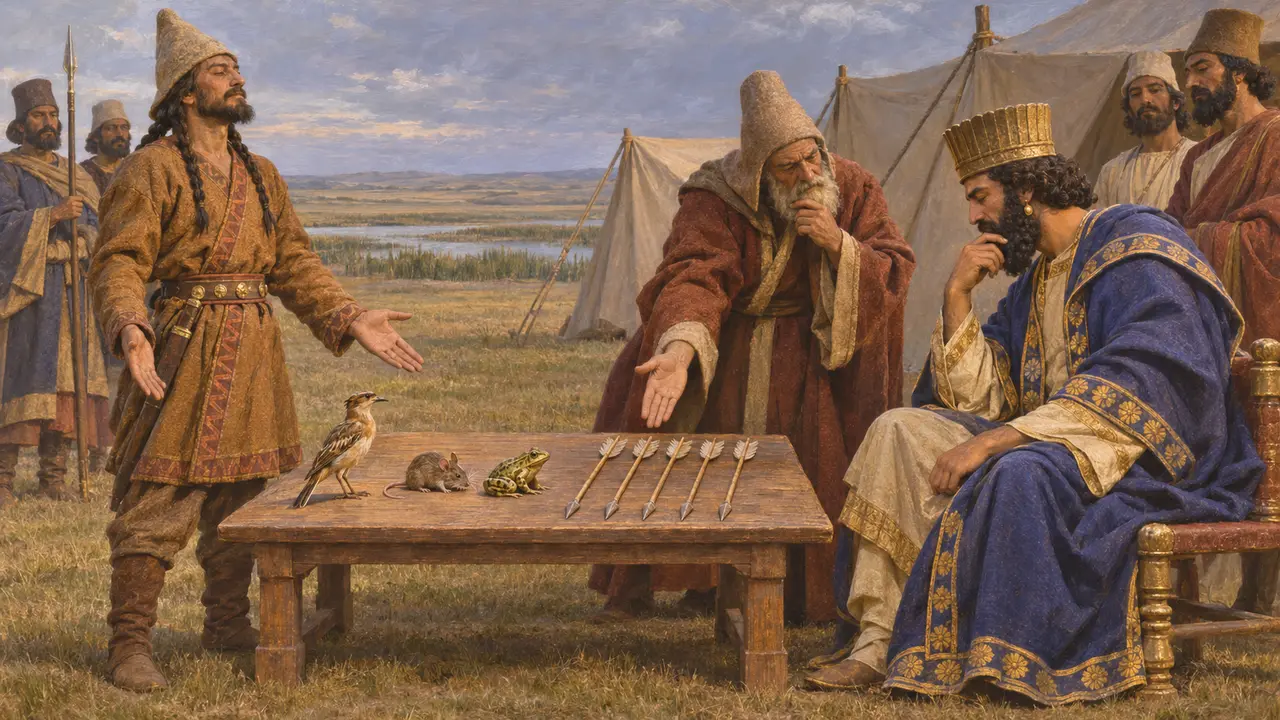
Later legendHerodotus tells that the Scythians sent Darius a bird, a mouse, a frog and five arrows. Darius read it as surrender, but Gobryas explained it as a threat: unless the Persians could fly, hide underground or leap into marshes, the arrows would kill them. The story is shaped as a moral tale about royal pride and should not be taken as a record.
Herodotus 4.131-132
Sources
- Herodotus, Histories, Book 4
- R. Rolle, The World of the Scythians, 1989
- P. Briant, From Cyrus to Alexander, 2002
- A. Kuhrt, The Persian Empire: A Corpus of Sources, 2007
- DNa
- Ctesias, Persica