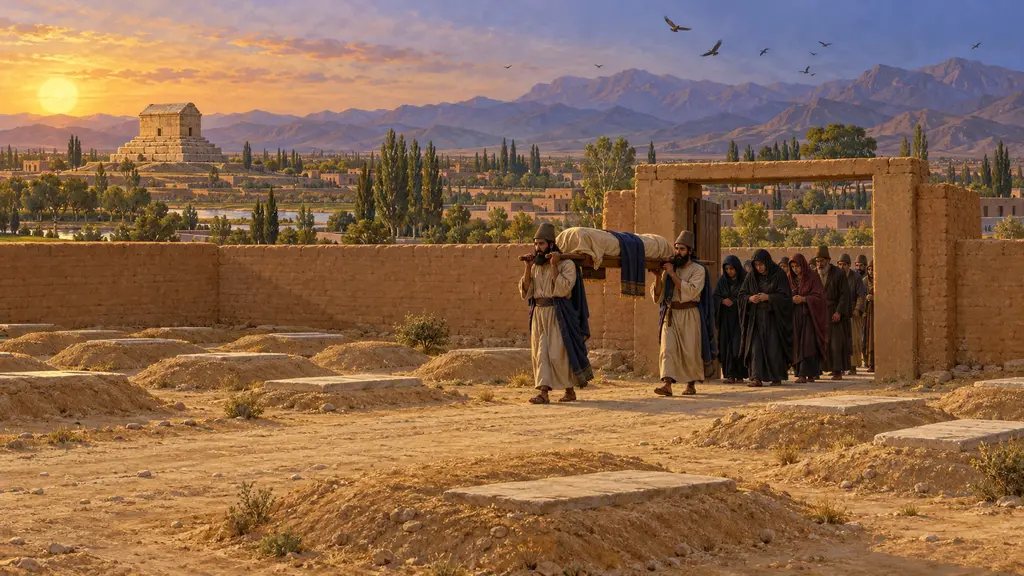
Necropolis
The cemeteries on the western desert edge of Memphis, Egypt, as in 525-524 BCE
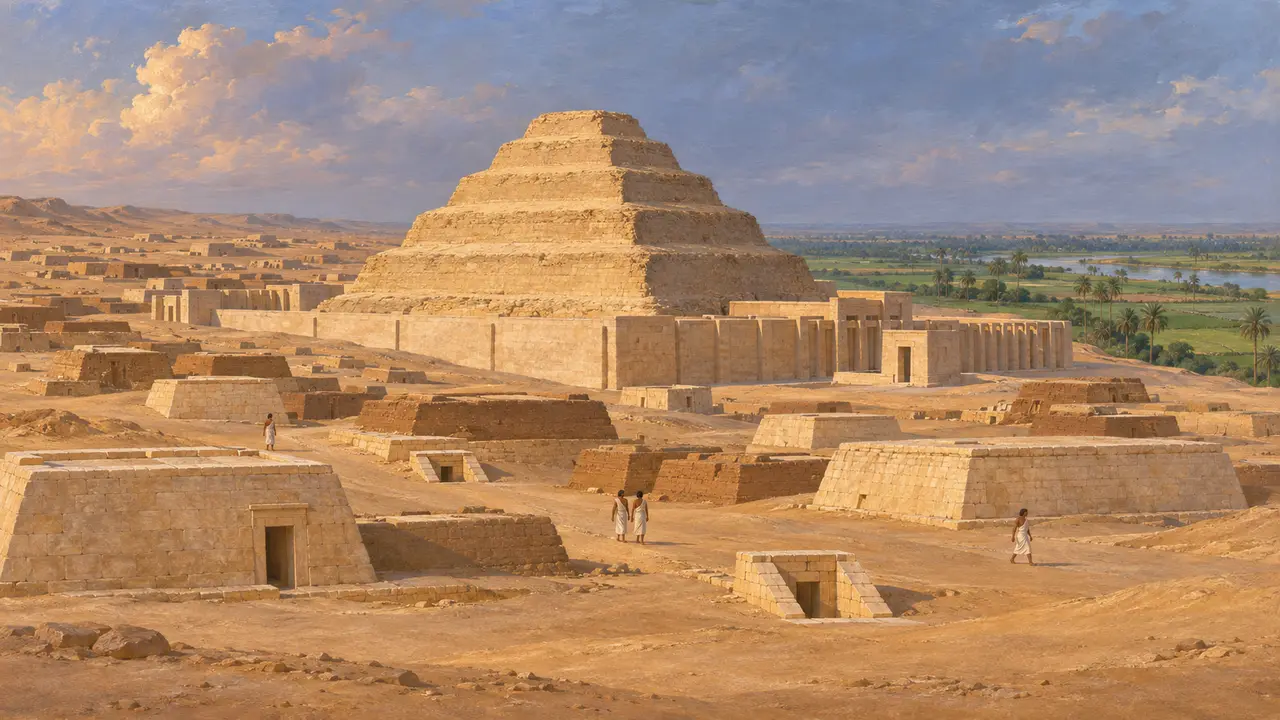
West of Memphis, on the dry plateau above the Nile flood, lay one of the largest burial grounds in Egypt, now known by names such as Saqqara and Abusir. For more than two thousand years before the Persian conquest, Memphites buried their dead there. Kings, priests, officials and the sacred Apis bulls were laid to rest on the same desert edge.
In the game: In the Memphis level the Burial Ground appears as the Necropolis, where bearers carry the dead. Sickness from unburied dead is a game simplification, and the seventy days in natron follows Herodotus, though the drying probably took less.
A city of the dead beyond the flood
In the recordExcavation shows that the Memphite cemeteries ran for many kilometres along the desert edge west of the city, from Giza through Abusir and Saqqara to Dahshur. The sand lay above the reach of the yearly flood and was too dry to farm, which is partly why burials were made there. At Saqqara, the Step Pyramid of Djoser stood among tombs from every later age, including many shaft tombs of the Saite period just before the Persians came.
Excavation reports at Saqqara and Abusir; J. Taylor, Death and the Afterlife in Ancient Egypt, 2001
Herodotus on the embalmers
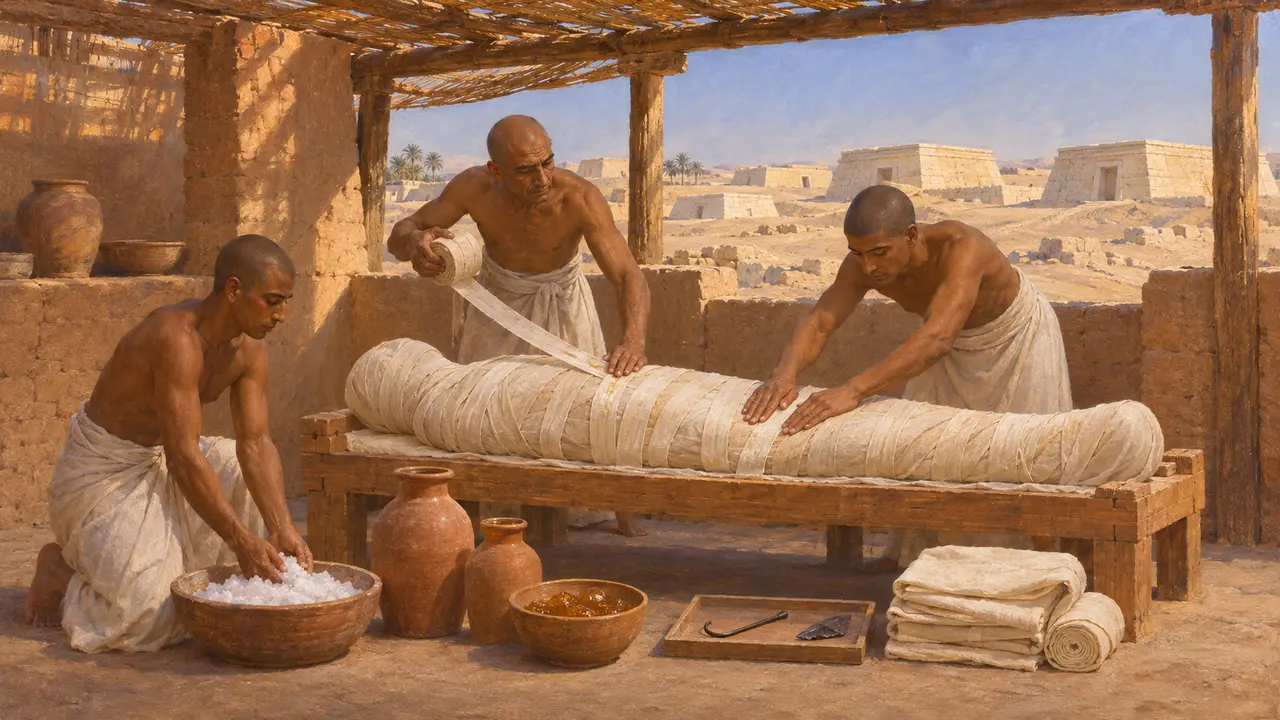
Ancient accountHerodotus says that embalmers offered three grades of treatment at three prices. For the costliest, they drew out the brain with an iron hook, opened the flank with a sharp Ethiopian stone, and removed the organs. They then laid the body in natron and wrapped it in linen bands smeared with gum. He says cheaper methods used injections of cedar oil or a simple purge before the natron.
Herodotus 2.86-88
How long the drying took
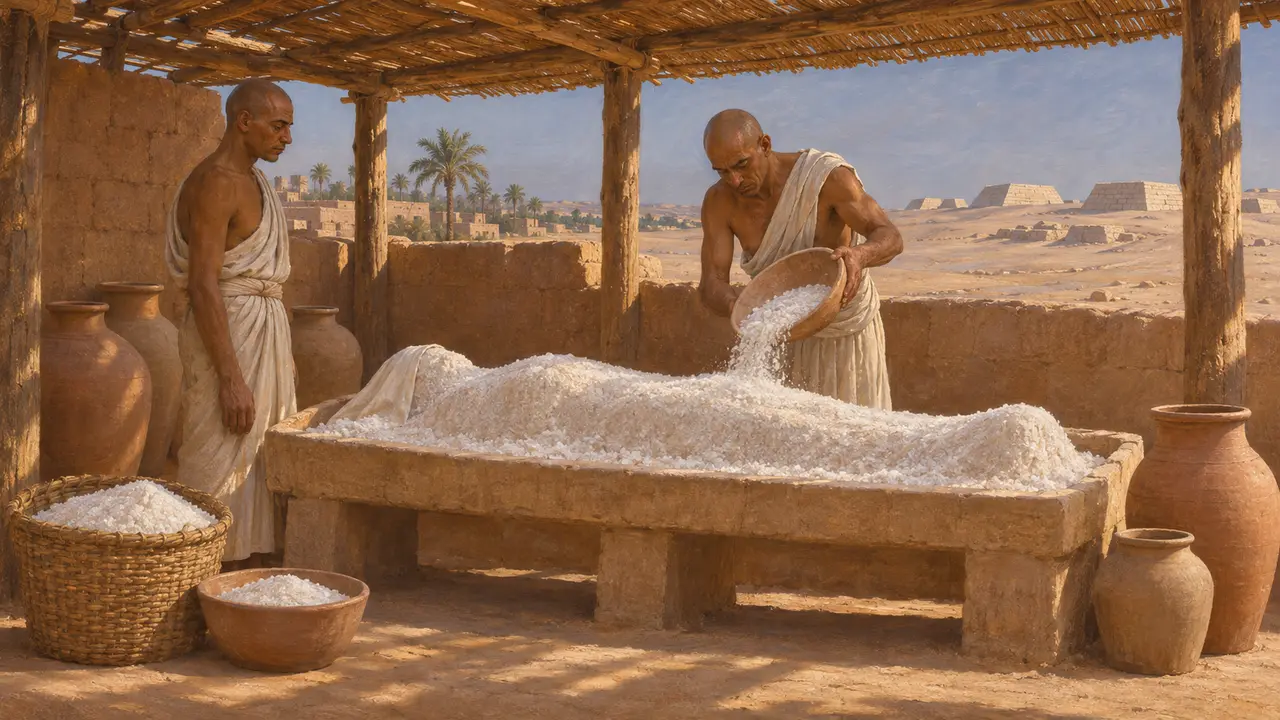
DisputedHerodotus says the body lay in natron for seventy days and no longer. Most Egyptologists read the seventy days as the length of the whole rite, from death to burial. They think the drying in natron itself probably took about forty days. The biblical account of Jacob's burial also separates forty days of embalming from seventy days of mourning by the Egyptians.
Herodotus 2.86; Genesis 50:3; S. Ikram and A. Dodson, The Mummy in Ancient Egypt, 1998
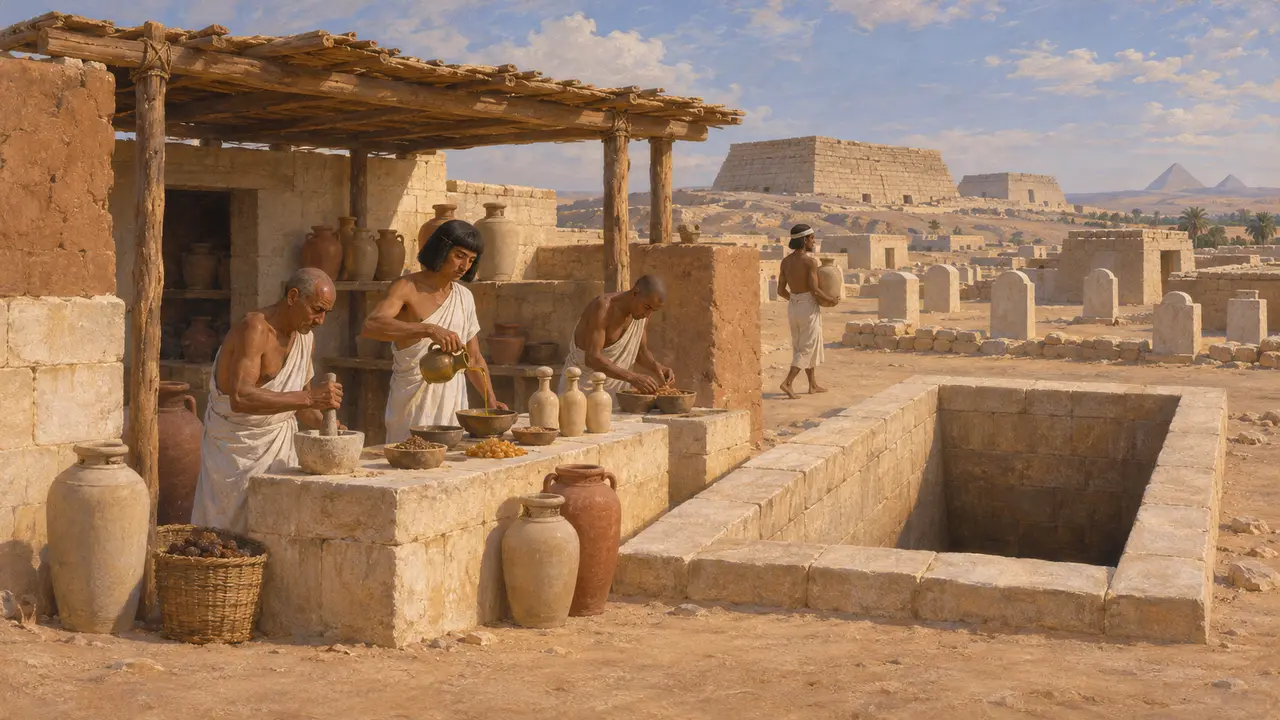
Workshops and tombs of the time
In the recordIn 2018 excavators at Saqqara found an embalming workshop of the Saite and Persian periods, with vessels for oils and resins, beside burial shafts. Nearby at Abusir, Czech archaeologists cleared the great shaft tomb built for Udjahorresnet, the Egyptian official who served Cambyses and Darius. Carian and Aramaic funerary stones from Saqqara show that foreigners living in Memphis were buried there too.
L. Bareš, Abusir IV: The Shaft Tomb of Udjahorresnet, 1999; O. Masson, Carian Inscriptions from North Saqqâra and Buhen, 1978; Saqqara excavation reports
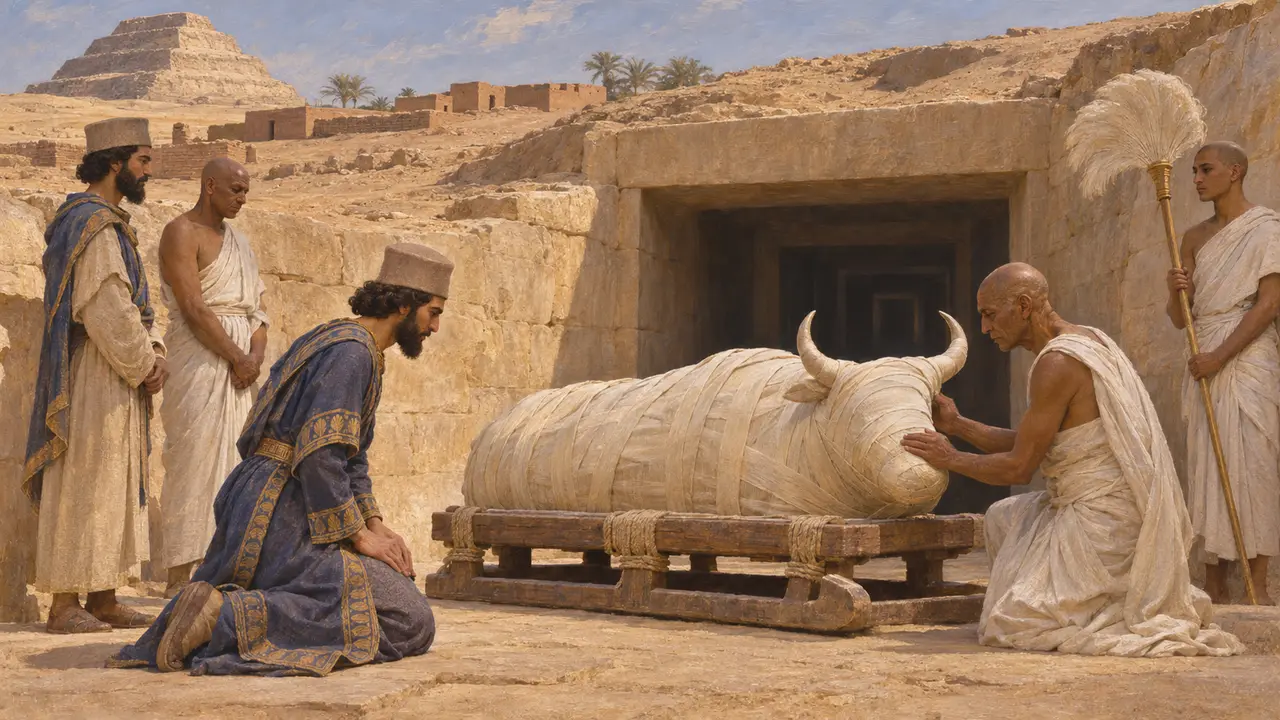
The Apis burials under Cambyses
In the recordThe Apis bulls of Memphis were buried in great underground galleries at Saqqara, the Serapeum. An Apis died and was buried in Cambyses' sixth regnal year, about 524, and a stela from the burial shows Cambyses kneeling before the bull. Herodotus later told how Cambyses killed an Apis, a story this evidence does not support, though some scholars link his tale to the next bull.
Apis stela of Cambyses' year 6; G. Posener, La première domination perse en Égypte, 1936; Herodotus 3.27-29
Sources
- Herodotus 2.86-88
- S. Ikram and A. Dodson, The Mummy in Ancient Egypt, 1998
- J. Taylor, Death and the Afterlife in Ancient Egypt, 2001
- L. Bareš, Abusir IV: The Shaft Tomb of Udjahorresnet, 1999
- G. Posener, La première domination perse en Égypte, 1936
- P. Briant, From Cyrus to Alexander, 2002