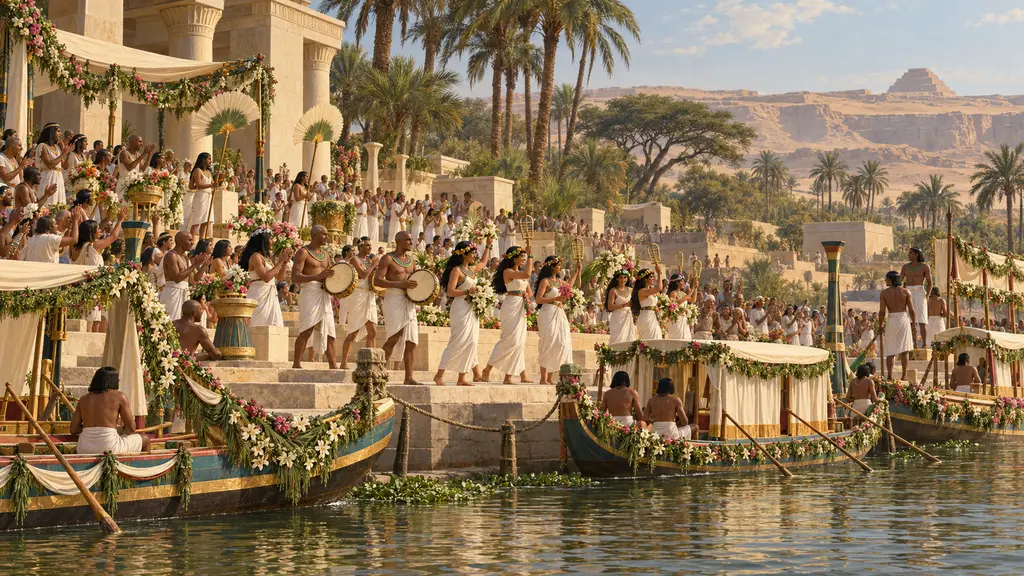
Festival Quay
Landing for festival boats on the Nile, Egypt, 6th-5th centuries BCE
Egyptian religious festivals drew large crowds, and many pilgrims came by river. Herodotus describes boats packed with men and women sailing to the festival of Bastet at Bubastis with music, singing and clapping. A landing place for such boats served both worship and the river traffic that linked Egyptian towns.
In the game: The game's note follows Herodotus 2.59-60, but he describes boats bound for Bubastis in the Delta. Offering the quay at Memphis and requiring it within four cells of water is the game's own setting, not a site named in the sources.
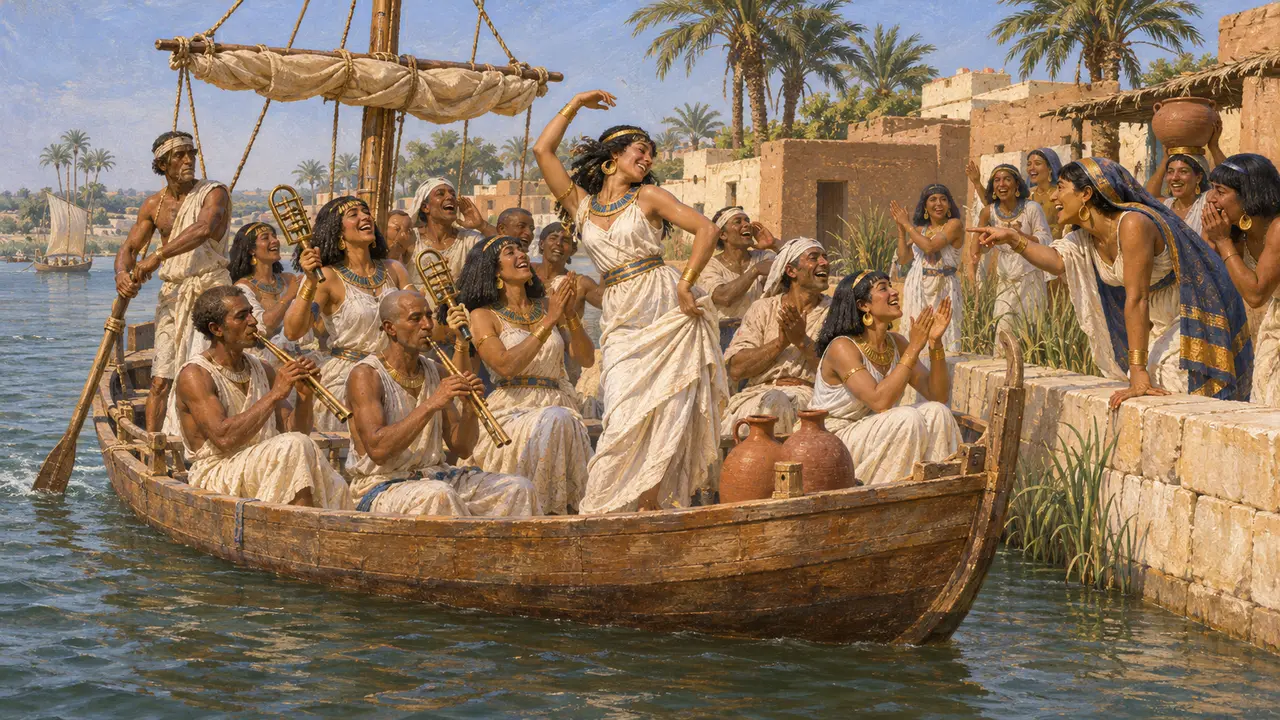
Sailing to Bubastis
Ancient accountHerodotus says that men and women sailed together to Bubastis, many in each boat. Some women shook rattles, some men played pipes the whole way, and the rest sang and clapped. When a boat passed a town it drew close to the bank, where some women jeered at the townswomen, some danced and some lifted their skirts. At Bubastis, he says, more wine was drunk than in all the rest of the year.
Herodotus 2.60
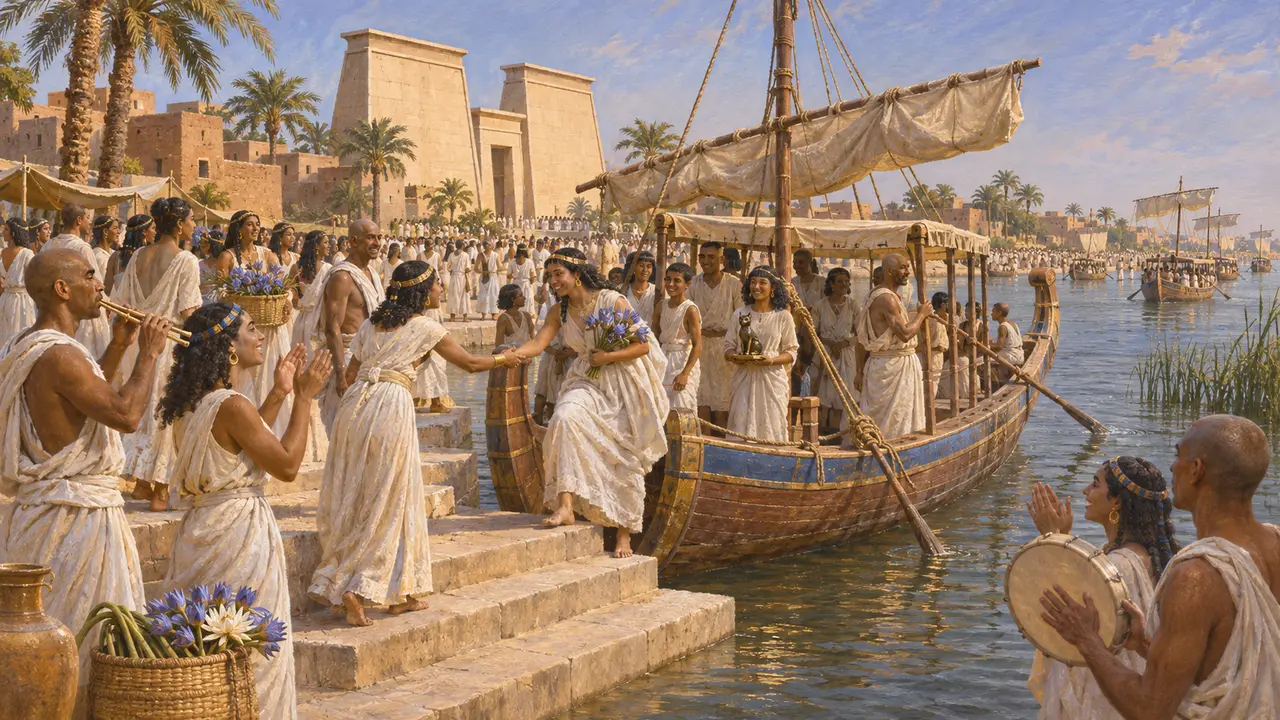
Egypt's great festivals
Ancient accountHerodotus lists six great Egyptian festivals and ranks the one at Bubastis first. He gives the gods Greek names: Artemis for Bastet at Bubastis and Athena for Neith at Sais, with others at Busiris, Heliopolis, Buto and Papremis. He reports a local claim that 700,000 men and women, not counting children, gathered at Bubastis. Historians generally take this figure as greatly exaggerated.
Herodotus 2.59-60
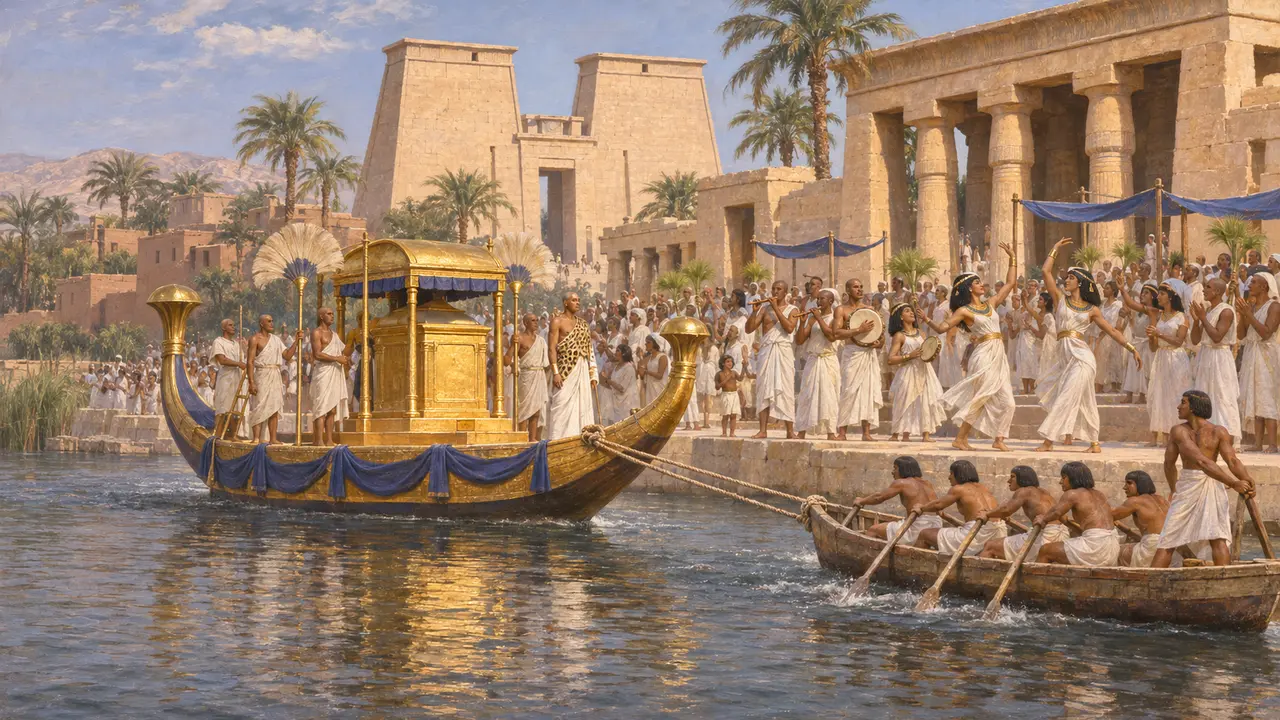
Boats in Egyptian worship
In the recordEgyptian evidence for river festivals long predates Herodotus. Reliefs of the Opet festival at Luxor temple show the gods' barques towed along the Nile, escorted by musicians, dancers and crowds on the bank. Excavations at Bubastis uncovered the great temple of Bastet, confirming the importance of the site he describes.
Luxor temple, Opet festival reliefs; E. Naville, Bubastis, 1891
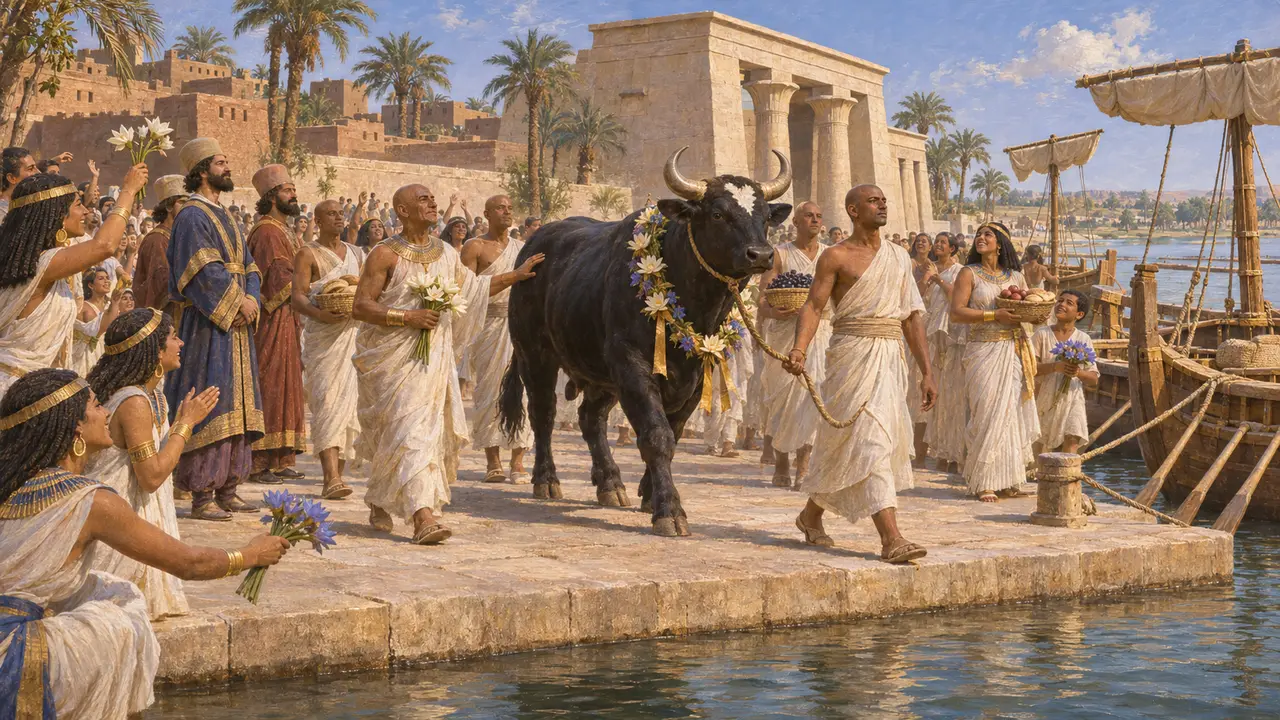
Festivals under Persian rule
DisputedHerodotus says that when a new Apis bull appeared at Memphis, the Egyptians feasted in festive clothes. Cambyses, thinking they were mocking his failures, then wounded the bull. Yet an Apis stela records a bull buried in Cambyses' sixth year, with a sarcophagus dedicated in his name. Historians debate whether the story is hostile tradition or refers to the next Apis, which died under Darius.
Herodotus 3.27-29; G. Posener, La première domination perse en Égypte, 1936
Sources
- Herodotus 2.59-60
- A. B. Lloyd, Herodotus Book II: Commentary 1-98, 1976
- E. Naville, Bubastis, 1891
- Herodotus 3.27-29
- G. Posener, La première domination perse en Égypte, 1936
- P. Briant, From Cyrus to Alexander, 2002