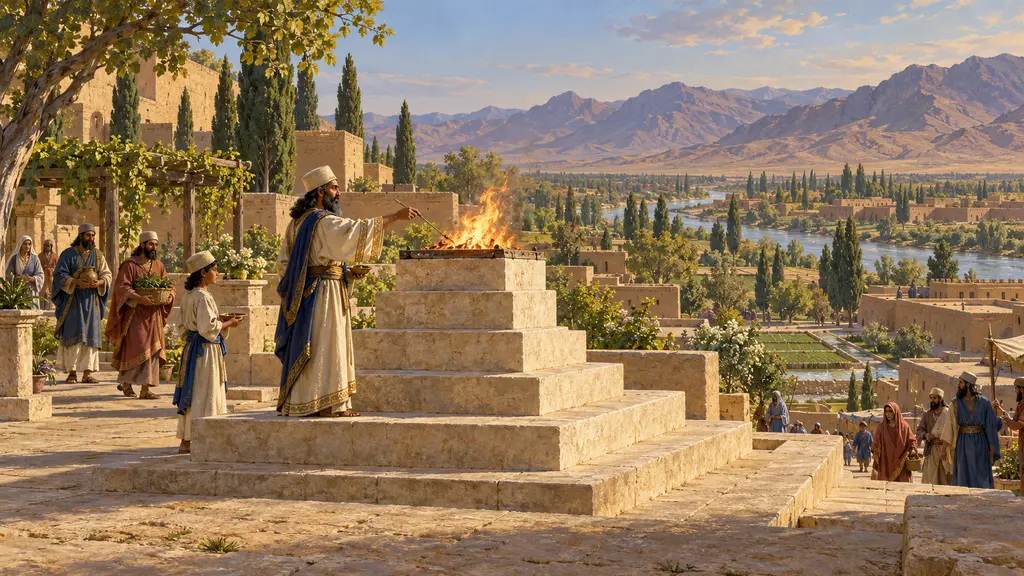
Fire Altar
Stepped stone stand for an open-air fire in Persian royal cult, Persis, about 530-479 BCE
A fire altar was a stone stand, stepped at top and foot, on which a fire burned in the open air. The best evidence for it is the relief carved on the tomb of Darius at Naqsh-e Rostam, where the King raises a hand before such an altar. With the Persepolis tablets, it shows that fire had an important place in Persian worship, even though Greek writers described that worship very differently.
In the game: The game shows a stepped stone altar with its fire in the open air, modelled on the Naqsh-e Rostam relief. Placing it on Pasargadae's sacred precinct simplifies matters: the stone blocks found there may not be altars at all.
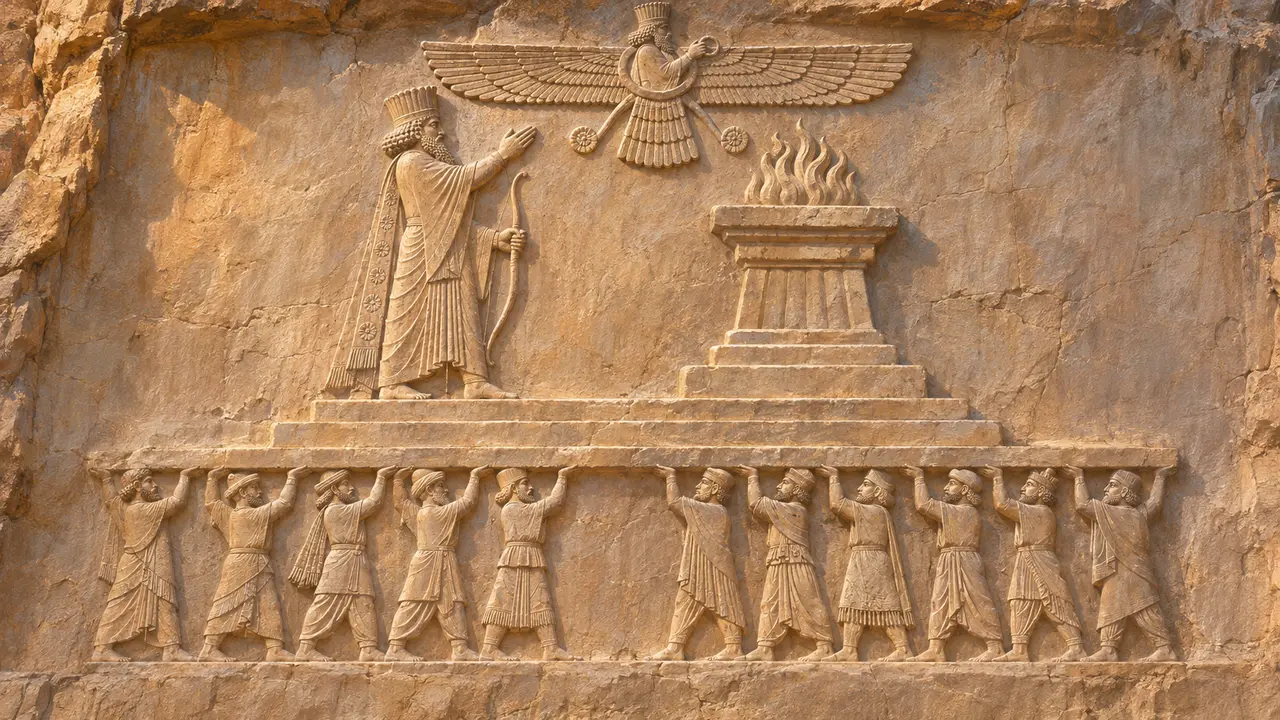
The altar on the royal tombs
In the recordIn the upper register of Darius's rock-cut tomb, beside the inscription DNa, the King stands on a three-stepped platform holding a bow and raises his right hand towards a stepped altar topped by flames. A winged figure, usually taken to be Auramazda, hovers above. The throne platform rests on the raised arms of figures representing the subject peoples. The same scene recurs on the later royal tombs at Naqsh-e Rostam and Persepolis.
DNa tomb relief; E. F. Schmidt, Persepolis III, 1970
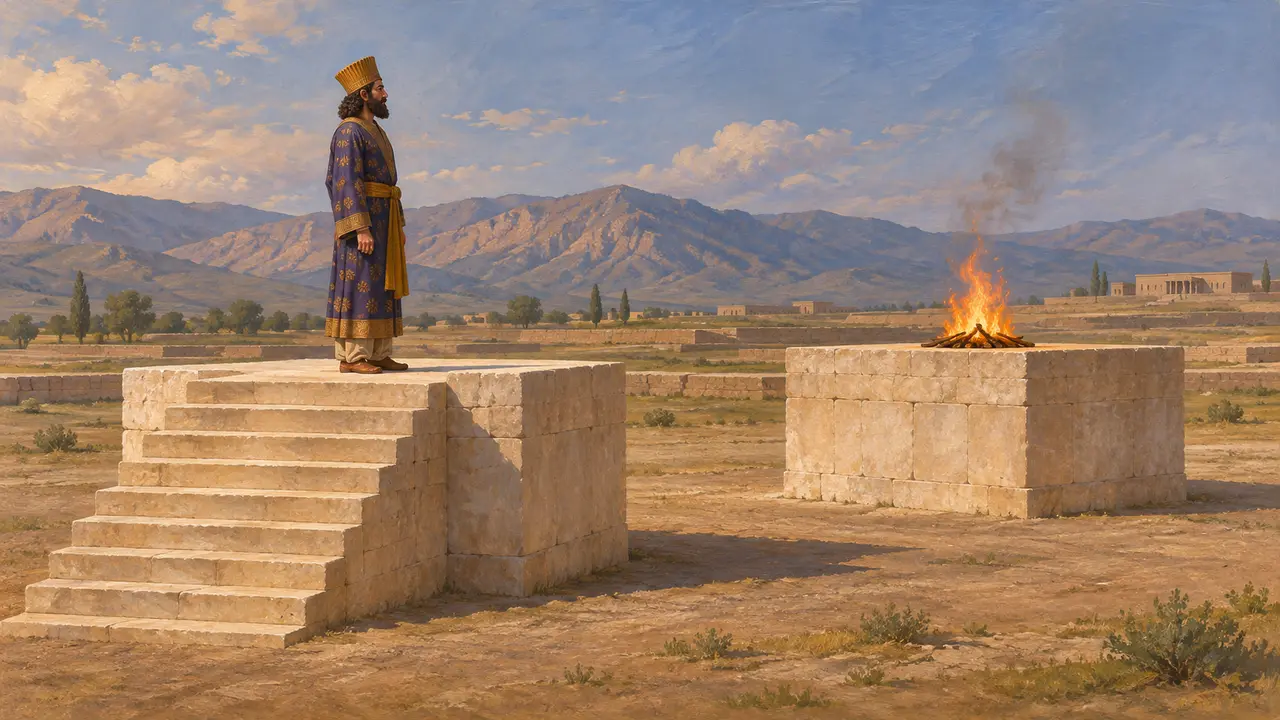
The stone plinths at Pasargadae
DisputedNorth-west of the palaces at Pasargadae lies an open area with two limestone plinths, one of them reached by a flight of steps. David Stronach suggested that the King stood on the stepped plinth while a fire burned on the other, which would match the tomb reliefs. The plinths themselves give no direct proof of fire, and other scholars are less certain of their purpose. The date of the terraces beside them is also debated.
D. Stronach, Pasargadae, 1978
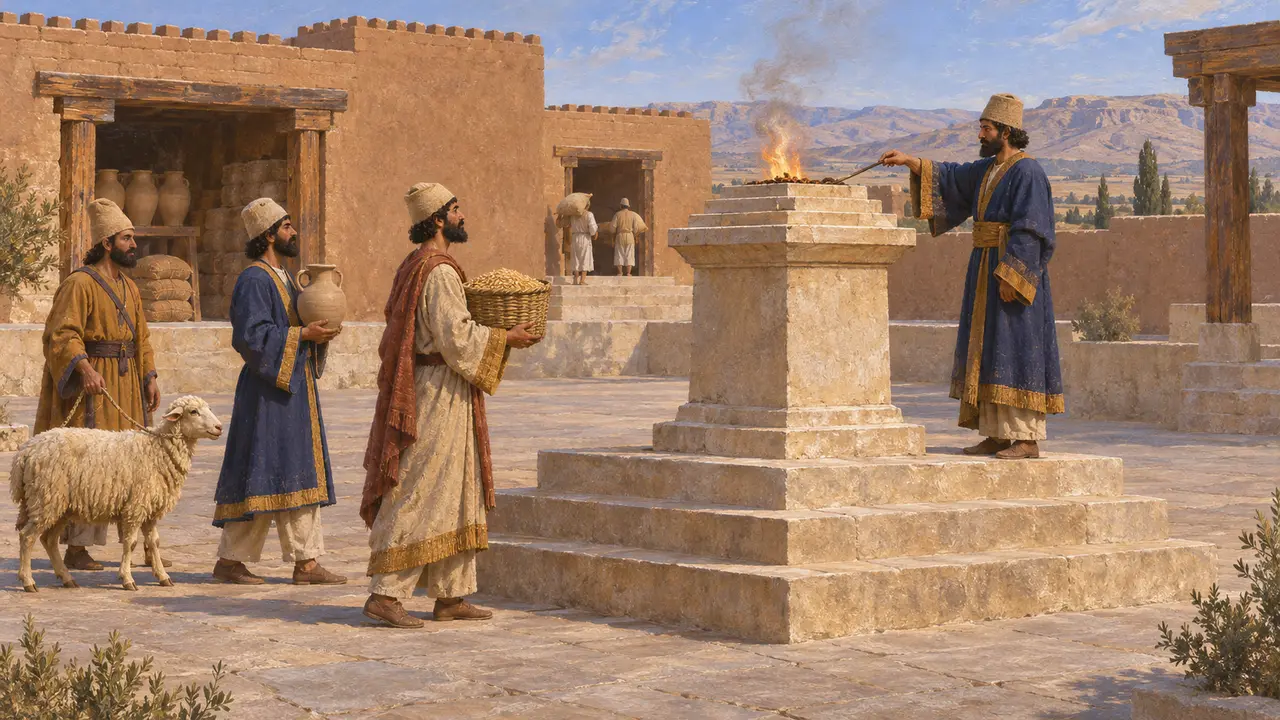
Fire in the Persepolis tablets
In the recordThe Persepolis Fortification tablets, from about 509 to 493, record grain, wine and animals issued from royal stores for offerings to Iranian and Elamite gods alike. Some recipients carry the title haturmakša, which probably meant an official who tended the fire. Seals impressed on these tablets also show figures standing before altars. The texts describe a regular, state-funded cult rather than a single uniform religion.
W. Henkelman, The Other Gods Who Are, 2008
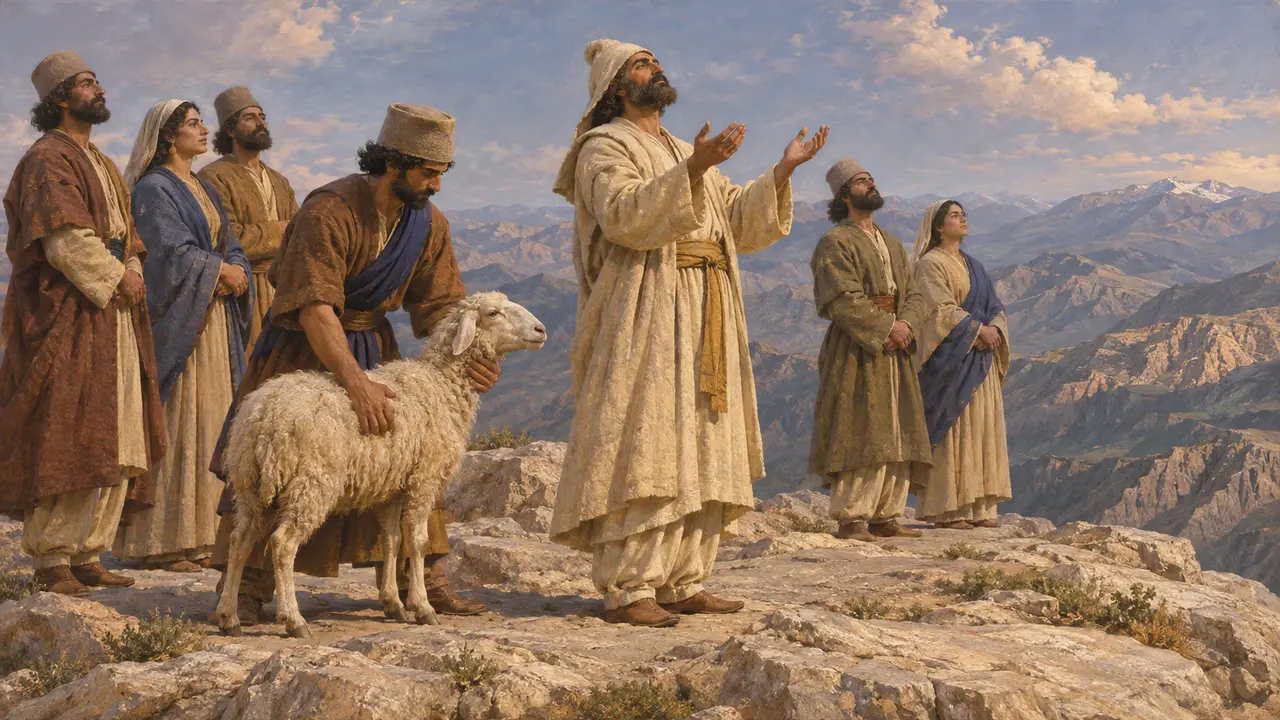
Herodotus and the Persians without altars
Ancient accountHerodotus says the Persians set up no statues, temples or altars. He adds that they sacrificed on the highest mountain peaks to the sky, sun, moon, earth, fire, water and winds, with no altar or lit fire, while a magus chanted. The reliefs plainly show a royal altar with fire, so his picture cannot be complete. Some historians think he meant the victim was not burned, since elsewhere he says Persians held fire to be a god.
Herodotus 1.131-132; 3.16
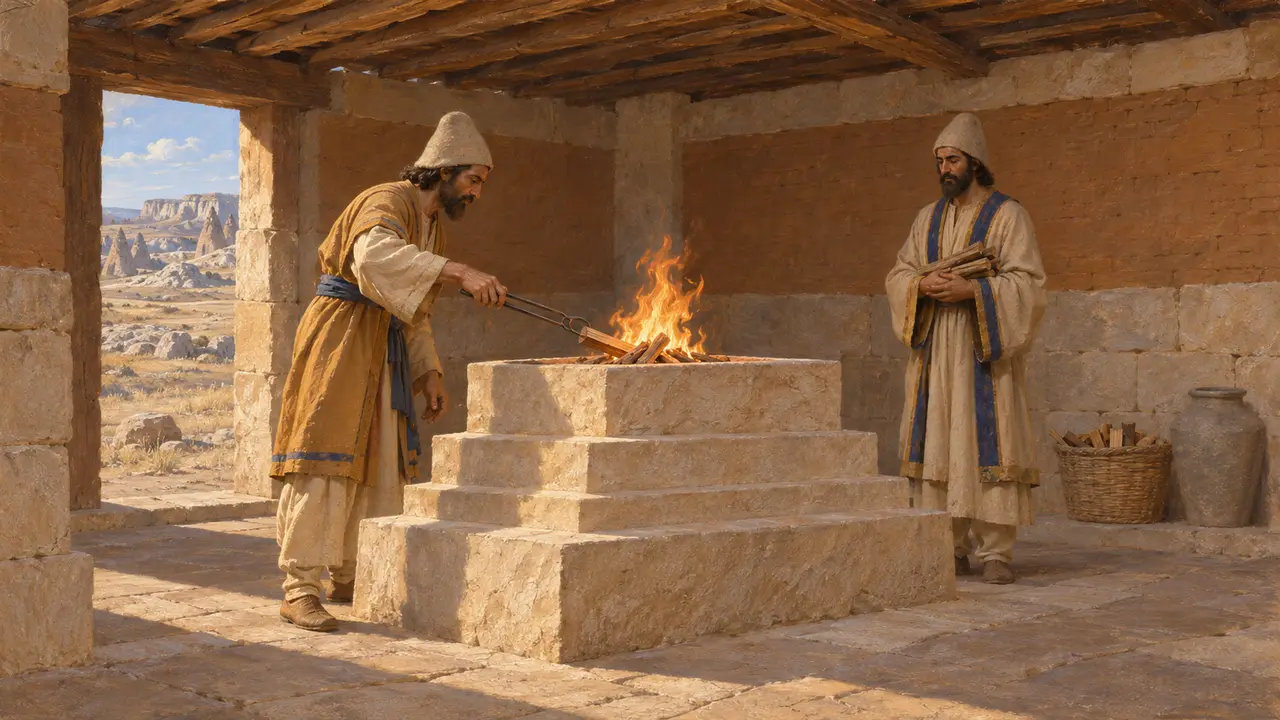
Later Greek accounts of fire worship
Ancient accountStrabo, writing about five centuries later, says the Persians made offerings especially to fire and water and took care not to pollute the fire. He describes magi tending fires that burned constantly in enclosed sanctuaries, which he saw in Cappadocia. This was the practice of his own time, and it should not be read back into the reign of Darius without caution.
Strabo, Geography 15.3
Sources
- DNa tomb relief, Naqsh-e Rostam
- Herodotus 1.131-132; 3.16
- D. Stronach, Pasargadae, 1978
- W. Henkelman, The Other Gods Who Are, 2008
- E. F. Schmidt, Persepolis III, 1970
- P. Briant, From Cyrus to Alexander, 2002