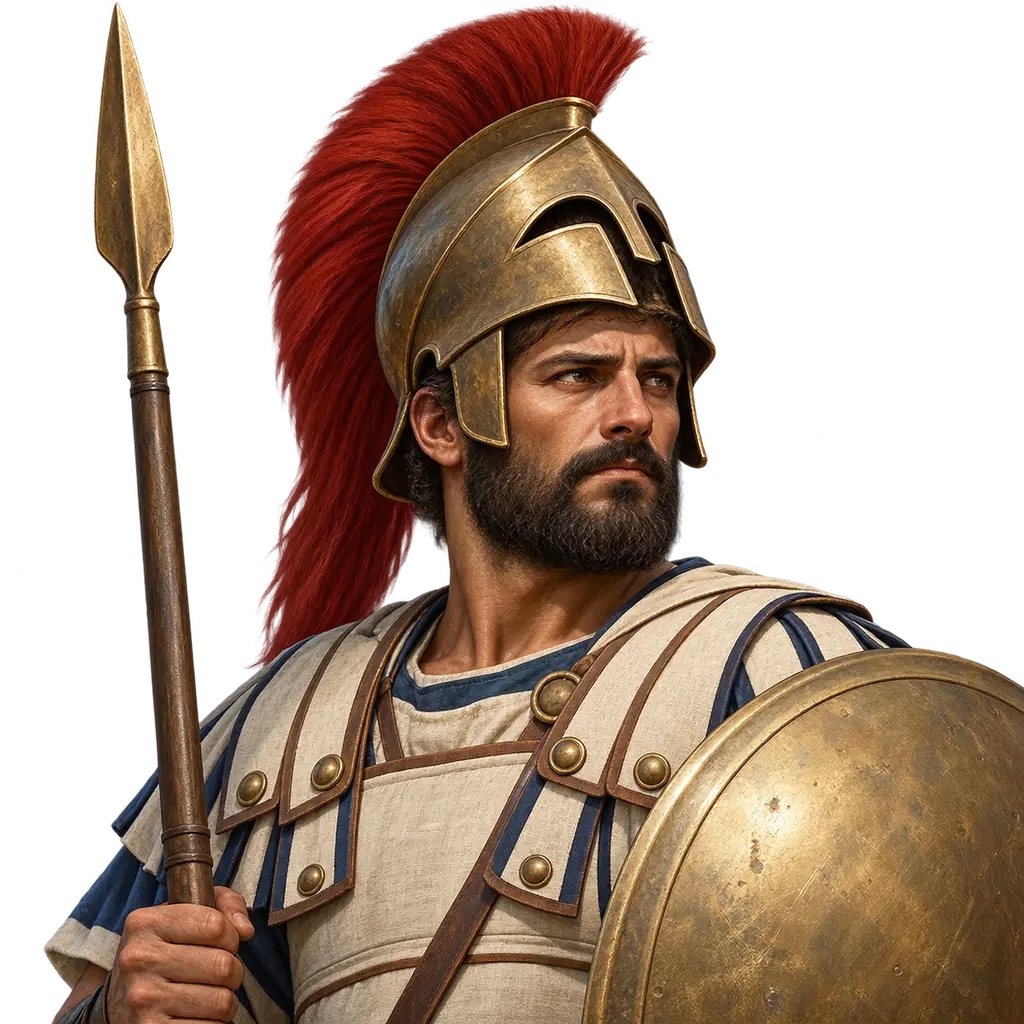
Gymnasium
Greek training ground for athletes and young citizens, 6th-5th century BCE
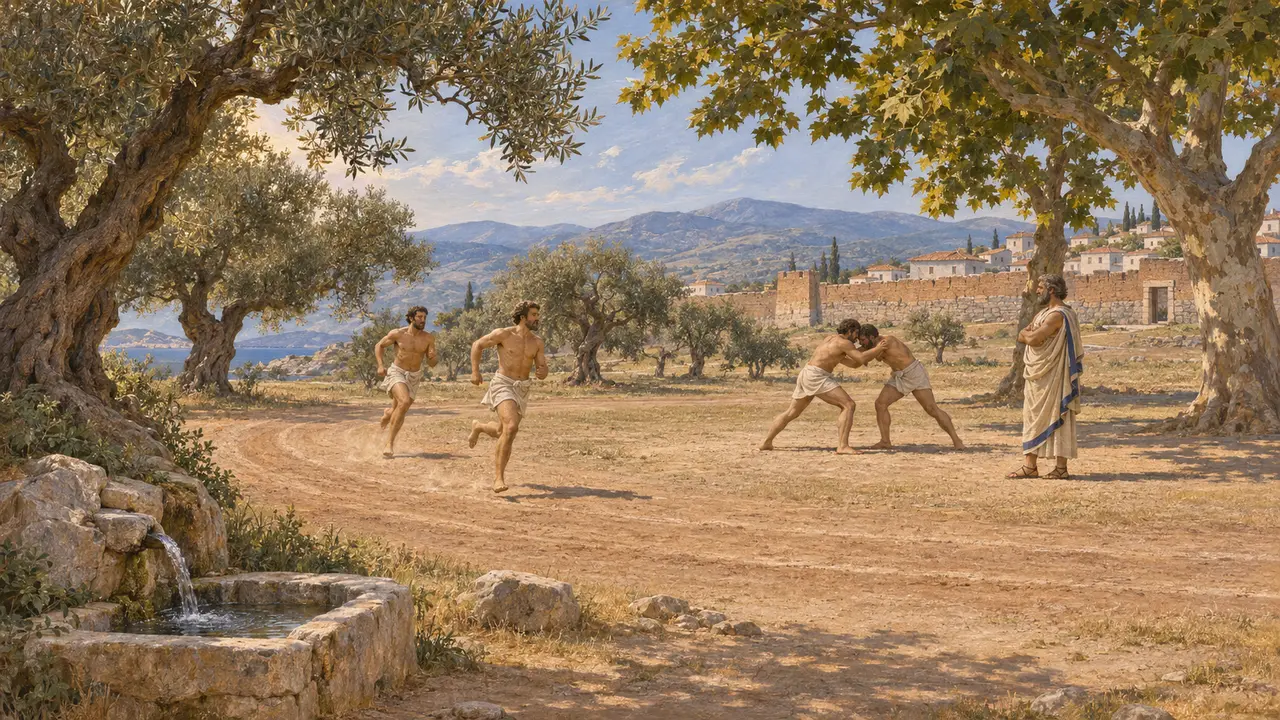
A gymnasium was a place where Greek men exercised, ran and wrestled, usually naked, to prepare for war and for contests such as the games at Olympia. In the years of the Persian wars it was probably still an open, watered ground with shade trees, often beside a shrine. Greek writers made athletic nakedness a mark of difference between Greeks and the peoples of the King's empire.
In the game: The game offers the Gymnasium as a service building in Greek towns, with a note on the olive wreath drawn from Herodotus 8.26. As a single building it simplifies history, since most training grounds of the time were probably open spaces.
An open ground more than a building
DisputedThe word comes from gymnos, naked. Excavated gymnasium buildings with colonnades and walled wrestling courts, as at Olympia and Delphi, date from the 4th century and later. For the late 6th and early 5th centuries historians rely mainly on later texts, and they debate how much was built. Most think early gymnasia were tracks and open land with water and trees, often outside a city's walls.
J. Delorme, Gymnasion, 1960; S. G. Miller, Ancient Greek Athletics, 2004
The Academy, the Lyceum and Cynosarges
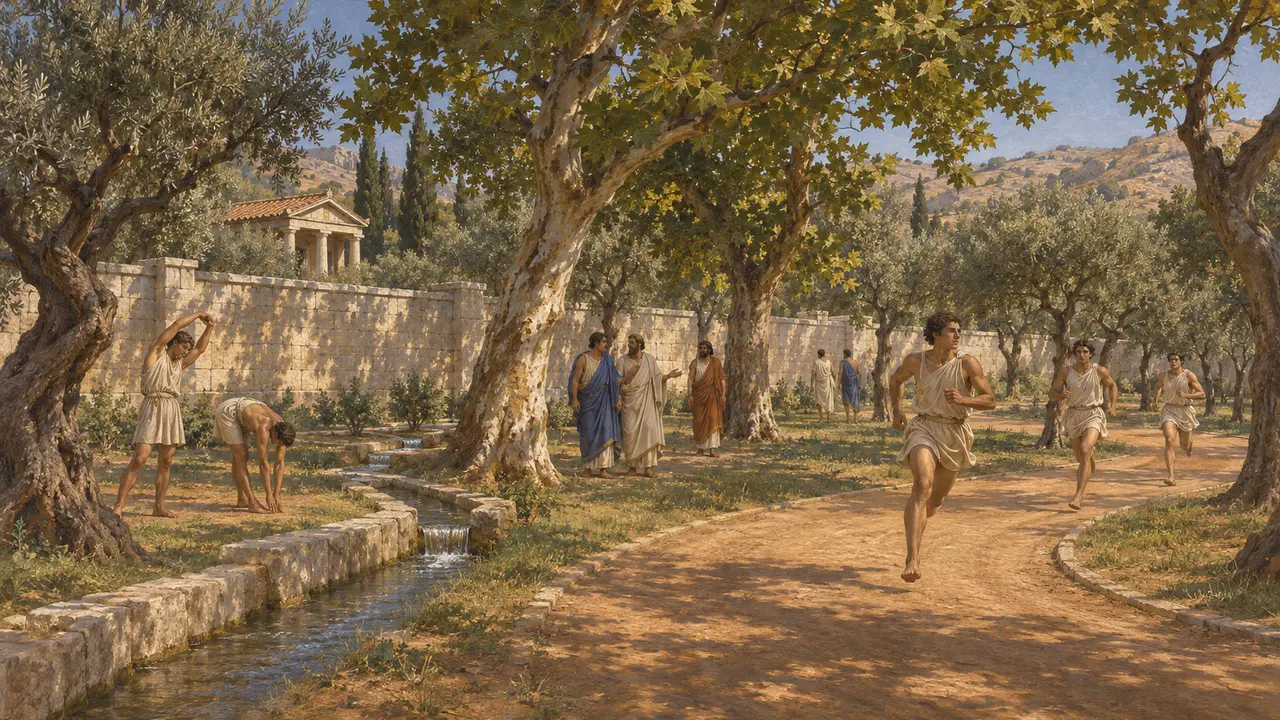
Ancient accountBy the classical period Athens had three such grounds outside its walls, each linked to a sanctuary. Later writers credit Hipparchus, son of Pisistratus, with building a costly wall at the Academy. Plutarch says that Cimon, after the Persian wars, brought water to the Academy and planted it with trees, turning a dry place into a shaded grove with paths for running.
Plutarch, Cimon 13; Suda; D. Kyle, Athletics in Ancient Athens, 1987
Training naked, a Greek habit
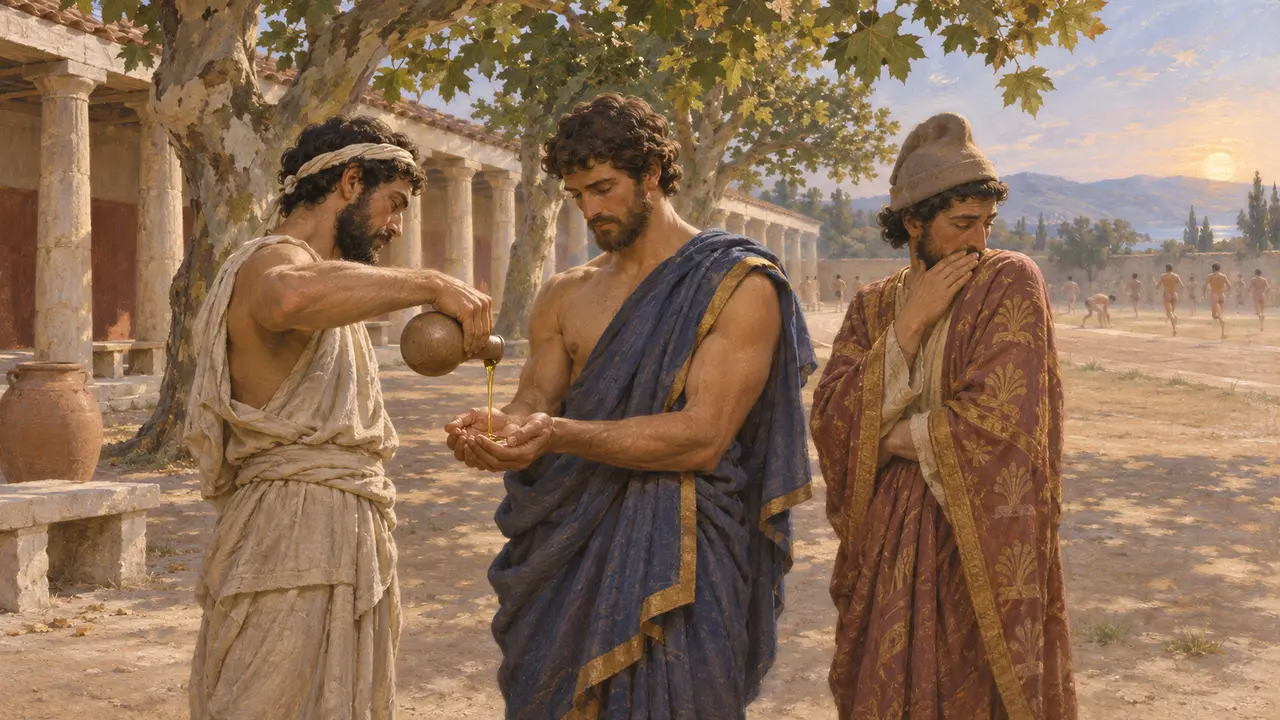
Ancient accountThucydides says the Spartans were the first to strip and rub themselves with oil for exercise, and that loincloths at the games had been given up not many years before his time. Herodotus notes that among the Lydians, and nearly all non-Greek peoples, it was shameful even for a man to be seen naked. Herodotus also tells how Alexander of Macedon had to prove Greek descent before he was allowed to run at Olympia.
Thucydides 1.6; Herodotus 1.10; Herodotus 5.22
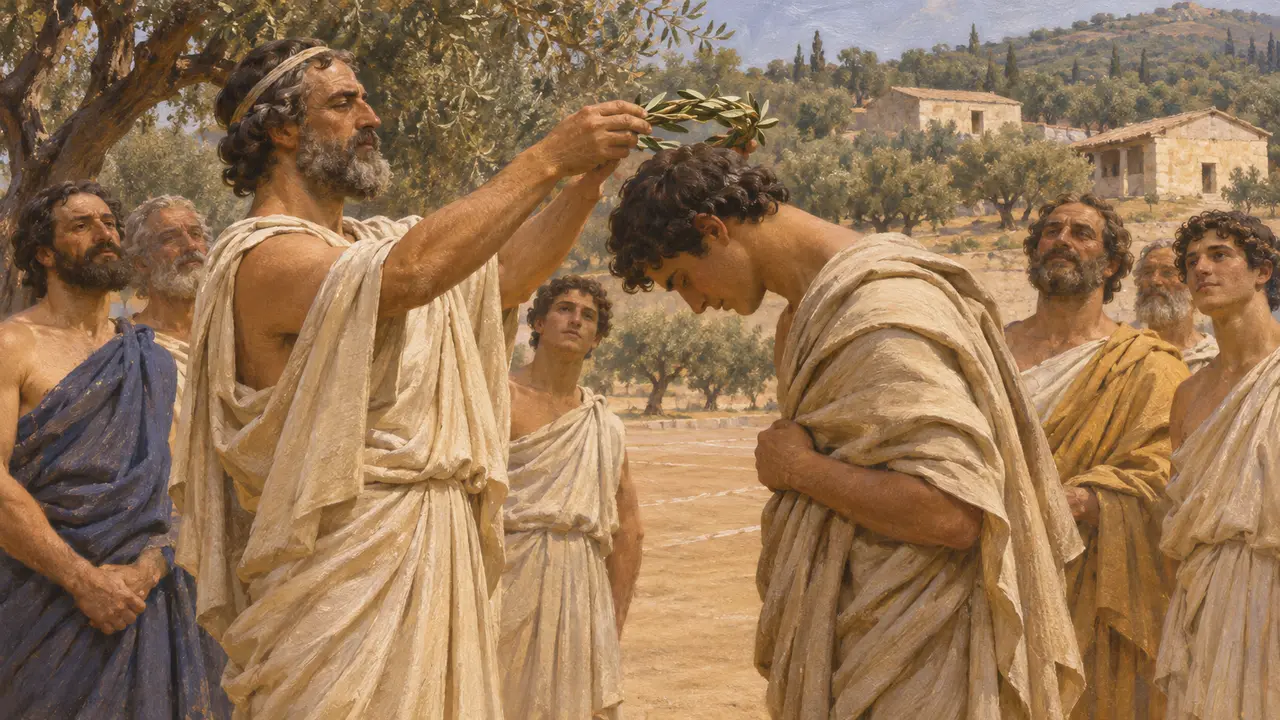
An olive wreath at Olympia
Ancient accountHerodotus says the Olympic festival fell in the same weeks as Thermopylae in 480 and slowed the Greek muster. After the battle, he says, deserters from Arcadia told the Persians that the Greeks were at the games and that the prize was an olive wreath. Tritantaechmes, son of Artabanus, then said to Mardonius that these men contended for excellence, not money. Herodotus adds that the King judged him a coward for it.
Herodotus 7.206; Herodotus 8.26
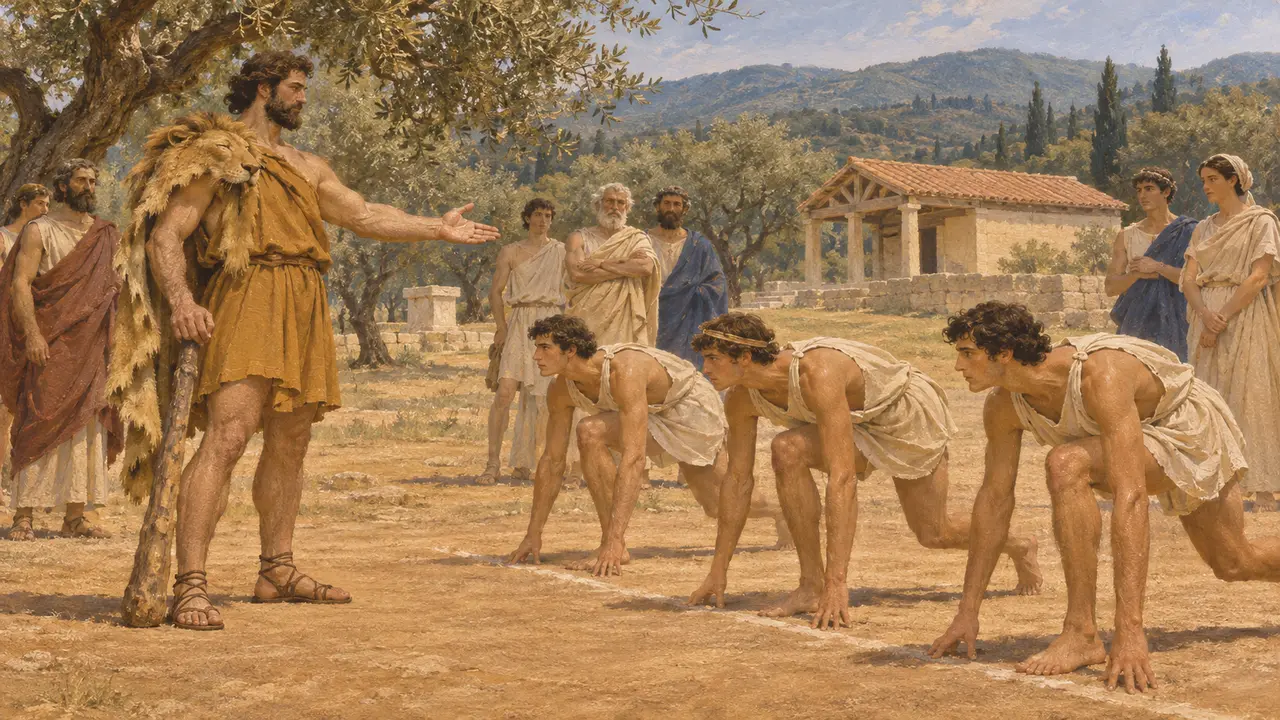
Heracles and the founding of the games
Later legendPindar's victory odes tell that Heracles founded the Olympic games. The familiar starting date of 776 rests on a list of victors drawn up by Hippias of Elis around 400, long after the events it records. Plutarch already warned that this list had no firm basis. The early history of the games is therefore largely tradition.
Pindar, Olympian 10; Plutarch, Numa 1
Sources
- Herodotus 8.26
- Herodotus 7.206
- Thucydides 1.6
- Plutarch, Cimon 13
- D. Kyle, Athletics in Ancient Athens, 1987
- S. G. Miller, Ancient Greek Athletics, 2004