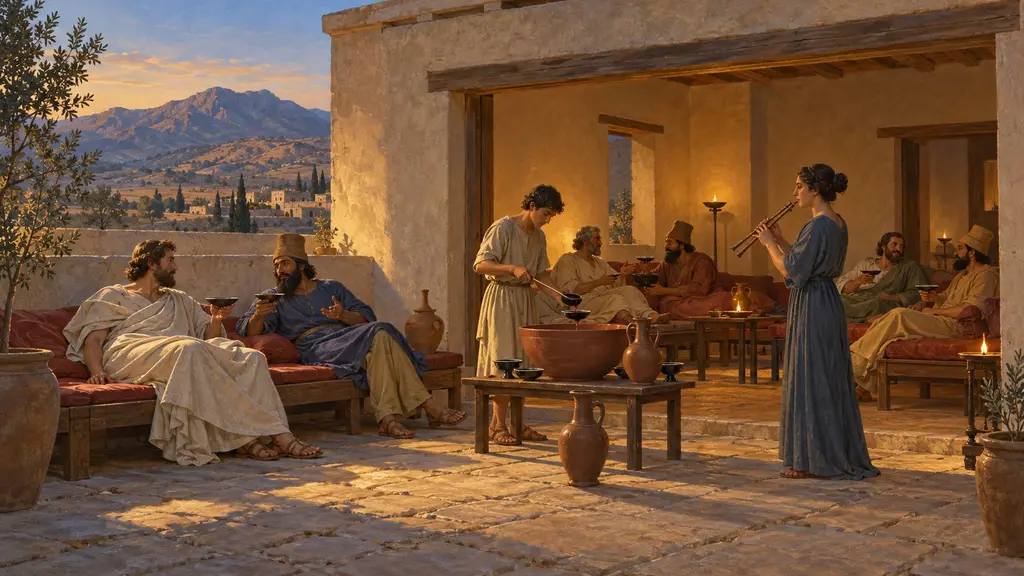
Symposium House
Greek drinking party and its rooms; a Theban feast for Mardonius, 479 BCE
The symposium was the Greek drinking party, held on couches in the men's room of a private house, with mixed wine, songs and the aulos. In 479, as the armies gathered near Plataea, the Theban Attaginus held one for Mardonius and fifty Persians. Herodotus tells of it as an evening of friendship between Persians and their Greek allies, shadowed by the defeat that followed.
In the game: In the Plataea level, Greek towns can build the Symposium House as a service. Real symposia were held in private houses, not in a separate public building, so the game simplifies here.
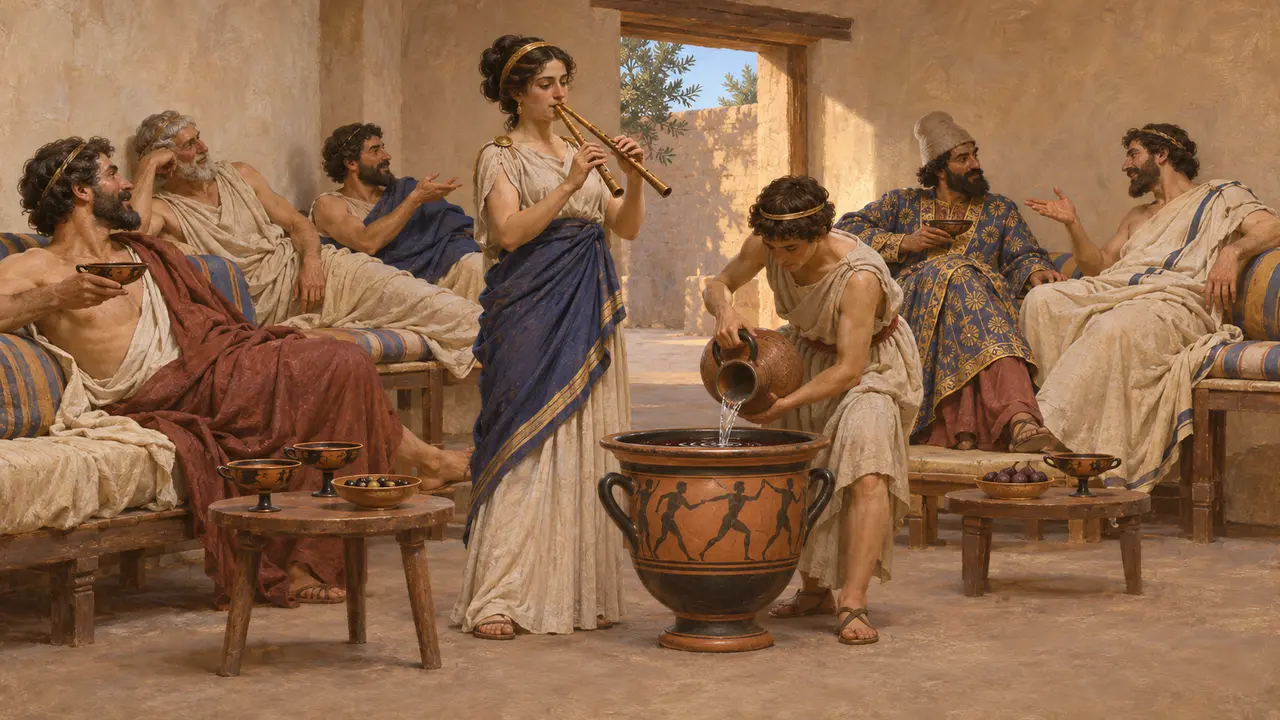
Couches, wine and the aulos
In the recordAthenian painted cups and mixing bowls of the late 6th and early 5th centuries show men reclining on couches, wine mixed with water in a large krater, and a piper, often a hired woman, playing the double pipe called the aulos. The custom of reclining to drink probably reached Greece from the Near East by about 600. Excavated classical houses, best known at Olynthus, have a men's room, the andron, with an off-centre door so that couches could line the walls.
F. Lissarrague, The Aesthetics of the Greek Banquet, 1990; O. Murray (ed.), Sympotica, 1990
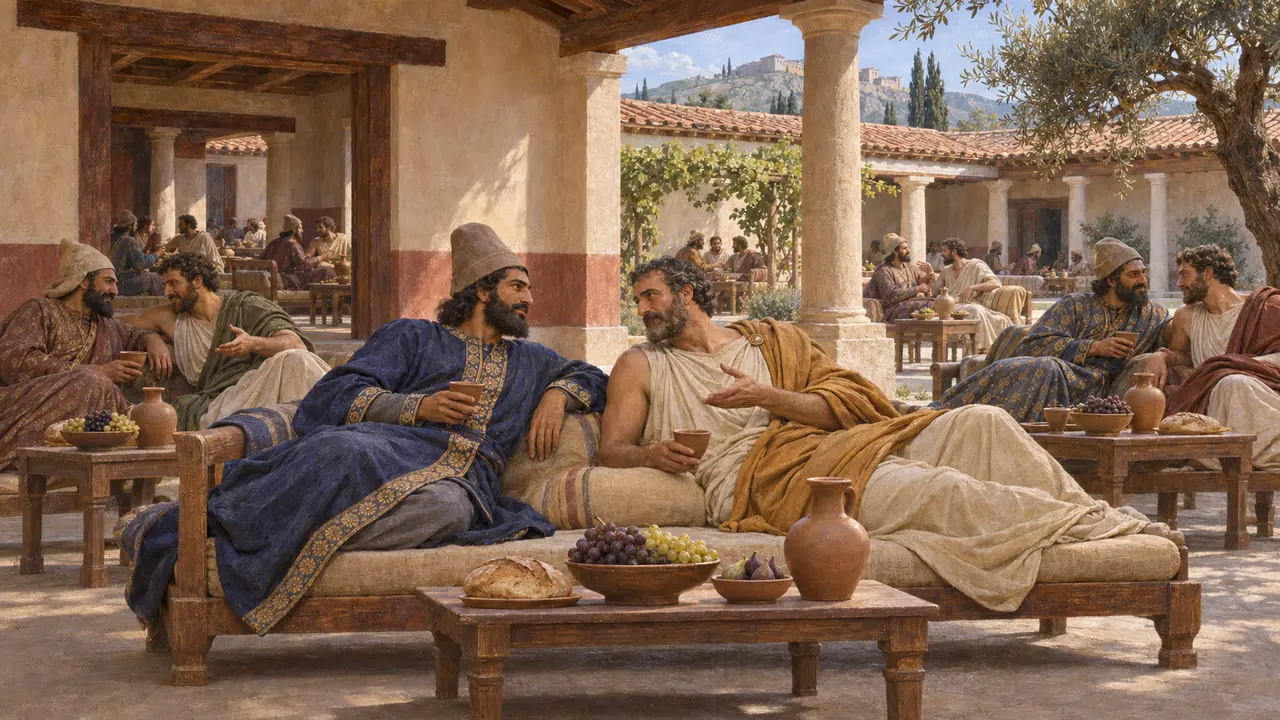
Attaginus feasts the Persians
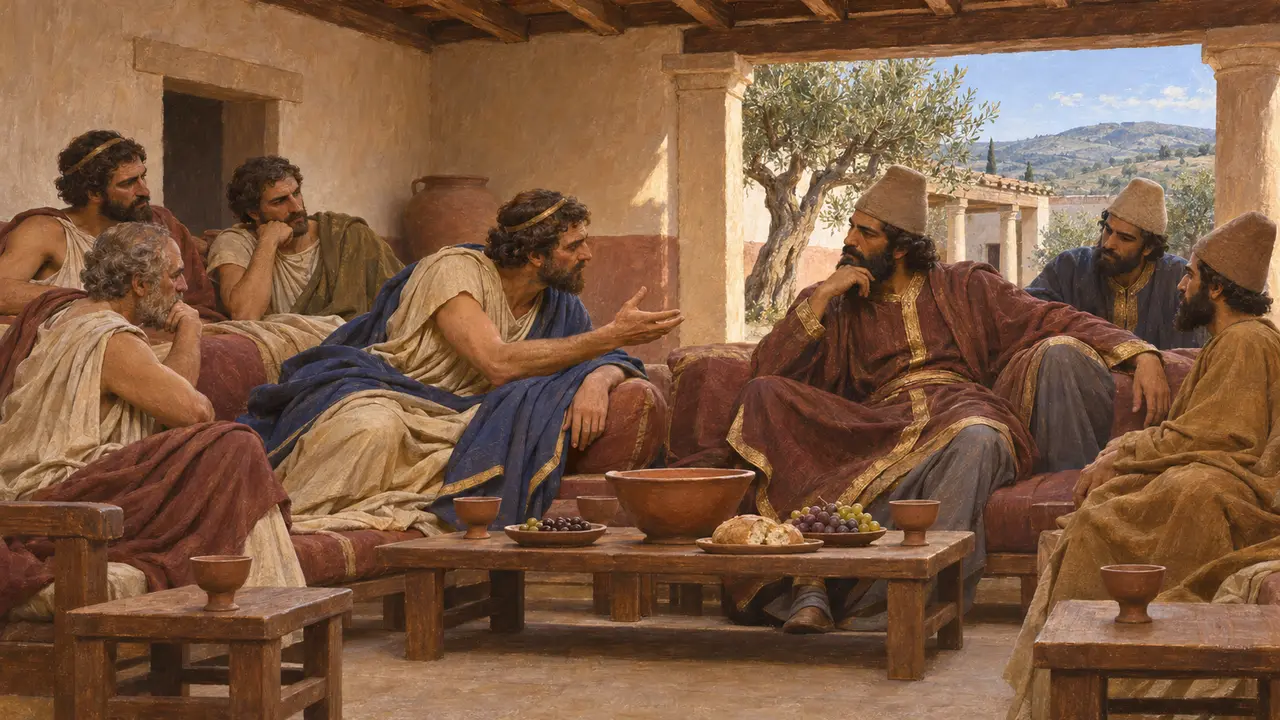
Ancient accountHerodotus says that Attaginus son of Phrynon, a leading Theban, prepared a great feast at Thebes and invited Mardonius with fifty of the most notable Persians, together with fifty Thebans. The guests did not lie apart by people: a Persian and a Theban shared each couch. The meal took place shortly before the battle of Plataea.
Herodotus 9.15-16
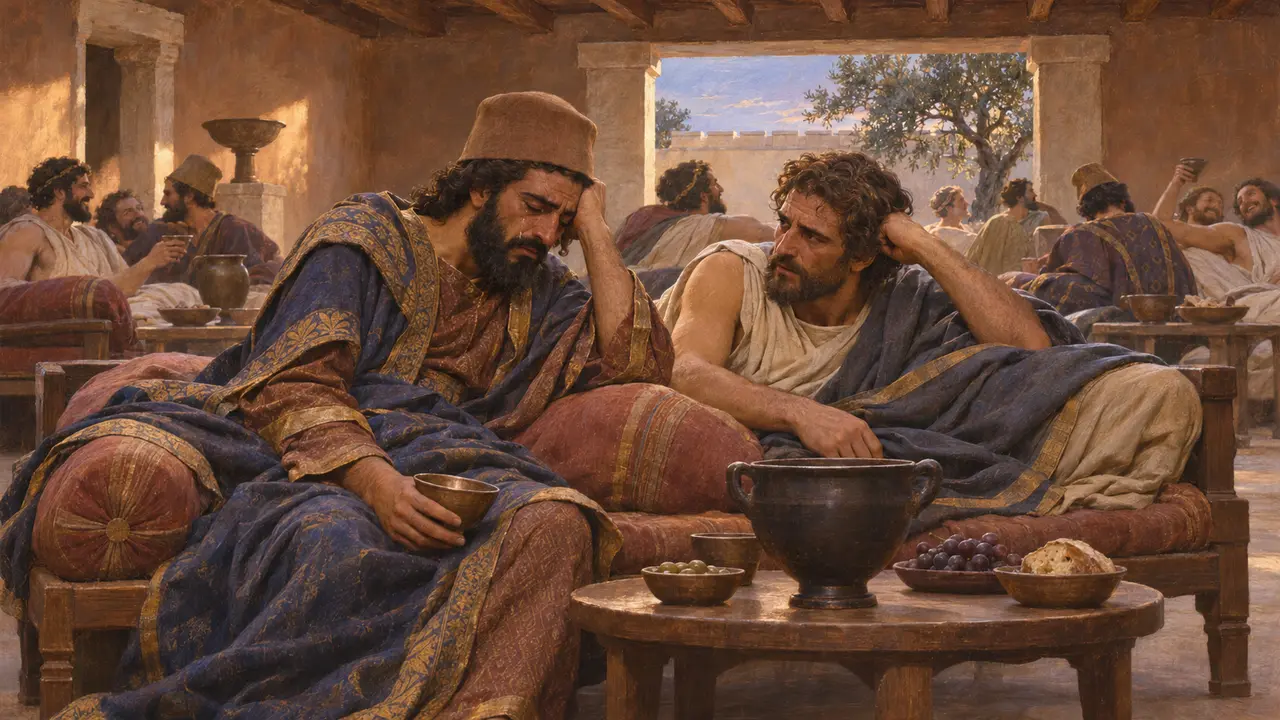
The Persian who wept
Later legendHerodotus heard from Thersander of Orchomenus, who was at the feast, that his Persian couch-mate wept over the wine. The Persian foresaw that few of the guests would live long, and said the bitterest pain was to understand much yet have no power to change it. The scene is shaped as a warning before disaster, and whether the words were spoken as told cannot be checked.
Herodotus 9.16
How Theban was the alliance
DisputedHerodotus counts Thebes among the Greeks who gave earth and water to Xerxes and has the Thebans advising Mardonius on strategy. Half a century later, Theban speakers in Thucydides claimed the city had been ruled in 480 by a narrow clique of powerful men, not by its people, and so should not bear the blame. Historians still debate how far the city as a whole chose the Persian side.
Herodotus 7.132; Herodotus 9.2; Thucydides 3.62
The host after Plataea
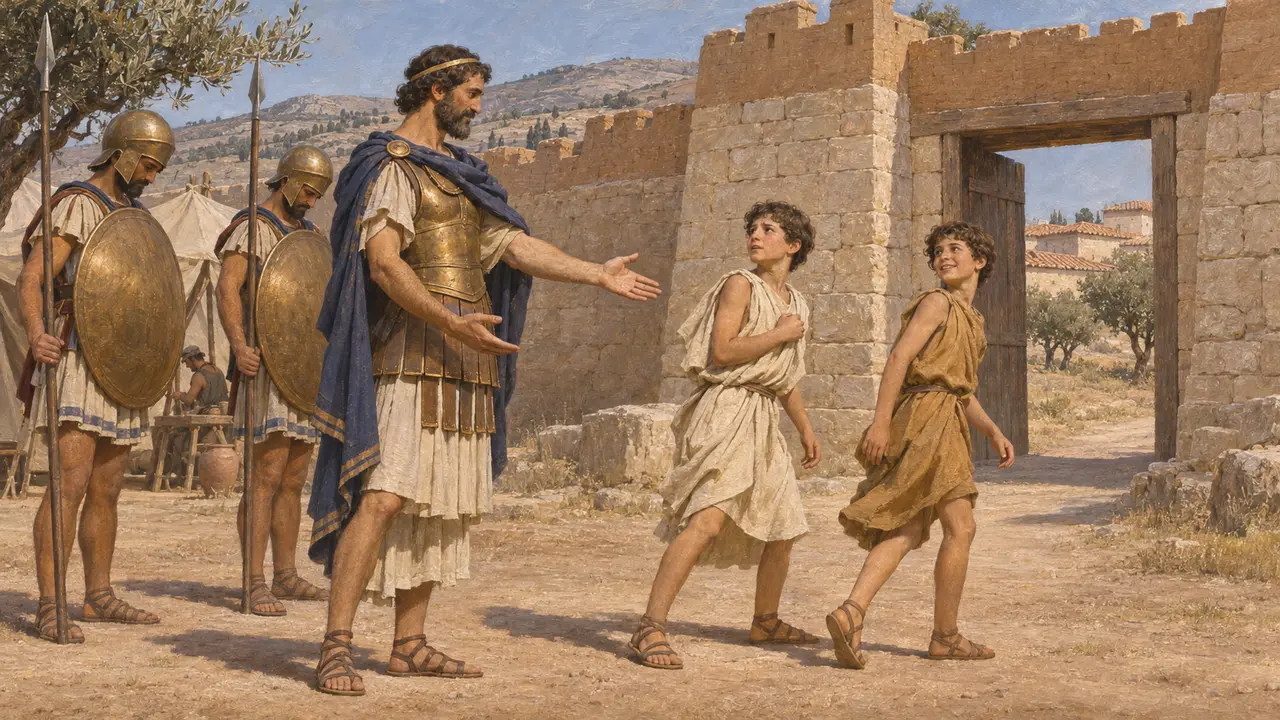
Ancient accountAfter the Greek victory the allies besieged Thebes and demanded the surrender of the leaders of the pro-Persian party, Attaginus among them. Herodotus says Attaginus escaped. His sons were handed over instead, but Pausanias released them, saying children had no share in their father's siding with the Medes.
Herodotus 9.86-88
Sources
- Herodotus 9.15-16
- Herodotus 9.86-88
- Thucydides 3.62
- O. Murray (ed.), Sympotica, 1990
- F. Lissarrague, The Aesthetics of the Greek Banquet, 1990