Obelisk
Single-stone granite shaft set before Egyptian temples, long standing by 525 BCE
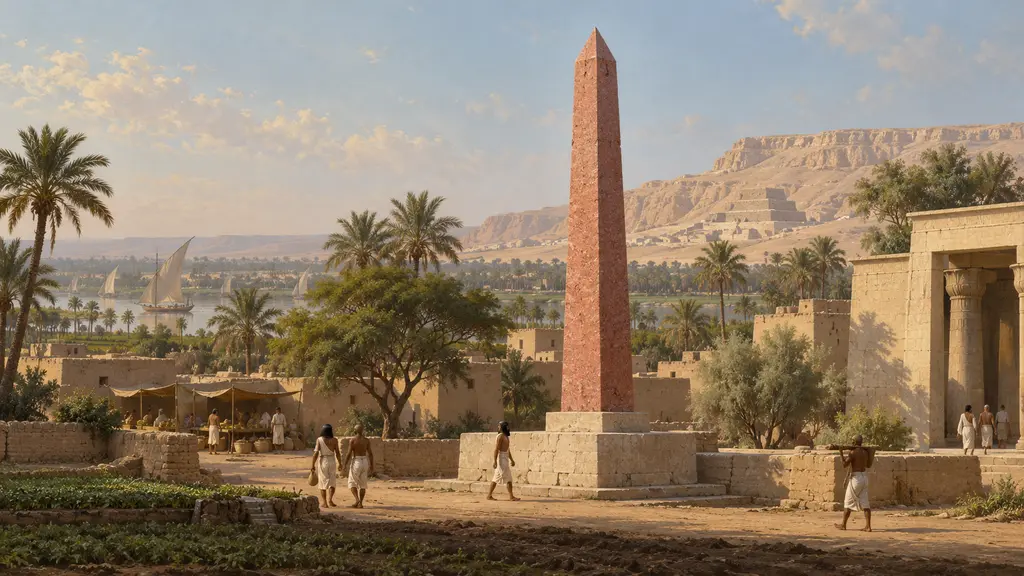
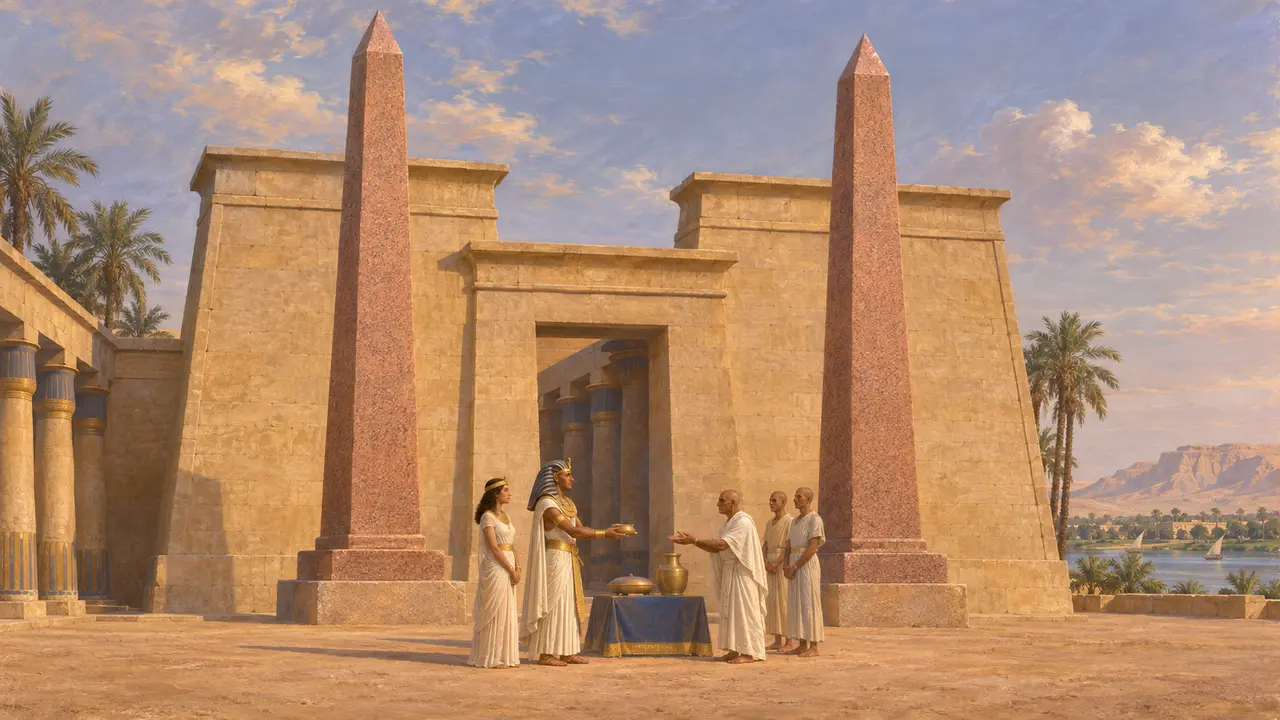
An obelisk was a tall, four-sided stone shaft that tapered to a small pyramid at the top. Egyptian kings usually set obelisks in pairs before temple gates as signs of the sun god. By the Persian conquest of 525 many had stood for centuries, and the Saite kings had recently added more. No obelisk is securely known to have been raised for a Persian king.
In the game: The game offers the Obelisk as a housing building in Memphis only. Its note cites Herodotus, but those passages describe obelisks at Heliopolis and Sais, not Memphis. Most obelisks were Aswan granite, though not all.
Cut from a single stone
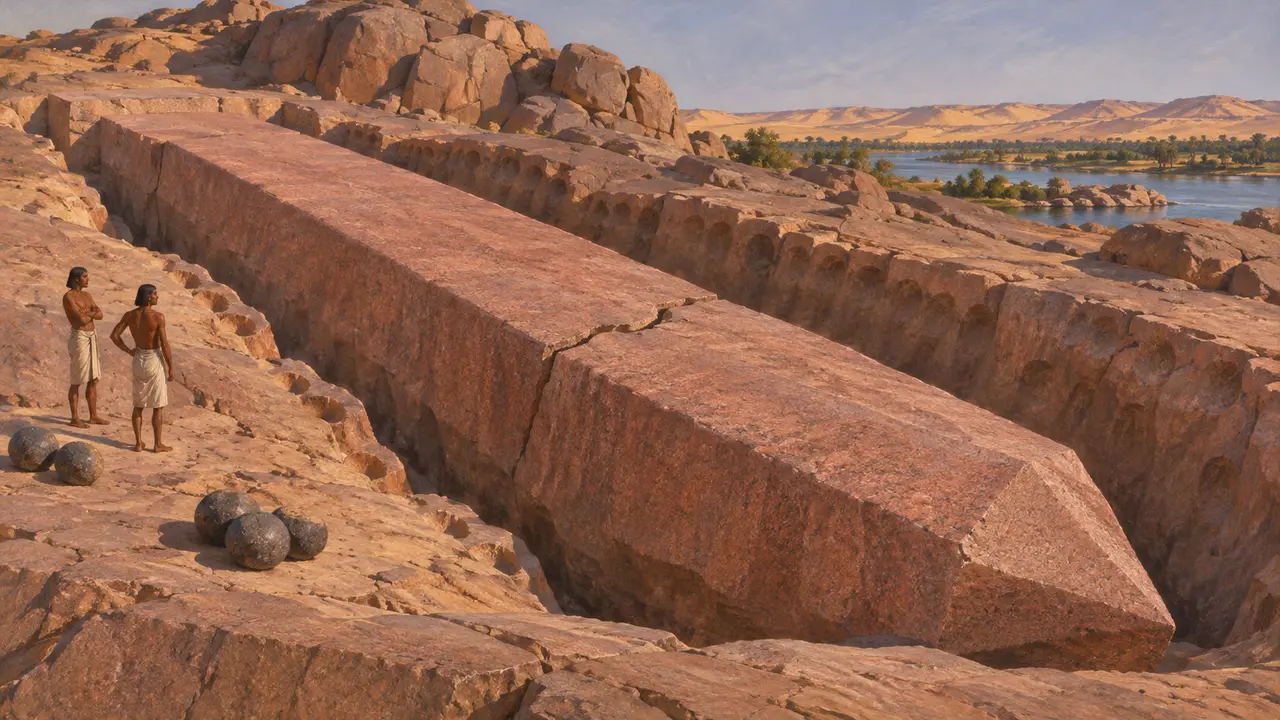
In the recordMost obelisks were cut from the red granite of Aswan, at the southern edge of Egypt, though a few were made of quartzite or other stone. An unfinished obelisk still lies in the Aswan quarry. It cracked before it could be freed and was abandoned. Workers shaped it by pounding the granite with balls of hard dolerite, and the trenches they made can still be seen around the shaft.
R. Engelbach, The Problem of the Obelisks, 1923
Signs of the sun at temple gates
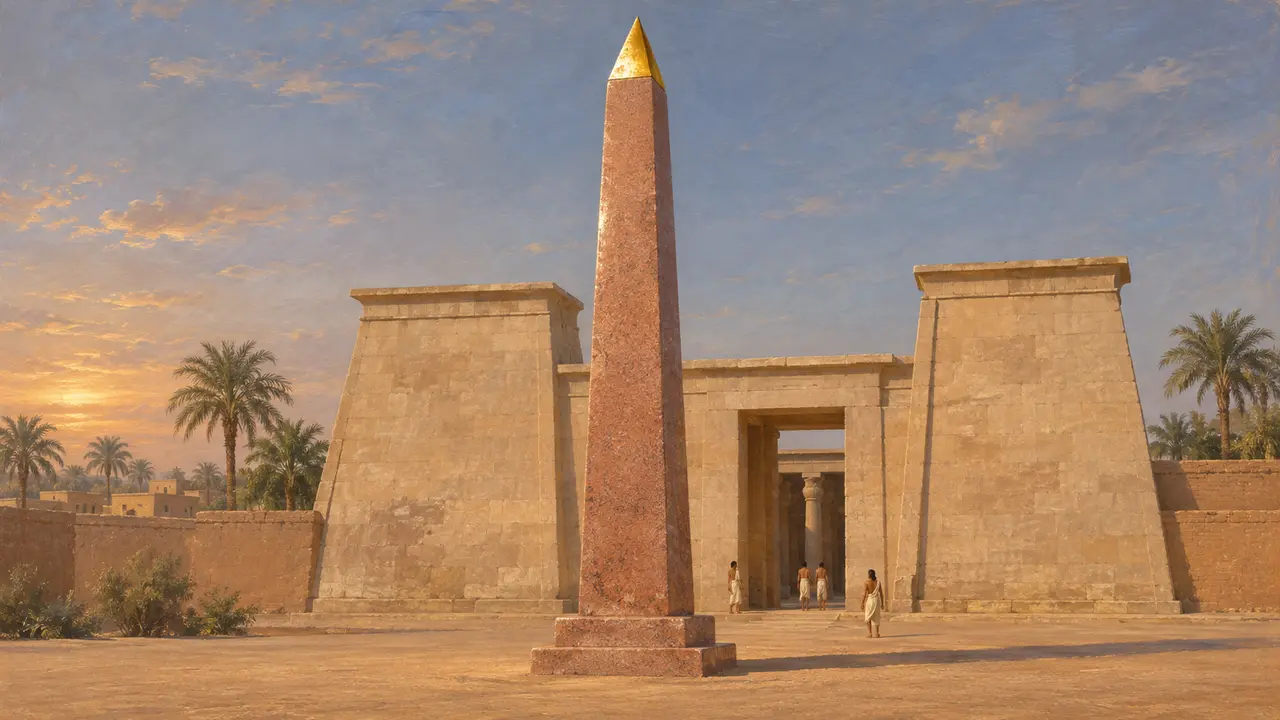
In the recordObelisks were linked to the sun cult of Heliopolis, and their tips were sometimes sheathed in metal to catch the light. The obelisk of Senusret I, raised about 1950, still stands there, and inscriptions on Hatshepsut's obelisks at Karnak record their making. The Saite kings Psamtik II and Apries set up obelisks at Heliopolis and Sais in the decades before the Persian conquest. Both now stand in Rome, where emperors later carried them.
L. Habachi, The Obelisks of Egypt, 1977
What Herodotus saw and heard
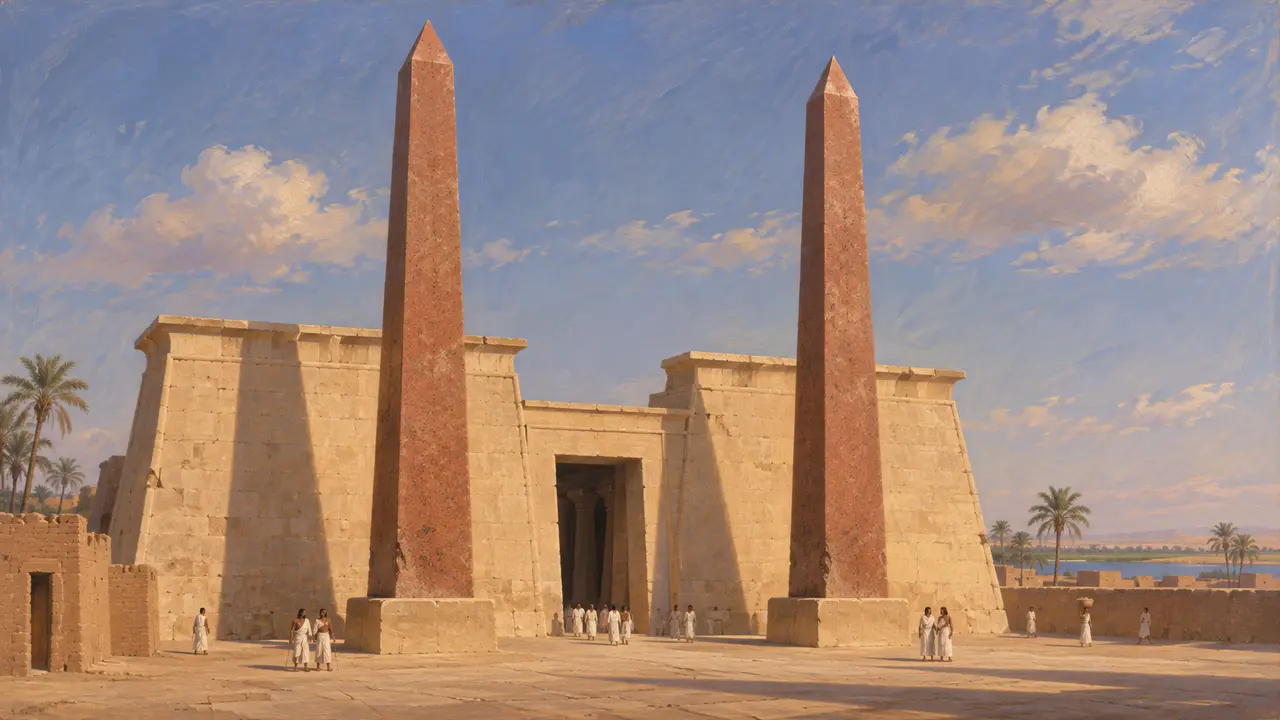
Ancient accountHerodotus says that a king he calls Pheros dedicated two obelisks at the temple of the Sun in Heliopolis. He says each was made of one stone and was a hundred cubits high, roughly 45 to 50 metres. The tallest standing obelisk, now in Rome, is about 32 metres, so his figure is probably exaggerated. He also describes great stone obelisks in the sacred precinct at Sais, beside a lake.
Herodotus 2.111, 2.170
The blind king and the faithful wife
Later legendHerodotus tells how Pheros hurled a spear into the flooding Nile and was struck blind. An oracle said he would be cured by washing his eyes in the urine of a woman faithful to her husband. His own wife failed, and he burned the women who had failed, married the one who cured him and then gave gifts to the temples, the obelisks among them. The name Pheros is probably the royal title pharaoh mistaken for a name.
Herodotus 2.111
How the shafts were raised
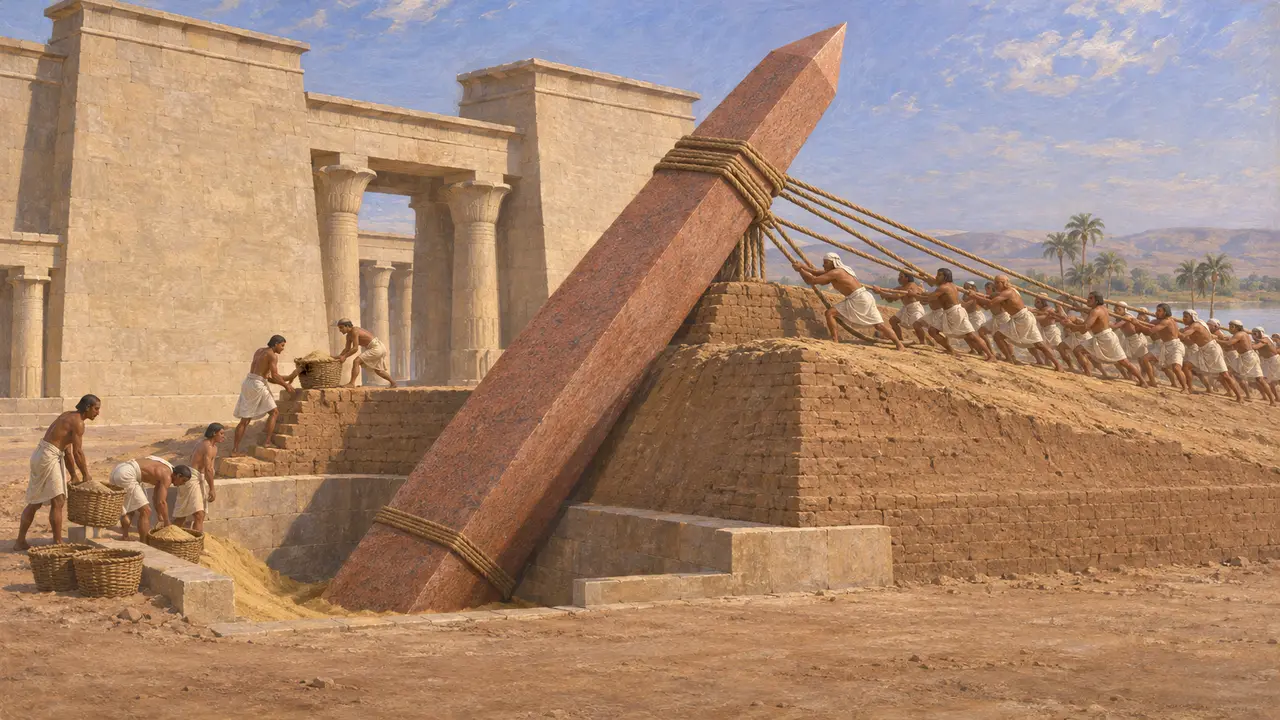
DisputedNo Egyptian text explains how an obelisk weighing hundreds of tonnes was moved and stood upright. Scholars have proposed earth ramps, levering, and lowering the shaft into a pit of sand that was slowly emptied. Modern experiments have shown that some of these methods can work, but which methods the Egyptians used, and whether they varied, remains uncertain.
L. Habachi, The Obelisks of Egypt, 1977
Sources
- Herodotus 2.111
- Herodotus 2.170
- L. Habachi, The Obelisks of Egypt, 1977
- R. Engelbach, The Problem of the Obelisks, 1923
- A. B. Lloyd, Herodotus Book II, 1975-1988