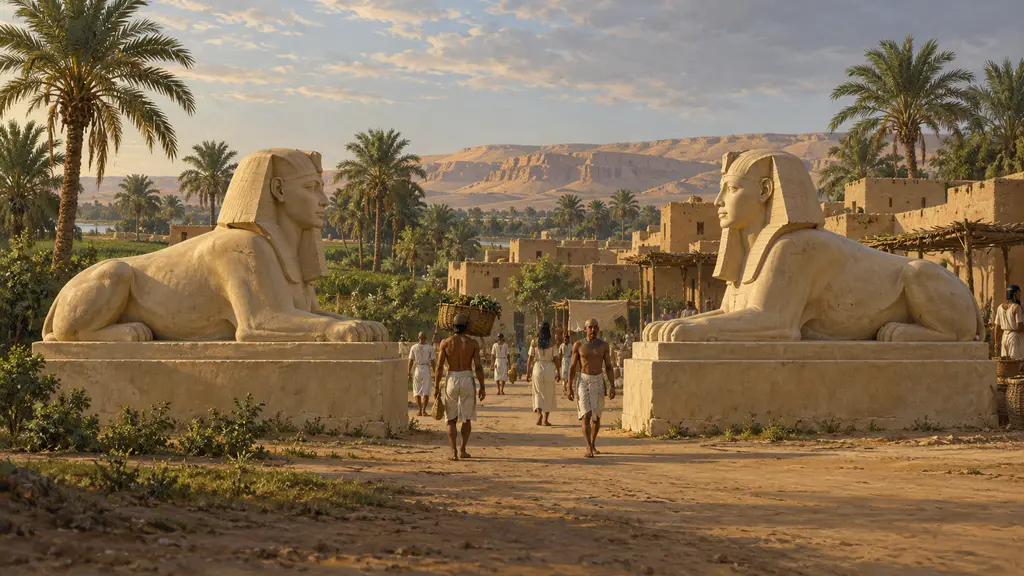
Sphinx Pair
Paired stone sphinxes on Egyptian temple approaches, Sais and Memphis, 6th century BCE
Egyptian temples were often approached along a processional way flanked by pairs of stone sphinxes, lions with the head of a king or a ram. Herodotus says Amasis, the last long-reigning pharaoh before Cambyses conquered Egypt in 525, set up great man-headed sphinxes at Sais. Strabo later saw sphinxes half-buried in sand near Memphis, though that avenue was mostly built after the Persian conquest.
In the game: The game offers the Sphinx Pair among its housing buildings at Memphis. Real sphinx avenues led to temples, not homes, and the Serapeum avenue Strabo saw was mostly laid out in the 4th century, after the game's period.
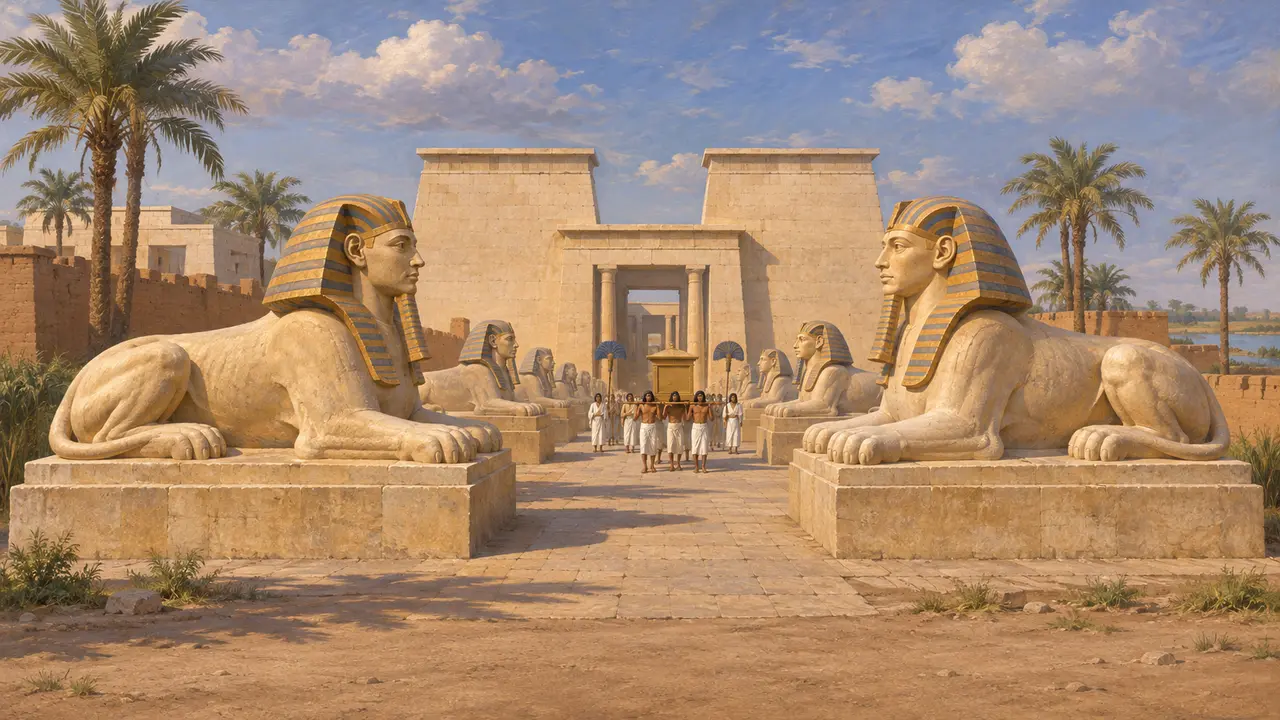
Avenues for the gods
In the recordFrom the New Kingdom onward, Egyptian builders lined the approach to a temple, the dromos, with rows of sphinxes facing each other across the path. Surviving examples at Karnak use ram-headed sphinxes, while others have the face of a ruling king. On festival days the god's image was carried along these routes, so the sphinxes framed processions rather than everyday streets.
R. H. Wilkinson, The Complete Temples of Ancient Egypt, 2000
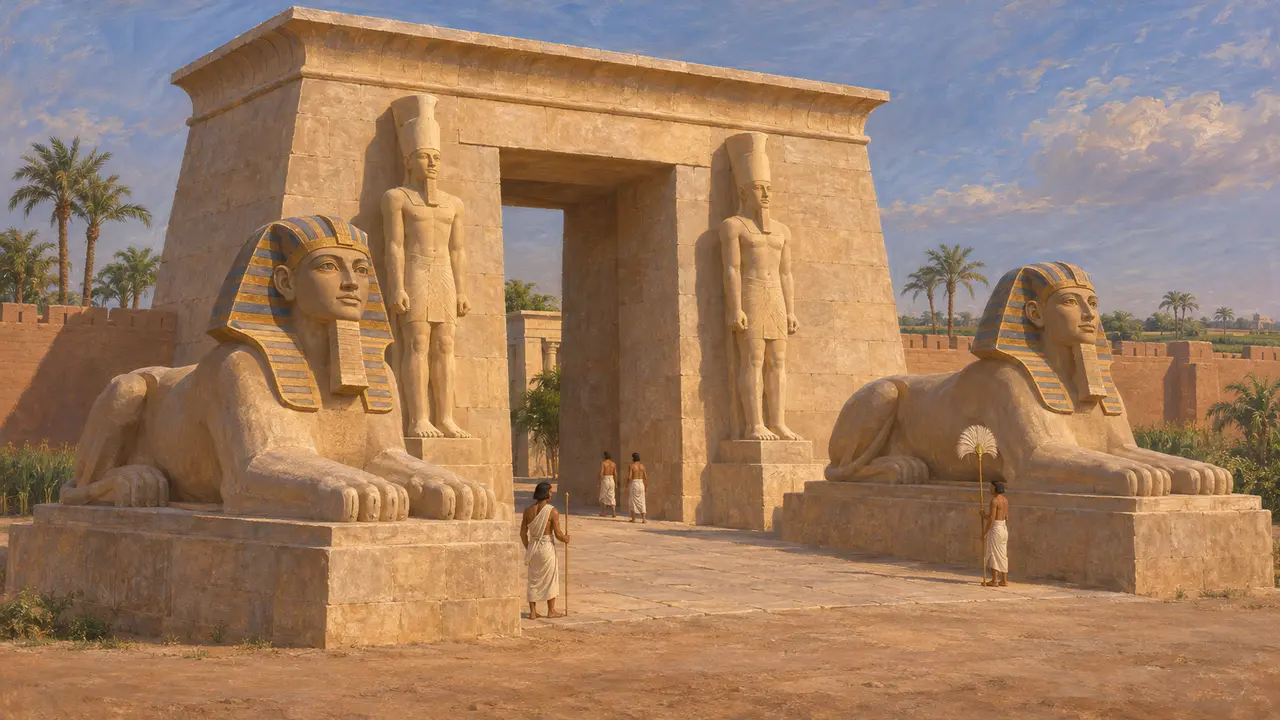
Amasis at Sais
Ancient accountHerodotus says that Amasis, who ruled Egypt until shortly before the Persian conquest, built a gateway for the temple of Athena at Sais, meaning the goddess Neith. He adds that Amasis set up colossal statues and large man-headed sphinxes there and hauled in huge blocks of stone. Little of Sais survives above ground, so the description rests mainly on his account.
Herodotus 2.175
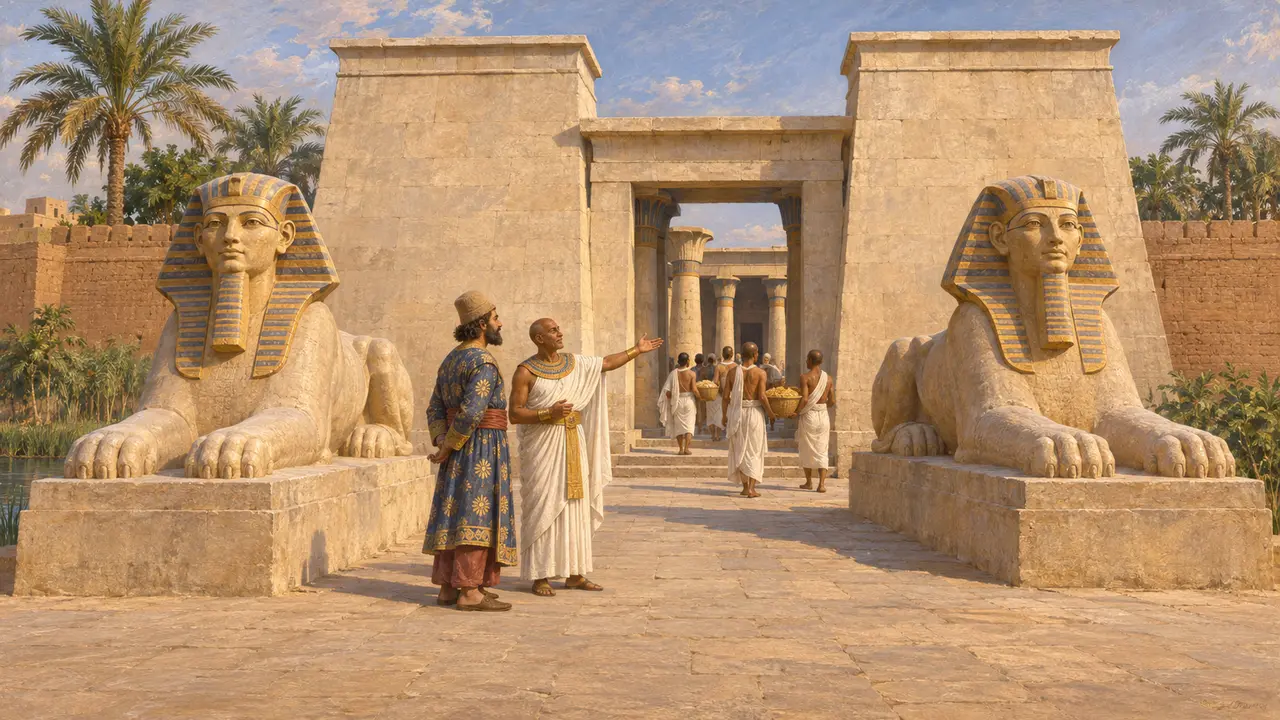
Sais under Persian rule
In the recordThe statue of Udjahorresnet, a priest and official from Sais, records that he served Cambyses after 525. He says he persuaded the King to clear foreigners out of the temple of Neith and to restore its revenues and rites. This suggests that the temple Amasis had adorned kept working under its new Persian master.
Statue of Udjahorresnet (Vatican Museums)
Strabo at the Serapeum
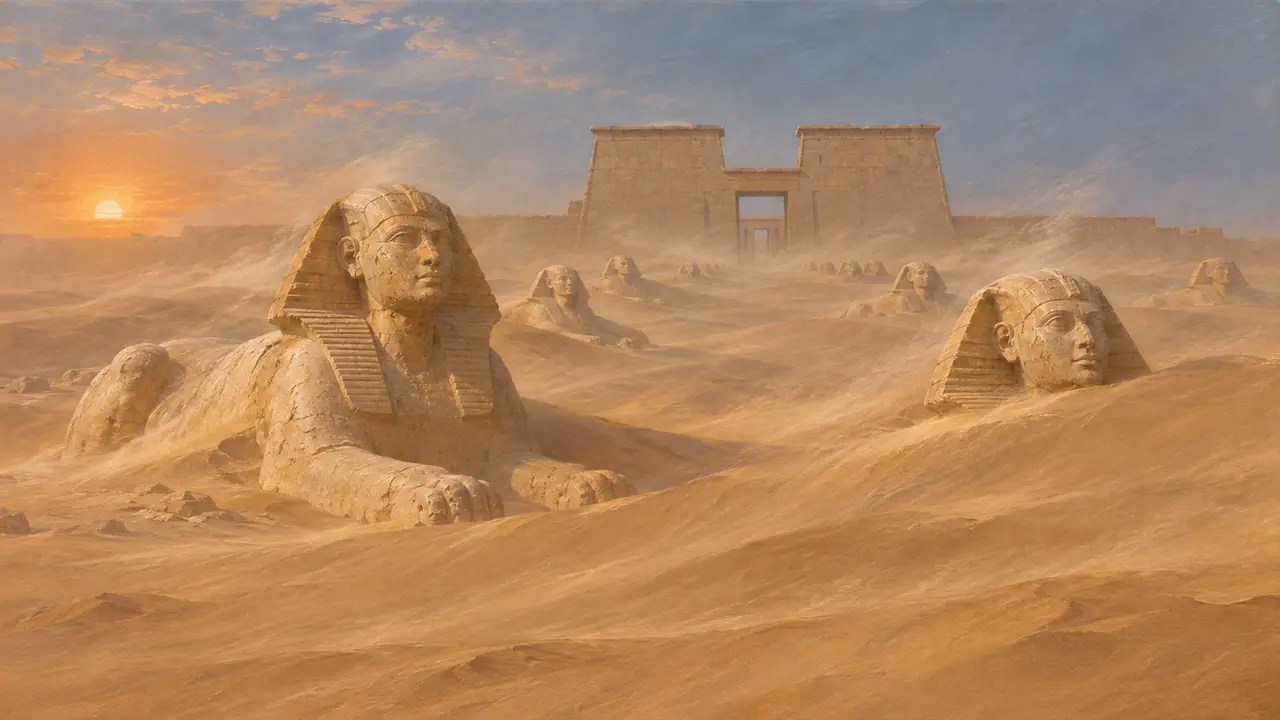
Ancient accountStrabo, who visited Egypt about five centuries after Cambyses, describes the Serapeum near Memphis as standing in a very sandy place. Wind-driven dunes had buried some of its sphinxes up to the head and others halfway. He remarks that the sight showed how dangerous a sandstorm could be for anyone walking to the temple.
Strabo 17.1.32
What stood at Memphis in 525
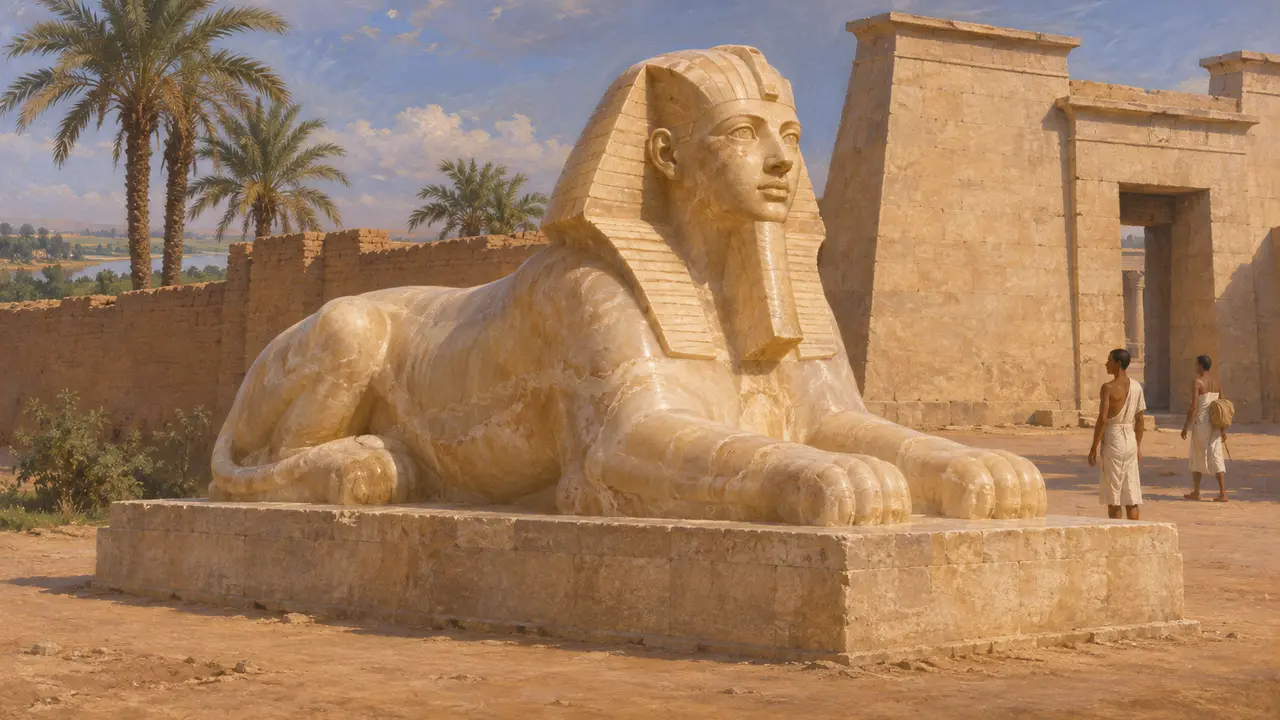
DisputedIn 1850 Auguste Mariette found the Serapeum by clearing the avenue Strabo had seen. Its sphinxes are mostly dated to the 30th Dynasty in the 4th century, long after 525. Older sphinxes survive at Memphis, such as the New Kingdom alabaster sphinx at Mit Rahina. The city was robbed for stone and is only partly excavated, so historians cannot say how many sphinx avenues stood when Cambyses arrived.
D. J. Thompson, Memphis under the Ptolemies, 1988
Sources
- Herodotus 2.175
- Strabo 17.1.32
- D. J. Thompson, Memphis under the Ptolemies, 1988
- R. H. Wilkinson, The Complete Temples of Ancient Egypt, 2000
- Statue of Udjahorresnet (Vatican Museums)