Encyclopedia › Soldiers and ships
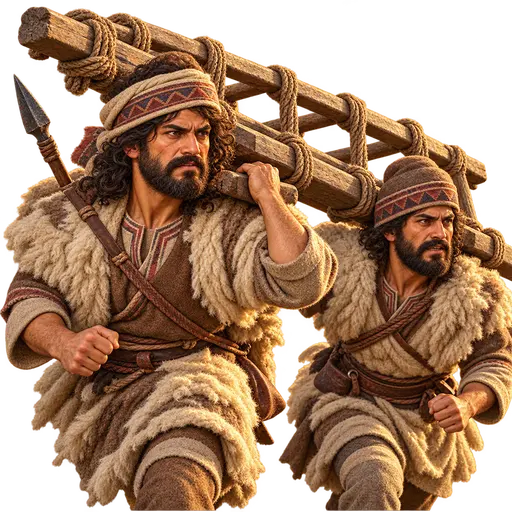
Scaling Ladder
Siege ladder for climbing city walls, Near East and Greece, 9th to 5th centuries BCE
The scaling ladder was the simplest way to get soldiers over a wall: a long timber frame carried forward, set against the defences and climbed under covering fire. It was cheap and quick to make, but dangerous for the men on it. Near Eastern and Greek armies used ladders alongside ramps, rams and mines, and the Persians, heirs to Assyrian siege practice, probably did too.
In the game: In the game two men carry a ladder for the King's enemies; once set, raiders climb it, while defenders topple it and archers shoot the bearers. In history Persian armies were far more often the besiegers than the besieged.
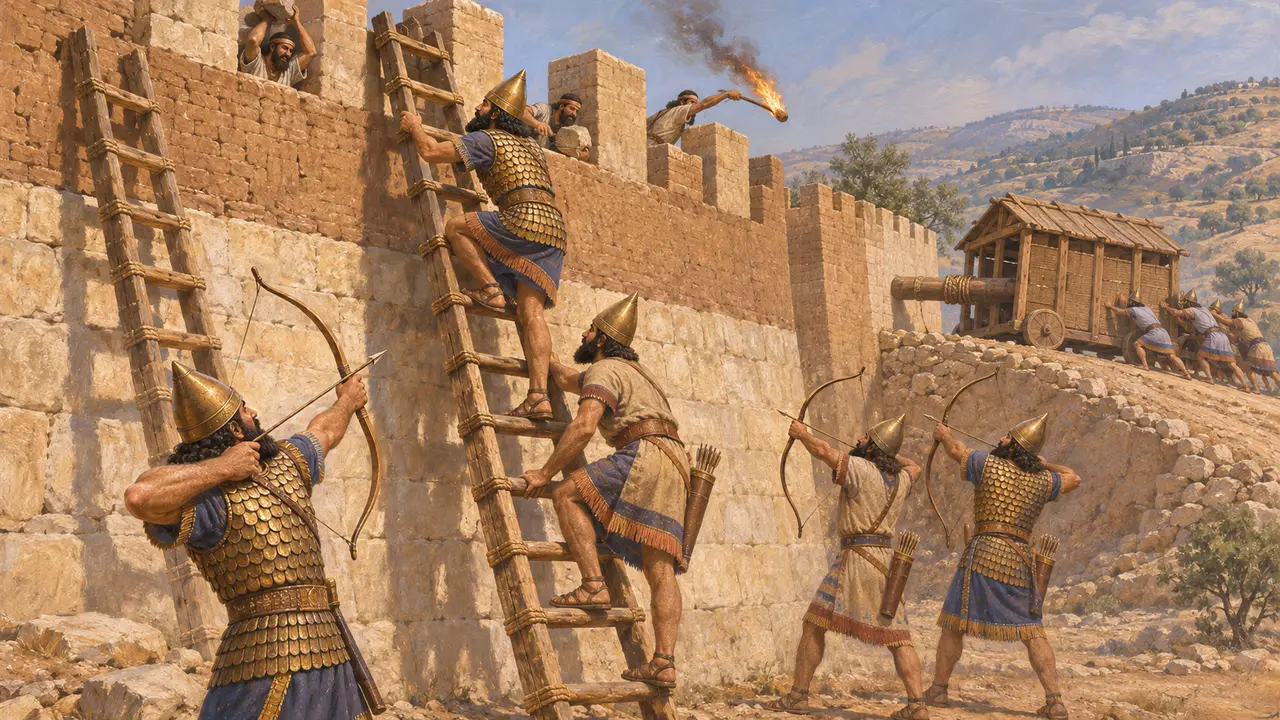
Ladders on the Assyrian reliefs
In the recordAssyrian palace reliefs from Nimrud and Nineveh show soldiers climbing ladders against city walls while archers behind them shoot at the parapet. On the reliefs Sennacherib set up at Nineveh after his siege of Lachish in 701, rams are pushed up a ramp and defenders throw down stones and torches. The Persians later ruled the lands where these methods had been developed.
D. Ussishkin, The Conquest of Lachish by Sennacherib, 1982
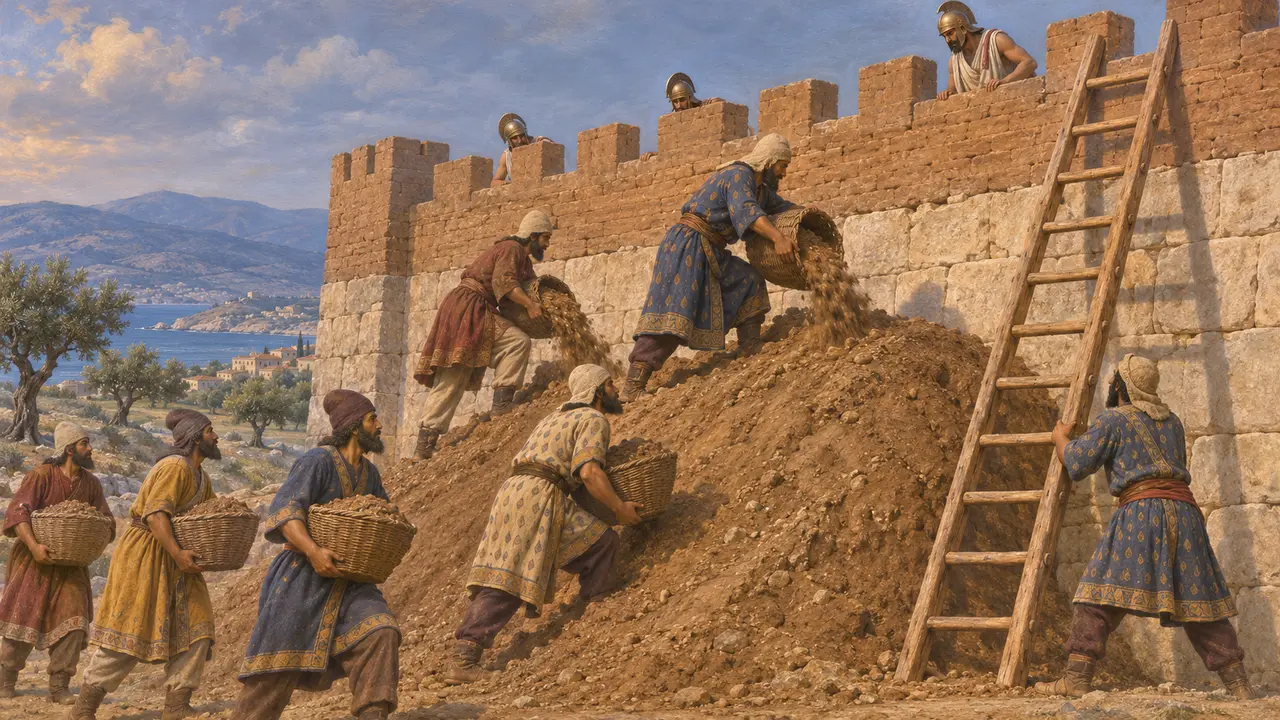
How Herodotus says Persians took cities
Ancient accountHerodotus describes Persian captures of cities mostly through mounds, mines and surprise. He says Harpagus took the Ionian cities by heaping earth against their walls, and that the citadel of Sardis fell when a soldier climbed an unguarded cliff. Miletus, he says, was taken in 494 by undermining the walls and using every kind of siege engine.
Herodotus 1.84; Herodotus 1.162; Herodotus 6.18
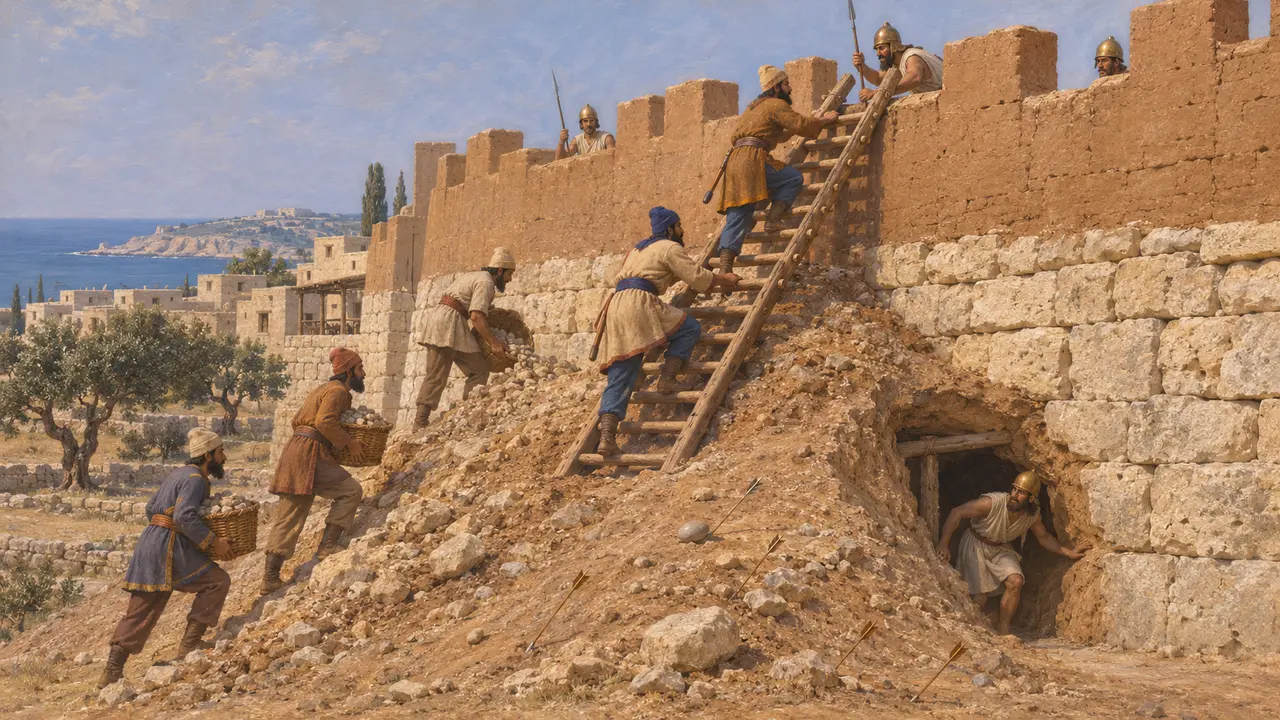
The siege mound at Old Paphos
In the recordAt Old Paphos on Cyprus, excavators found a Persian siege ramp built against the city wall, probably during the Cypriot revolt of about 498. Arrowheads, sling bullets and stone balls lay in and around the fill, and the defenders had dug tunnels beneath it to make it collapse. The site shows how Persian armies combined several methods to reach the top of a wall.
F. G. Maier and V. Karageorghis, Paphos: History and Archaeology, 1984
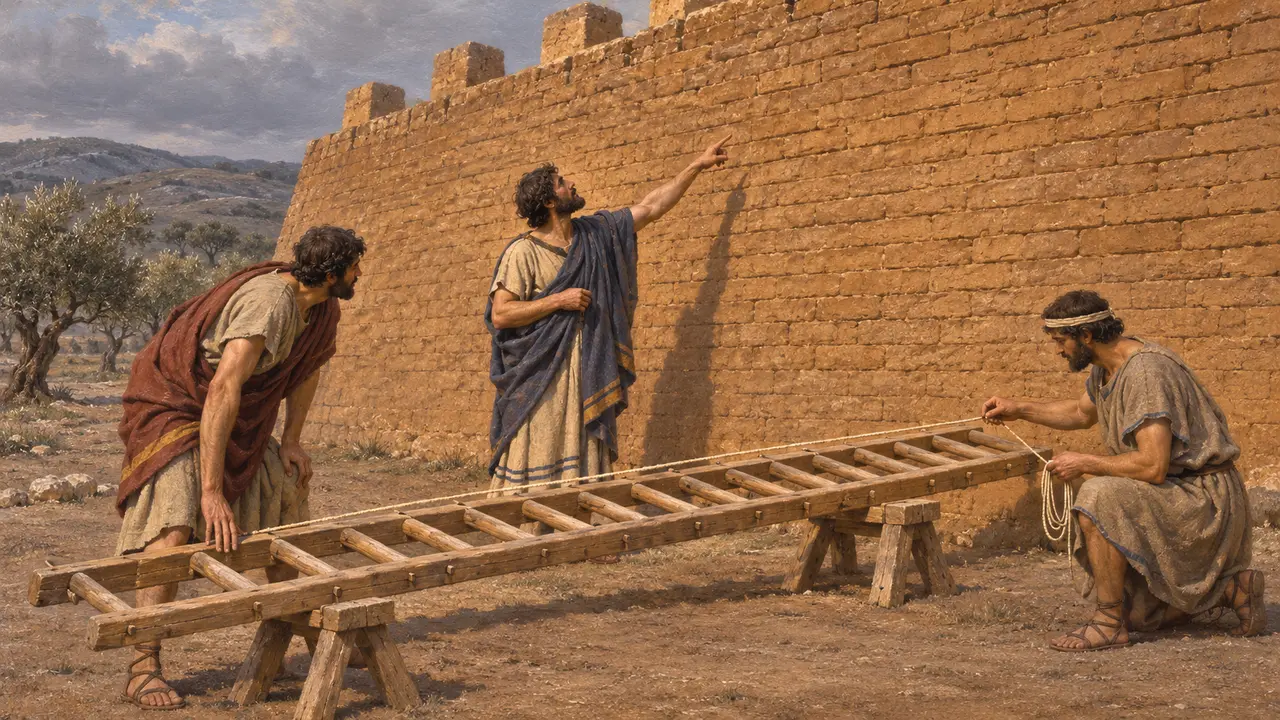
Measuring the height of a wall
Ancient accountA ladder had to be the right length, or the attack failed. Thucydides says the besieged Plataeans, in the winter of 428-427, counted the courses of bricks in the enemy siege wall to judge how long to make their ladders. Polybius, writing much later, stressed that commanders had to calculate the height of a wall and cited attacks that failed because the ladders were the wrong length.
Thucydides 3.20; Polybius, Histories book 9
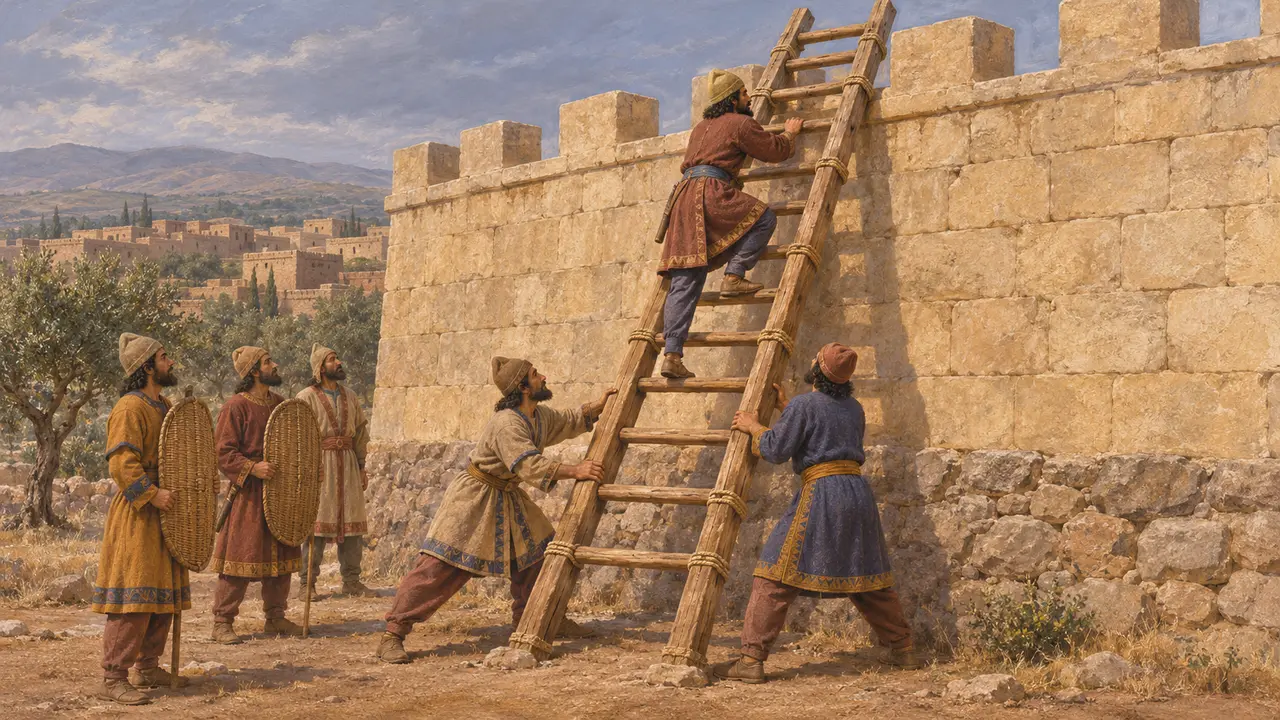
How skilled were Persian besiegers
DisputedGreek writers tend to explain Persian captures of cities through treachery or tricks, which may understate Persian skill. Many modern historians think the Persians inherited Assyrian and Babylonian siege practice and used it well. The sources rarely say whether ladders were used in particular sieges, so their exact role remains uncertain.
P. Briant, From Cyrus to Alexander, 2002
Sources
- Herodotus, Histories
- Thucydides 3.20
- D. Ussishkin, The Conquest of Lachish by Sennacherib, 1982
- F. G. Maier and V. Karageorghis, Paphos: History and Archaeology, 1984
- P. Briant, From Cyrus to Alexander, 2002
- Polybius, Histories book 9