Encyclopedia › Soldiers and ships
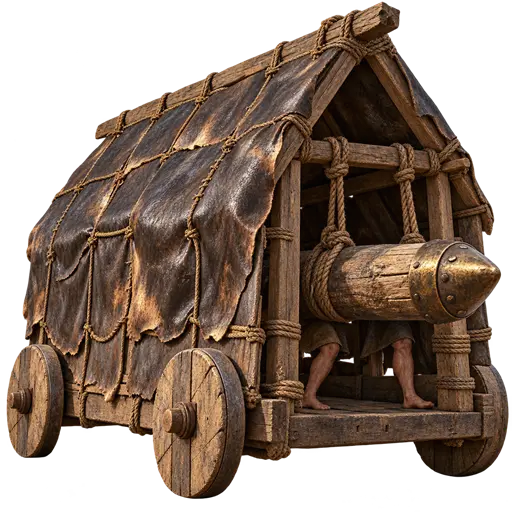
Covered Ram
Roofed battering ram for breaching walls, in Near Eastern use long before 530 BCE
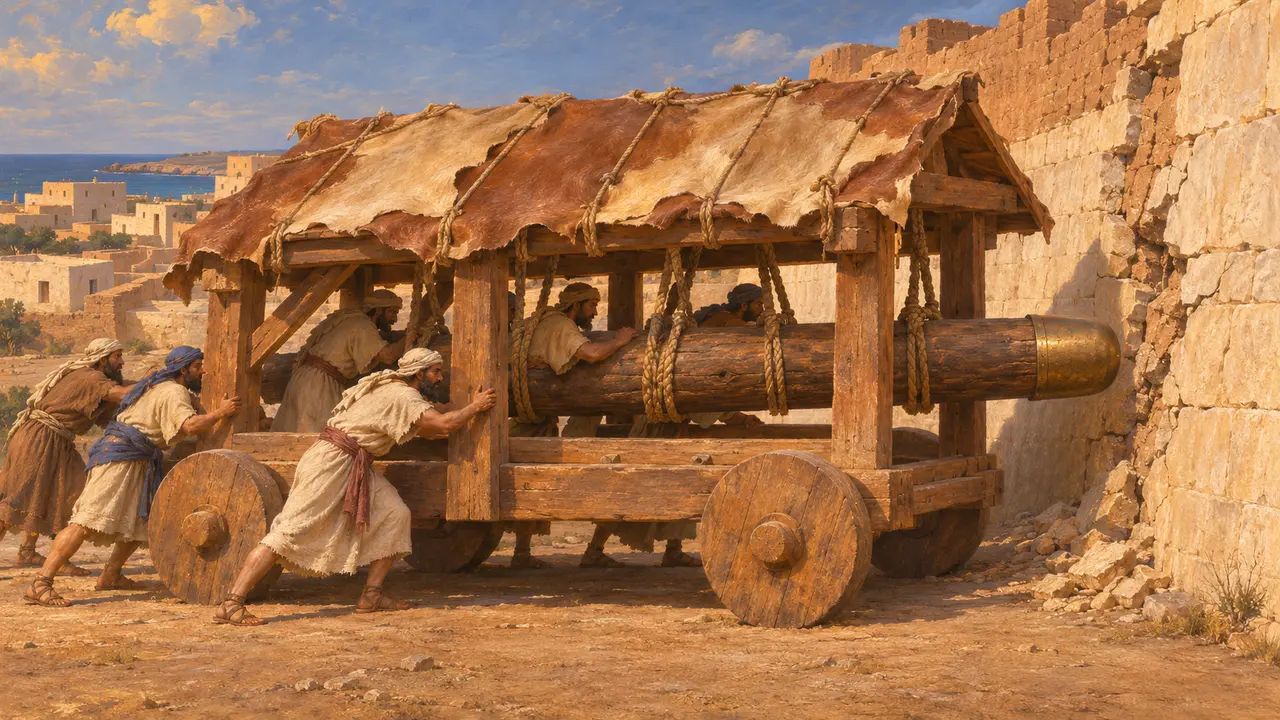
A covered ram was a heavy beam, usually tipped with metal, driven against a wall or gate by a crew sheltering in a roofed wooden shed that guarded them from missiles and fire. The device was already centuries old by the time of Cyrus, as Assyrian palace reliefs show. In this period Persian armies took cities mostly with earth mounds, mines and blockade, and Herodotus says little about rams in their sieges.
In the game: The game gives the King's enemies a slow, hide-covered ram that arrows barely harm and spearmen and horsemen break. This simplifies: wet hides guarded mainly against fire, and Persia's foes in these years seldom used rams.
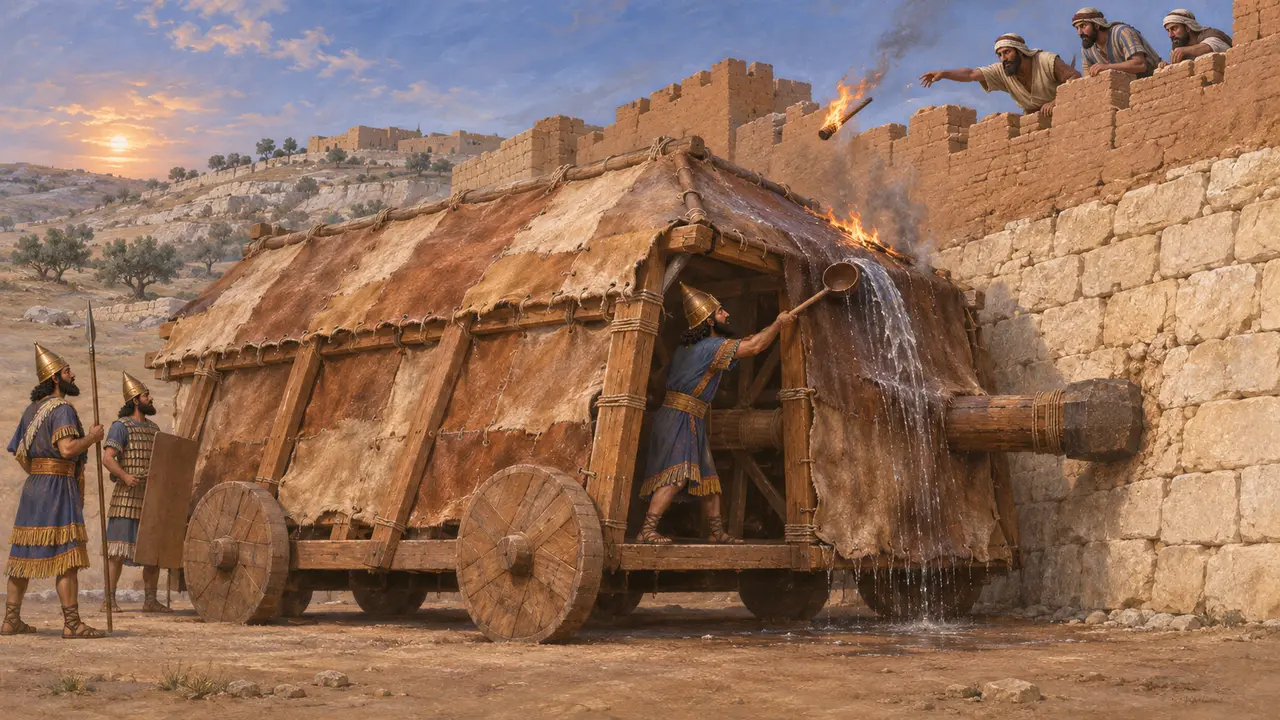
Rams before the Persians
In the recordAssyrian palace reliefs show wheeled rams with high covered sheds attacking walls, most fully in Sennacherib's reliefs of the siege of Lachish in 701. In one scene a crewman pours water from a long ladle over the front of the machine while defenders throw torches down on it. The scene suggests that fire, more than arrows, was the danger the crews guarded against.
D. Ussishkin, The Conquest of Lachish by Sennacherib, 1982
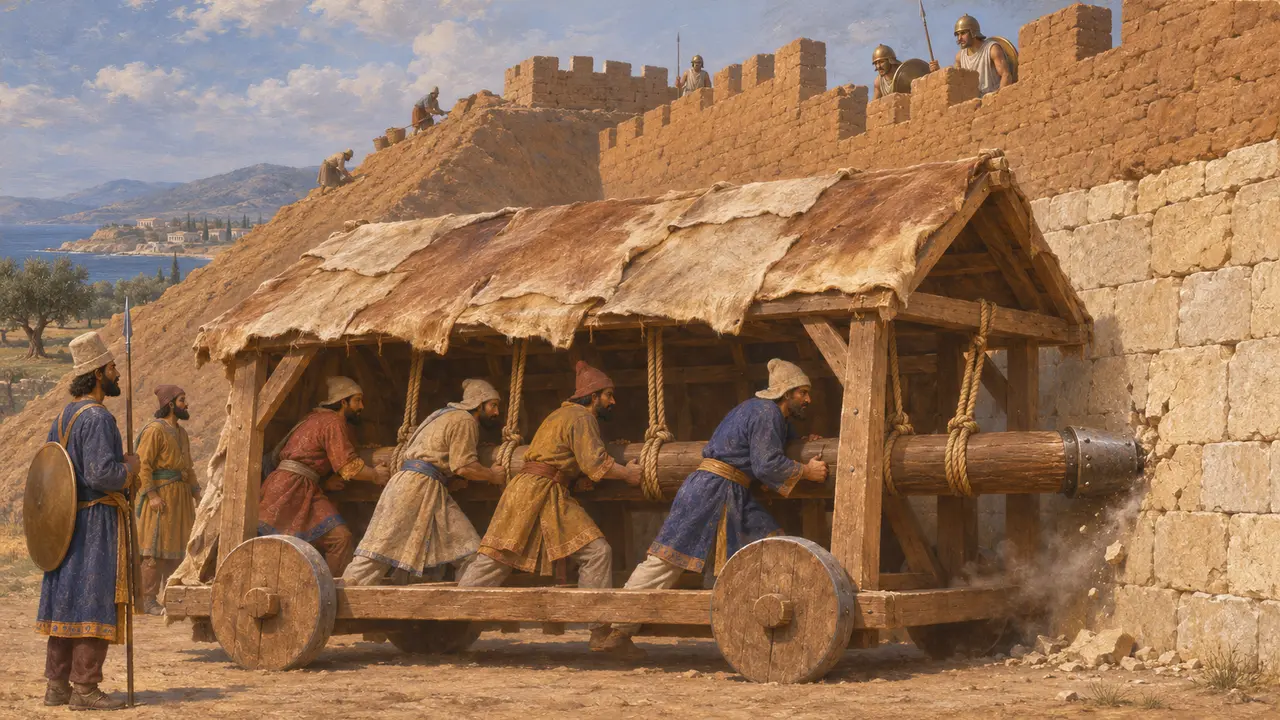
How the Persians took cities
Ancient accountHerodotus says that Harpagus took the Ionian cities in the 540s by raising earth mounds against their walls. At Barca in Libya the Persians dug mines, which a bronzesmith found by listening at a bronze shield, and in the end they took the town by a trick. Herodotus also says Soli on Cyprus fell when its wall was undermined, and that Miletus fell in 494 to mining and every kind of engine.
Herodotus 1.162; 4.200-201; 5.115; 6.18
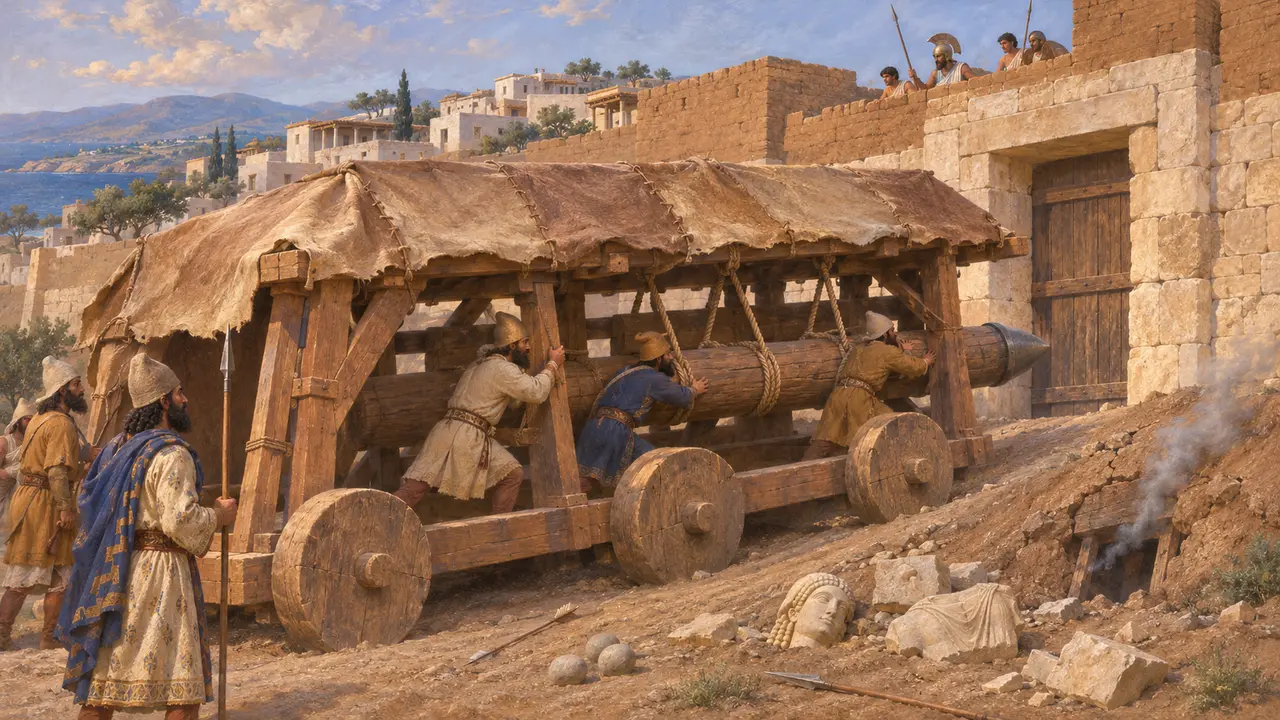
The siege mound at Paphos
In the recordExcavators at Old Paphos on Cyprus found a Persian siege ramp built against the north-east gate during the Cypriot revolt of about 498-497. It was filled partly with broken statues and building stone. The defenders dug tunnels beneath it and lit fires to bring it down, and hundreds of stone balls, arrowheads and spearheads lay on the site. Herodotus does not describe this siege; it is known only from excavation.
F. G. Maier and V. Karageorghis, Paphos: History and Archaeology, 1984
Greeks and the ram
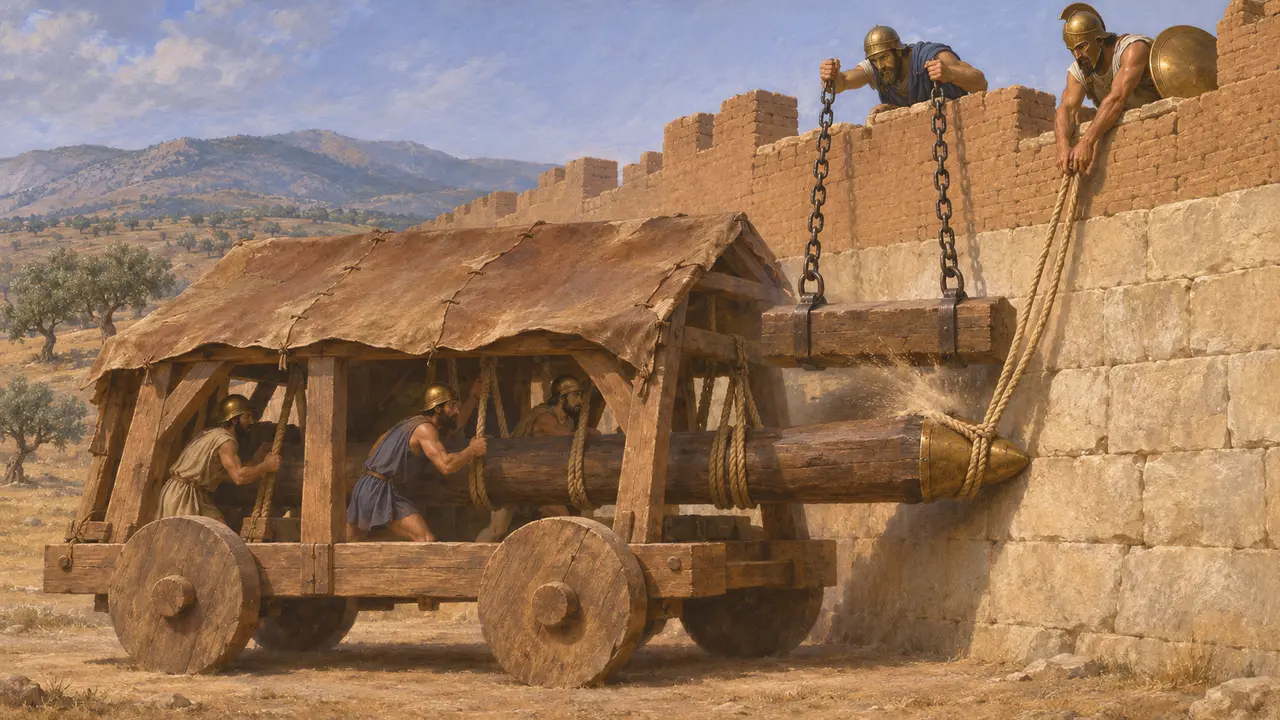
Ancient accountThucydides describes Peloponnesian rams brought against Plataea in 429, fifty years after this game ends. The defenders caught the ram heads with nooses and snapped them off by dropping heavy beams hung on chains. Herodotus says that in 479 the Spartans could not break into the Persian stockade at Plataea until the Athenians arrived, and that the Athenians took Sestos by blockade once its defenders were starving.
Thucydides 2.76; Herodotus 9.70; 9.114-118
Tales of the first ram
Later legendLater writers told stories about who invented the ram. The Roman architect Vitruvius, writing more than four centuries after this period, says the Carthaginians first used one at the siege of Gades. He adds that a Carthaginian named Cetras later set it on wheels under a hide-covered roof. These are late tales about origins, and the Assyrian reliefs show covered rams in use long before.
Vitruvius, On Architecture 10.13
Sources
- Herodotus, Histories 1.162, 4.200-201, 5.115, 6.18, 9.70, 9.114-118
- Thucydides 2.76
- F. G. Maier and V. Karageorghis, Paphos: History and Archaeology, 1984
- D. Ussishkin, The Conquest of Lachish by Sennacherib, 1982
- Vitruvius, On Architecture 10.13