Encyclopedia › Soldiers and ships
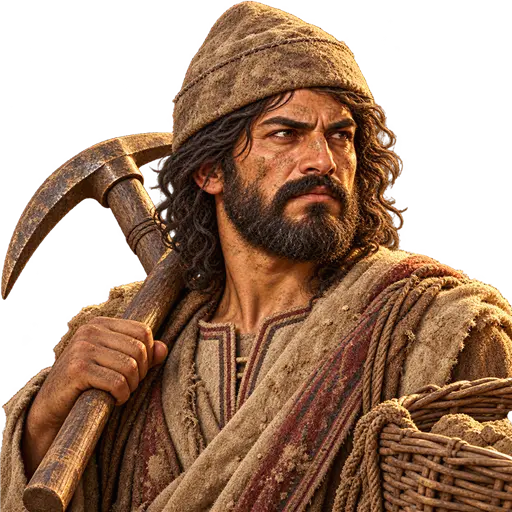
Sapper
Soldiers who dug under city walls in the sieges of the Achaemenid age, 6th-5th c. BCE
Sappers were the diggers of ancient siege warfare. They tunnelled beneath walls or prised out their foundations so that the stonework above would collapse. In the period of the game, the clearest evidence for mining comes from Persian armies attacking walled cities in Libya, Cyprus and Ionia, and from the countermines that defenders dug to stop them.
In the game: In the game, sappers serve the King's enemies, digging under the player's walls and towers, and fall easily to any soldier. History mostly reverses this: the best-attested mining of the period was done by Persian armies, at Barca, Soli and Miletus.
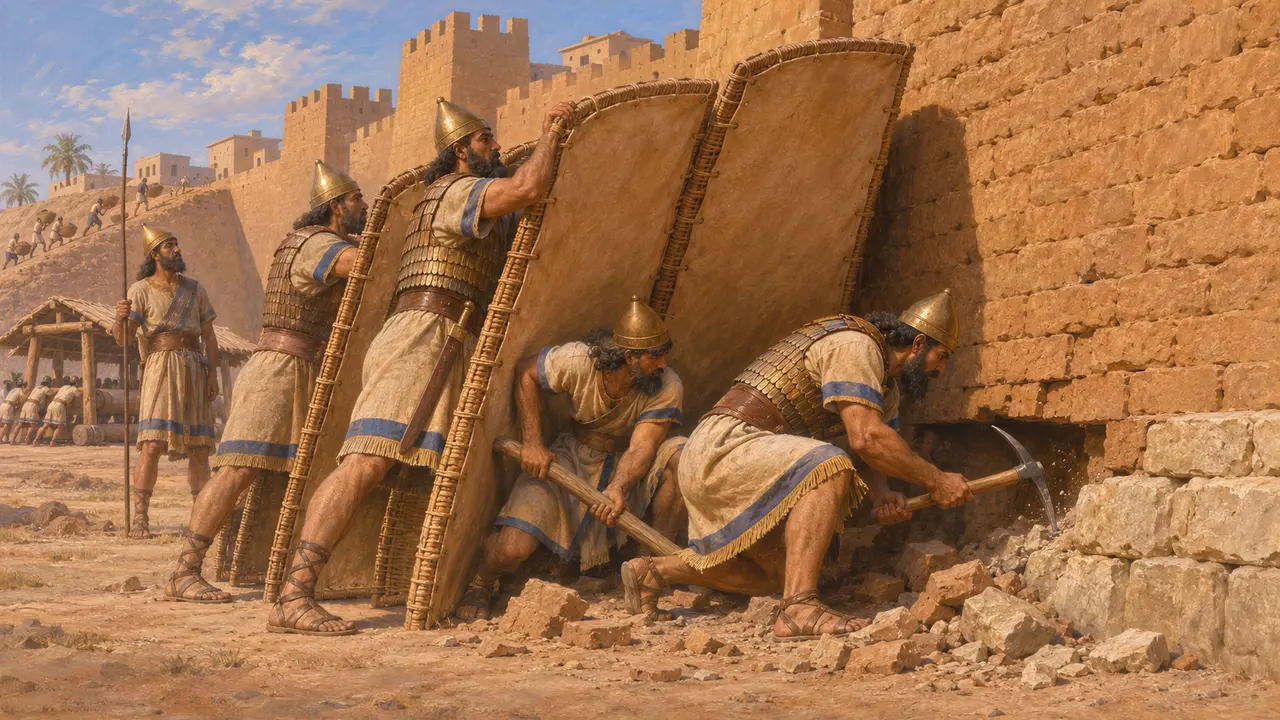
An old Near Eastern craft
In the recordUndermining walls was an old technique in the Near East. Assyrian palace reliefs of the 9th to 7th centuries show soldiers attacking the foot of city walls with picks and levers under the cover of large shields. They also show rams and siege ramps, such as those carved for Sennacherib's siege of Lachish in 701. Persian armies probably inherited much of this Mesopotamian siege practice.
Assyrian palace reliefs from Nimrud and Nineveh; P. B. Kern, Ancient Siege Warfare, 1999
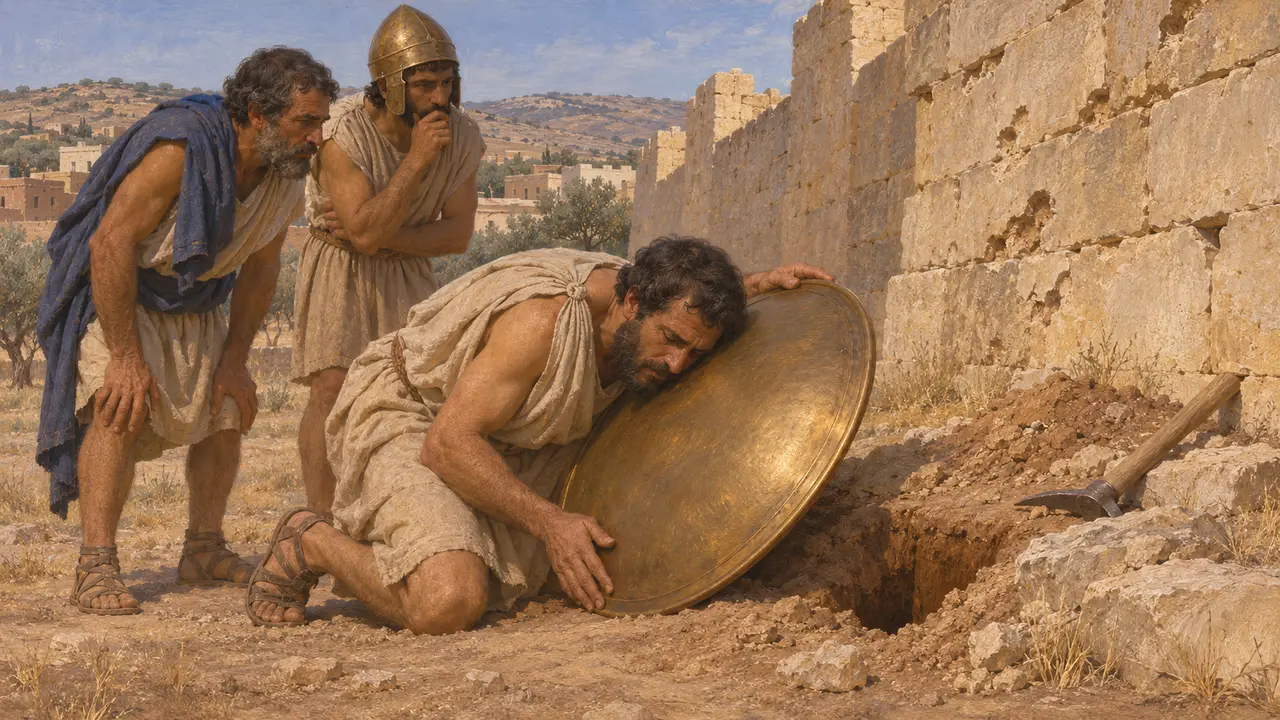
The mines at Barca
Ancient accountHerodotus says that a Persian army sent by Aryandes, the satrap of Egypt, besieged Barca in Libya for nine months and dug tunnels towards its walls. A Barcaean bronze-smith found the tunnels by carrying a bronze shield around inside the walls, listening for where it rang over hollow ground. The defenders countermined there and killed the Persian diggers. According to Herodotus, the city finally fell to a trick, not to the mines.
Herodotus 4.200-201
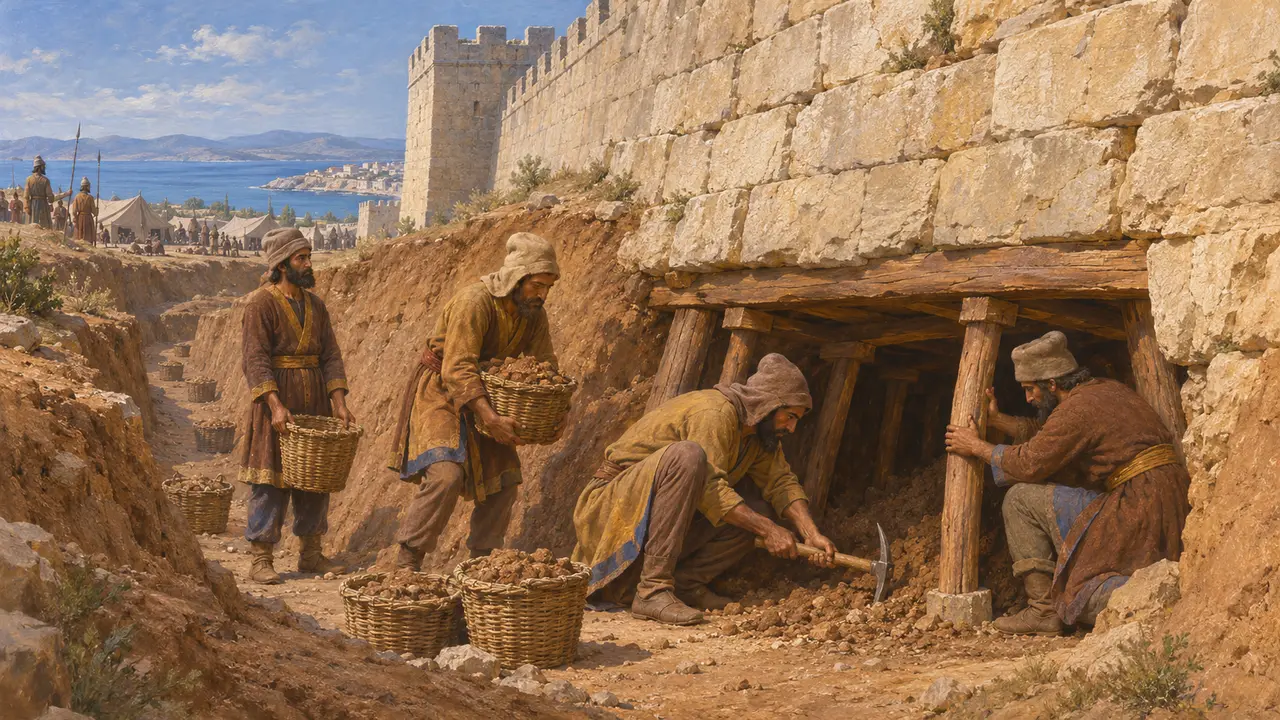
Soli and Miletus
Ancient accountHerodotus reports that during the Ionian Revolt the Persians took Soli on Cyprus in the fifth month of the siege by undermining its wall. In 494, after the naval victory at Lade, they captured Miletus by mining its walls and using every kind of siege engine. In both cases digging was part of a long and costly siege, not a quick assault.
Herodotus 5.115; Herodotus 6.18
Tunnels under the Paphos siege mound
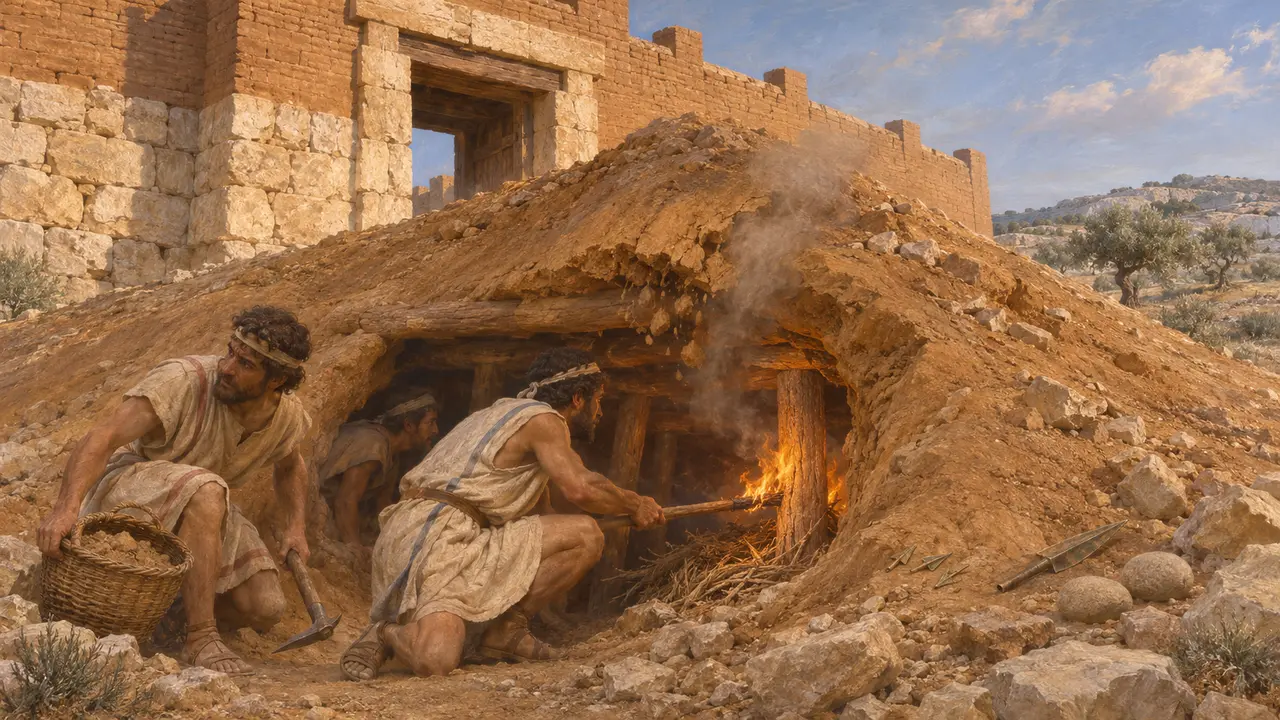
In the recordExcavations at Palaepaphos (Kouklia) on Cyprus uncovered a Persian siege mound built against the city's north-east gate, probably during the revolt of about 498-497. The defenders dug tunnels beneath the mound and lit fires in them to make it collapse. Arrowheads, spearheads and stone balls were found in the fill. These works are among the clearest physical remains of mining and countermining from this period.
F. G. Maier and V. Karageorghis, Paphos: History and Archaeology, 1984
Who did the digging
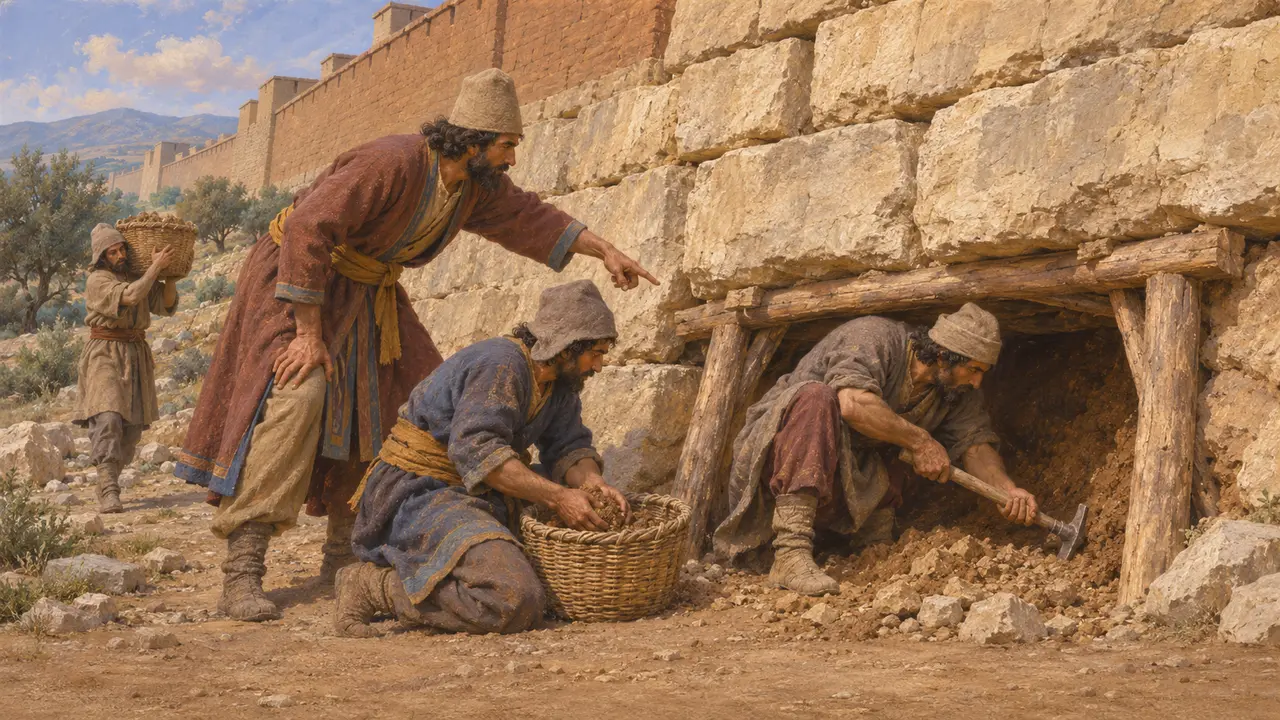
DisputedNo source of the period says whether Persian armies kept specialist miners or set levies and subject troops to dig under skilled direction. Herodotus describes the mines at Barca, Soli and Miletus but never names or describes the diggers. How far Persian siegecraft rested on dedicated experts rather than on mass labour therefore remains an open question, and modern views differ.
P. B. Kern, Ancient Siege Warfare, 1999; P. Briant, From Cyrus to Alexander, 2002
Sources
- Herodotus 4.200-201
- Herodotus 5.115; 6.18
- F. G. Maier and V. Karageorghis, Paphos: History and Archaeology, 1984
- P. B. Kern, Ancient Siege Warfare, 1999
- P. Briant, From Cyrus to Alexander, 2002