Encyclopedia › Soldiers and ships
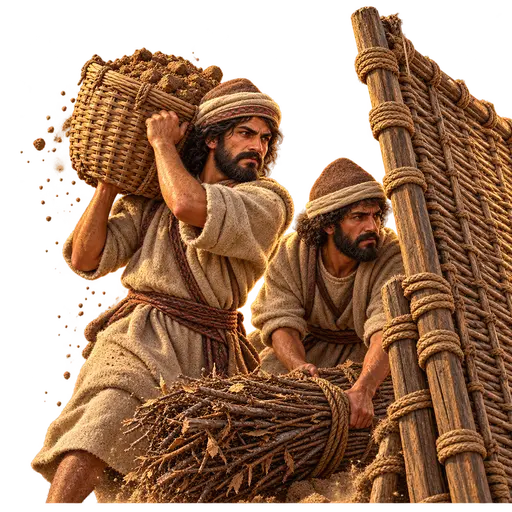
Earth Carrier
Men who heaped siege mounds against city walls, Near East and Aegean, to 479 BCE
In the game: Level 1: The Founder's Tomb
A siege mound was a ramp of earth, stone and timber piled against a city wall until attackers could reach the rampart. It needed many carriers working under fire. In the Near East it was an old Assyrian method, and the Persians used it to take the Greek cities of Ionia and Cyprus.
In the game: Enemy earth carriers pile a mound behind wicker screens until it becomes a road over the wall, and archers on the wall can kill them. Historically the mound was chiefly a tool of the King's own armies, so the game reverses the roles.
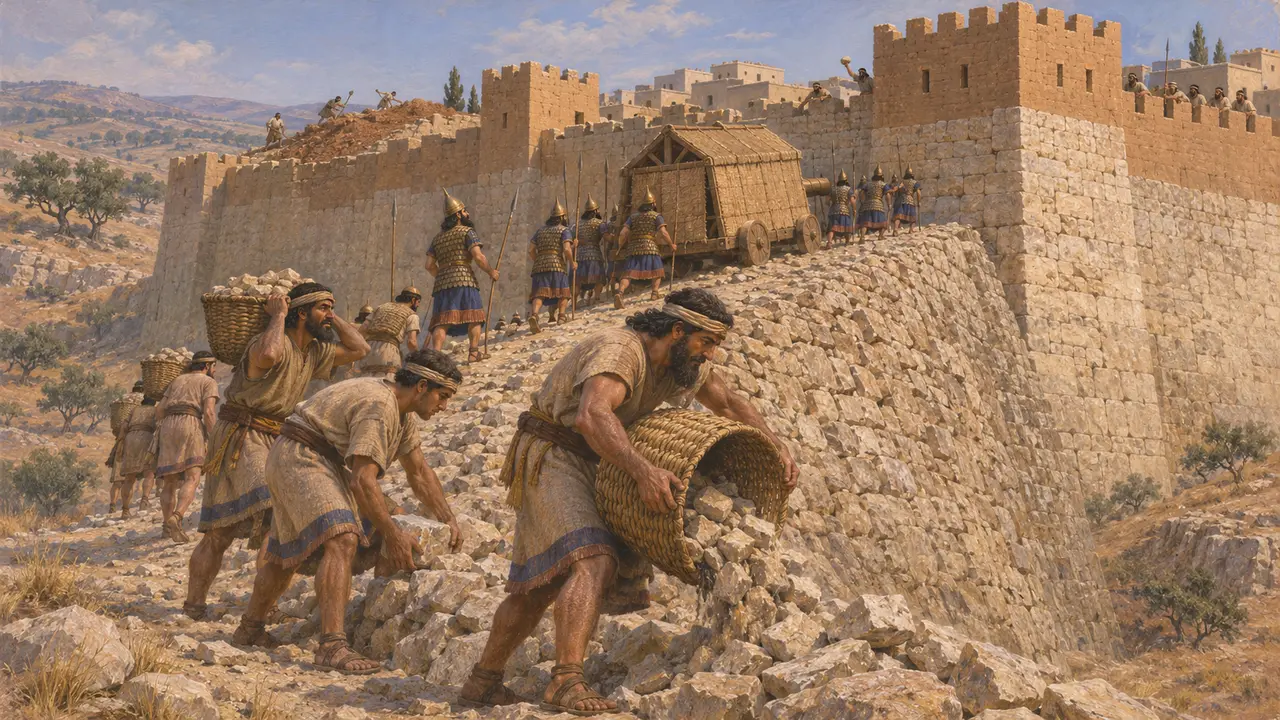
An Assyrian precedent at Lachish
In the recordWhen Sennacherib of Assyria besieged Lachish in Judah in 701, his army built a great ramp of stones against the city's south-west corner. Excavators have traced it on the ground, along with a counter-ramp raised by the defenders inside. Reliefs from Sennacherib's palace at Nineveh show rams and soldiers moving up such ramps to the walls.
D. Ussishkin, The Conquest of Lachish by Sennacherib, 1982
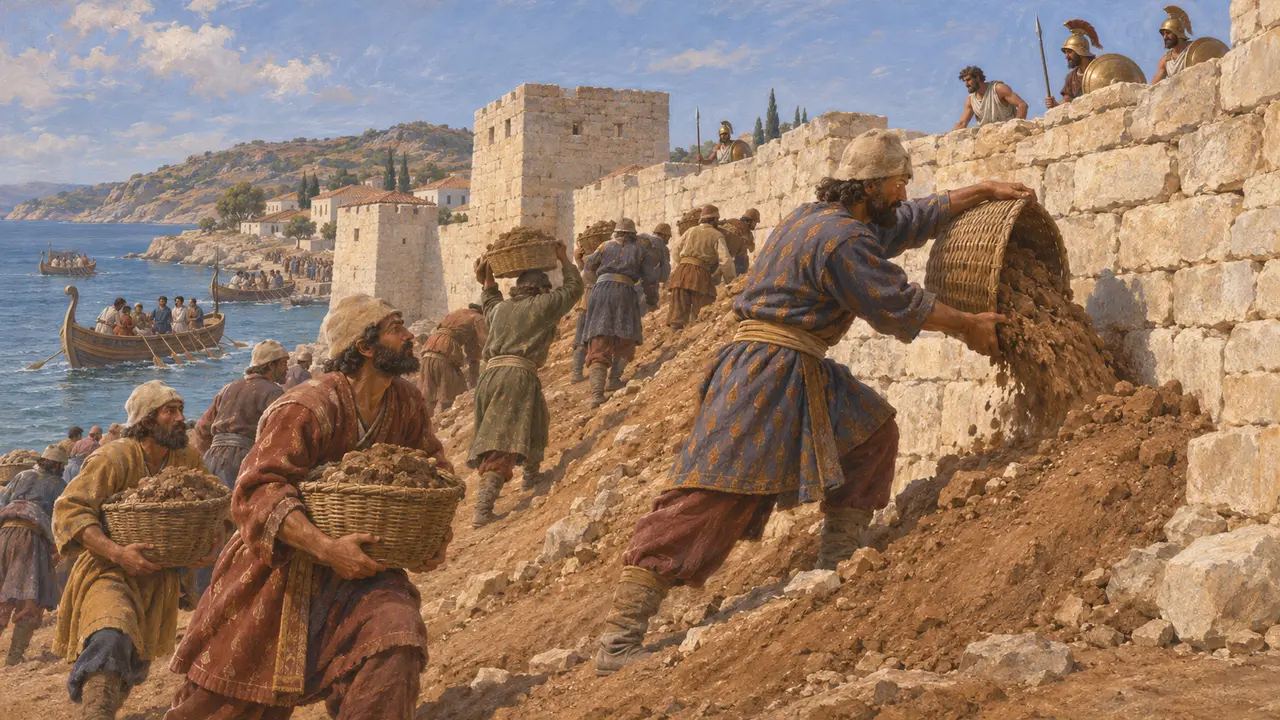
Harpagus and the mounds of Ionia
Ancient accountHerodotus says that after Cyrus conquered Lydia, his general Harpagus took the Greek cities of the coast by shutting their people inside the walls and then building mounds against them. He describes Phocaea under this threat, where the citizens took to their ships and left rather than wait for the city to fall.
Herodotus 1.162-164
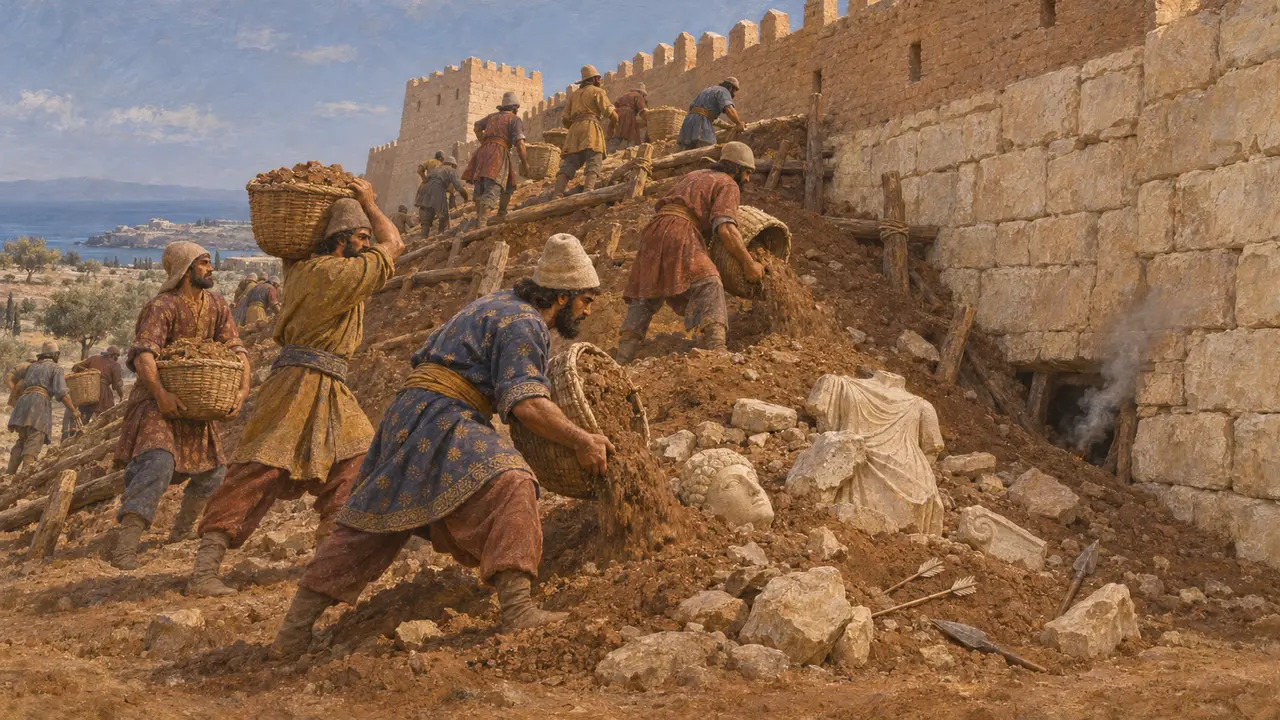
The Persian mound at Old Paphos
In the recordAt Old Paphos in Cyprus, excavators found a Persian siege mound built against the city wall, probably during the Cypriot part of the Ionian Revolt in about 498 to 497. Its fill held earth, stones, timber and many broken statues and votive pieces, probably taken from a sanctuary outside the walls. The defenders dug tunnels under the mound and tried to burn it, and hundreds of arrowheads and spearheads lay in the debris.
F. G. Maier and V. Karageorghis, Paphos: History and Archaeology, 1984
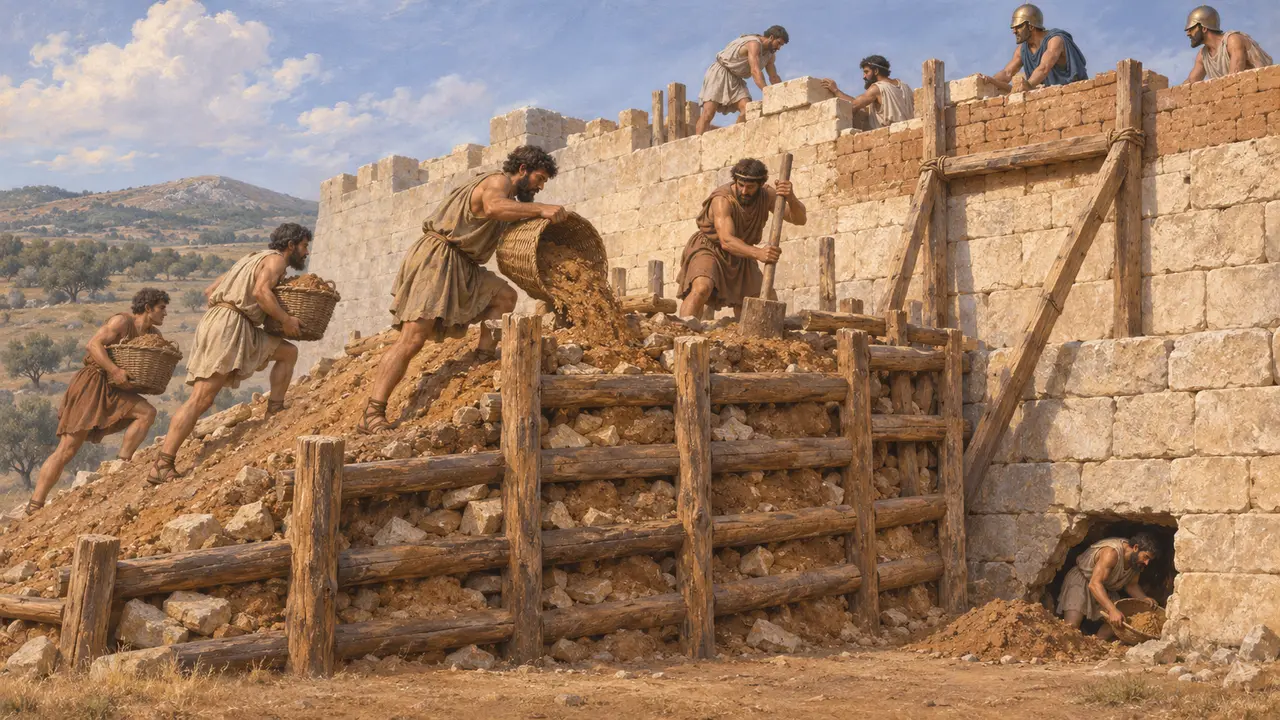
How a mound was built and fought
Ancient accountThucydides gives the fullest ancient description, for the Peloponnesian siege of Plataea under the Spartan king Archidamus in 429. The attackers held the sides of their mound with a lattice of timber and filled it with wood, stones and earth. The Plataeans raised their wall higher and dug out earth from beneath the mound. Herodotus says the Persians took Soli in Cyprus by the related method of undermining its wall.
Thucydides 2.75-76; Herodotus 5.115
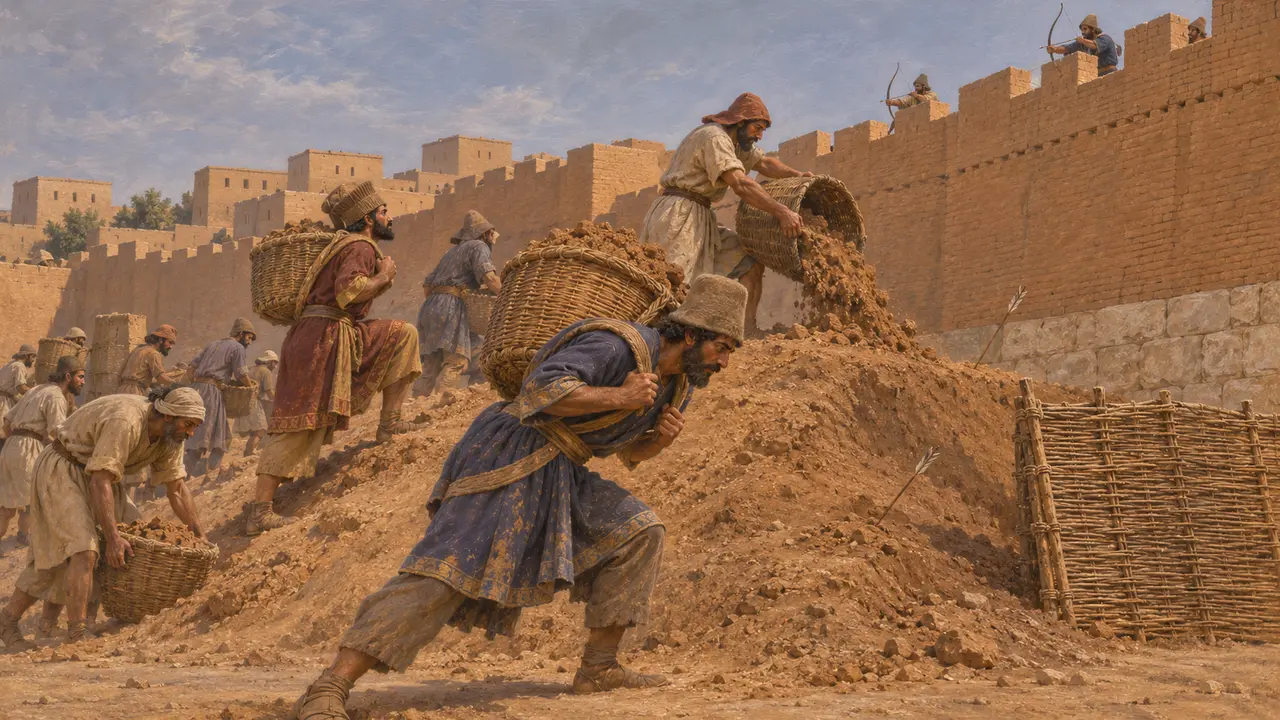
Who carried the earth
DisputedThe sources rarely say who did the carrying. It may have been soldiers, labour raised from the surrounding countryside, or prisoners, and historians differ on how far Persian armies relied on each. Whoever they were, they worked within bowshot of the wall, and losses among them were probably heavy.
P. Briant, From Cyrus to Alexander, 2002
Sources
- Herodotus 1.162-164
- F. G. Maier and V. Karageorghis, Paphos: History and Archaeology, 1984
- D. Ussishkin, The Conquest of Lachish by Sennacherib, 1982
- Thucydides 2.75-76
- Herodotus 5.115
- P. Briant, From Cyrus to Alexander, 2002