Encyclopedia › Soldiers and ships
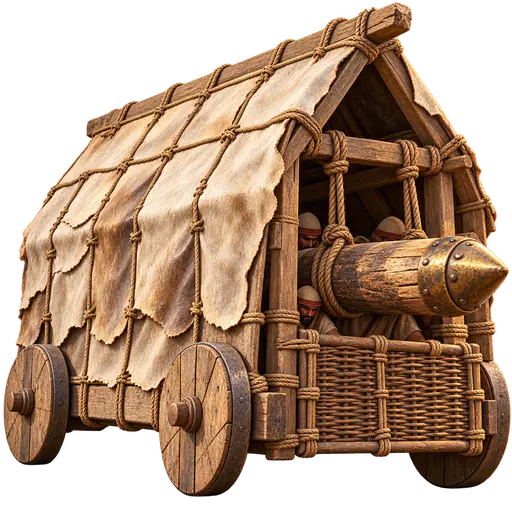
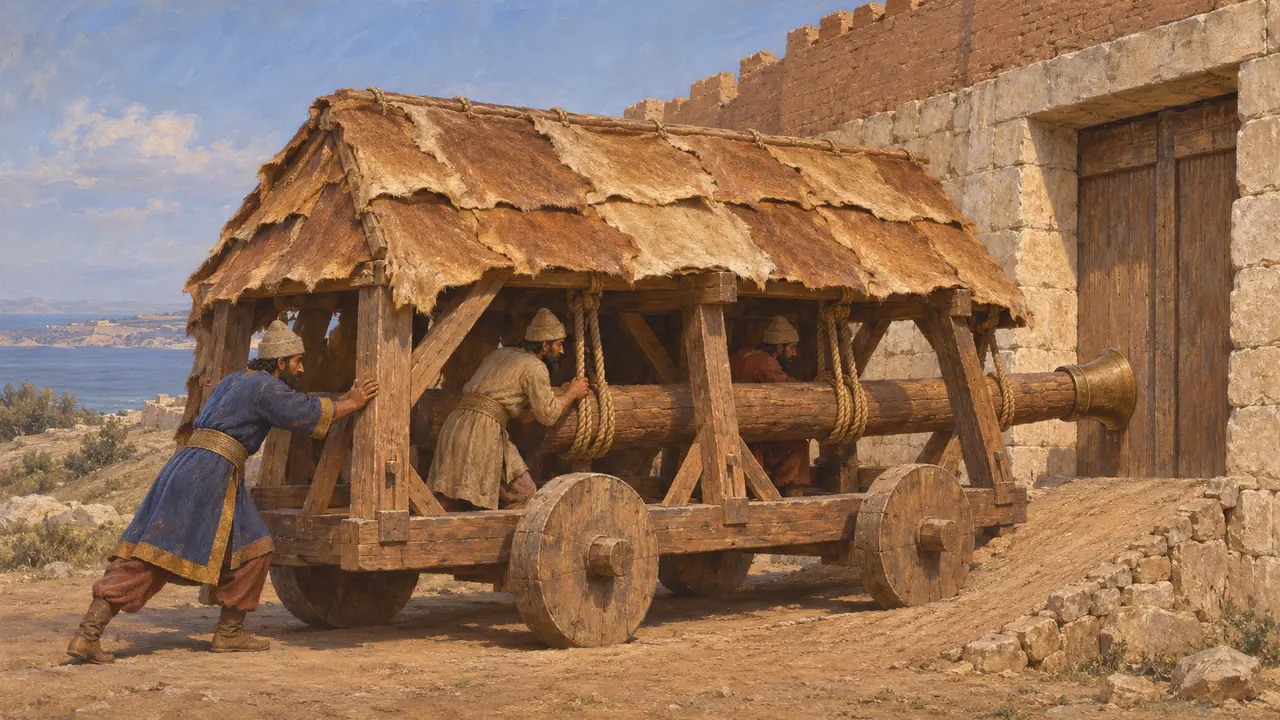
Persian Covered Ram
A roofed battering ram for breaking walls and gates, Near East, 9th-5th centuries BCE
A covered ram was a heavy beam, often metal-tipped, swung or pushed against a wall or gate from inside a wheeled shed that shielded its crew from arrows and stones. The Assyrians used it widely, and the Persians who followed them besieged many cities. No Achaemenid source clearly shows a ram, however, so how often Persian armies used one is an open question.
In the game: In the game the ram quickly breaks a raider camp's fence and huts but cannot fight, so spearmen must guard it. Real rams were used against city walls and gates, not hill camps, and Persian sieges in the sources lean on mounds and mines.
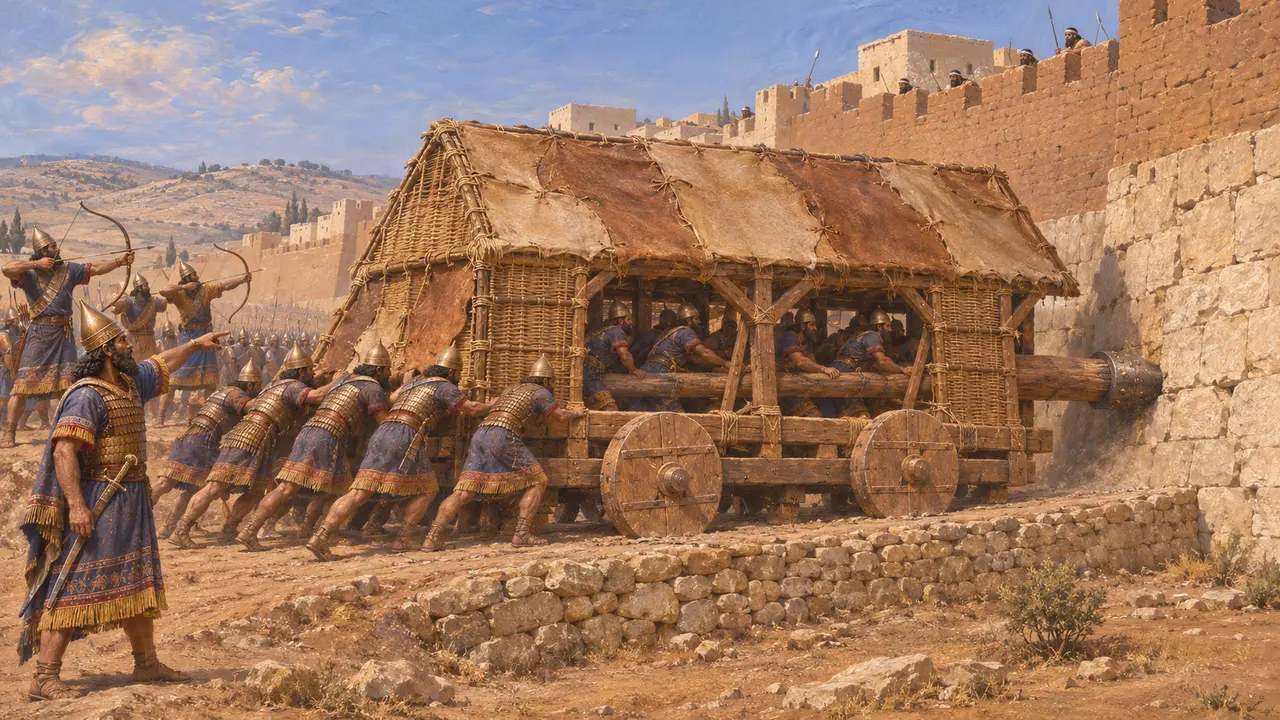
The Assyrian model
In the recordNeo-Assyrian palace reliefs from Nimrud and Nineveh show wheeled rams under wicker or hide covers, worked against city walls while archers gave covering shot. Such scenes appear from the 9th century, under Ashurnasirpal II, onwards. Sennacherib's Lachish reliefs show the siege of 701, with rams pushed up a built ramp against the town wall.
Lachish reliefs, South-West Palace, Nineveh (British Museum); Y. Yadin, The Art of Warfare in Biblical Lands, 1963
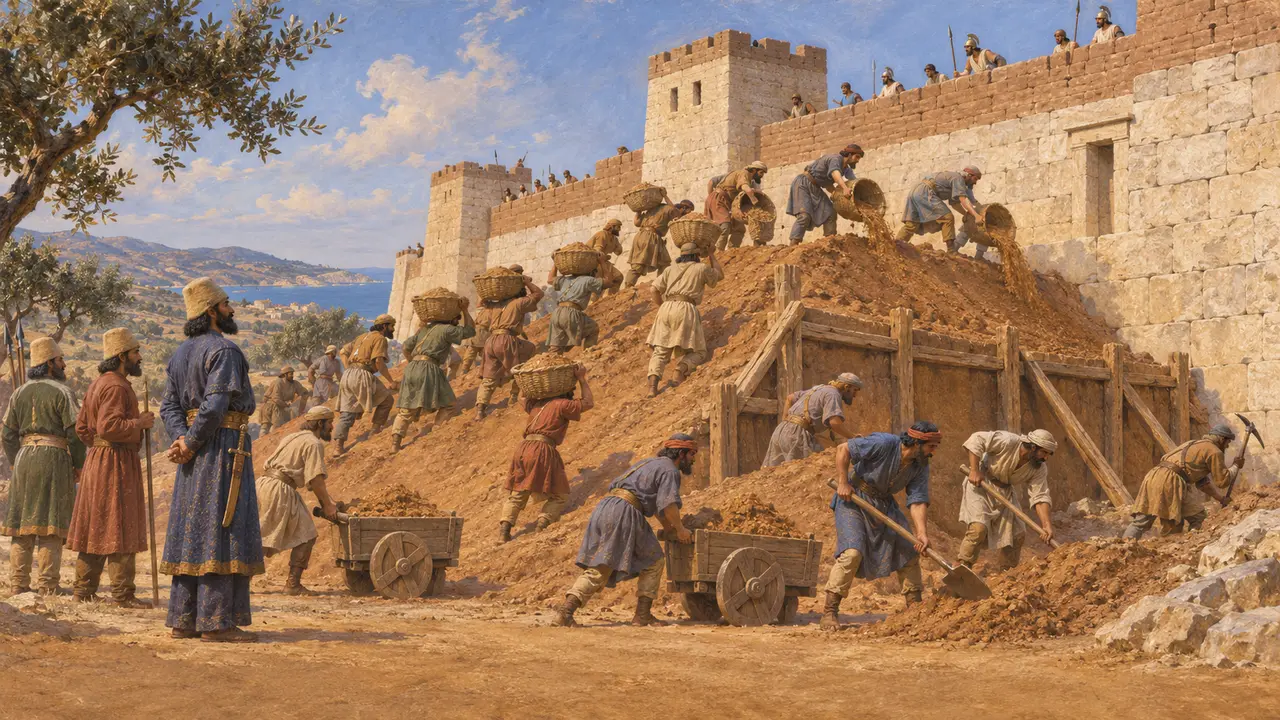
Persian sieges in Herodotus
Ancient accountHerodotus says Harpagus took the Ionian cities about 545 by heaping mounds against their walls. He tells of Persian mines at Barca in Libya, of Soli on Cyprus falling in the fifth month to undermining, and of Miletus taken in 494 by mines and every kind of engine. He does not describe what these engines were, and he nowhere names a ram in Persian hands.
Herodotus 1.162; 4.200; 5.115; 6.18
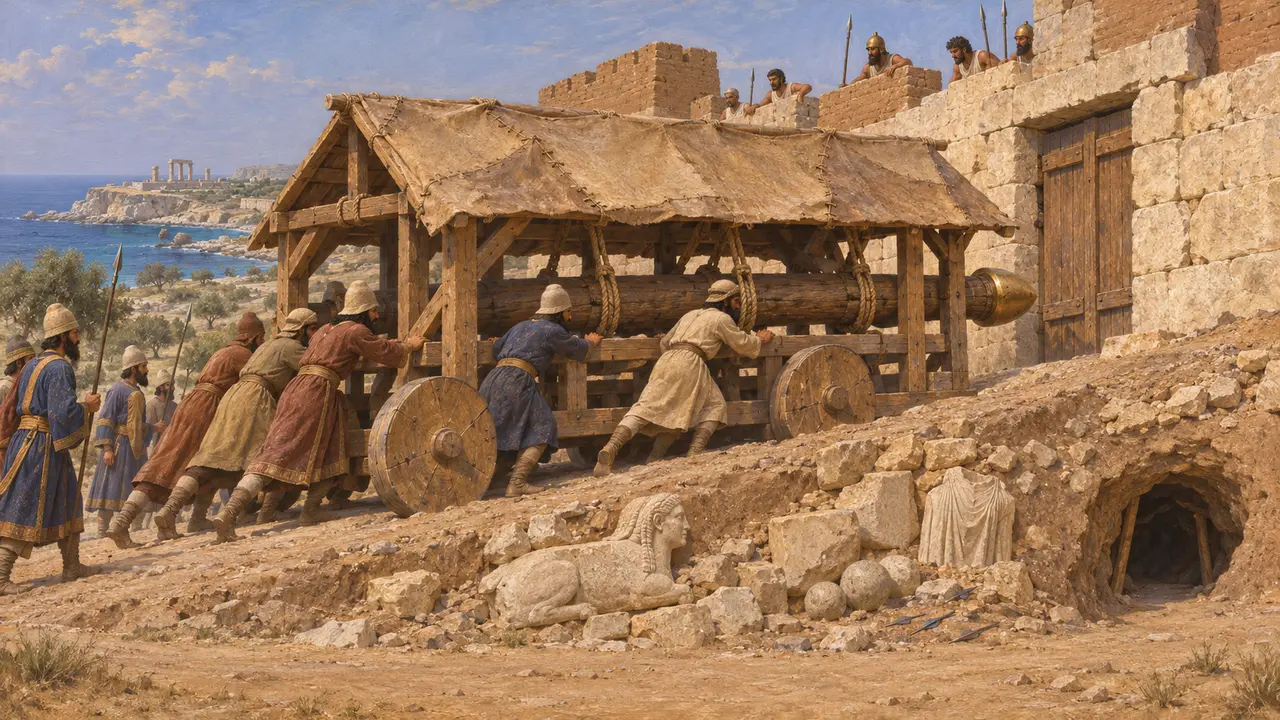
The siege ramp at Paphos
In the recordExcavations at Old Paphos on Cyprus uncovered a siege ramp that the Persian besiegers built against the city wall during the Cypriot revolt of about 498-497. The defenders dug tunnels under the ramp to undermine it. Hundreds of arrowheads and spearheads and many stone balls were found there, along with broken sculpture from a nearby sanctuary used as fill. Such ramps were raised to bring troops, and perhaps engines, up to the wall.
F. G. Maier and V. Karageorghis, Paphos: History and Archaeology, 1984
Did the Persians use rams
DisputedNo Achaemenid relief, inscription or tablet clearly shows a battering ram, and Herodotus leaves the engines at Miletus unnamed. Some historians assume the Persians kept the Assyrian ram, citing ramps like the one at Paphos. Others note that the sieges we know of were won mainly by mounds, mines, blockade or betrayal, as at Eretria in 490. Ephorus, cited by Plutarch, called the engines at Samos in 440 a novelty, so rams were probably rare in the Aegean.
Herodotus 6.101; Plutarch, Pericles 27; P. Briant, From Cyrus to Alexander, 2002
Sources
- Herodotus, Histories
- F. G. Maier and V. Karageorghis, Paphos: History and Archaeology, 1984
- Y. Yadin, The Art of Warfare in Biblical Lands, 1963
- P. Briant, From Cyrus to Alexander, 2002
- Plutarch, Pericles 27