Encyclopedia › Soldiers and ships
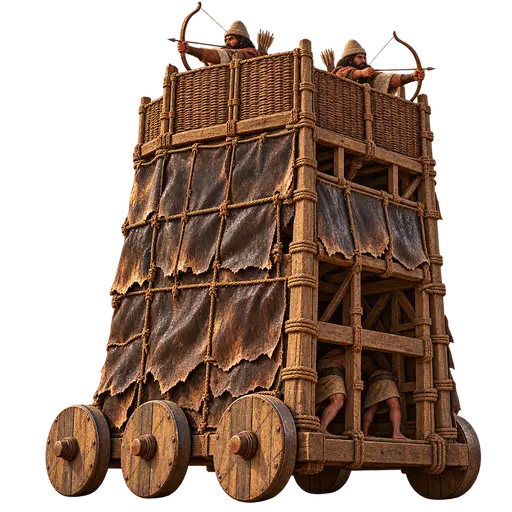
Siege Tower
Wheeled timber engine for assaulting walls, Near East and Greece, 9th-4th century BCE
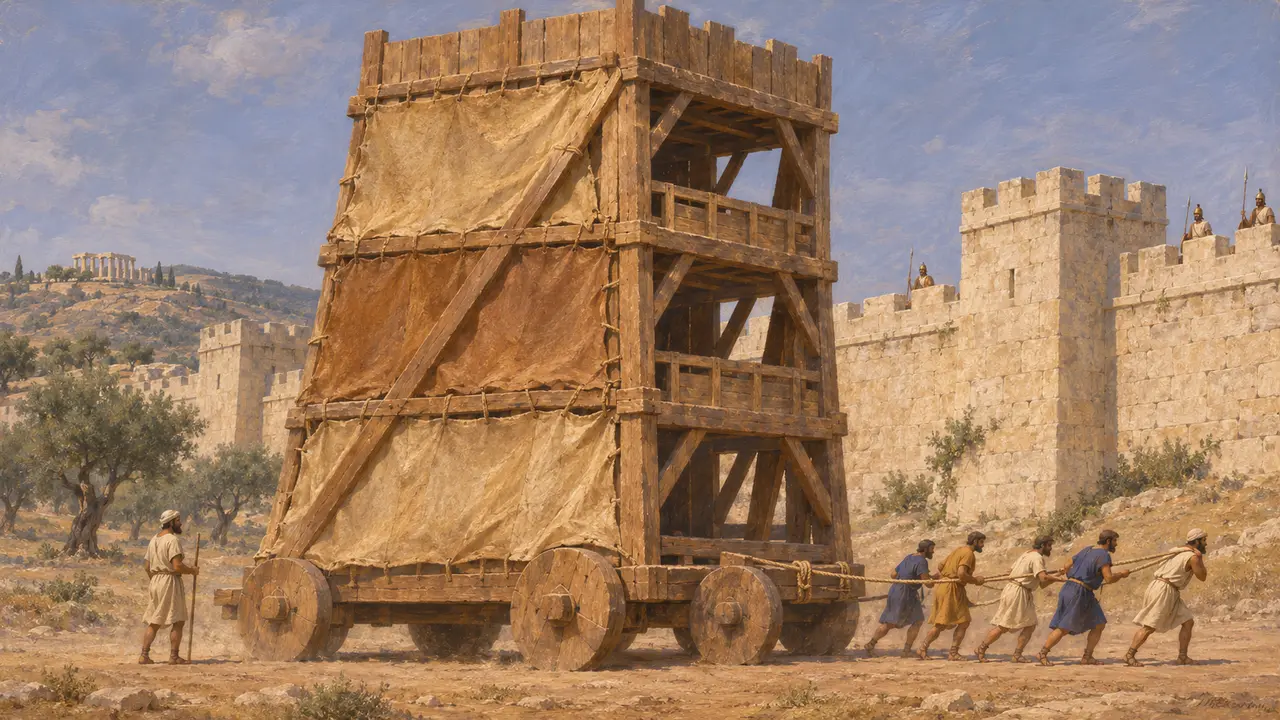
A siege tower was a wheeled timber frame pushed up to a city wall so that archers could shoot down on the defenders and soldiers could reach the battlements. Assyria used tower-like engines long before the Persians. For the Achaemenid wars of 530-479, however, the sources describe Persian armies taking cities mainly with earth mounds, mines and unnamed engines, and say nothing clear about towers.
In the game: The game fields the tower as an enemy engine with archers and a gangway, which fire or a sally can destroy. No rebel or Greek force of 530-479 is known to have used one, so this unit is a simplification.
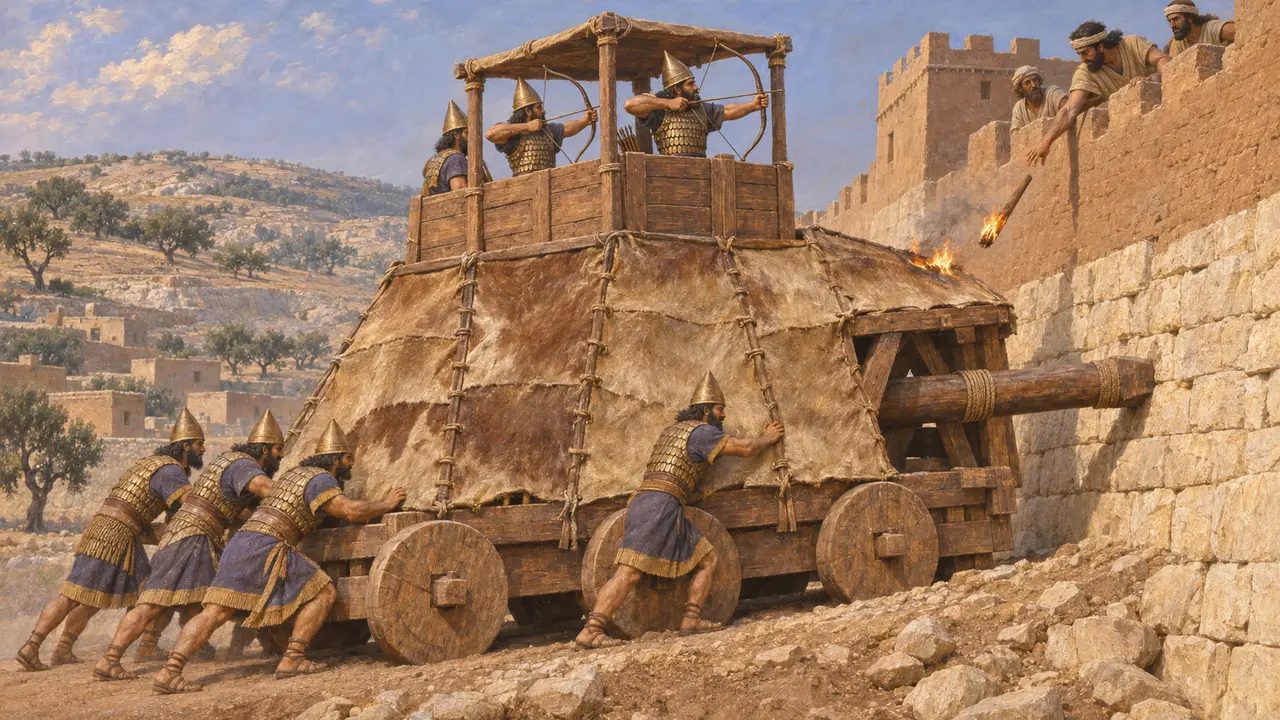
Assyrian engines before the Persians
In the recordAssyrian palace reliefs from the 9th century onwards show wheeled engines with a ram in front and archers in a turret above. The reliefs of Sennacherib at Nineveh show the siege of Lachish in 701. In them such engines are pushed up earth ramps against the walls while the defenders throw torches down on them. These scenes are the best pictures of tower-like engines from the world the Persians inherited.
Lachish reliefs, South-West Palace, Nineveh; D. Ussishkin, The Conquest of Lachish by Sennacherib, 1982
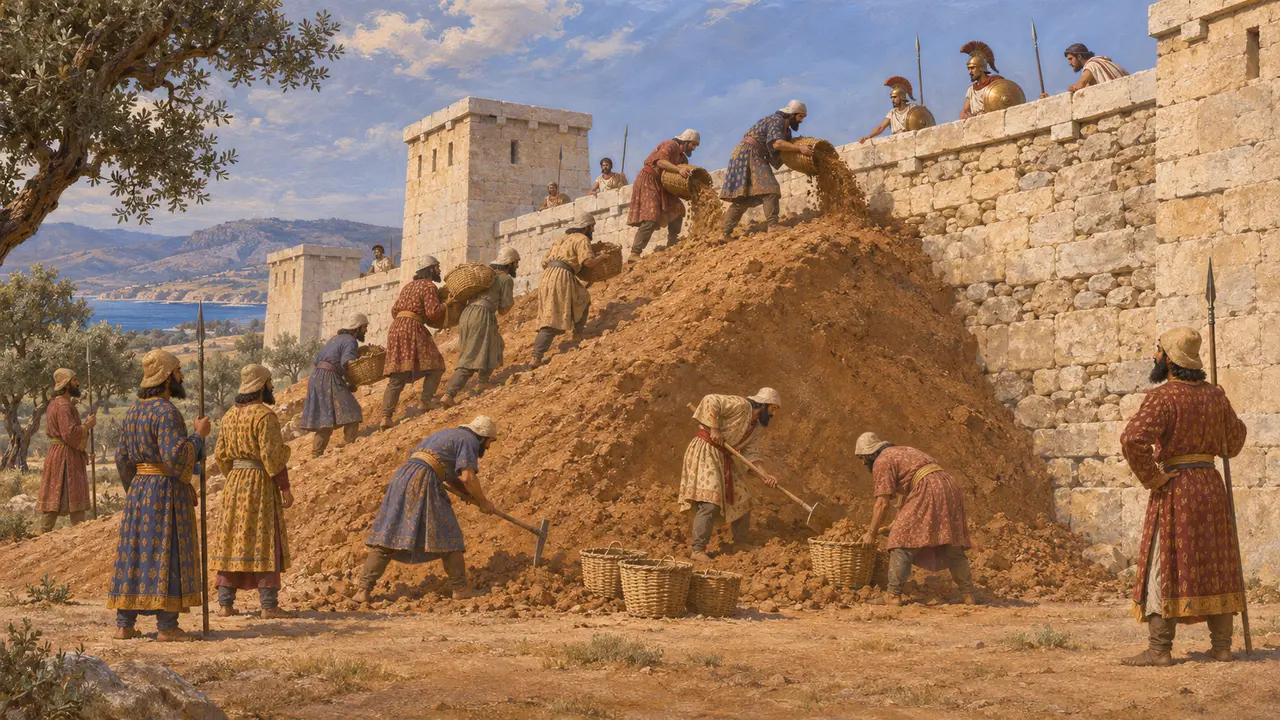
How Persian armies took cities
Ancient accountHerodotus says Harpagus took the Ionian cities about 545 by penning the defenders in and heaping mounds against their walls. At Barca in Libya the Persians dug mines. At Miletus in 494 they undermined the walls and brought up engines of every kind. He describes no mobile tower in any of these sieges.
Herodotus 1.162; Herodotus 4.200; Herodotus 6.18
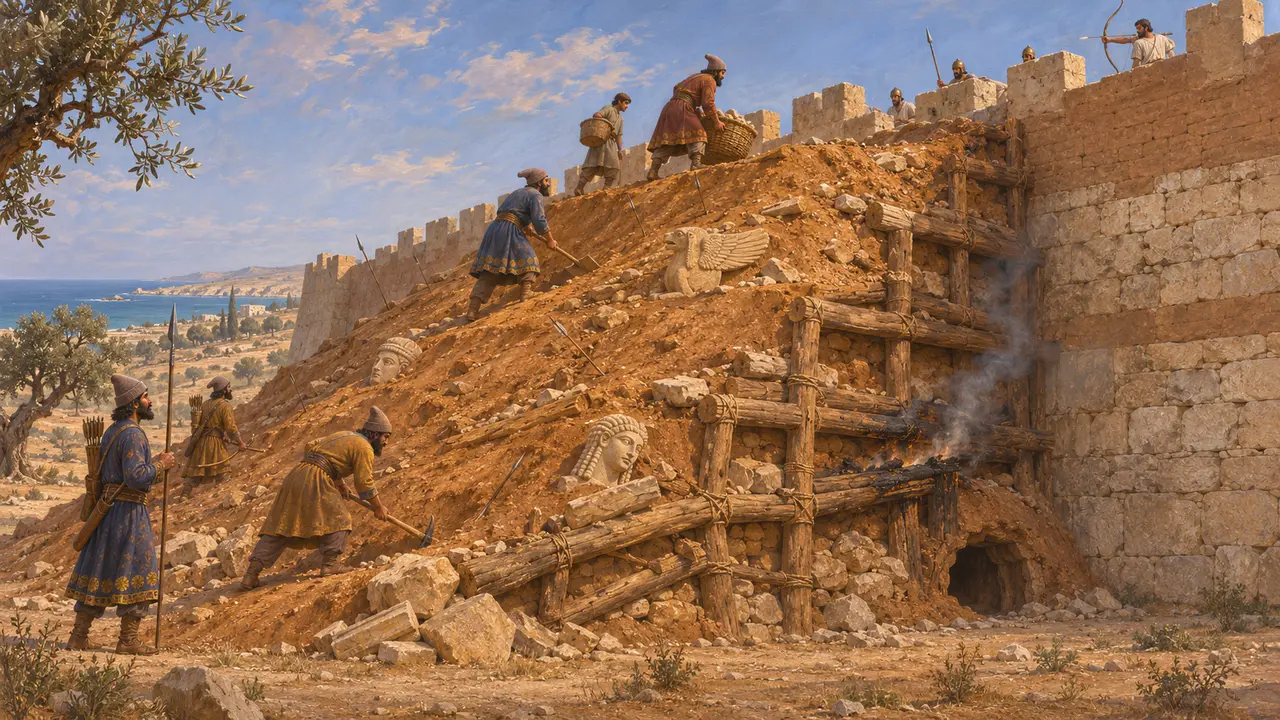
The siege mound at Paphos
In the recordAt Old Paphos on Cyprus, excavators found the ramp the Persians built against the city wall when they put down the Cypriot revolt, probably about 497. It was packed with rubble, broken sculpture and hundreds of arrowheads and other missiles. The defenders dug tunnels under the ramp and tried to burn its timbers to bring it down. Herodotus tells of the Persian sieges of the Cypriot cities but does not describe Paphos.
F. G. Maier and V. Karageorghis, Paphos: History and Archaeology, 1984; Herodotus 5.115
Did the Persians build towers
DisputedIt is uncertain whether the Persians kept Assyrian-style tower engines. Herodotus's word for the engines at Miletus is vague, and no Achaemenid image or text shows a mobile tower. Tall wheeled towers are clearly described only later in Greek sources, for the Carthaginians at Selinus in 409 and for Dionysius at Motya in 397. For this reason many historians think towers became common only around 400.
Diodorus 13.54; Diodorus 14.51; P. B. Kern, Ancient Siege Warfare, 1999
Cyrus's ox-drawn towers
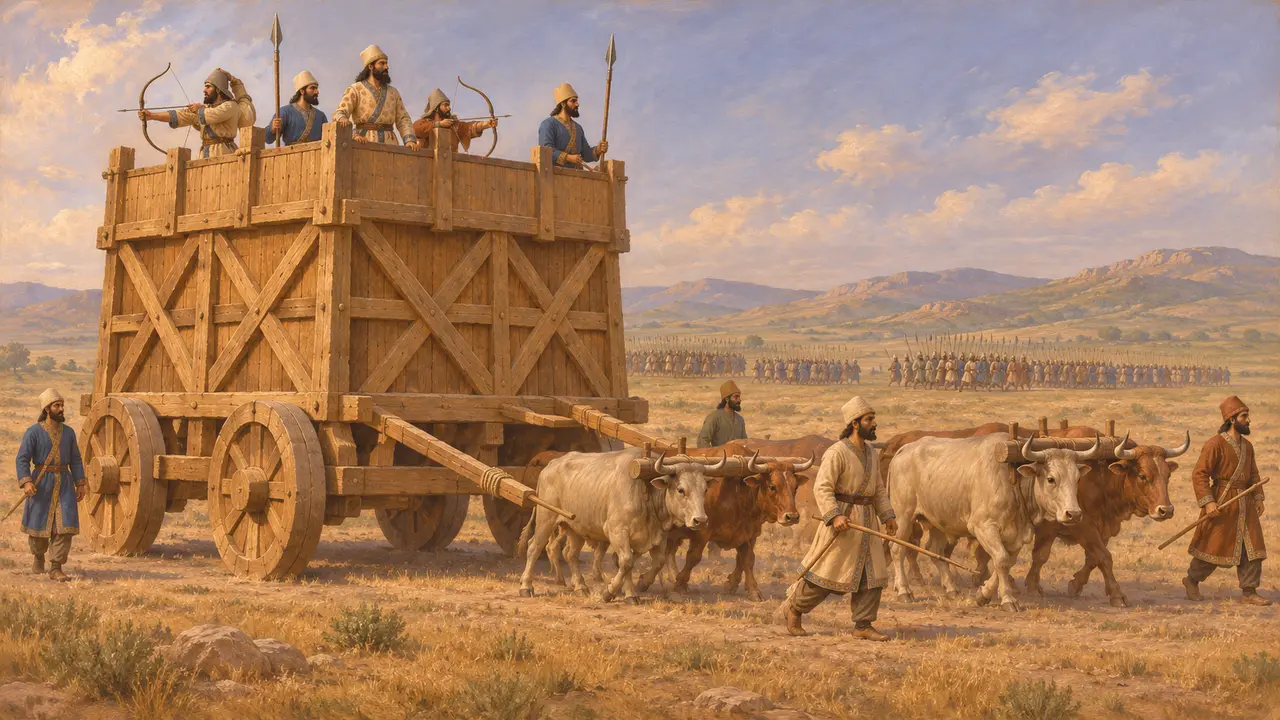
Later legendXenophon wrote more than a century and a half after Cyrus. He has Cyrus build great wheeled towers, drawn by teams of oxen, to carry fighting men into a field battle. The Cyropaedia is a moral romance about the ideal ruler. This scene probably reflects the military thinking of Xenophon's own day rather than any evidence from the 540s.
Xenophon, Cyropaedia 6.1
Sources
- Herodotus, Histories
- F. G. Maier and V. Karageorghis, Paphos: History and Archaeology, 1984
- D. Ussishkin, The Conquest of Lachish by Sennacherib, 1982
- P. B. Kern, Ancient Siege Warfare, 1999
- Diodorus 13.54; 14.51
- Xenophon, Cyropaedia