Hunters' Lodge
Hunting for game and against dangerous beasts in the Achaemenid world, 6th to 5th century BCE
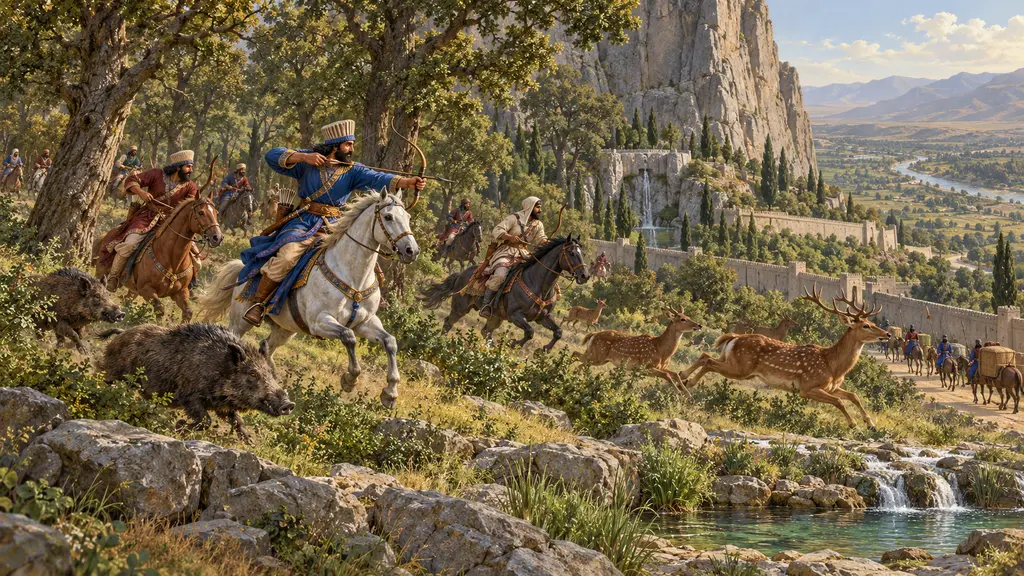
Persian kings were shown as hunters, and Greek writers describe hunting as the training ground of Persian youth. Lions, leopards, wolves and wild boar still ranged across the empire, and the herds and fields of ordinary people had to be kept from them. How much game ordinary households ate is not recorded.
In the game: The lodge's hunters walk out over the open land and bring meat home, and they carry back the carcass of any beast your soldiers kill. Beasts kill hunters and walkers who come near them. This is a simplification: the sources tell us far more about royal and noble hunting than about the work of common hunters.
The King as hunter
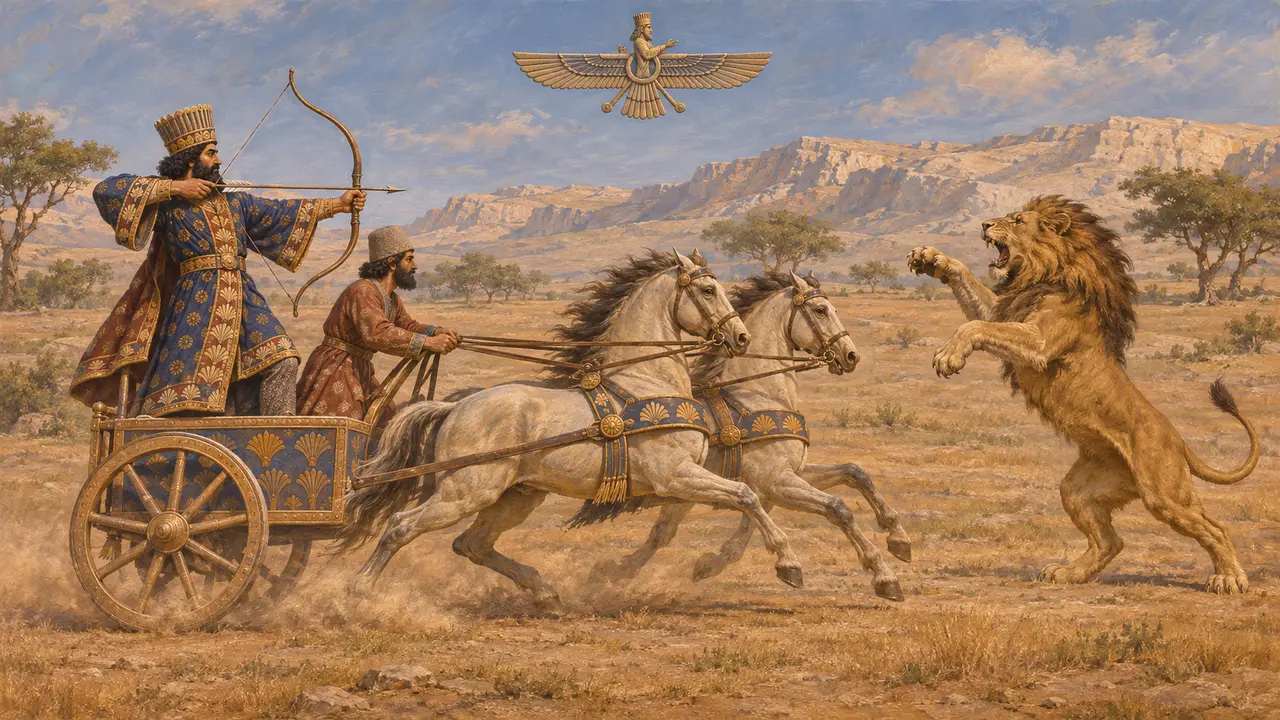
In the recordA cylinder seal inscribed with the name of Darius, now in the British Museum, shows the king in a chariot shooting arrows at a rearing lion beneath a winged symbol. Royal seals and reliefs across the Near East had long shown the king killing lions, a sign that he protected his land and people from the wild.
British Museum, seal of Darius, BM 89132
Hunting as training for war
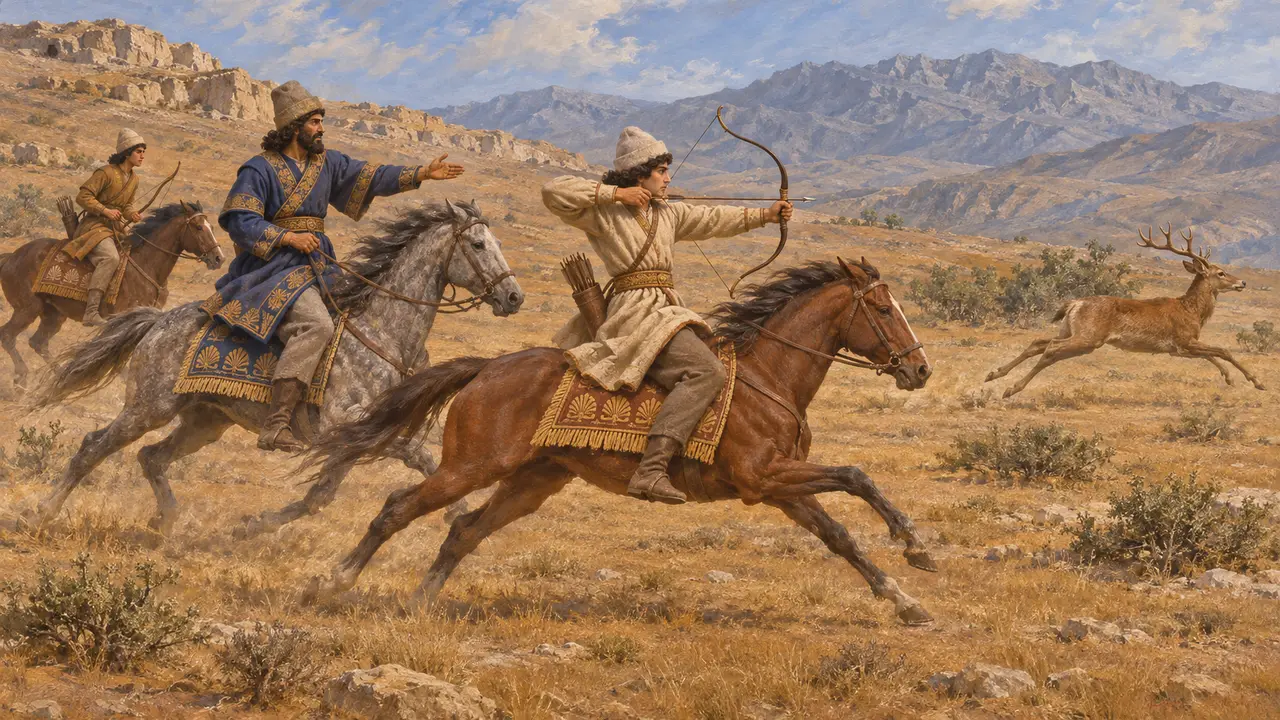
Ancient accountHerodotus says Persian boys were taught three things from the age of five to twenty: to ride, to shoot the bow and to speak the truth. Xenophon, writing in the fourth century, says the king led the young men out to hunt because hunting was the truest practice for war. His picture is idealised, but both writers link the hunt and the army.
Herodotus 1.136; Xenophon, Cyropaedia 1.2.9-10
The boar of Mysian Olympus
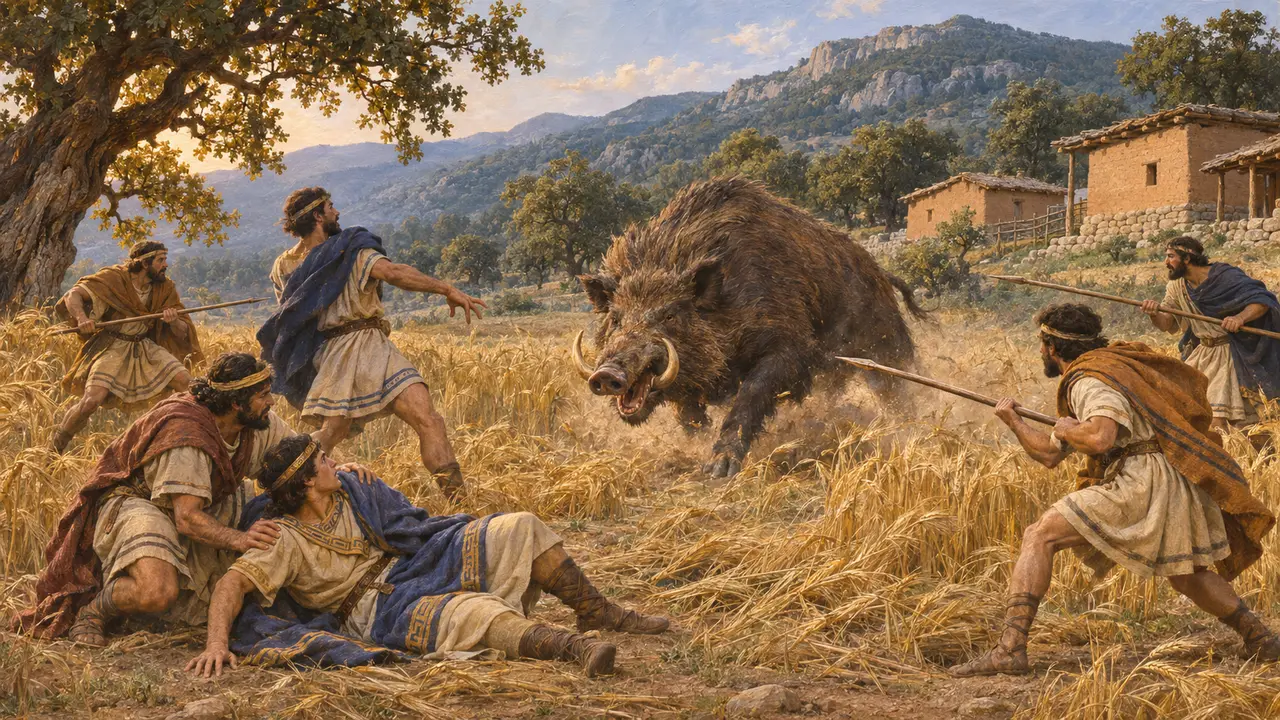
Later legendHerodotus tells of a huge boar that came down from Mysian Olympus and wrecked the farmers' fields, while the men sent against it were hurt and could do nothing. They begged Croesus of Lydia for help, and his son Atys went on the hunt and was killed by a spear thrown at the boar. The story shows how a single wild beast could threaten a countryside.
Herodotus 1.36-43
Meat on the table
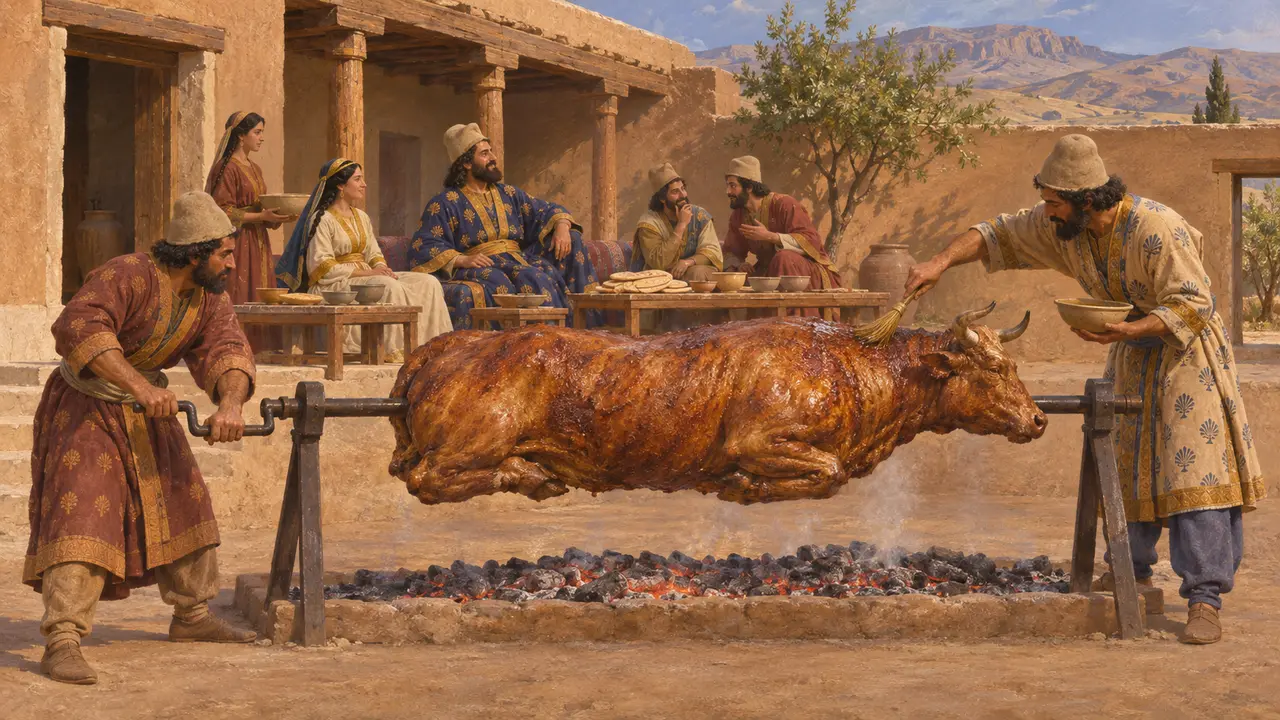
DisputedHerodotus says that on their birthdays wealthy Persians roasted a whole ox, horse, camel or donkey, while poorer families served smaller animals. Meat from flocks was also issued to officials in the Persepolis records. How often common households ate wild game, rather than the meat of their own flocks, is not known.
Herodotus 1.133; W. Henkelman, The Other Gods Who Are, 2008
Sources
- British Museum, seal of Darius, BM 89132
- Herodotus 1.36-43, 1.133, 1.136
- Xenophon, Cyropaedia 1.2.9-10
- W. Henkelman, The Other Gods Who Are, 2008