Theatre of Dionysus
Open-air theatre on the south slope of the Acropolis, Athens, sixth to fifth century BCE
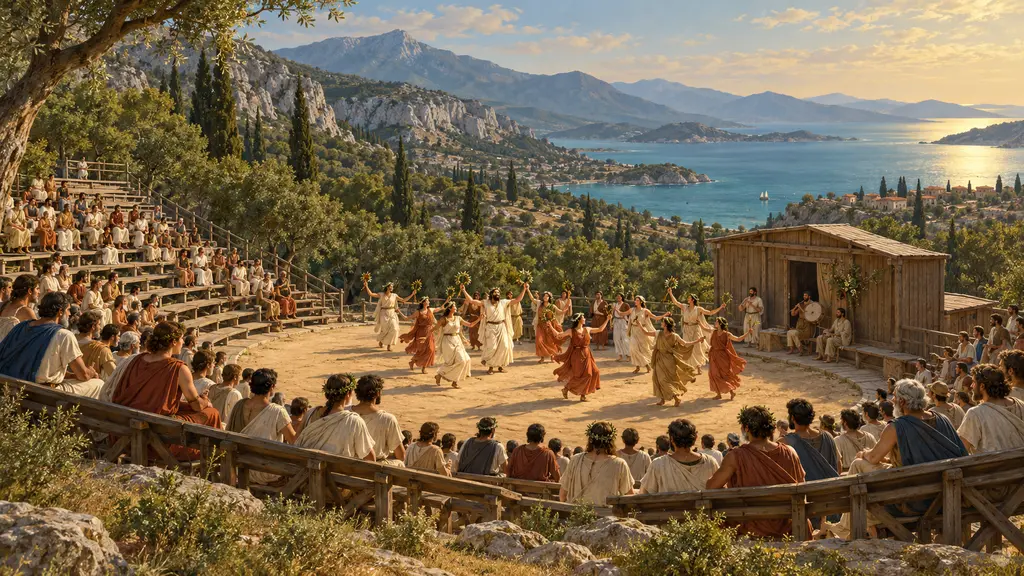
The Theatre of Dionysus stood on the south slope of the Acropolis, where the Athenians watched tragedies at the City Dionysia, the spring festival of the god. In the years of the Persian wars it was probably still a simple dancing floor with wooden seating. Athenian tragedy of those decades turned the fall of Miletus and the defeat of Xerxes into shared public memory.
In the game: The game offers it in Greek towns as a service building of wooden benches, and Herodotus 6.21 does record Athens weeping at Phrynichus. Few Greek cities had a theatre this early; Athens is the clear case, so the game generalises.
The sanctuary on the south slope
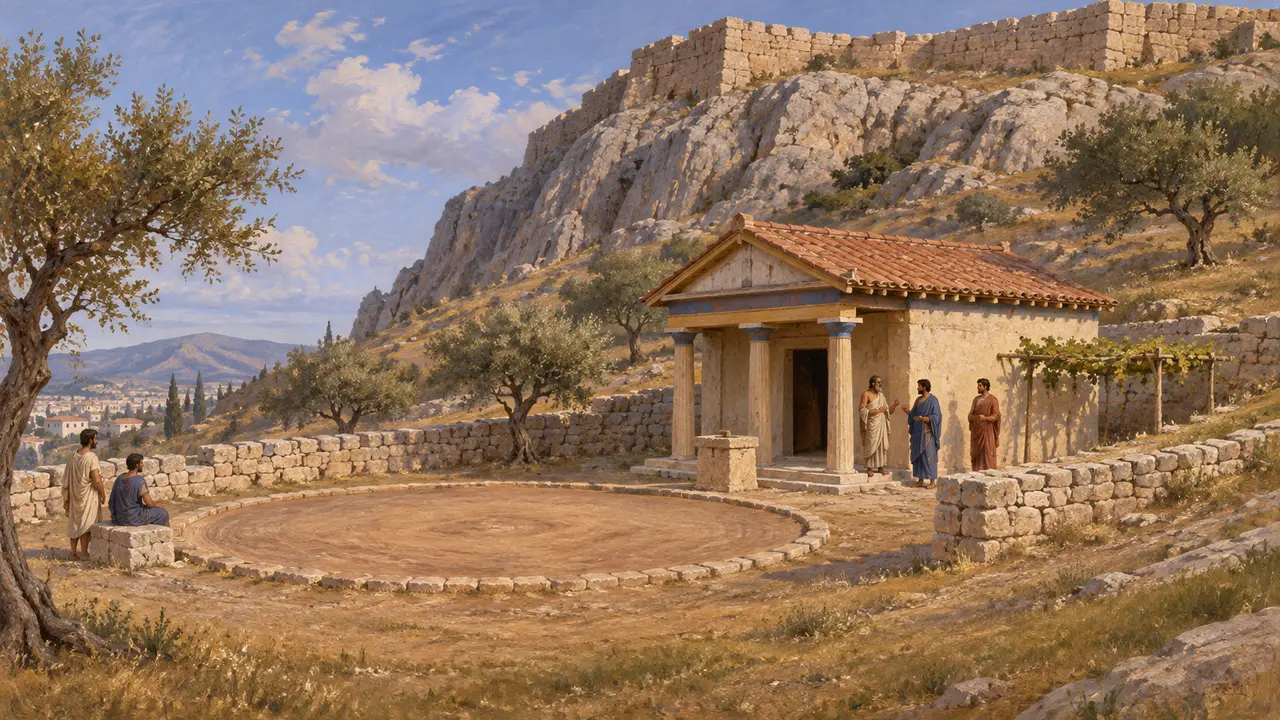
In the recordThe theatre lay inside the sanctuary of Dionysus Eleuthereus, where excavators found the foundations of a small temple of the sixth century. Remains from before 480 are scanty. They include some early walls and traces that may belong to a circular dancing floor, the orchestra. The stone seating that survives today belongs mostly to a rebuilding of about 330 under Lycurgus, with later Roman alterations.
A. Pickard-Cambridge, The Theatre of Dionysus in Athens, 1946
Wooden benches and where plays were seen
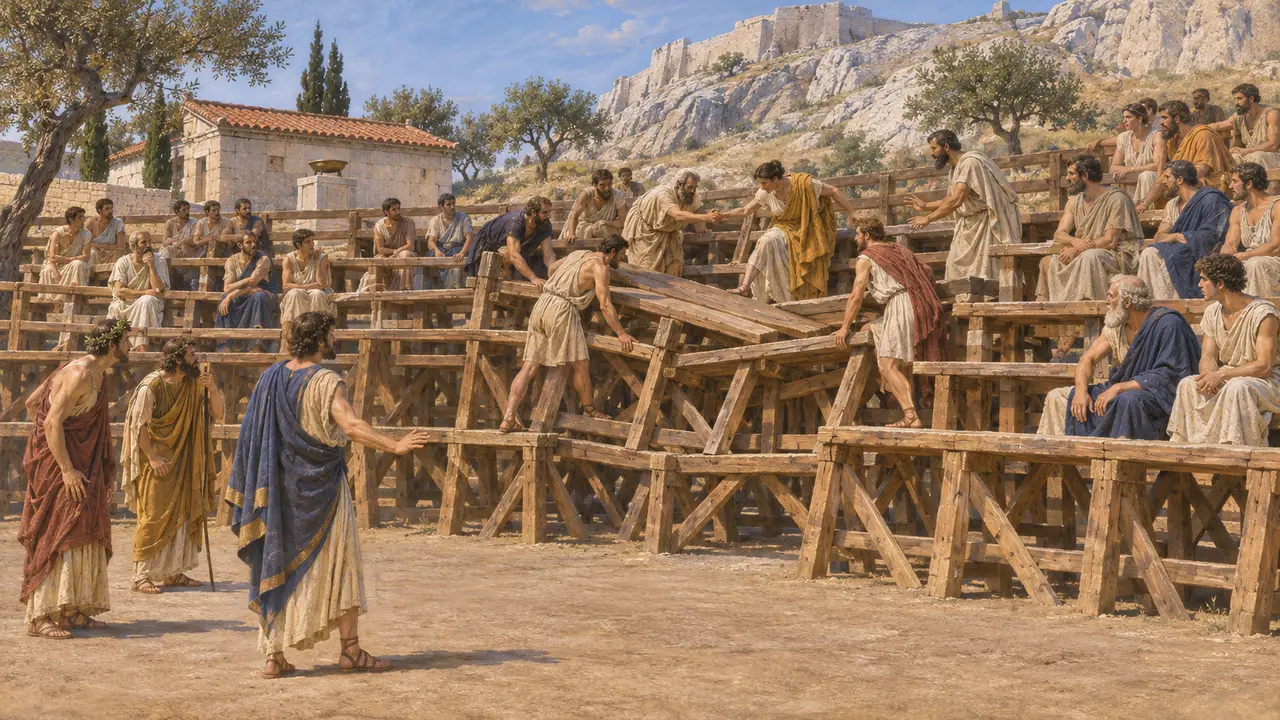
DisputedLater Greek lexicographers say that early audiences sat on wooden stands called ikria. The Suda reports that stands collapsed around 500 during a contest in which Pratinas competed against Aeschylus, after which the Athenians built a theatre. Some historians think the earliest plays were staged in the Agora and moved to the slope only then. Others place them at the sanctuary from the start, and the dating of the earliest remains is still argued over.
Suda, s.v. Pratinas; E. Csapo and W. Slater, The Context of Ancient Drama, 1995
Phrynichus and the Capture of Miletus
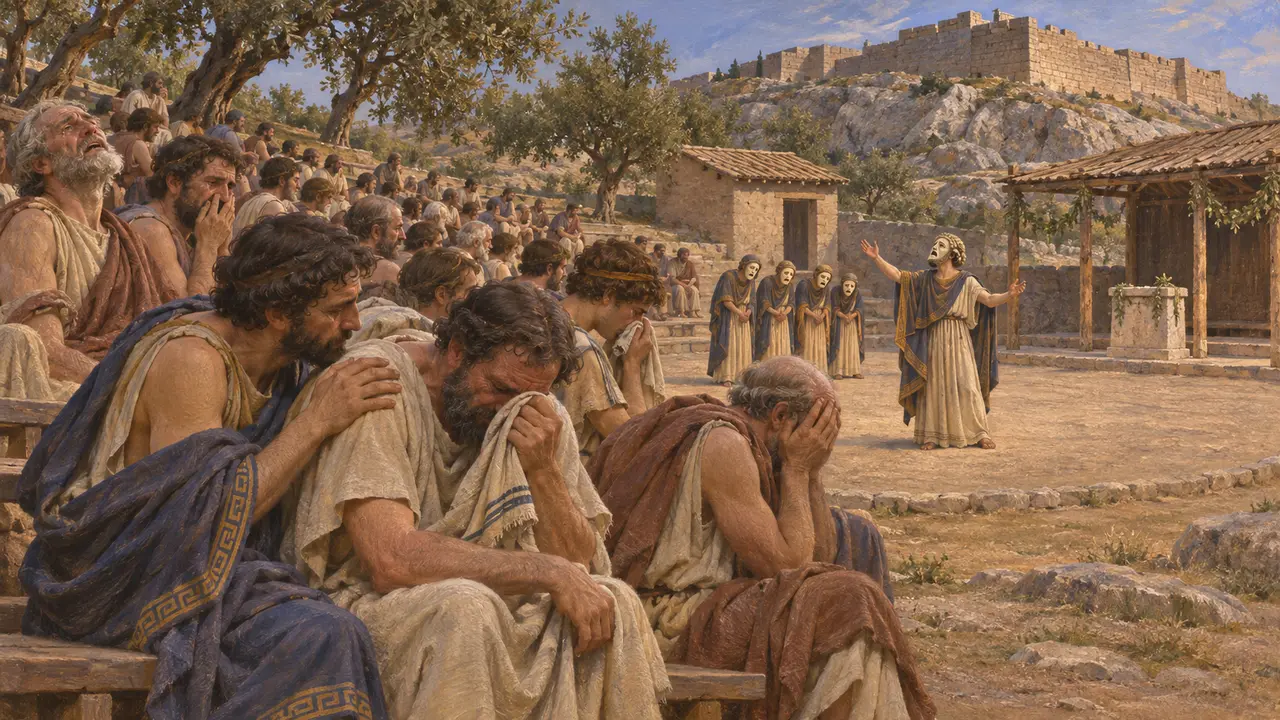
Ancient accountHerodotus says that Phrynichus staged a tragedy, The Capture of Miletus, after the Persians took the city in 494, and the whole audience burst into tears. The Athenians fined him a thousand drachmas for reminding them of their own misfortunes and banned the play from being performed again. Herodotus gives no date, and scholars usually place it about 493. Athens had sent twenty ships to help the Ionian revolt and then withdrawn them, which may explain why the play stung.
Herodotus 6.21; Herodotus 5.97; Herodotus 5.103
The Persian wars on the stage
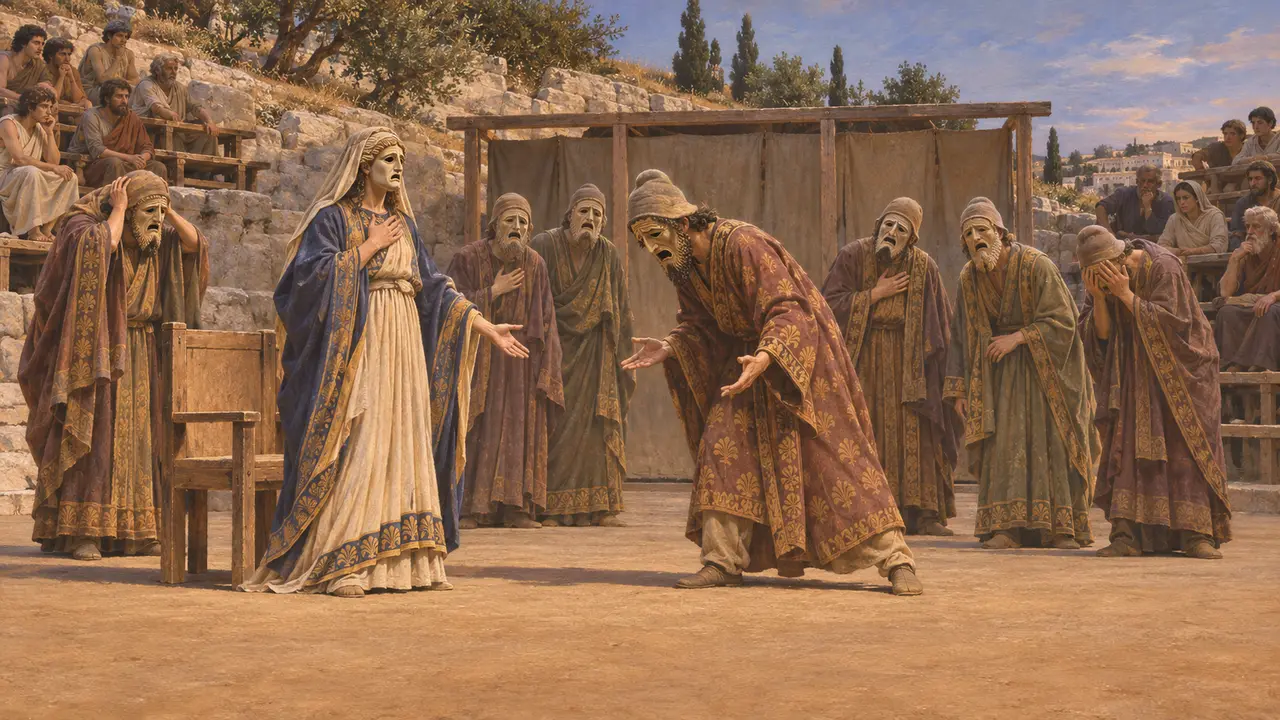
Ancient accountPlutarch says Themistocles paid for a winning chorus of Phrynichus in 476. Modern scholars often identify the play as the Phoenician Women, a drama about Salamis. Aeschylus, who had fought at Marathon, staged The Persians in 472, set at the Persian court as news of Xerxes' defeat reaches the queen mother. It is a Greek imagining of Persia rather than a Persian source, and it is the oldest Greek tragedy that survives.
Plutarch, Themistocles 5; Aeschylus, Persians
Thespis and the first tragedy
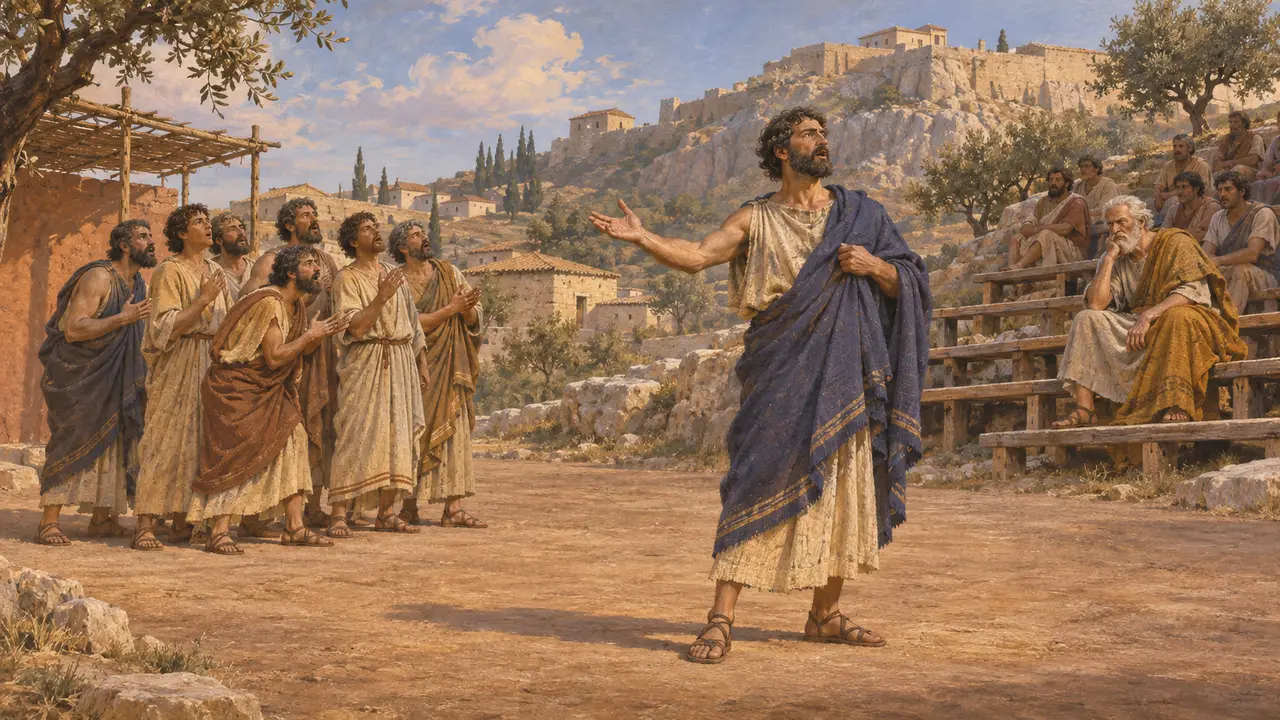
Later legendLater Greeks told that tragedy began when Thespis stepped apart from the chorus and first spoke as a character. A chronicle carved in the third century, the Parian Marble, places his first production at Athens in the 530s. Plutarch tells a moral tale in which the aged Solon watched Thespis perform and scolded him for telling lies in public. These stories were written down centuries afterwards and cannot be checked.
Plutarch, Solon 29; Marmor Parium
Sources
- Herodotus 6.21
- A. Pickard-Cambridge, The Theatre of Dionysus in Athens, 1946
- A. Pickard-Cambridge, The Dramatic Festivals of Athens, 2nd ed., 1968
- E. Csapo and W. Slater, The Context of Ancient Drama, 1995
- Aeschylus, Persians
- Plutarch, Themistocles 5