Encyclopedia › Battles and events
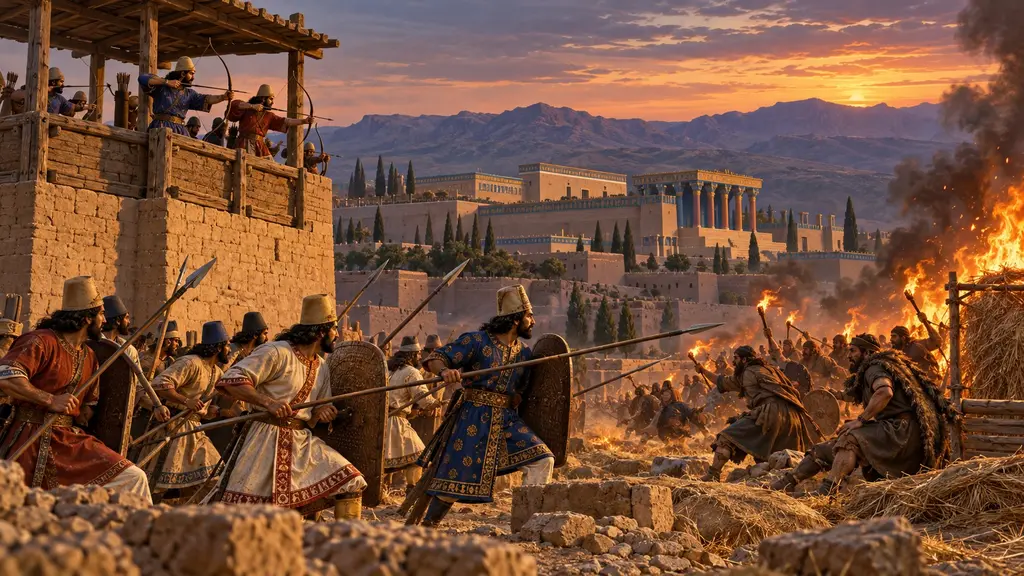
The battle of Pasargadae
Cyrus's victory over Astyages the Mede, probably near Pasargadae in Persis, about 550 BCE
In the game: Level 1: The Founder's Tomb
This battle ended the war between Cyrus, king of Anshan, and Astyages, king of the Medes. A Babylonian chronicle records that Astyages' own army rebelled and handed him over to Cyrus, who then plundered the Median capital at Ecbatana. Greek writers place the final fight near Pasargadae, where Cyrus later built his residence.
In the game: The game stages the Median desertion and the women on the hill, with Astyages taken alive in 550. The women's story comes from Nicolaus and Plutarch, not Herodotus, and the kinship of Cyrus and Astyages rests on Herodotus alone.
What the Babylonian chronicle says
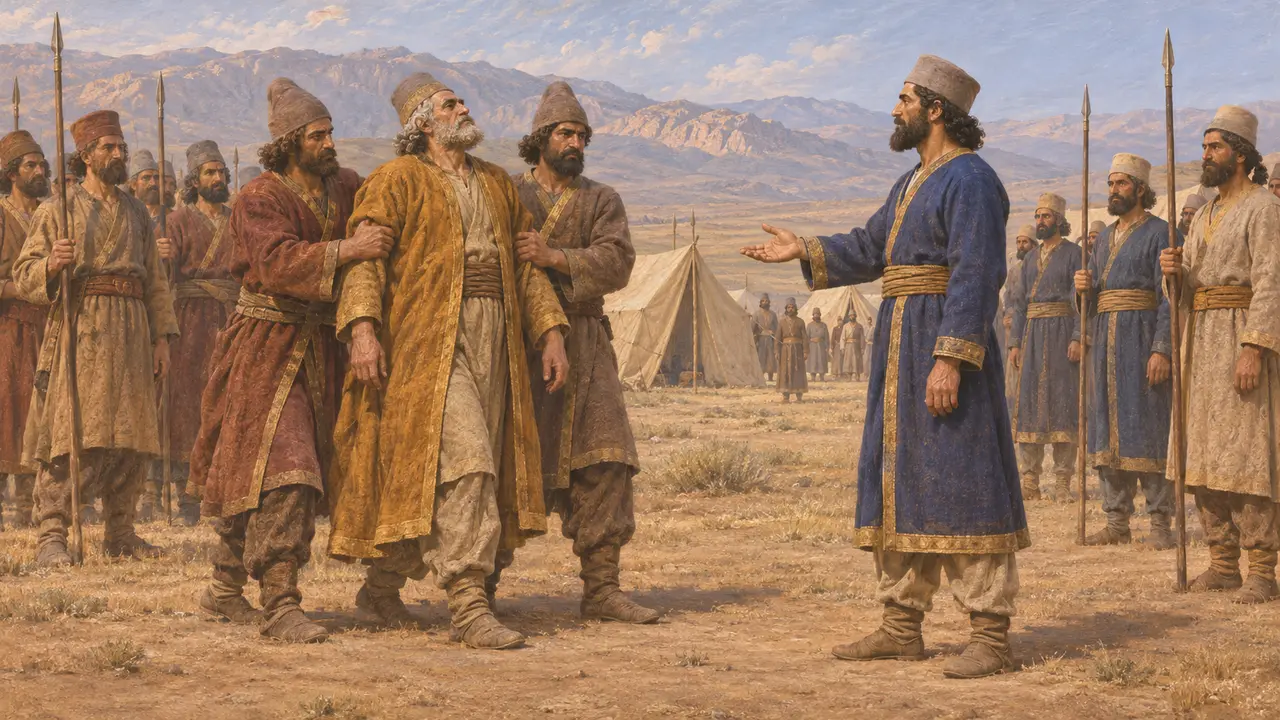
In the recordThe Nabonidus Chronicle, under the sixth year of Nabonidus (about 550), says that Astyages gathered his army and marched against Cyrus, king of Anshan. His army rebelled, seized him and handed him over to Cyrus. Cyrus then went to Ecbatana and carried silver, gold and other goods back to Anshan. The Chronicle makes Astyages the attacker and names no battlefield.
Nabonidus Chronicle (ABC 7) ii 1-4
Harpagus and the deserting Medes
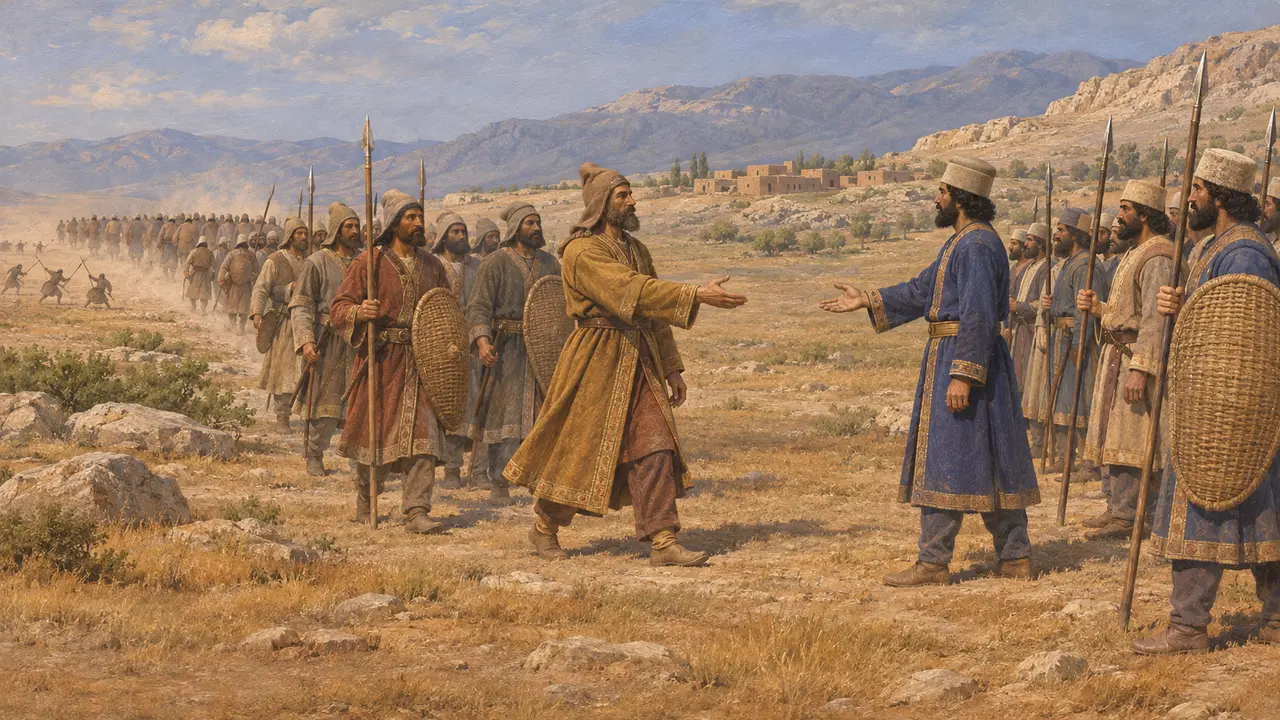
Ancient accountHerodotus says Astyages, his judgement clouded by the gods, gave his army to Harpagus, a noble he had once cruelly punished. When the armies met, a few Medes fought, some went over to the Persians, and most fled on purpose. Astyages then impaled the magi who had advised him, armed the men left in his city, and was beaten and taken alive. This fits the Chronicle's report of a mutiny.
Herodotus 1.127-128
The women on the hill
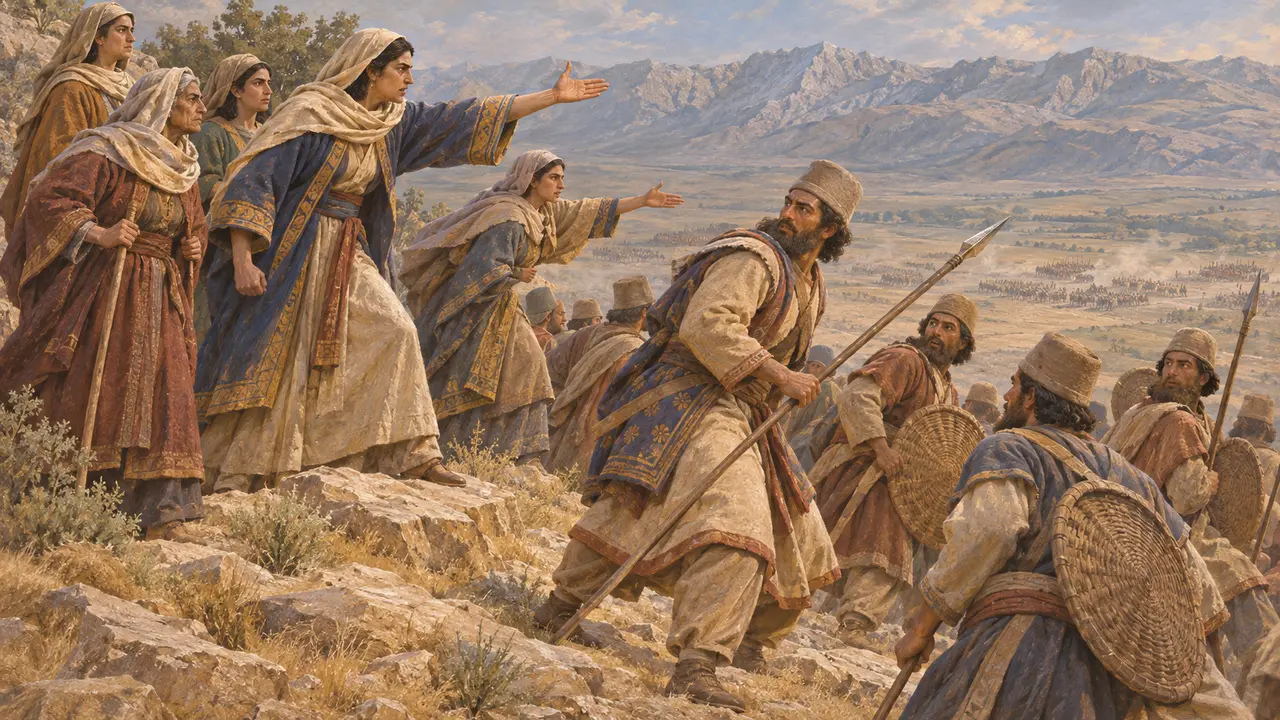
Later legendNicolaus of Damascus, probably following Ctesias, tells of fighting near Pasargadae in which the Persians were driven up a mountain, where their mothers and wives shamed them into turning back. Plutarch adds that Cyrus rewarded the women: whenever a king entered the city, each woman received a gold piece. Herodotus does not tell the story. The gold-piece custom looks like a later explanation, since Persian kings struck no gold coins of their own before Darius.
Nicolaus of Damascus, FGrH 90 F66; Plutarch, Bravery of Women 5; Plutarch, Alexander 69
When and where the battle was fought
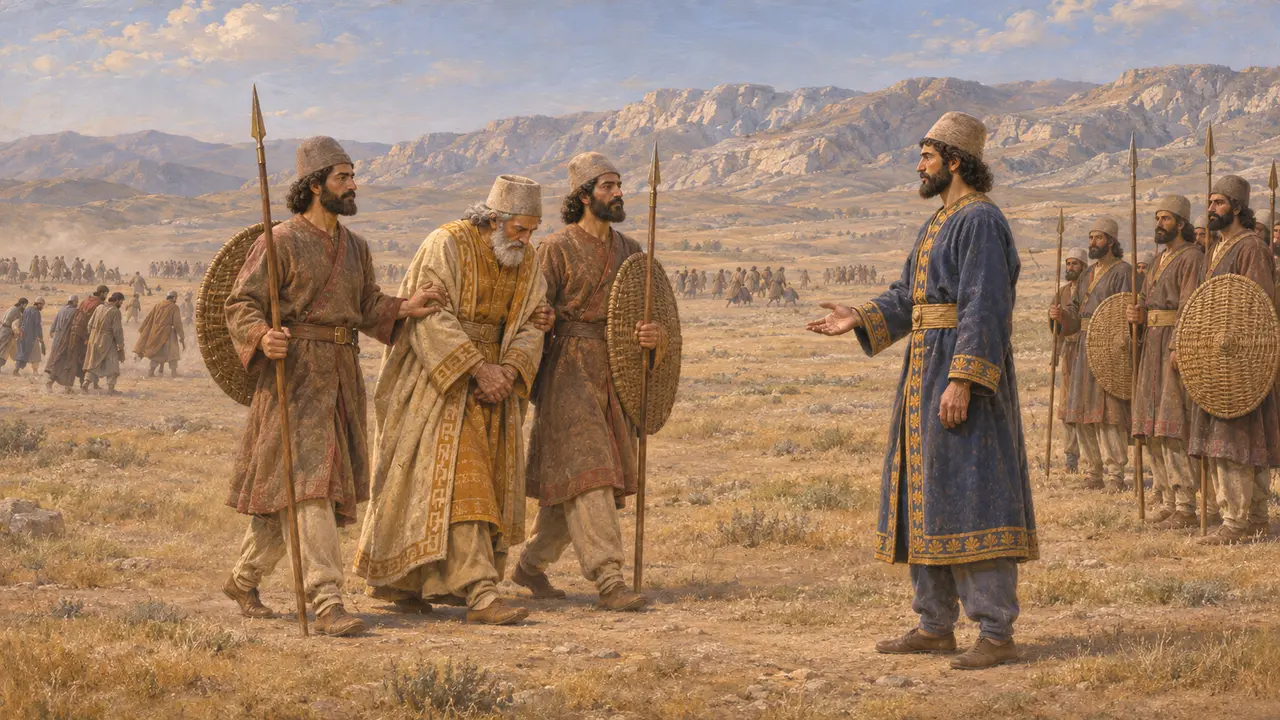
DisputedNabonidus's Sippar cylinder says that in his third year, about 553, Cyrus scattered the large Median army and took Astyages captive. The Chronicle puts the capture in the sixth year, about 550. Some historians think the war ran from 553 to 550, and others think the Sippar text compresses events. Strabo says Cyrus honoured Pasargadae because he beat Astyages there in the last battle, but no Persian record confirms the site.
Nabonidus, Sippar cylinder; Strabo 15.3.8; P. Briant, From Cyrus to Alexander, 2002
Grandson or rival
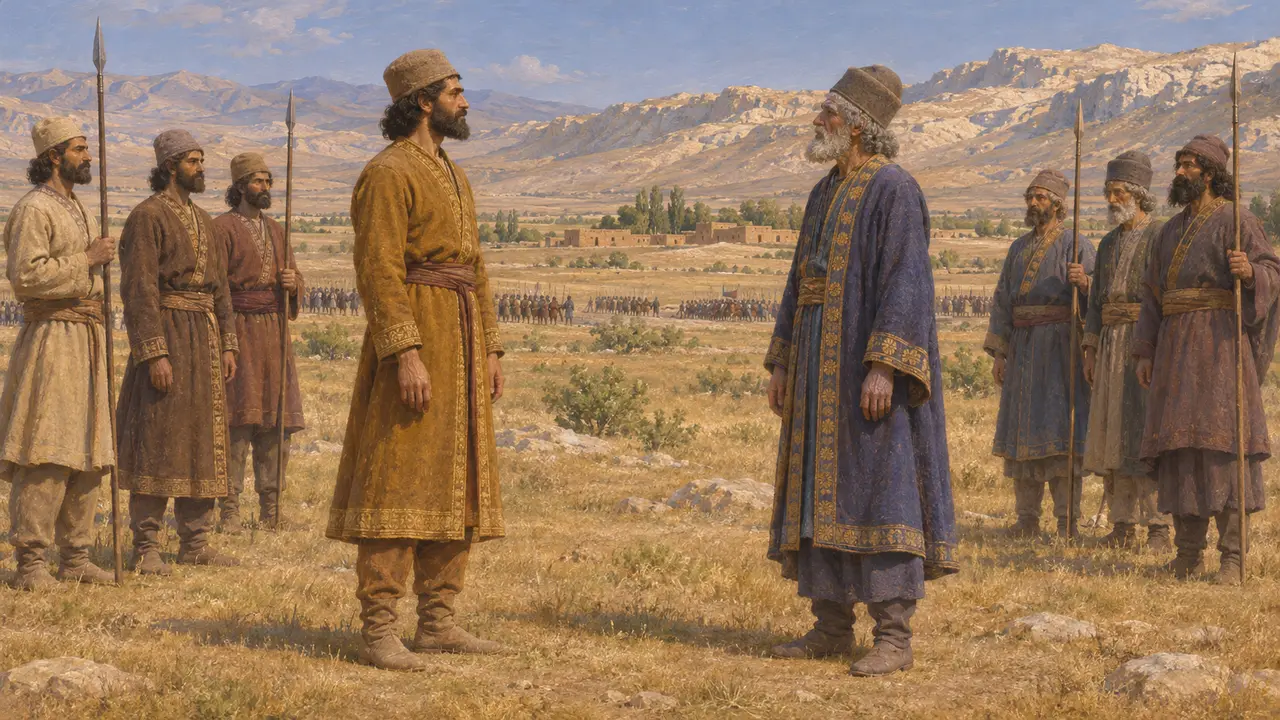
DisputedHerodotus makes Cyrus the son of Astyages' daughter Mandane, so the war becomes a grandson's revolt. Ctesias denied any blood tie between the two men. In his own Cylinder, Cyrus names only his descent from the kings of Anshan and claims no Median ancestry. The game's note treats the kinship as fact, but it rests on Herodotus alone.
Herodotus 1.107-108; Ctesias, Persica (in Photius); Cyrus Cylinder
Sources
- Nabonidus Chronicle (ABC 7) ii 1-4
- Herodotus 1.107-130
- Strabo 15.3.8
- Nicolaus of Damascus, FGrH 90 F66
- Plutarch, Bravery of Women 5
- P. Briant, From Cyrus to Alexander, 2002