Artavardiya
Persian general of Darius against Vahyazdata in Persis, 522-521 BCE
In the game: Level 4: The Terrace
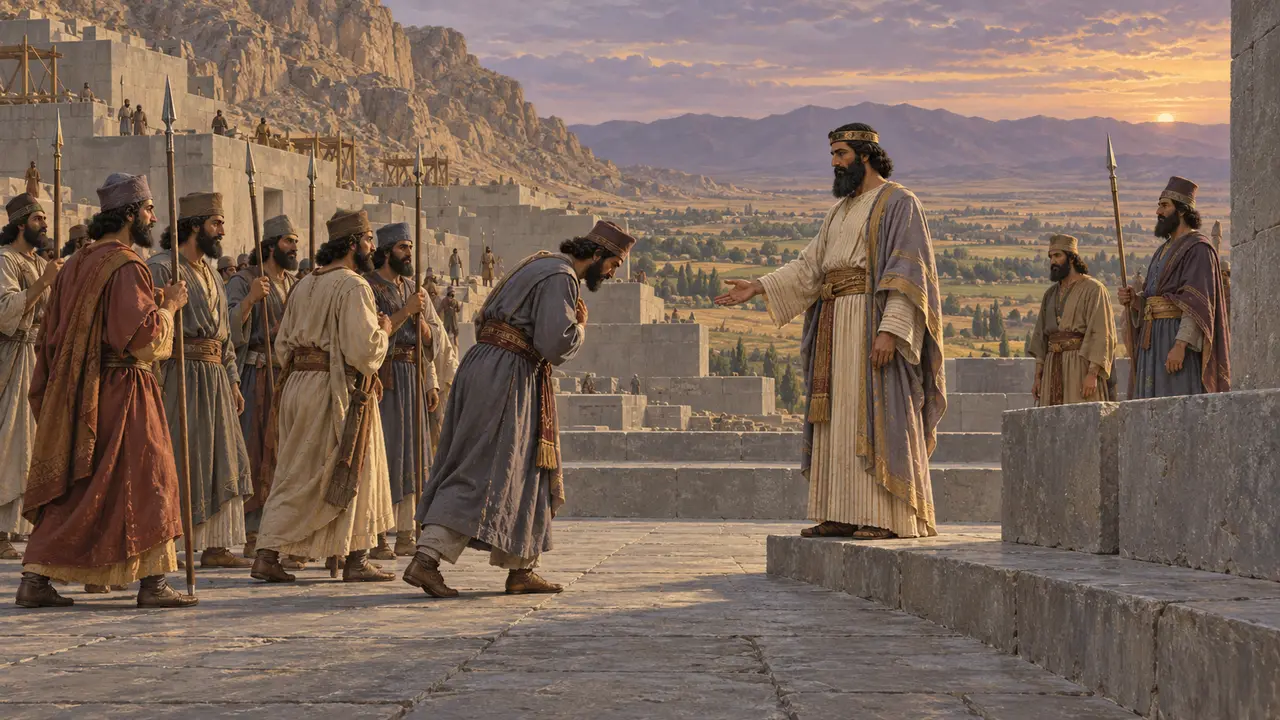
Artavardiya was a Persian commander whom Darius sent against the rebel Vahyazdata in Persis. He is known from the Behistun inscription, where Darius names him as the man whose army beat the rebels in two battles. Herodotus does not mention him, and no other surviving Greek account of these years names him.
In the game: The game names Artavardiya only in Chronicle entries and in the Encyclopedia's article on the revolt of Vahyazdata. He is not a figure or place in any level and has no mechanic of his own.
Darius's general at Behistun
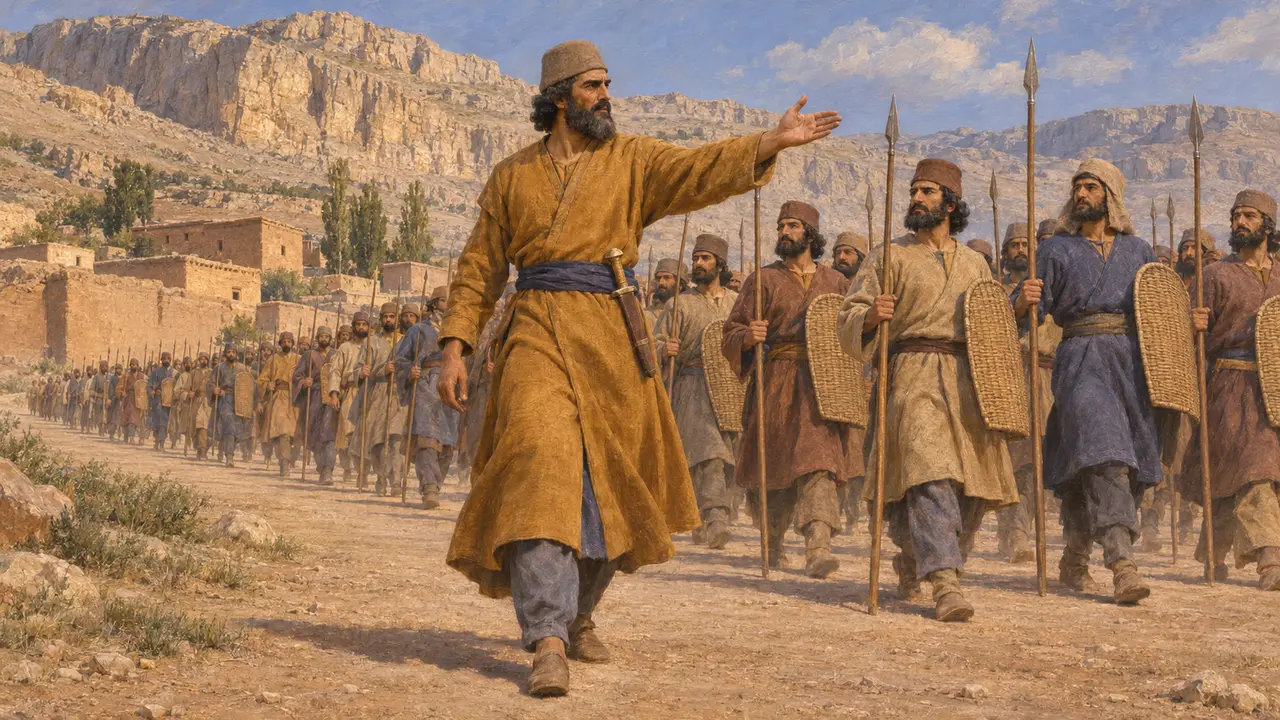
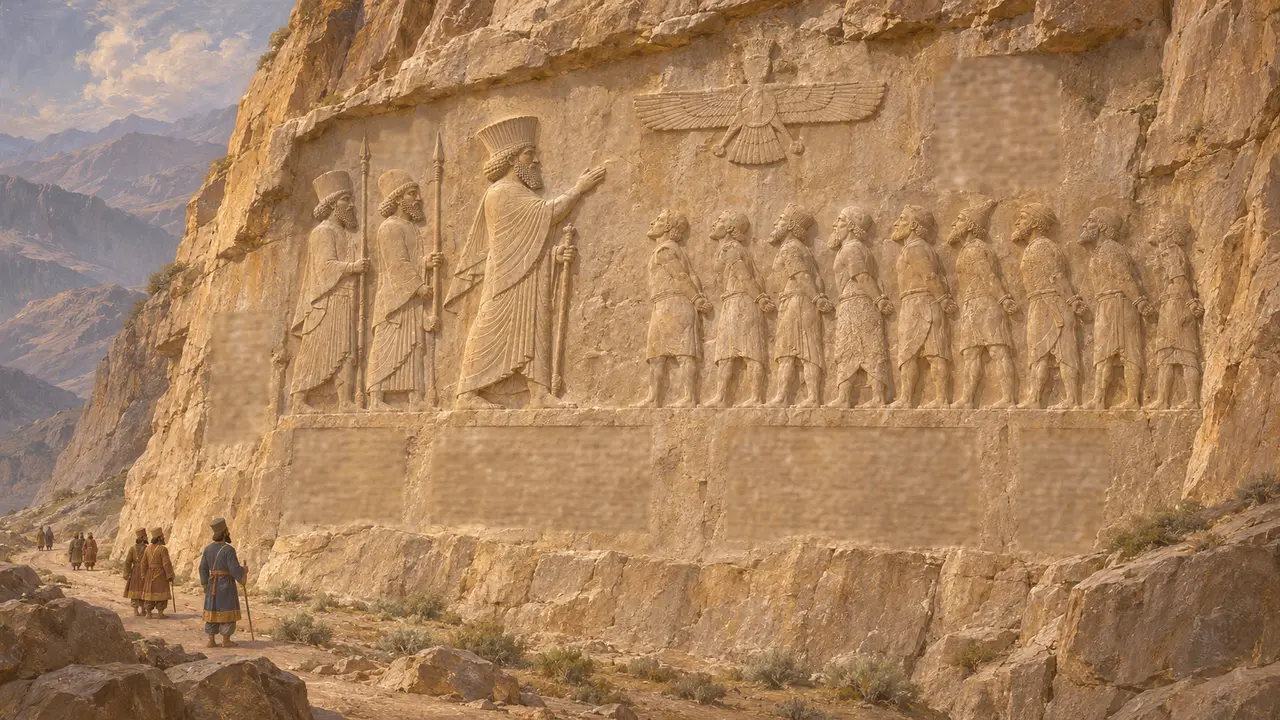
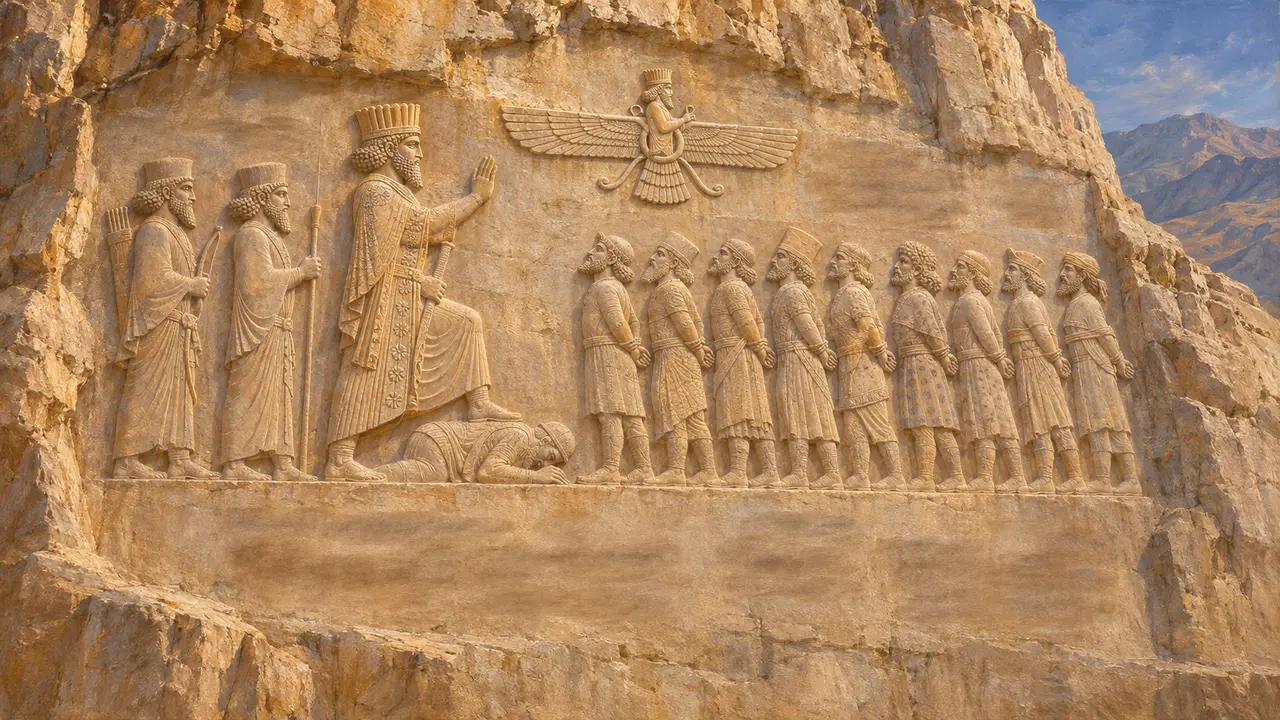
In the recordIn the Behistun inscription Darius calls Artavardiya a Persian and his servant, and says he sent him with a Persian army against Vahyazdata. The text gives him no title and says nothing of his family. The inscription is the only contemporary source that names him.
DB
Rakha and Mount Parga
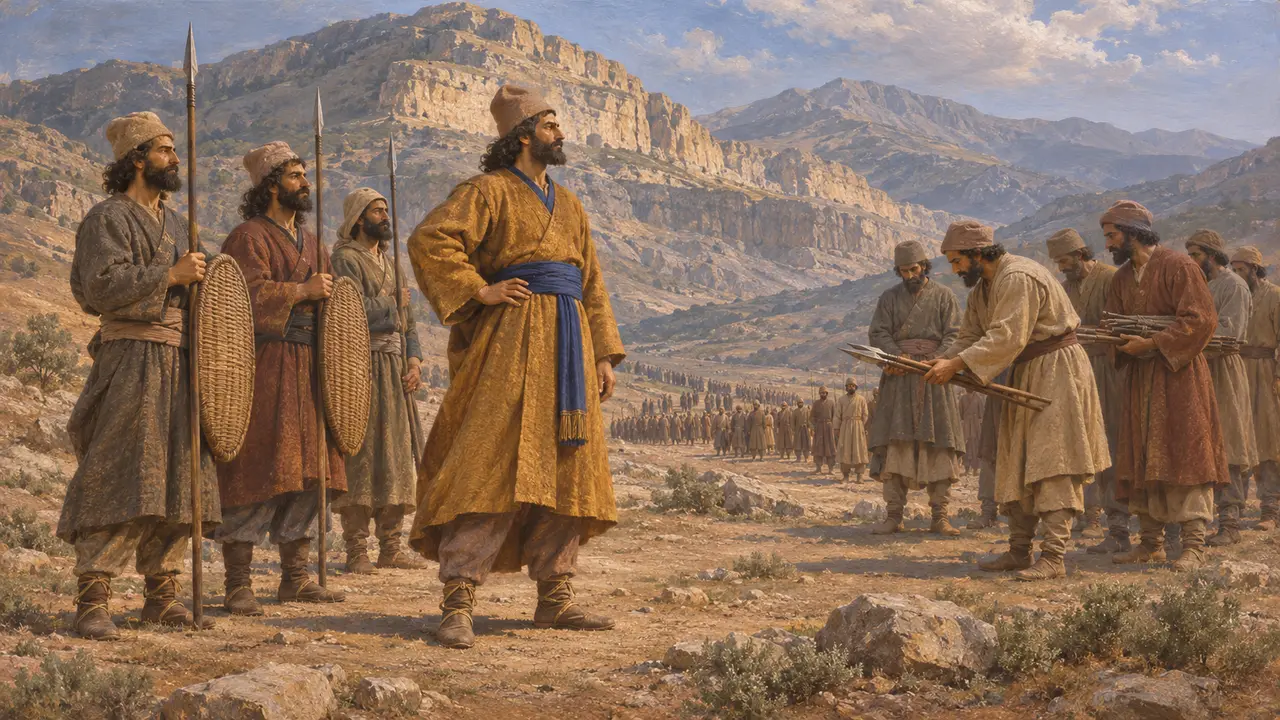
In the recordDarius records two battles in which Artavardiya's army defeated the forces of Vahyazdata, the first at a place called Rakha and the second at Mount Parga. Vahyazdata was then captured with his chief followers and impaled at Uvadaicaya in Persia. Darius credits Auramazda for the victories and does not describe the fighting.
DB
The rebel he fought
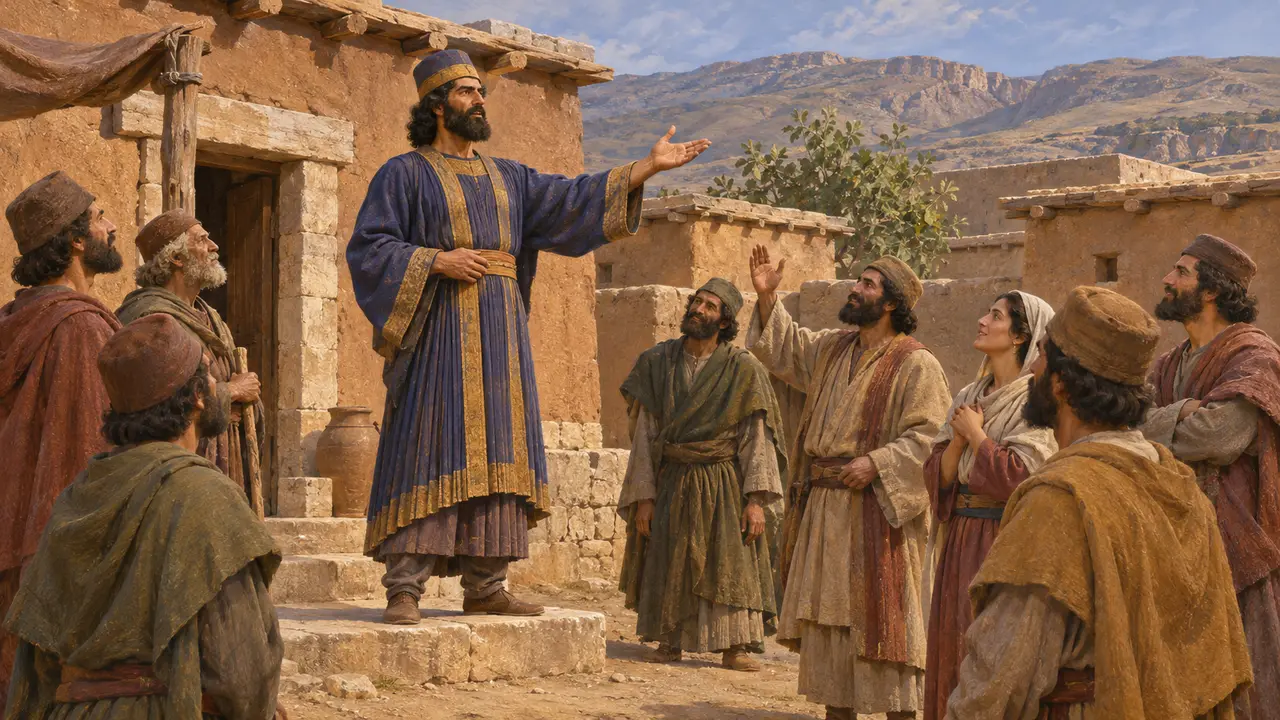
In the recordVahyazdata was a Persian who claimed to be Bardiya, the son of Cyrus, although Darius says Bardiya had been killed earlier. Darius presents him as a liar who deceived the people of Persis. Darius says he sent Artavardiya against him, and the text gives no sign that Darius went himself.
DB
Silence in the Greek writers
Ancient accountHerodotus tells at length of the false Smerdis and of Darius's seizure of the throne, but he does not tell of a second pretender in Persis, and so says nothing of Artavardiya. His version of these years is shaped by stories of the seven conspirators. For this campaign Behistun is therefore the main source.
Herodotus 3.61-88
How far Darius can be trusted
DisputedBehistun is Darius's own account, written to justify his rule, and it presents every rebel as a liar who opposed the king. Historians accept that the revolts happened but treat the details of battles and dates with caution. A revolt in Persis itself would have been dangerous for Darius, but that is a modern judgement, and Artavardiya's role beyond what Darius says cannot be checked.
P. Briant, From Cyrus to Alexander, 2002
Sources
- DB
- Herodotus 3.61-88
- P. Briant, From Cyrus to Alexander, 2002
- A. Kuhrt, The Persian Empire, 2007