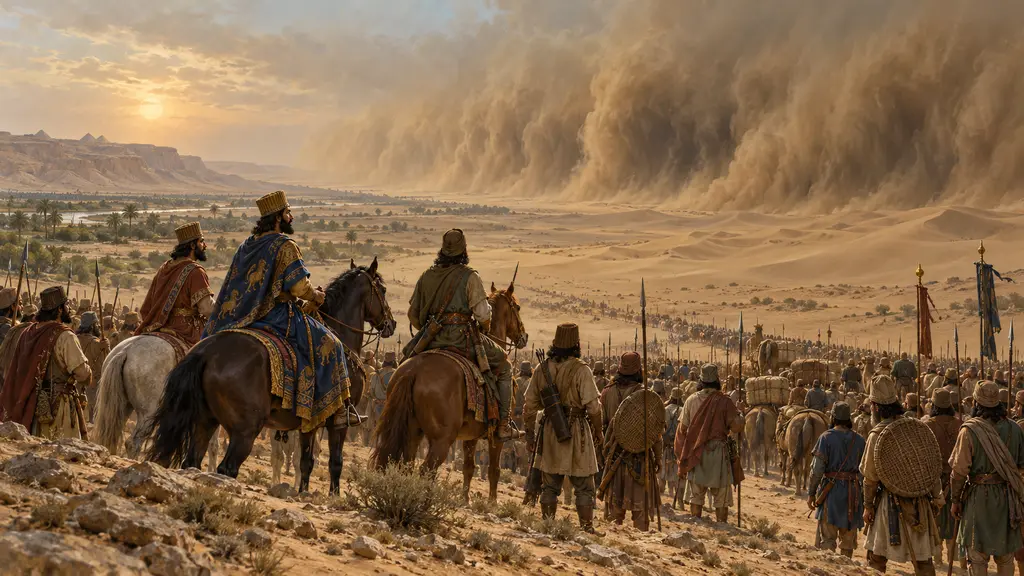
Ammon (Siwa)
Oracle oasis in the Libyan desert of western Egypt, 6th century BCE
Ammon was the oasis of Siwa, home of a famous oracle of Amun, whom Greeks equated with Zeus. Herodotus says Cambyses sent an army against it from Thebes and that the army vanished in the sand. What happened to the force is not known, and the story is still argued over.
In the game: The game names Ammon only in the Chronicle and in event articles such as the marches on Ammon and Ethiopia. It is not a level, a figure or a place with its own mechanic.
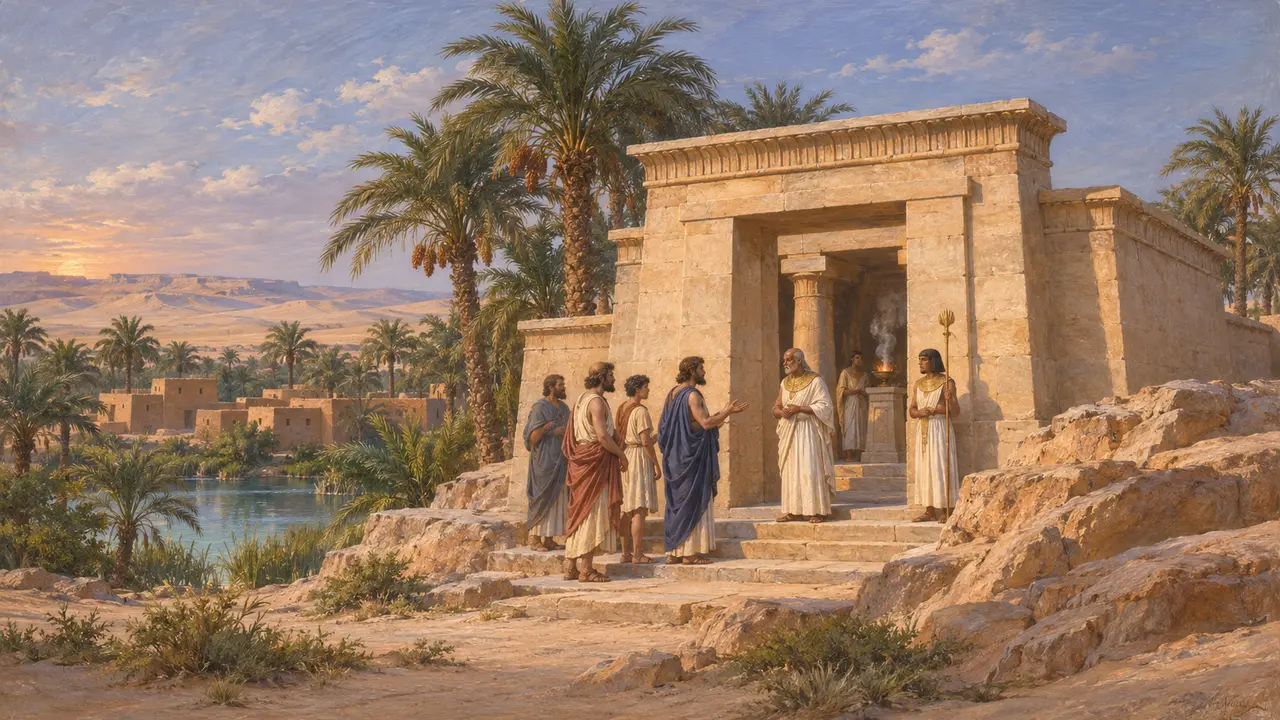
The oasis and its oracle
Ancient accountHerodotus describes the Ammonians as a people living in the desert west of Egypt, with a temple of Zeus, whom he equates with the Egyptian Amun. Greeks consulted the oracle, and Herodotus knew Greek stories about it. Siwa is a real oasis in the Western Desert, and the ruins of a temple of Amun survive there.
Herodotus 2.42
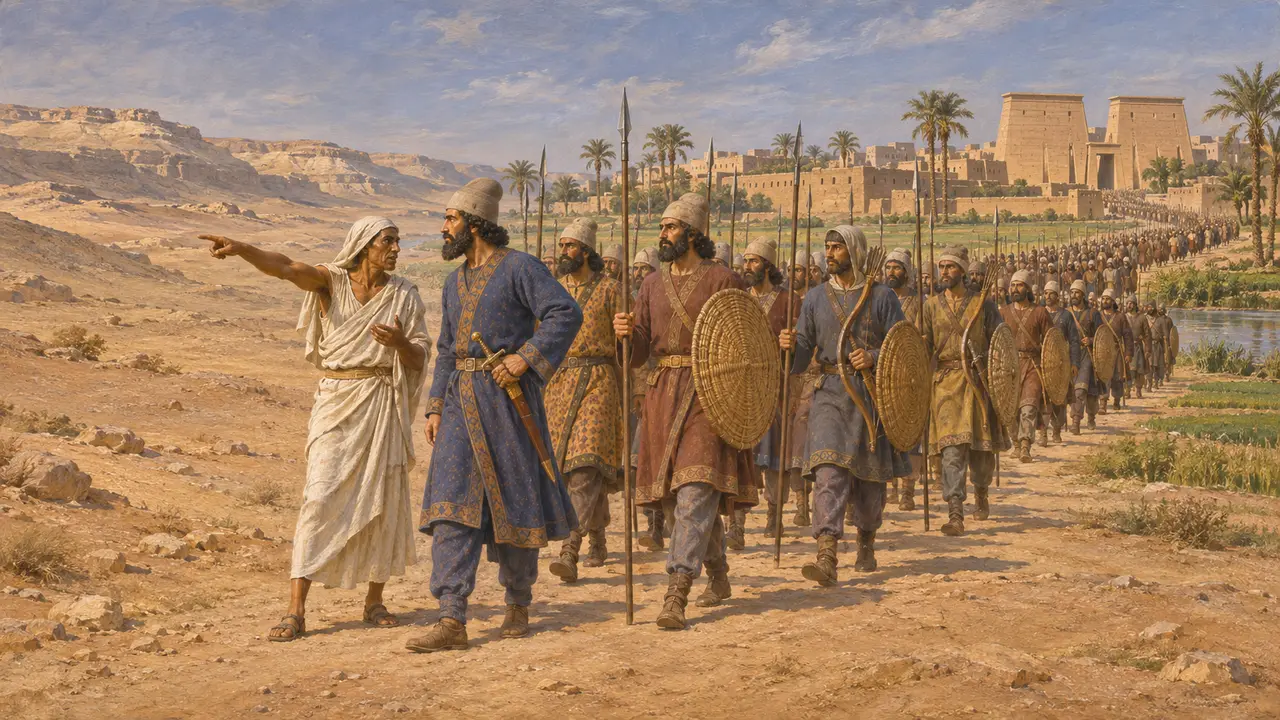
Cambyses' order to march
Ancient accountHerodotus says Cambyses, after taking Egypt, planned three ventures: against Carthage, against the Ethiopians and against the Ammonians. He says Cambyses sent fifty thousand men from Thebes, guided by locals, to enslave the Ammonians and burn the oracle. The figure is Herodotus's and is probably inflated.
Herodotus 3.17-3.25
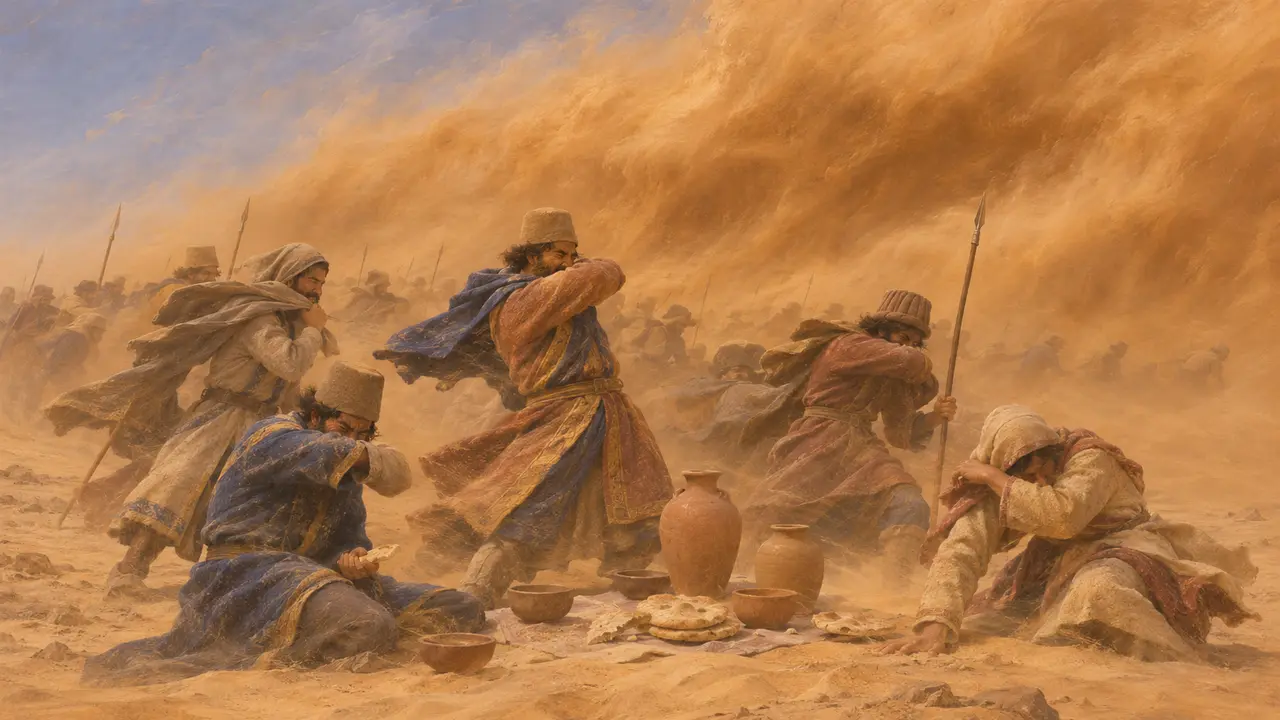
The lost army
Ancient accountHerodotus reports that the army reached a place called Oasis, probably the Kharga oasis, and then set off across the sand. According to the Ammonians, a great south wind buried it during the midday meal, and it was never seen again. Herodotus gives this as their account and says nothing more certain about the army's end.
Herodotus 3.26
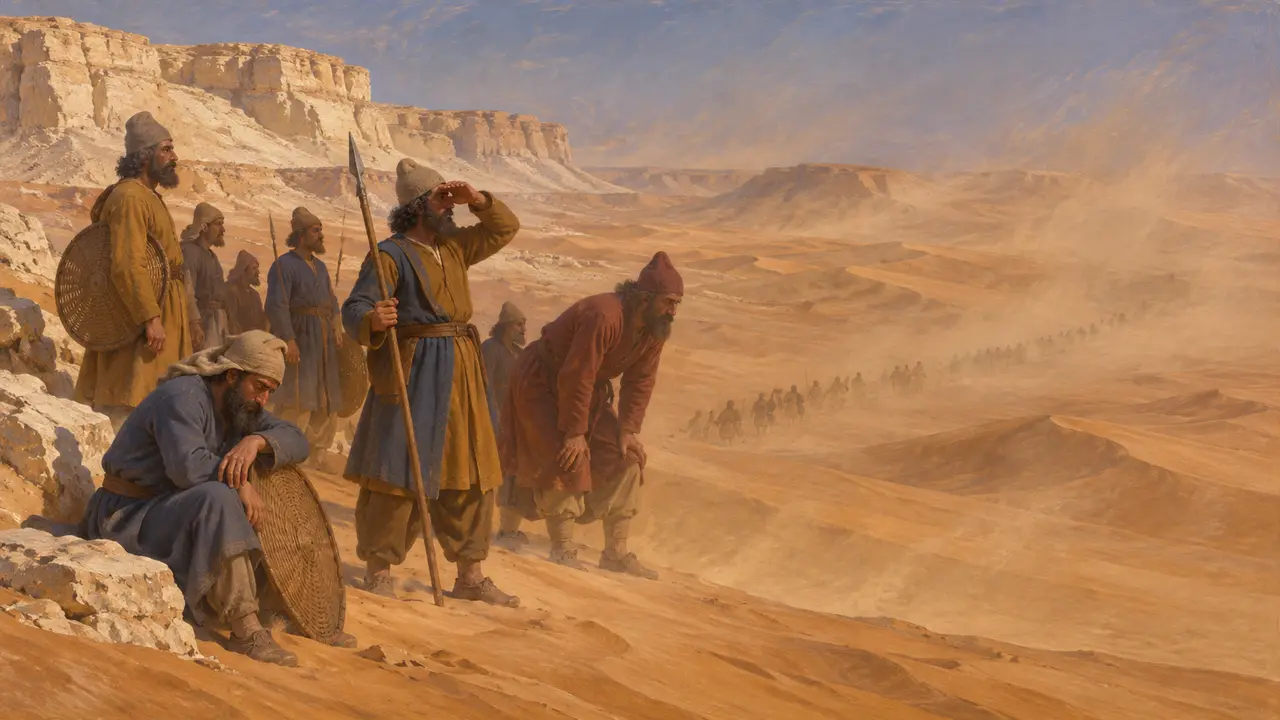
Did the army reach Siwa?
DisputedNo Persian or Egyptian text mentions the expedition, so it rests on Herodotus alone. Some historians accept a real force lost in the desert, while others doubt that it was meant for Siwa or even that it happened. Claims of modern finds of the lost army are widely doubted.
P. Briant, From Cyrus to Alexander, 2002
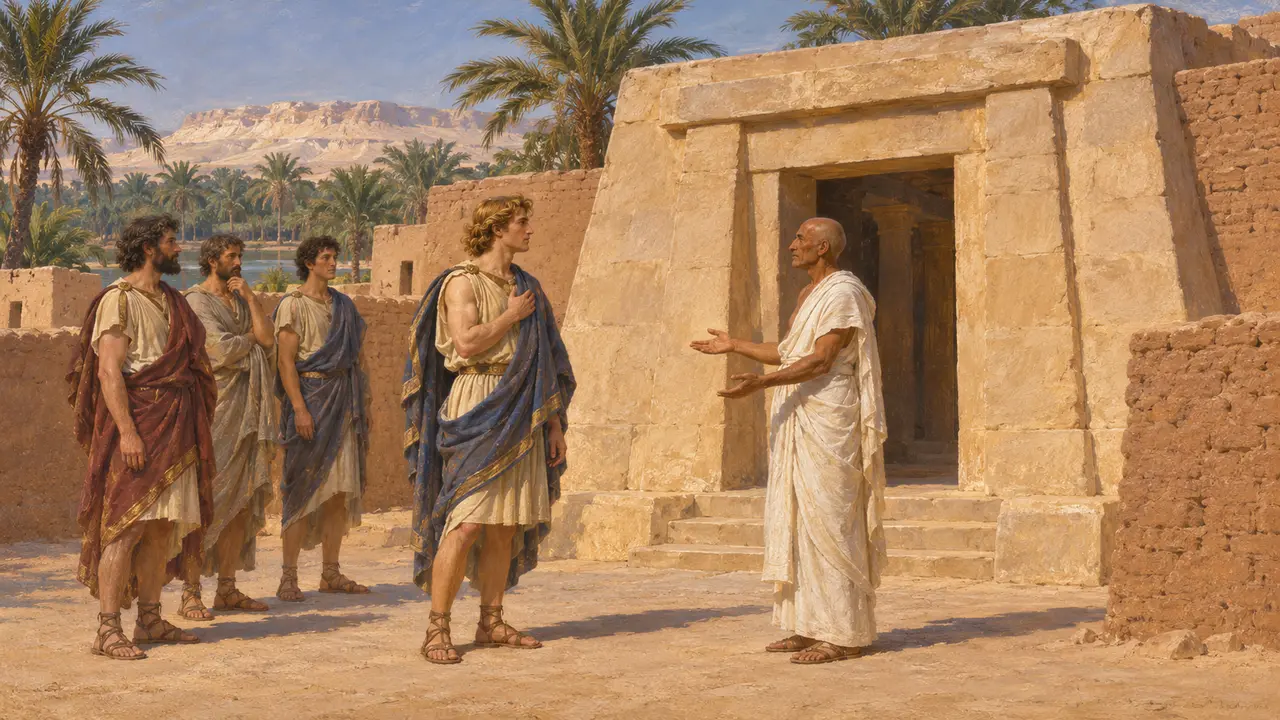
Later fame of the oracle
Ancient accountThe oracle became better known in 331, when Alexander the Great visited it, as Arrian reports. That visit lies long after the Persian period and belongs to a different story.
Arrian, Anabasis 3.3-3.4
Sources
- Herodotus 3.17-3.26
- Herodotus 2.42
- P. Briant, From Cyrus to Alexander, 2002
- Arrian, Anabasis 3.3-3.4