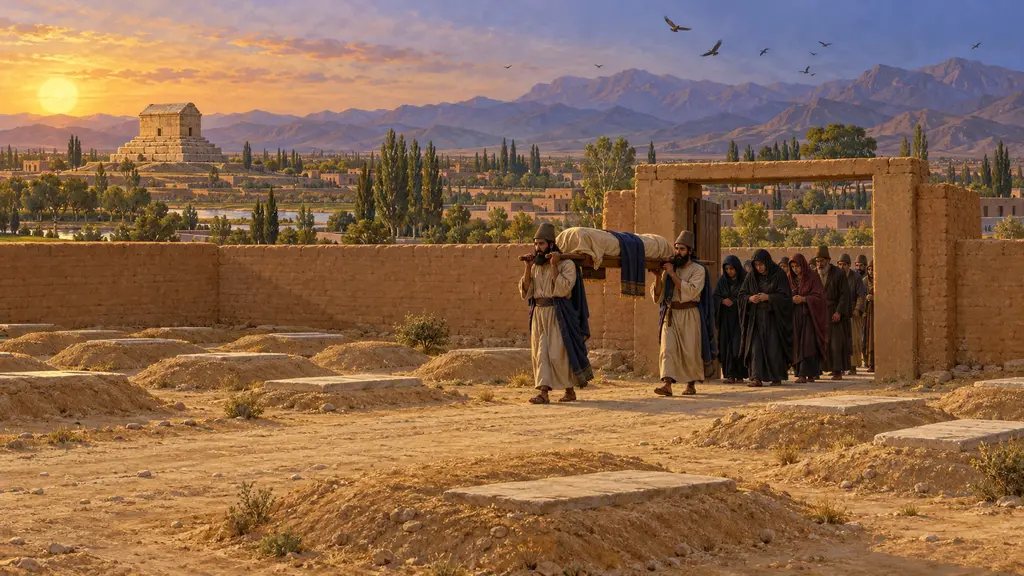
Royal Tumulus
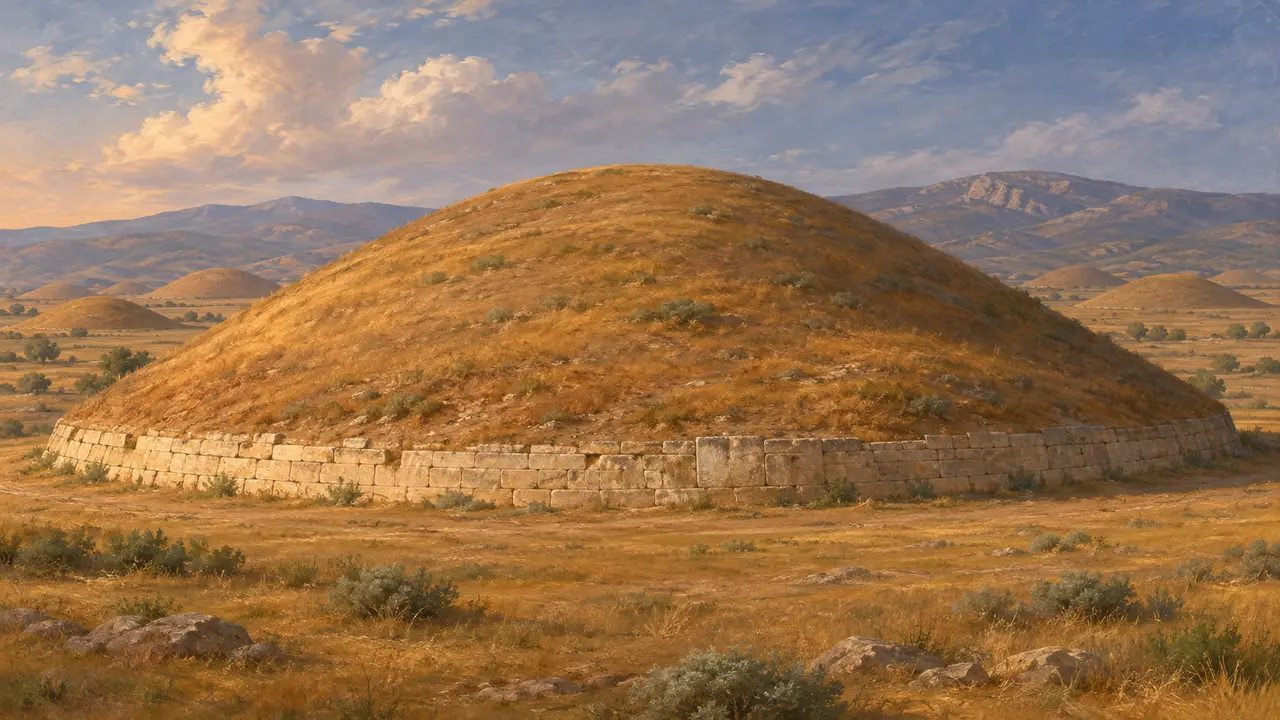
Lydian burial mounds at Bin Tepe, north of Sardis, seventh to fourth century BCE
The kings of Lydia were buried under great earth mounds raised on stone foundations at Bin Tepe, a cemetery about 10 km north of Sardis. The largest, which Herodotus calls the tomb of Alyattes, father of Croesus, ranks among the biggest mounds in Anatolia. Lydian and Persian nobles kept building such tumuli after Cyrus took Sardis in about 546, so the mounds also show a local elite carrying on under Persian rule.
In the game: In Sardis the Burial Ground becomes a town-funded Royal Tumulus where bearers carry the dead. Herodotus credits traders, craftsmen and prostitutes, and the real royal mounds stood apart at Bin Tepe, not among the town's graves.
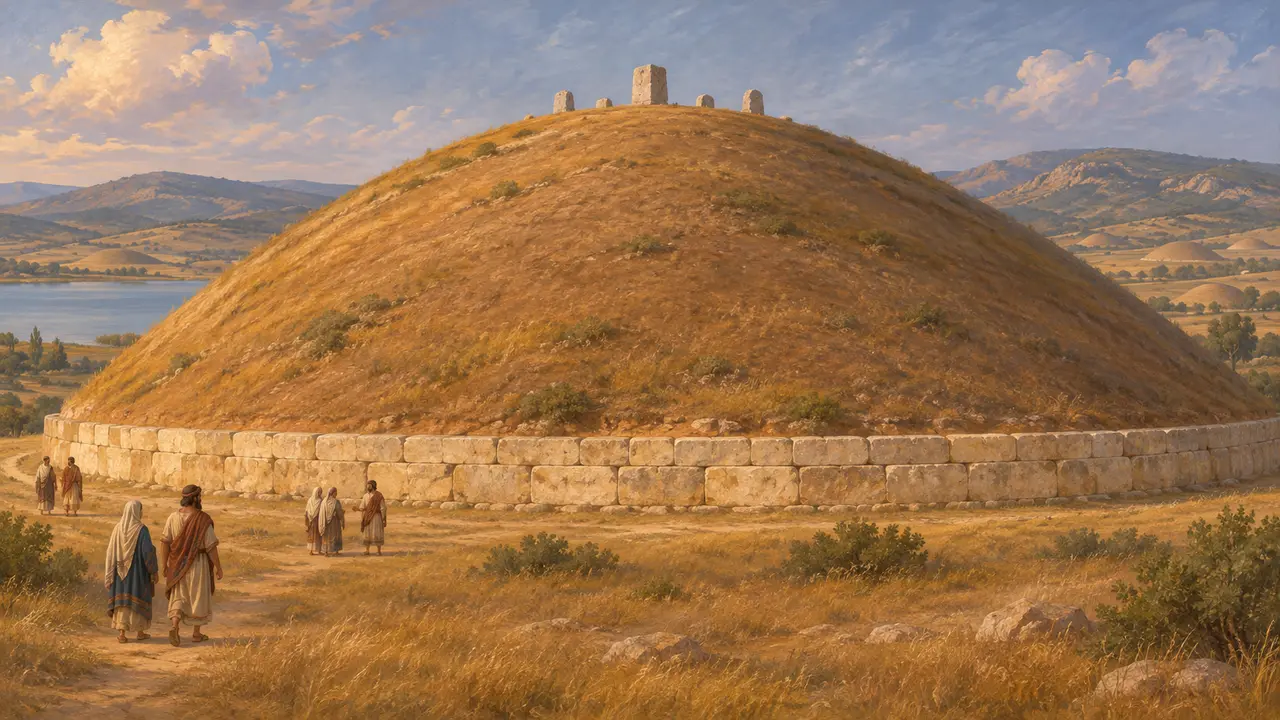
Herodotus on the tomb of Alyattes
Ancient accountHerodotus counted the tomb of Alyattes as the one great work in Lydia to rival those of Egypt and Babylon. He says it had a base of large stones with a mound of earth above, and that the market traders, craftsmen and prostitutes of Sardis raised it. Inscribed markers on top, he says, recorded each group's share, and the prostitutes' share was the largest. Strabo later describes the same mound near the Gygaean lake.
Herodotus 1.93; Strabo 13.4.7
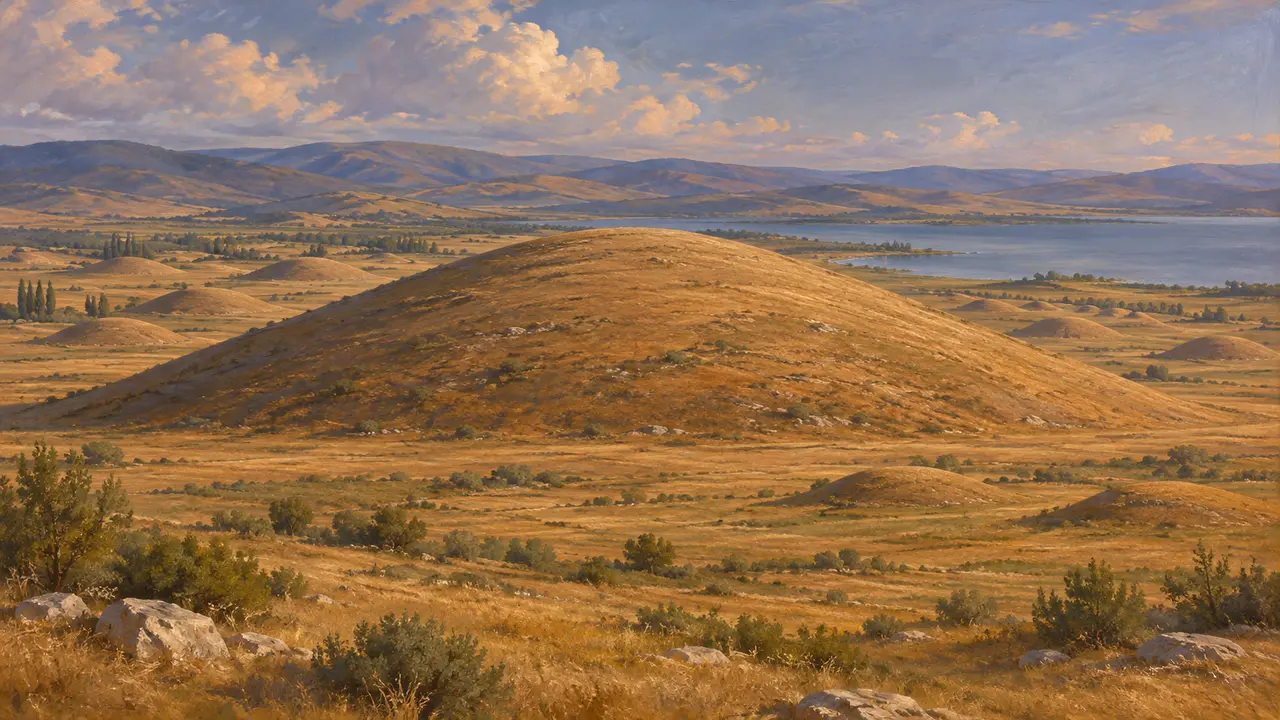
The mounds at Bin Tepe
In the recordBin Tepe, Turkish for 'thousand mounds', lies across the Hermus plain from Sardis, beside the lake Herodotus calls Gygaean. The mound usually identified as Alyattes' tomb, Kocamutaf Tepe, is about 355 metres across. Tunnelling in 1854 reached a burial chamber of finely cut marble blocks, long since robbed. Excavators later found a stone retaining wall, or crepis, inside Karnıyarık Tepe.
G. M. A. Hanfmann, Sardis from Prehistoric to Roman Times, 1983
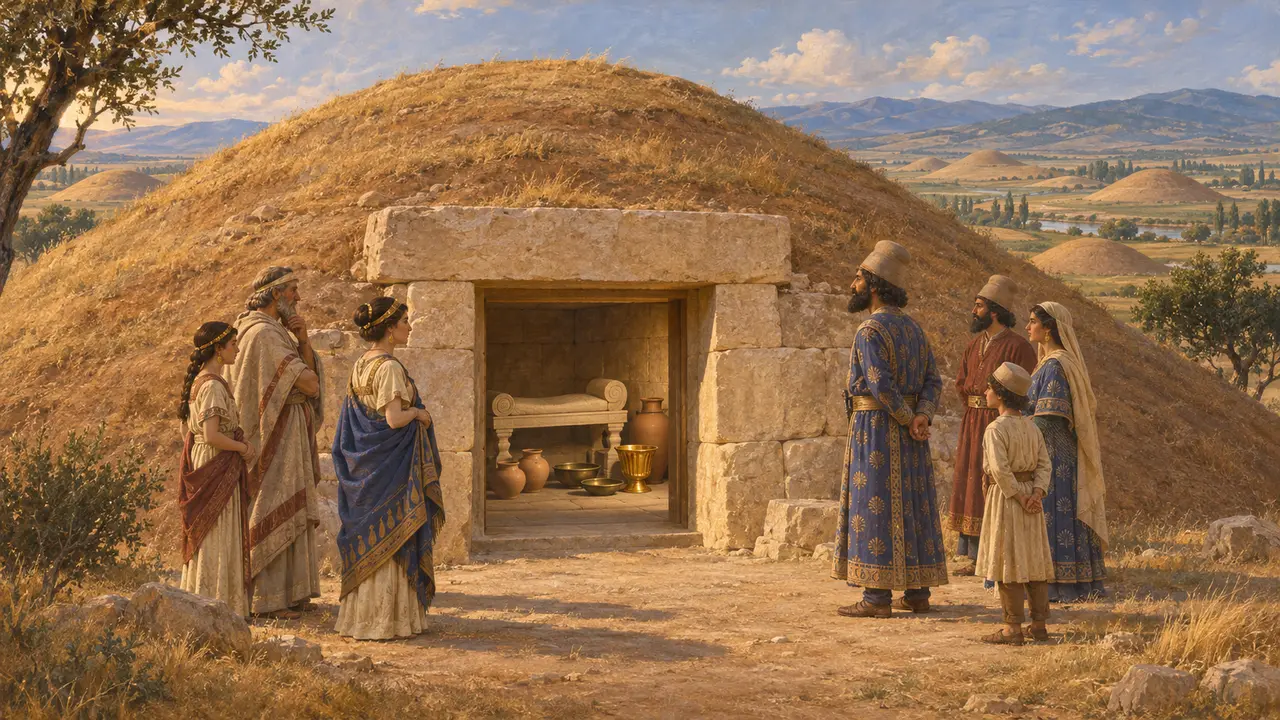
Tumuli under Persian rule
In the recordSurvey and excavation suggest that many of the Bin Tepe and other Lydian tumuli were probably built after the Persian conquest, through the fifth and fourth centuries. Their chambers, couches and grave goods mix Lydian and Persian styles. Archaeologists read this as a sign that Lydian families and Persians settled in the satrapy both used the old royal form of burial to display rank.
C. H. Roosevelt, The Archaeology of Lydia, from Gyges to Alexander, 2009; E. R. M. Dusinberre, Aspects of Empire in Achaemenid Sardis, 2003
Whose mound, and who built it
DisputedThe names given to the big mounds rest on Herodotus and on scholars' inference, not on inscriptions naming the dead. Karnıyarık Tepe has been linked to Gyges because marks on its wall were read as his name, but the reading and the date are debated. Many historians also doubt the tale of prostitutes paying for the tomb, which fits Greek stories about Lydian luxury. Herodotus himself adds that common Lydian girls earned their dowries this way.
Herodotus 1.93; C. H. Roosevelt, The Archaeology of Lydia, from Gyges to Alexander, 2009
Sources
- Herodotus 1.93
- C. H. Roosevelt, The Archaeology of Lydia, from Gyges to Alexander, 2009
- G. M. A. Hanfmann, Sardis from Prehistoric to Roman Times, 1983
- E. R. M. Dusinberre, Aspects of Empire in Achaemenid Sardis, 2003
- Strabo 13.4.7