Encyclopedia › Battles and events
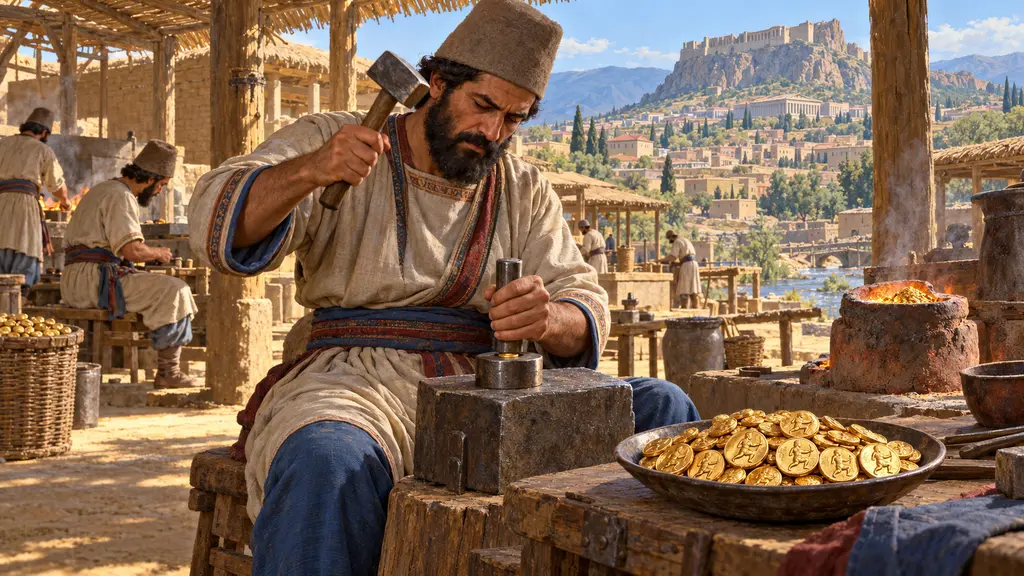
The striking of the daric
The first royal Persian coinage in gold and silver, probably at Sardis, about 510-500 BCE
In the game: Level 7: Sardis Burns
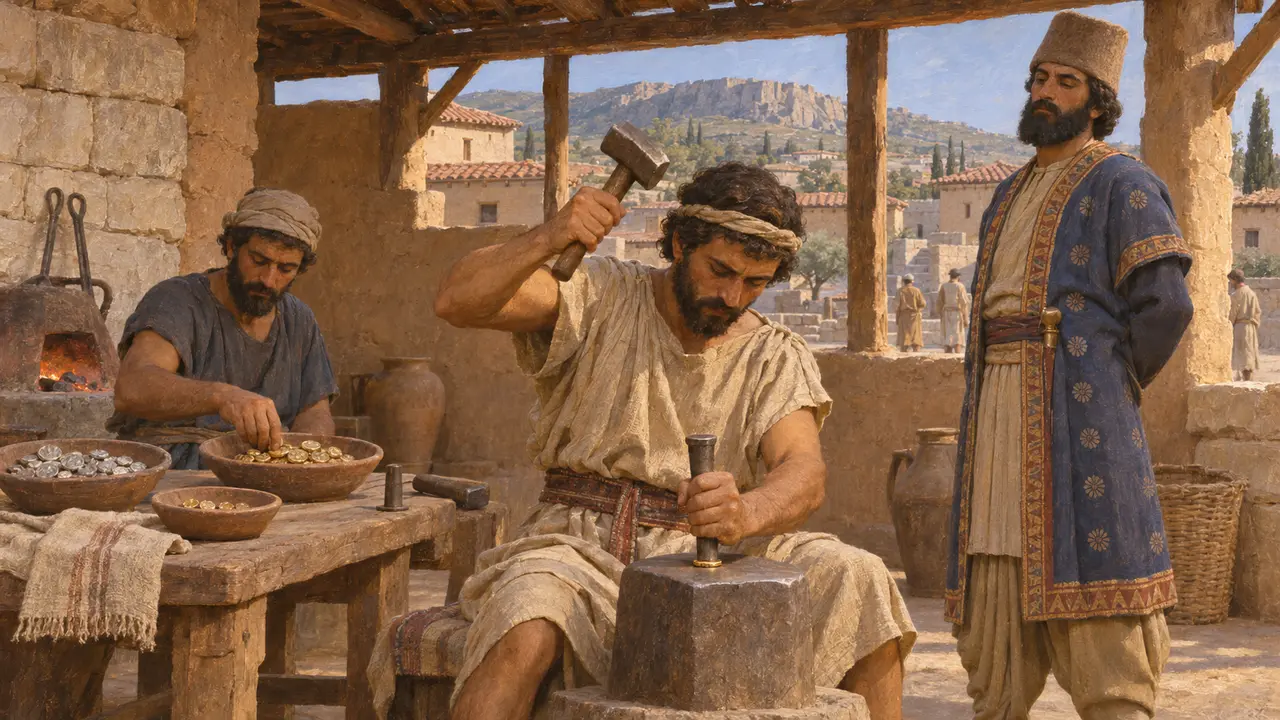
Under Darius the empire began to strike its own coins: the gold daric and the silver siglos, both showing a crowned archer. They followed the Lydian gold and silver coins attributed to Croesus in western Asia Minor and became the coins Greeks most linked with Persian wealth. Inside Persia most payments were still made in kind or in silver weighed out by the shekel.
In the game: The game shows a dramatized decree by Darius creating the daric and siglos at Sardis, about 510-500. No text names Sardis as the mint, and the first archer coins were silver only.
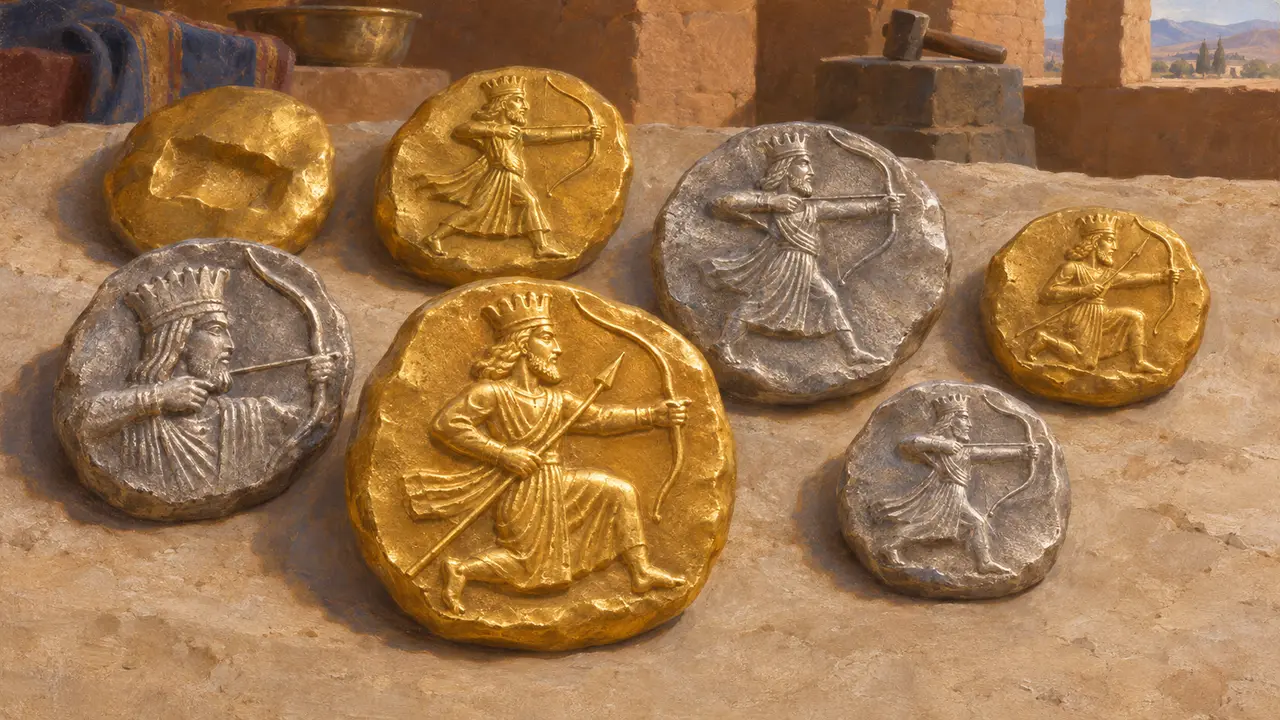
The coins themselves
In the recordThe surviving coins fall into a short series of types. The earliest appear to be silver sigloi showing a half-length crowned archer. Later types show the archer in a kneeling or running pose, either drawing a bow or holding a spear and bow, and these were struck in both gold and silver. A daric weighed about 8.4 grams of very pure gold, and an early siglos about 5.4 grams of silver.
I. Carradice, The 'regal' coinage of the Persian empire, 1987
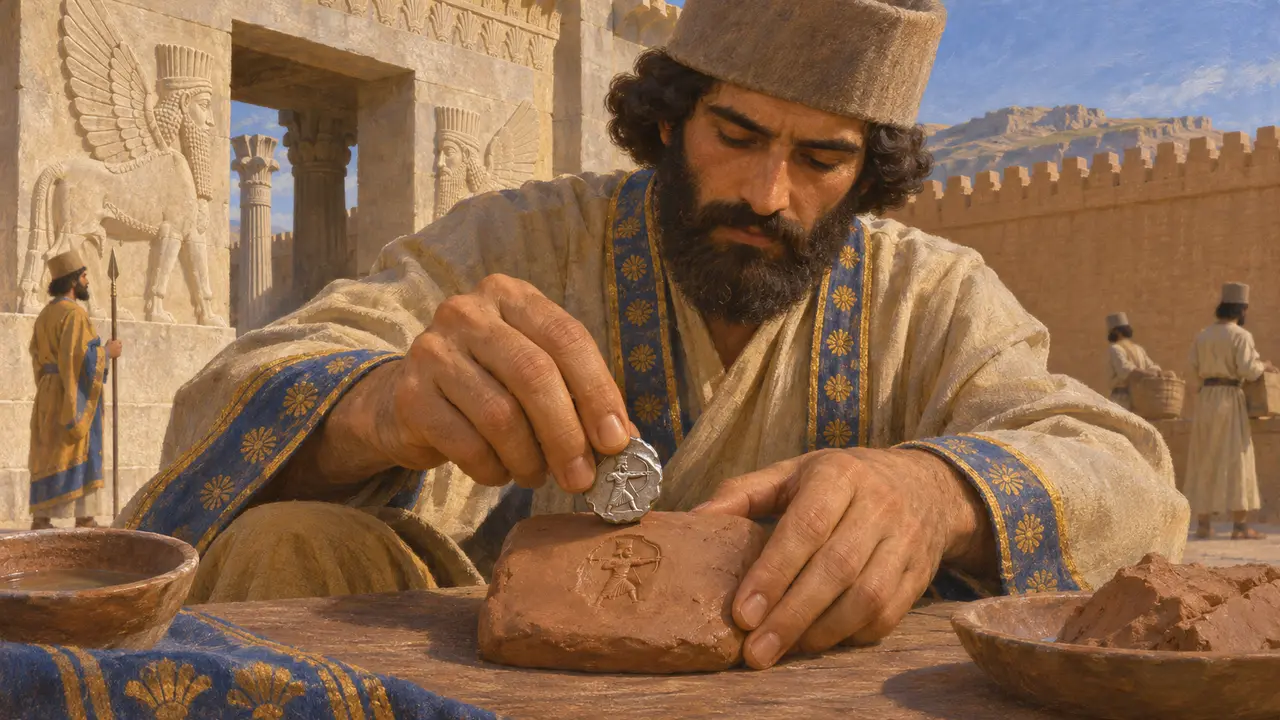
A coin pressed into a Persepolis tablet
In the recordAn official at Persepolis used a silver siglos of an archer type as his seal, catalogued as PFS 1393s. Its impressions appear on Fortification tablets dated to year 22 of Darius, about 500. This shows that archer coins were already in use by that date.
M. C. Root, Evidence from Persepolis for the dating of Persian and Archaic Greek coinage, 1988
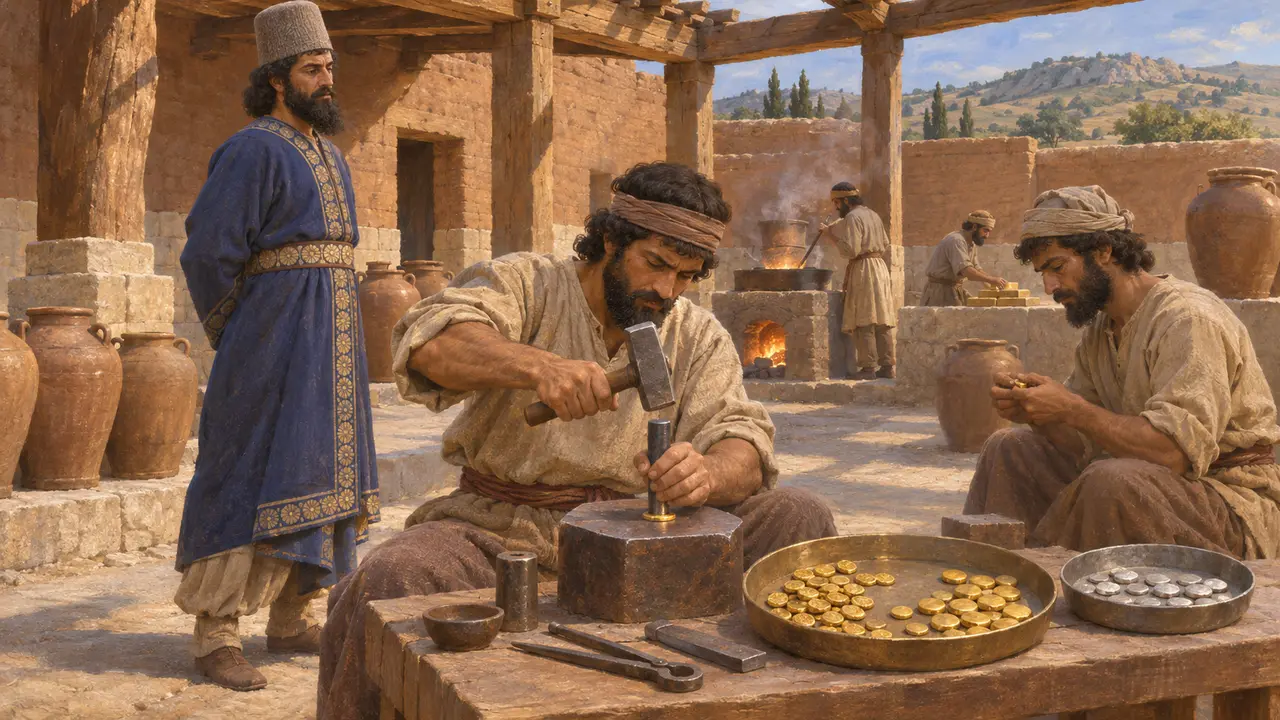
Herodotus on Darius and Aryandes
Ancient accountHerodotus says Darius refined gold to the greatest purity and struck coin from it. Aryandes, governor of Egypt, then struck silver of equal purity, and Darius had him killed, formally on a charge of rebellion. Herodotus also says the Lydian Pythius offered Xerxes nearly four million gold darics, a figure probably inflated. He adds that the King stored tribute as metal melted into jars.
Herodotus 4.166; Herodotus 7.28; Herodotus 3.96
Dates, mint and the archer
DisputedThe foundation deposits of the Apadana at Persepolis held Lydian and Greek coins but no archer coins. Some scholars take this to mean that royal coinage began only after the deposits were laid. Find spots and the Lydian tradition make Sardis the likely mint, but no text names it. Scholars also debate whether the archer is the King himself or a royal hero, and whether the name daric comes from Darius.
P. Briant, From Cyrus to Alexander, 2002
Rations and weighed silver in the heartland
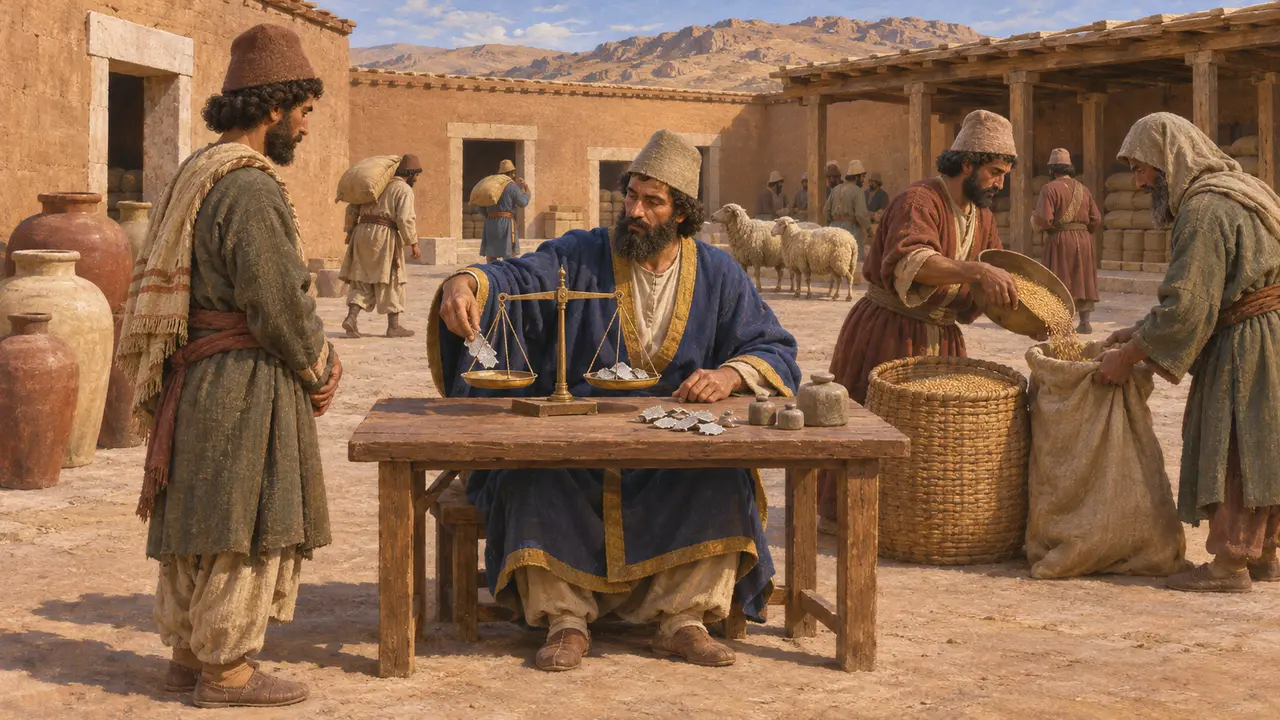
In the recordThe Persepolis Fortification tablets record workers' rations mostly in kind: grain, wine, beer and livestock. The Treasury tablets record some payments in shekels of silver measured by weight, not in counted coins. Archer coins are found mostly in western Asia Minor, so coinage probably served the western provinces and dealings with Greeks.
G. G. Cameron, Persepolis Treasury Tablets, 1948; P. Briant, From Cyrus to Alexander, 2002
Sources
- Herodotus 4.166
- M. C. Root, Evidence from Persepolis for the dating of Persian and Archaic Greek coinage, 1988
- I. Carradice, The 'regal' coinage of the Persian empire, 1987
- P. Briant, From Cyrus to Alexander, 2002
- G. G. Cameron, Persepolis Treasury Tablets, 1948
- Herodotus 7.28; Herodotus 3.96