
Heralds
Envoys who carried the King's demand for earth and water, about 513-480 BCE
Heralds were envoys sent to carry a ruler's message and bring back an answer. Greek writers describe Persian kings sending them to cities and peoples to ask for earth and water, a token of submission to the King. Their reception, from willing surrender to murder, shaped the wars between Persia and the Greeks.
In the game: The game shows heralds as the King's envoys asking for earth and water. This follows Herodotus; no Persian inscription or tablet mentions the earth-and-water ritual, so the game's picture rests on Greek accounts.
A sacred messenger
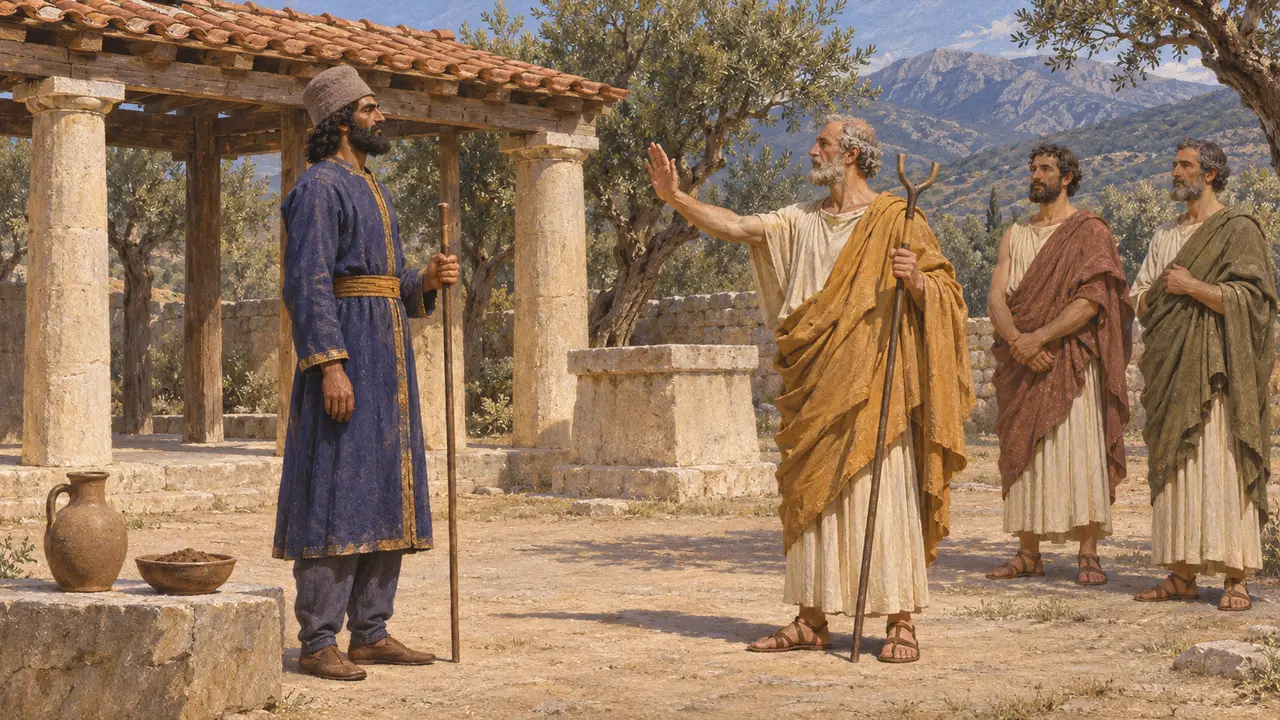
Ancient accountAmong the Greeks a herald (keryx) was held to be under divine protection, and harming one was an offence against the gods. Herodotus says that at Sparta the office was hereditary in a family, the Talthybiadae, who traced their line to Talthybius, herald of Agamemnon. Herodotus uses the same word for the men the Persian kings sent out, so the Greek idea of an inviolable envoy colours his stories of Persian heralds.
Herodotus 7.134
What earth and water meant
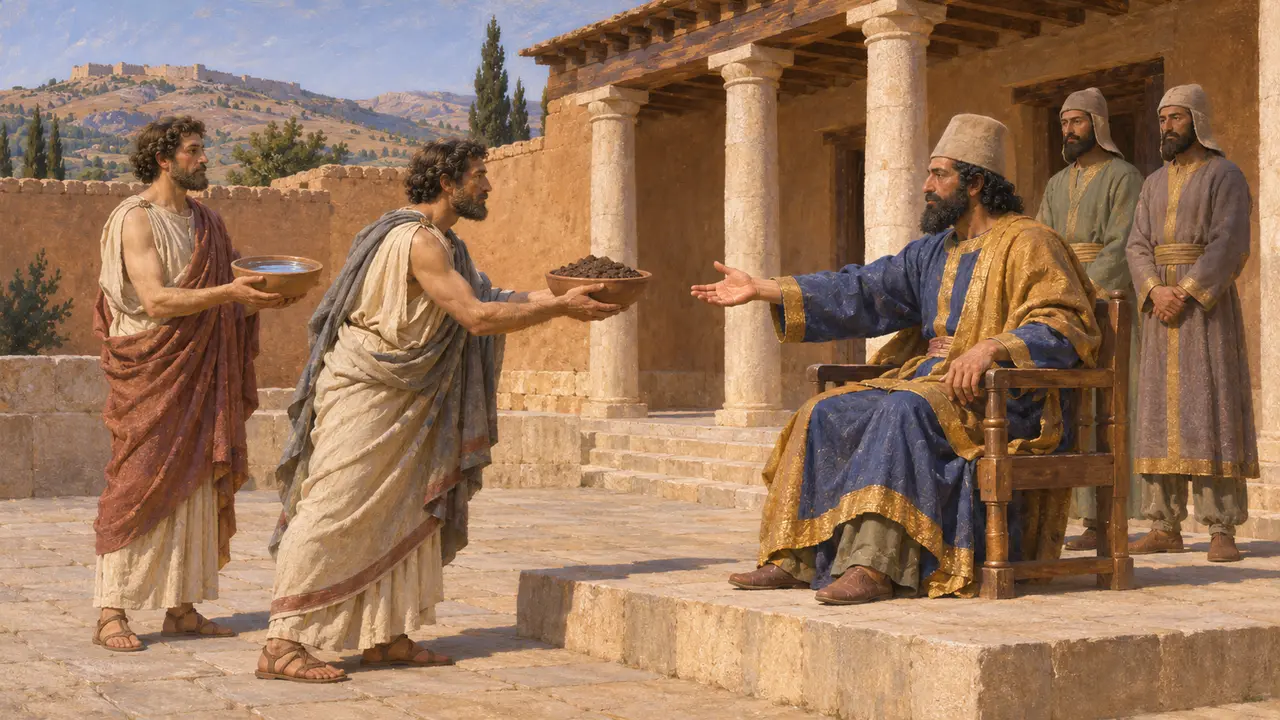
DisputedHerodotus treats the gift of earth and water as a sign that a people accepted the King as overlord. Historians still debate its exact sense: some see a plain act of surrender of land and water, others a formal agreement that bound both sides. Herodotus says Athenian envoys at Sardis gave earth and water to Artaphernes about 507 and were blamed for it at home, which suggests the Athenians may not have grasped what it committed them to.
Herodotus 5.73; A. Kuhrt, Earth and Water, 1988
Heralds sent to Greece
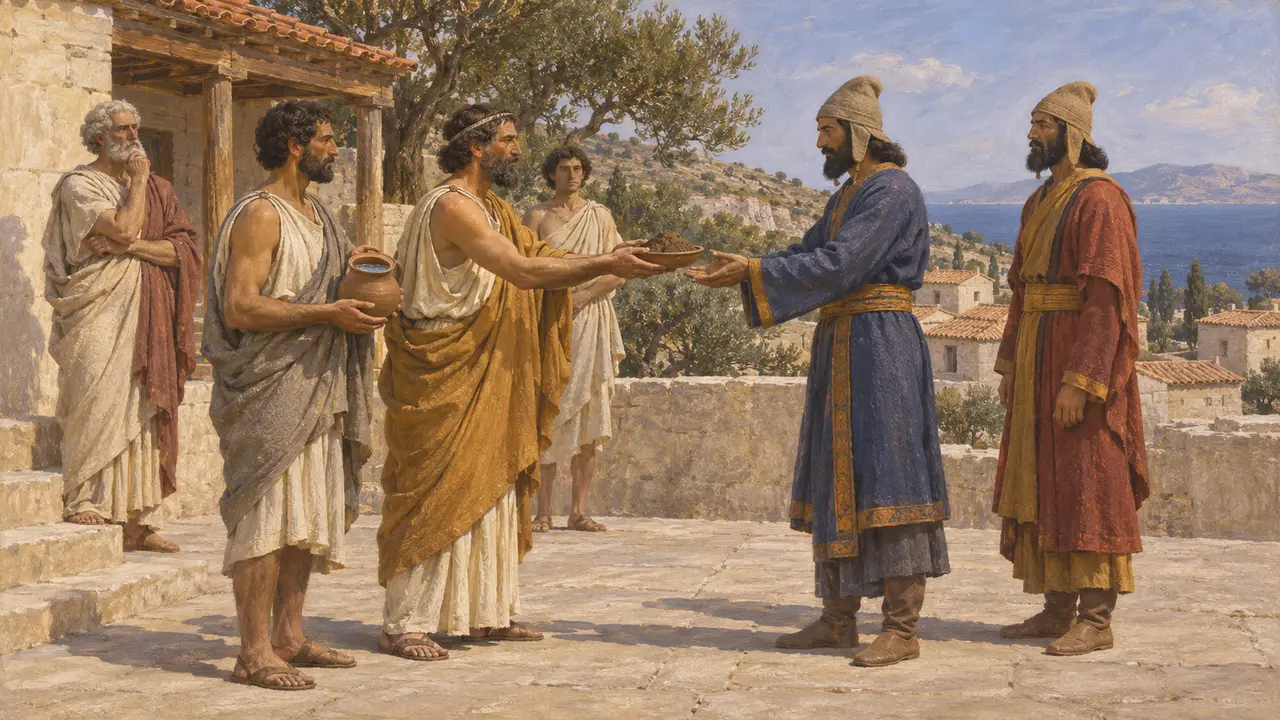
Ancient accountHerodotus says Darius sent heralds through Greece, probably in 491, to ask for earth and water. He reports that many mainland Greeks gave it, as did all the islanders the heralds reached, Aegina among them. In 481 Xerxes sent heralds to every Greek state except Athens and Sparta. Herodotus explains that the Athenians had thrown Darius's heralds into a pit and the Spartans into a well, telling them to fetch earth and water from there.
Herodotus 6.48-49; Herodotus 7.32; Herodotus 7.133
Travelling on the King's business
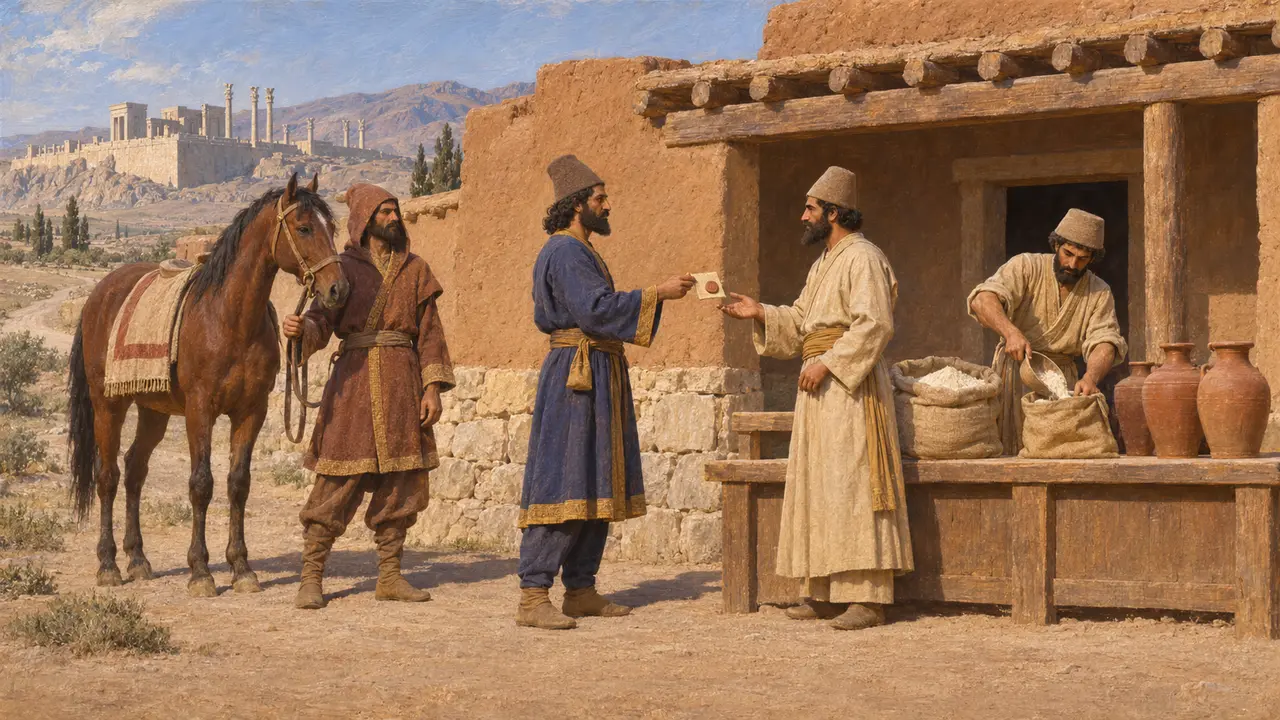
In the recordThe Persepolis Fortification tablets show how official travellers moved through the empire. Envoys, messengers and their escorts carried sealed authorisations and drew rations of flour, beer or wine at stations along the roads. The tablets record such journeys to and from distant provinces, but they say nothing of earth and water, so the Persian side of the heralds' work is known only in outline.
R. Hallock, Persepolis Fortification Tablets, 1969
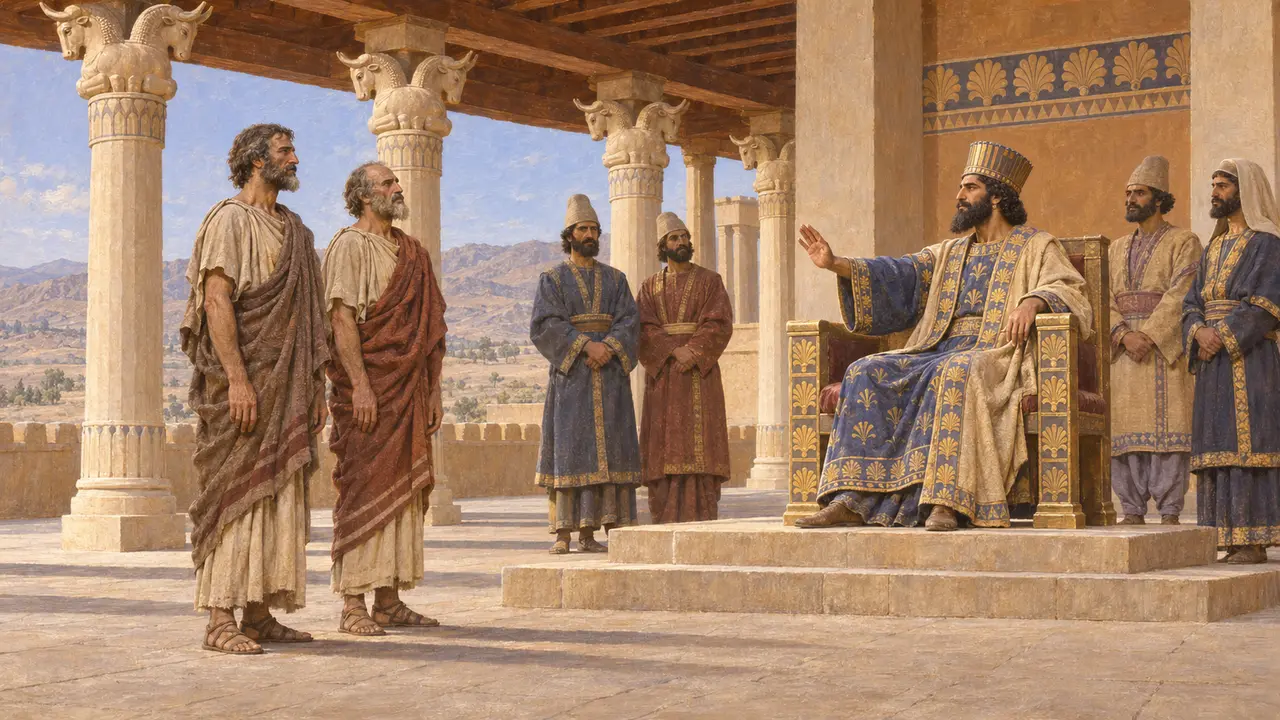
Sperthias and Bulis
Later legendHerodotus tells that after the killing of Darius's heralds the Spartans suffered the anger of Talthybius. Two citizens, Sperthias and Bulis, offered to die at the Persian court in atonement, but Xerxes refused to repeat the crime he blamed on Sparta. Thucydides names Aneristus and Nicolaus among Spartan envoys executed in 430, men Herodotus calls their sons. The men were probably real, but the divine anger and the King's reply belong to a moral tale.
Herodotus 7.134-137; Thucydides 2.67
Sources
- Herodotus 6.48-49; 7.32; 7.131-137
- Herodotus 5.73
- A. Kuhrt, Earth and Water, 1988
- R. Hallock, Persepolis Fortification Tablets, 1969
- P. Briant, From Cyrus to Alexander, 2002
- Thucydides 2.67