Encyclopedia › Soldiers and ships

War Drummer
A signaller of the King's enemies at the siege, a game figure for 530-479 BCE
The War Drummer stands for the men who kept an attacking force moving together and gave it its signals. Ancient armies of this period did use sound in battle, but the sources speak of pipes, trumpets and shouting far more than drums. No source of the period describes a drummer leading an assault on a wall.
In the game: The War Drummer, whose label changes by level, beats the enemy assault on from before the gate; archers on the wall can reach him. He is a game invention: period sources speak of pipes and trumpets in war, not drums.
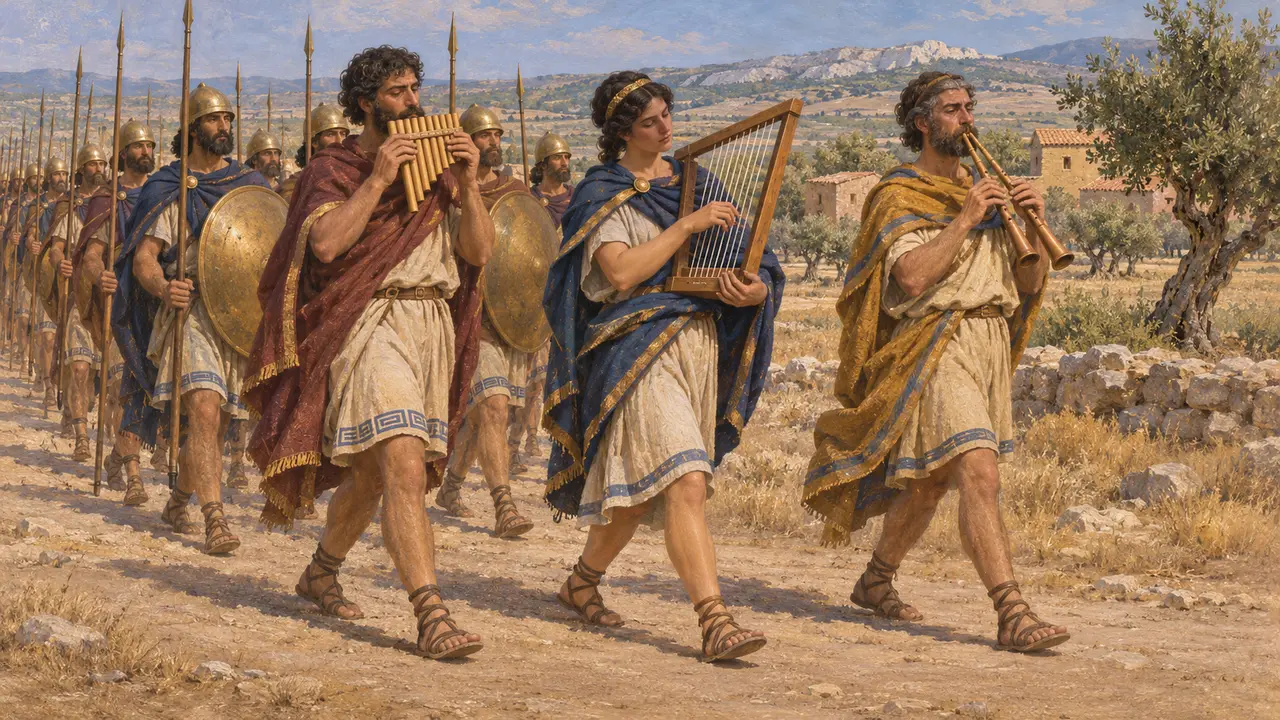
Pipes and harps on the march
Ancient accountHerodotus says that when Alyattes of Lydia raided the land of Miletus each year, his army marched to the sound of pan-pipes, harps and pipes. Thucydides, writing of a later battle at Mantinea in 418, describes the Spartans advancing slowly to many pipe-players. He explains that this was not for religion but to keep the line in step, so that it did not break apart as it closed with the enemy.
Herodotus 1.17; Thucydides 5.70
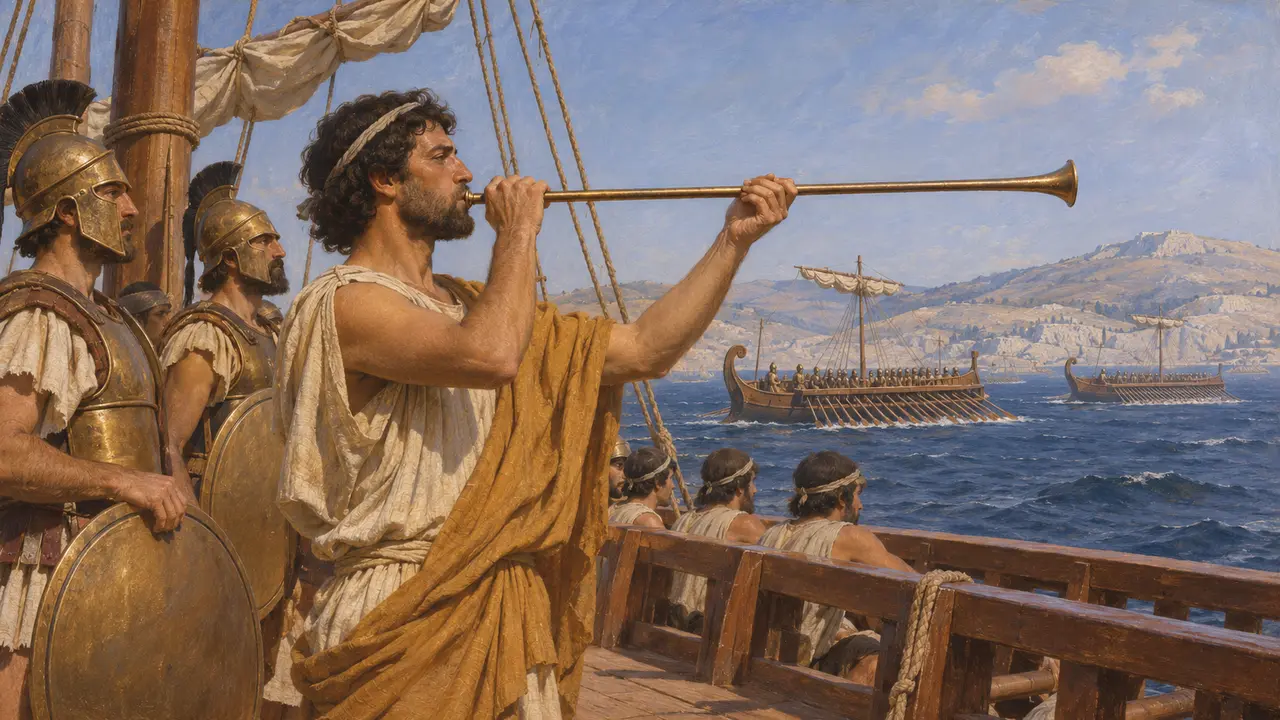
The trumpet as signal
Ancient accountGreek armies and fleets gave commands with the salpinx, a straight bronze trumpet. Aeschylus, who fought against the Persians, makes his messenger in the Persians tell how a trumpet set the Greek ships alight with spirit at Salamis. Xenophon's Anabasis also mentions trumpet calls used to signal the advance and to break camp.
Aeschylus, Persians; Xenophon, Anabasis
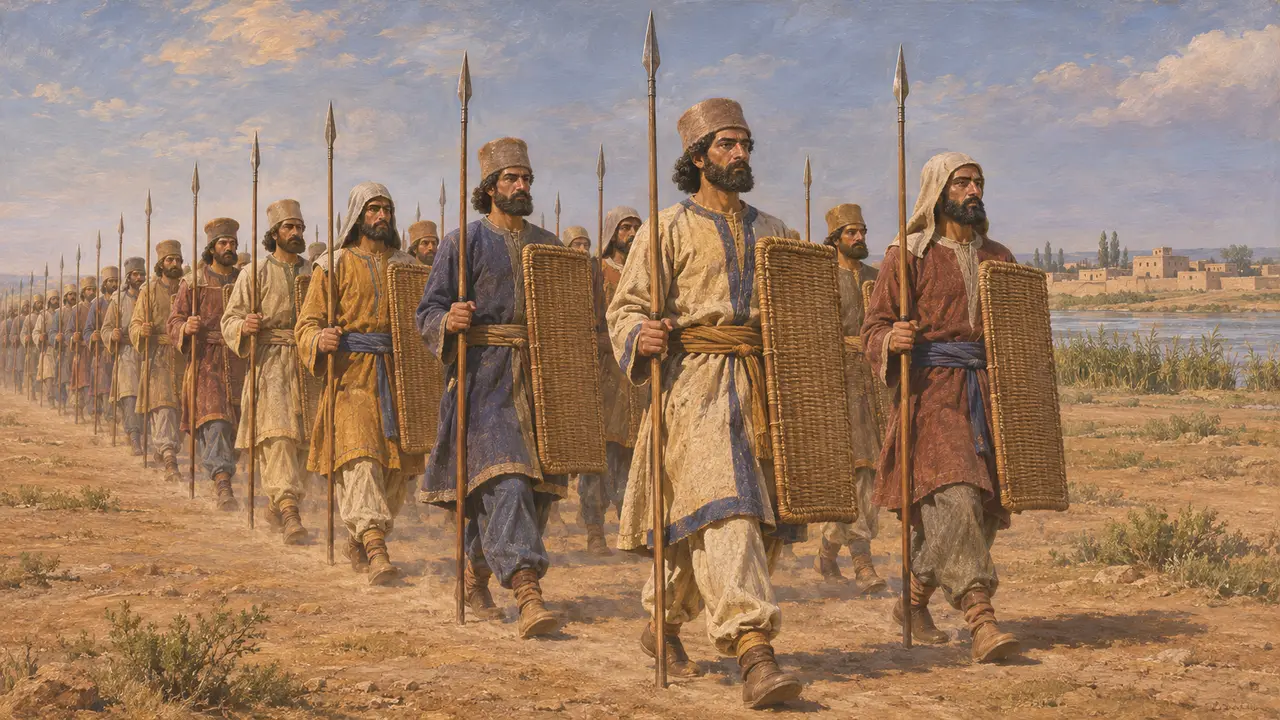
The King's army advancing in silence
Ancient accountXenophon, who was at Cunaxa in 401, says that the Greeks expected the King's army to come on shouting, but it advanced as quietly as it could, in a slow and even line. The battle is later than this game's period, yet it is one of the few eyewitness descriptions of how a Persian royal army sounded as it moved. It gives no hint of war drums.
Xenophon, Anabasis 1.8.11
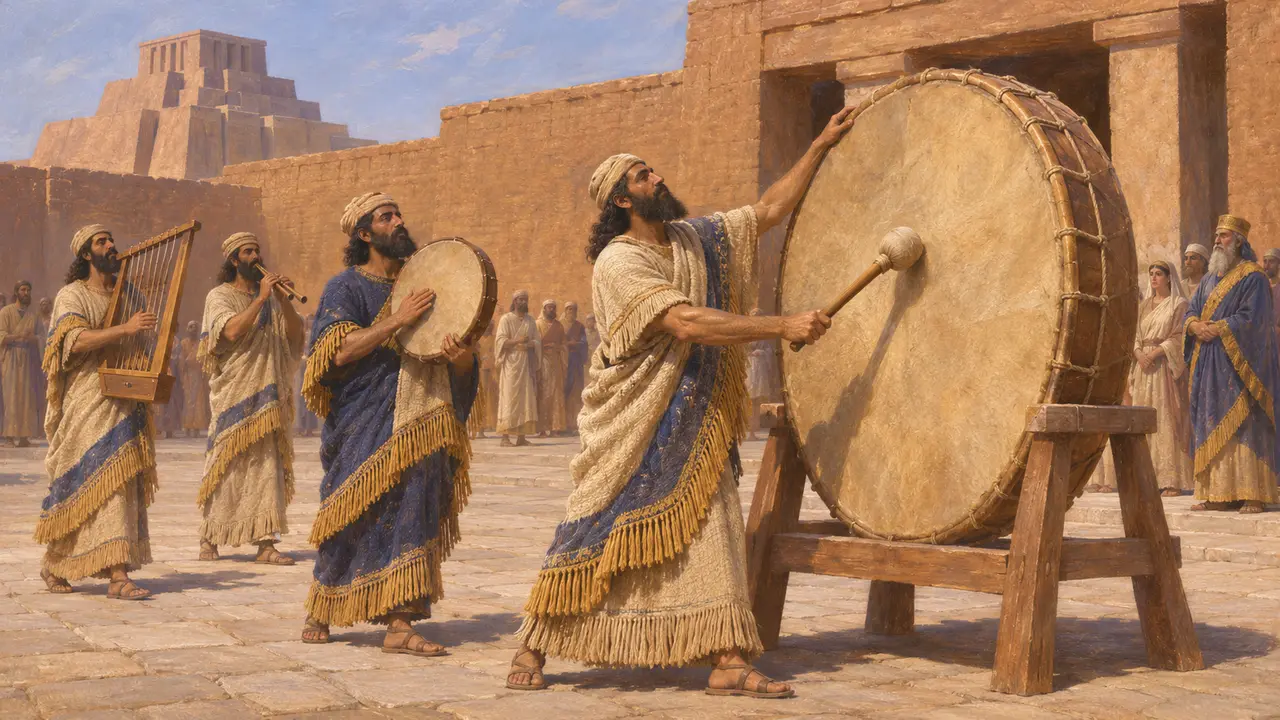
Drums in the Near East
In the recordDrums were well known in Mesopotamia, where large drums were played in temple ritual. Assyrian palace reliefs, carved a century and more before this game's period, show musicians with frame drums, pipes and harps, mostly in ceremonies and victory processions. The same reliefs show sieges in detail, with rams, archers, slingers and ladders, but they do not show drummers urging troops against a wall.
Assyrian palace reliefs, Nimrud and Nineveh
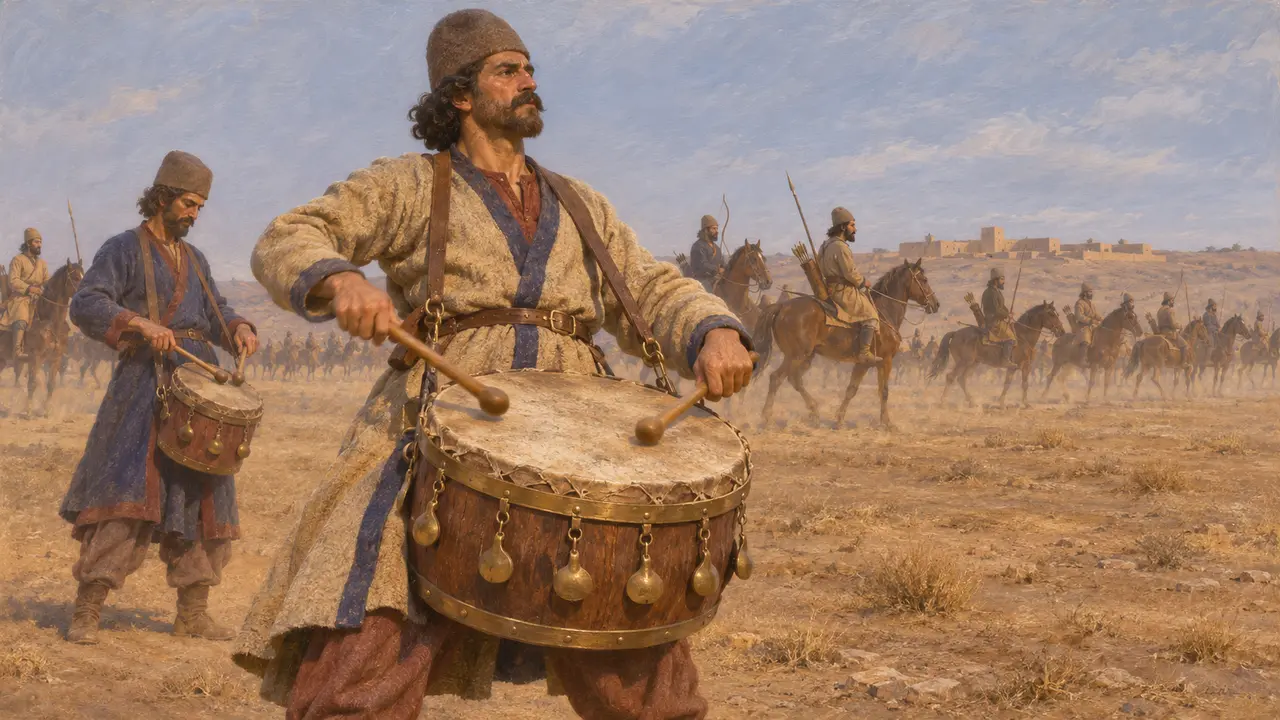
Iranian war drums: a later witness
DisputedPlutarch says the Parthians at Carrhae in 53 used hollow drums hung with bronze to unnerve the Romans before they attacked. Some writers assume older Iranian armies did the same, but no Achaemenid-period source confirms it. The Greek drum, the tympanon, belonged mainly to the cults of Dionysus and the Mother of the Gods, not to war.
Plutarch, Crassus 23; M. L. West, Ancient Greek Music, 1992
Sources
- Herodotus 1.17
- Thucydides 5.70
- Xenophon, Anabasis 1.8.11
- Aeschylus, Persians
- Plutarch, Crassus 23
- M. L. West, Ancient Greek Music, 1992