Encyclopedia › Soldiers and ships
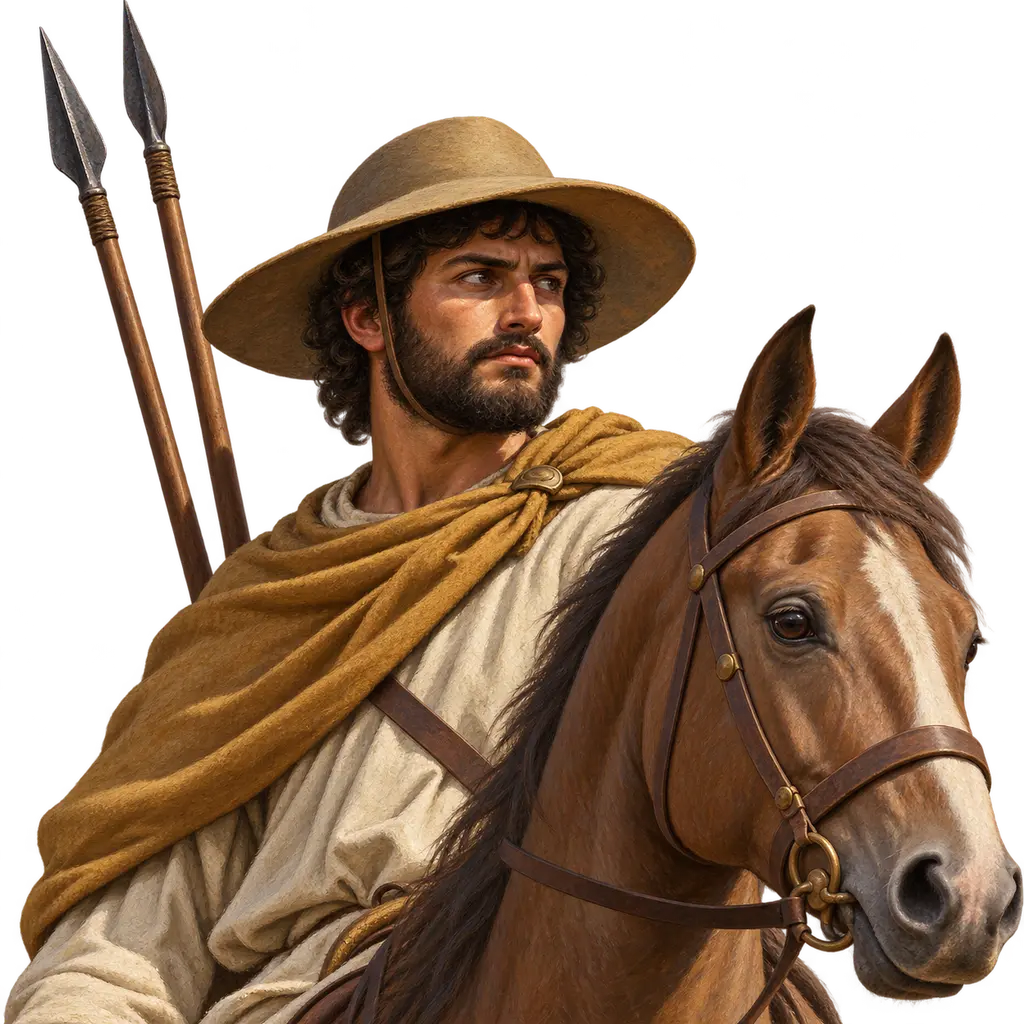
Greek horsemen
Cavalry of the Greek states, strongest in Thessaly and Boeotia, about 550-479 BCE
Greek horsemen were riders from the wealthy families of the Greek states. The strongest of them came from the open plains of Thessaly and Boeotia. In the wars with Persia, the best Greek cavalry fought on the King's side, while the allied army that won at Plataea in 479 relied almost entirely on infantry.
In the game: The game fields a Greek Rider at Plataea. Herodotus gives Pausanias's allied army no cavalry; the Greek horsemen on that field were Thebans and other Boeotians, with Thessalians, serving Mardonius.
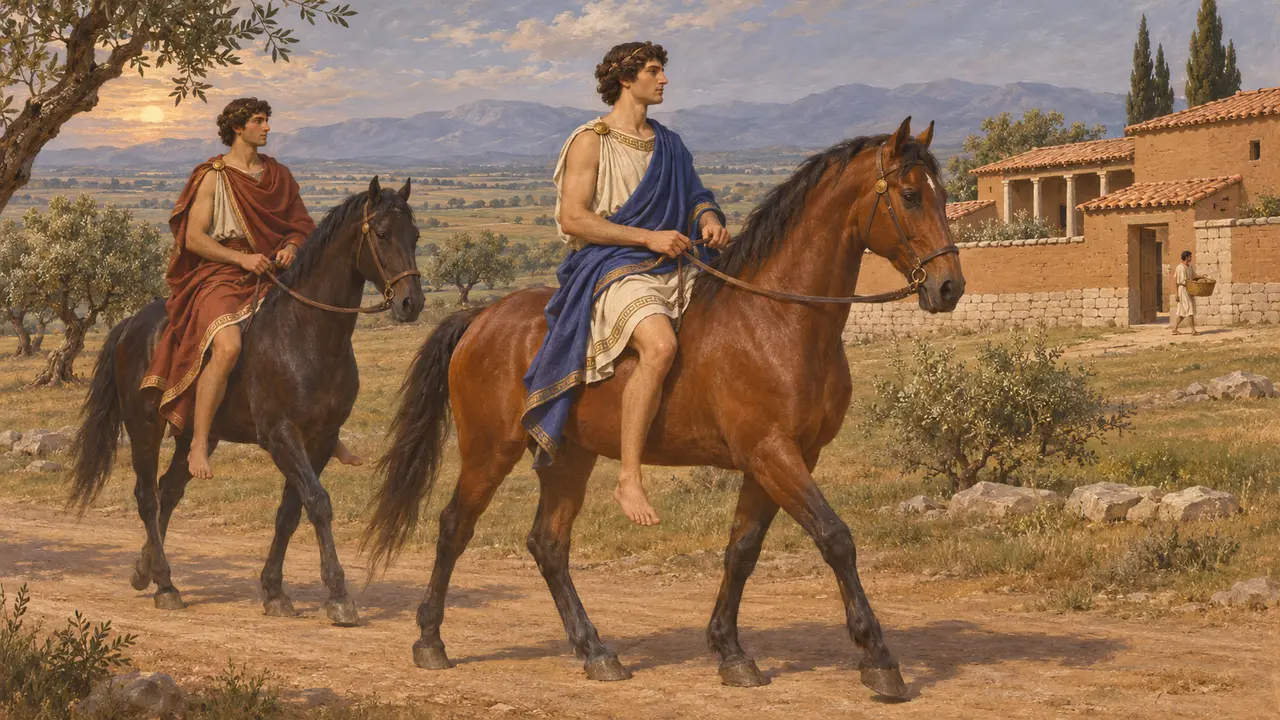
Horses as a mark of wealth
In the recordKeeping a horse in mainland Greece was costly, because good pasture was scarce outside a few plains. Athenian vase paintings and grave monuments of the later sixth century show young men of rich families on horseback. They often appear in parades, hunts or as mounted attendants of hoplites rather than charging in battle.
G. R. Bugh, The Horsemen of Athens, 1988; I. G. Spence, The Cavalry of Classical Greece, 1993
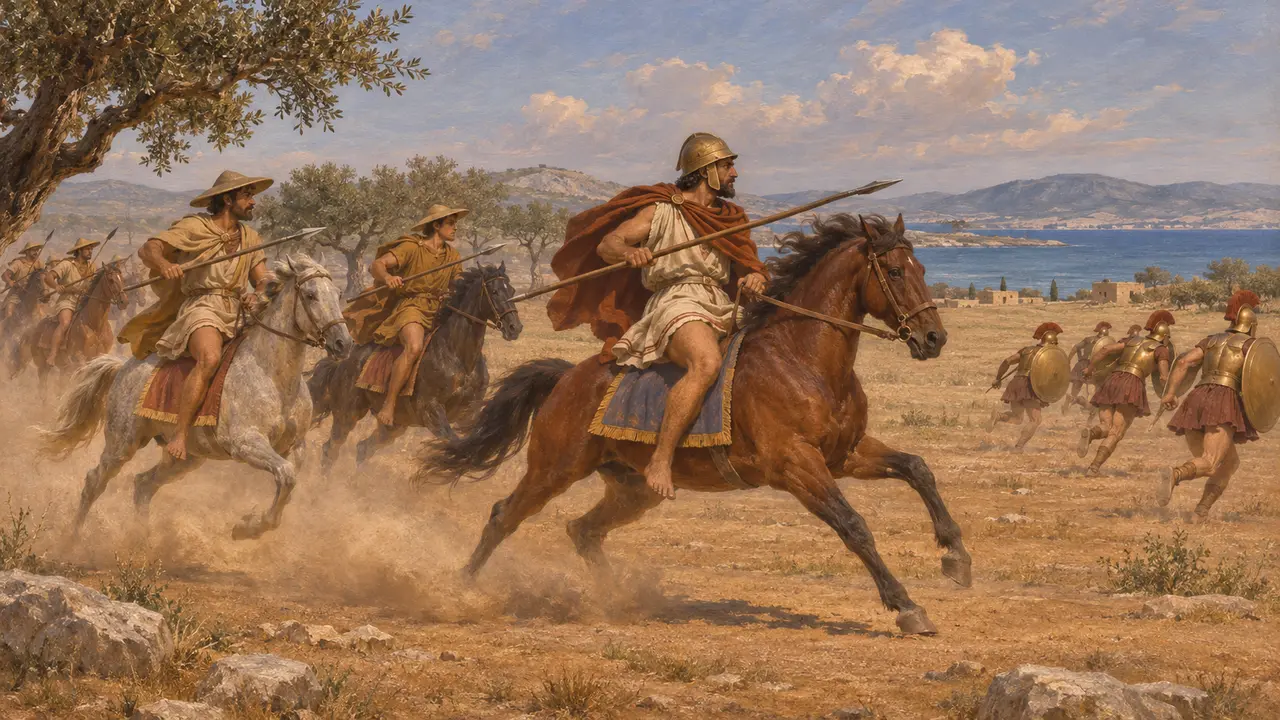
The horsemen of Thessaly
Ancient accountHerodotus says that in about 511 the Thessalians sent a thousand horsemen under their king Cineas to help the Athenian tyrant Hippias. On the cleared plain of Phalerum they routed a Spartan force and killed its commander Anchimolius. When Xerxes came in 480 the Thessalians went over to him. Herodotus says the King raced his own horses against Thessalian ones, said to be the best in Greece, and the Persian horses won.
Herodotus 5.63; 7.172-174; 7.196
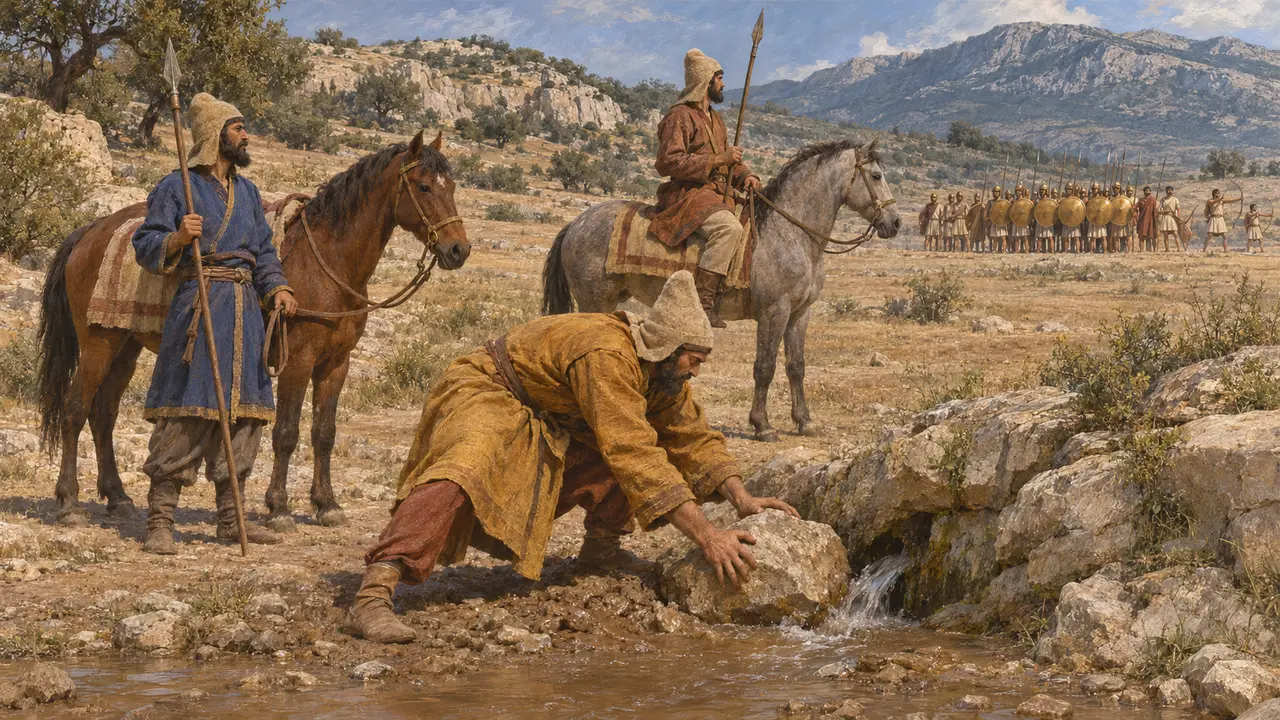
An allied army without cavalry
Ancient accountHerodotus lists Pausanias's army at Plataea as hoplites and light-armed men and names no cavalry. His total of 110,000 is probably too high. When Masistius led the Persian horse against the Greek line, 300 picked Athenians with archers held firm until his horse was shot and he was killed. Later the Persian riders choked the Gargaphia spring, and the Greeks had no horsemen to stop them.
Herodotus 9.20-25; 9.28-30; 9.49
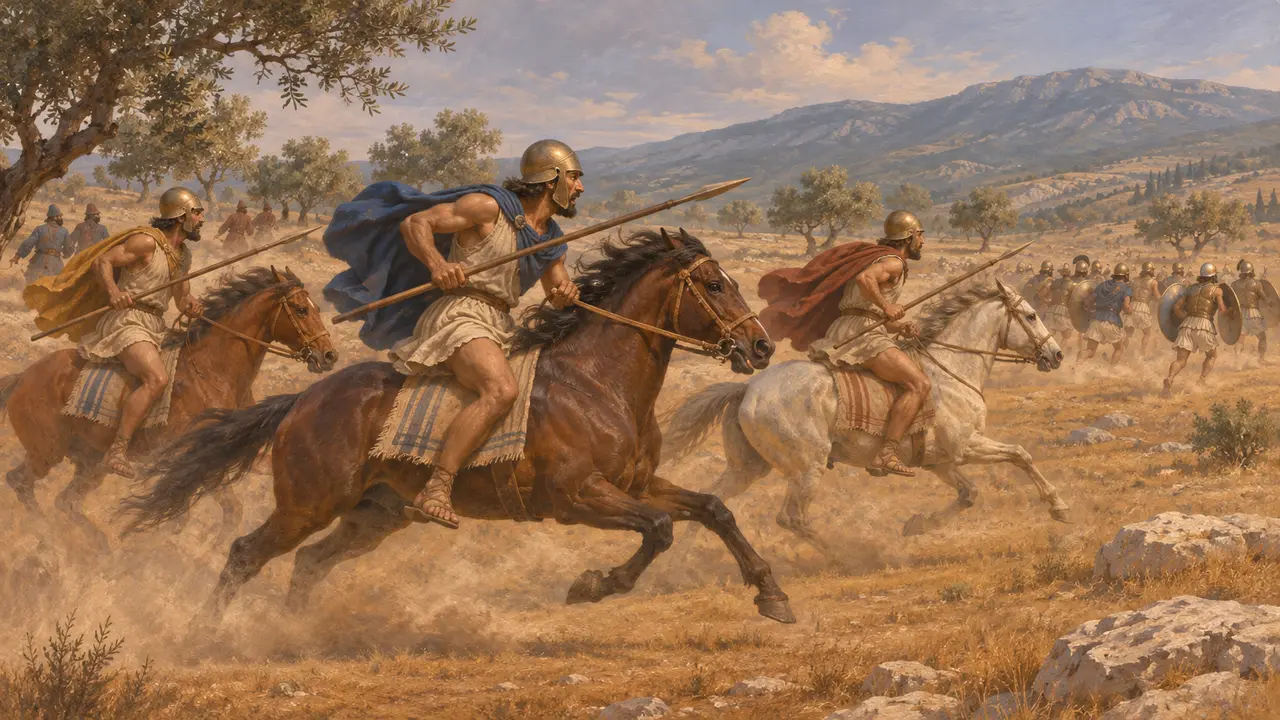
Greek riders in Mardonius's army
Ancient accountBoeotians and Thessalians marched with Mardonius, and the Thebans had advised him to make his stand in Boeotia. Herodotus says that when the Persian line broke, the Boeotian cavalry covered the flight. Theban horsemen caught the Megarians and Phliasians advancing in disorder, killed 600 of them and drove the rest towards Cithaeron.
Herodotus 9.2; 9.31-32; 9.68-69
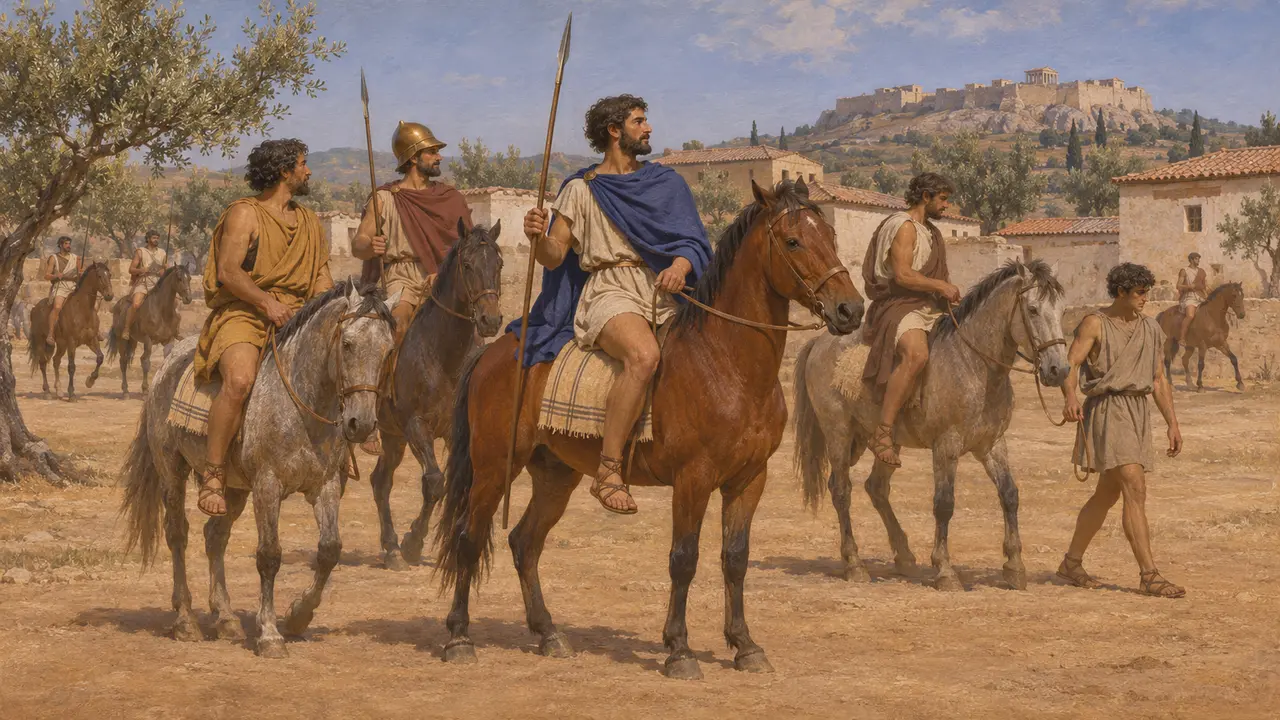
When Athens built a cavalry
DisputedThe Athenian Constitution names the hippeis, the horsemen, as a property class under Solon. Historians disagree over whether Athens had an organised cavalry corps before the Persian Wars. Some link a small early force to the naukraries; others follow Andocides, who says Athens first set up 300 horsemen after the Persian Wars. By 431 Thucydides counts 1,200 Athenian riders, including mounted archers.
Aristotle (attrib.), Athenian Constitution 7; Andocides, On the Peace; Thucydides 2.13; G. R. Bugh, The Horsemen of Athens, 1988
Sources
- Herodotus, Histories, books 5, 7 and 9
- I. G. Spence, The Cavalry of Classical Greece, 1993
- G. R. Bugh, The Horsemen of Athens, 1988
- Thucydides 2.13
- Aristotle (attrib.), Athenian Constitution 7
- Andocides, On the Peace