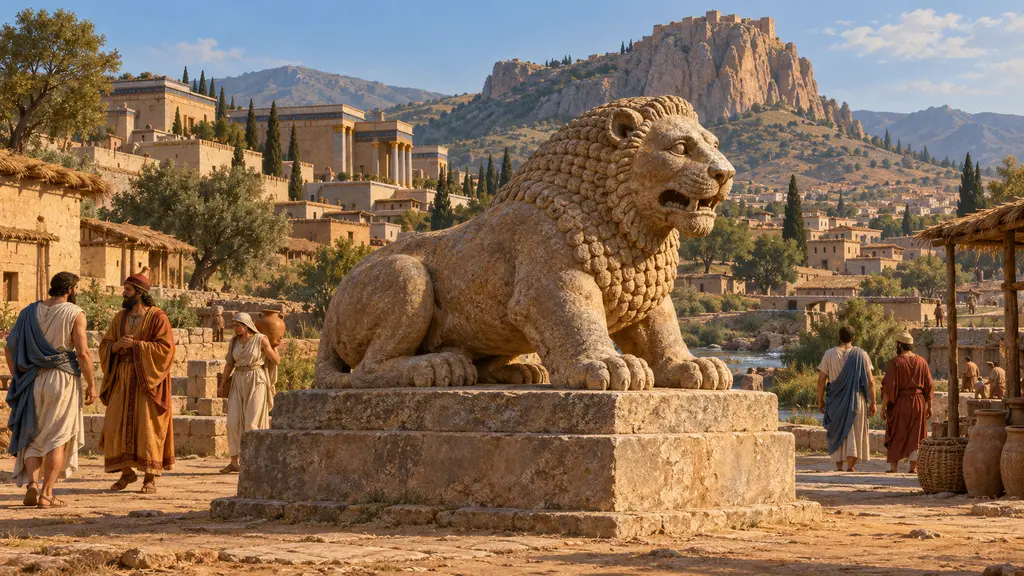
Stone Lion
Lion sculpture of Lydian Sardis and the Persian royal cities, 6th-5th centuries BCE
Carved lions guarded tombs, gates and sacred places across western Asia long before the Persians came, and in Lydia the lion came close to being a royal emblem. In Persia the animal appeared mostly in palace reliefs, glazed brick and seals, attacking a bull, striding in procession or fighting a royal hero. In both lands it stood for strength and royal power.
In the game: The game offers the Stone Lion, a crouching lion on a plinth, in Sardis, Pasargadae, Parsa and Susa. Freestanding lions fit Lydia, but Persian palaces showed lions mostly in relief and glazed brick, so this is a simplification there.
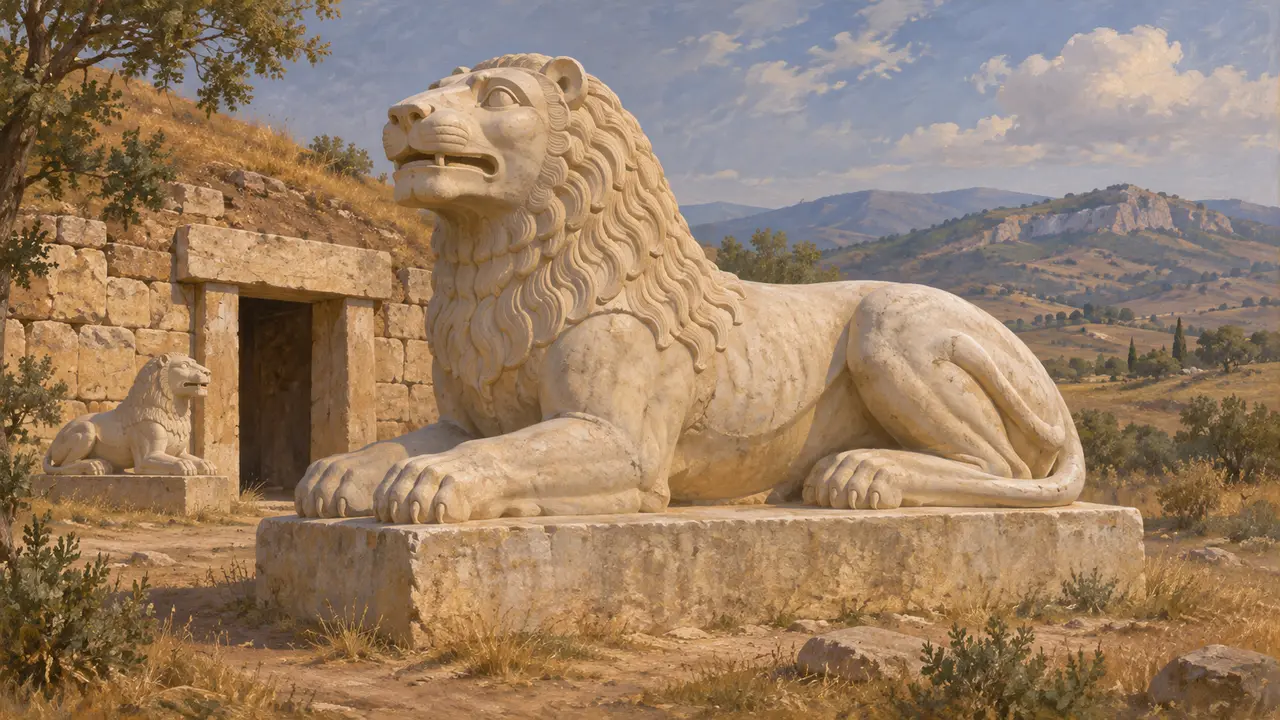
Marble lions of Sardis
In the recordExcavations at Sardis have recovered several archaic marble lions, most of them crouching or seated, from the 6th century. Many were probably set over tombs or at entrances as guardians. Early electrum coins from Lydia, among the first coins anywhere, carry a lion's head and were probably struck under the Lydian kings. Together these finds suggest how closely the lion was tied to Lydian kingship.
G. M. A. Hanfmann and N. H. Ramage, Sculpture from Sardis, 1978
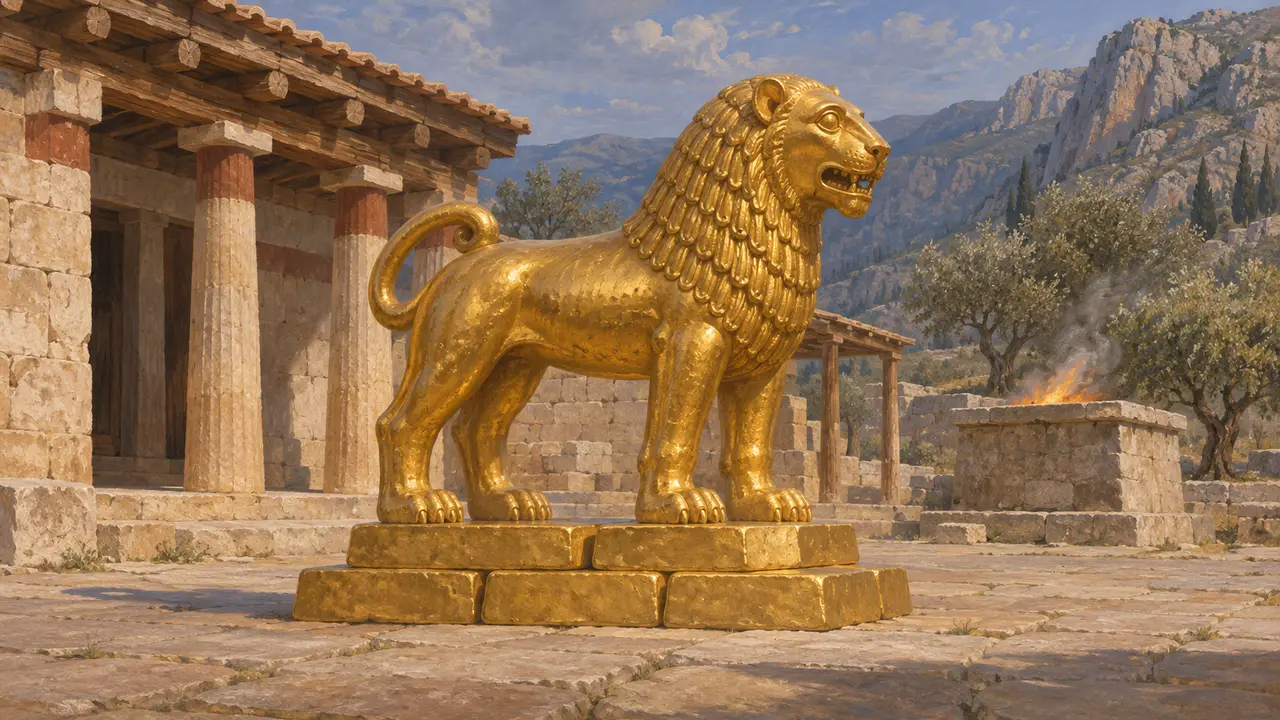
Croesus's golden lion at Delphi
Ancient accountHerodotus says that Croesus sent Apollo at Delphi a lion of refined gold weighing ten talents, set on a pile of gold half-bricks. When the temple burned, in a fire that later writers date to 548 BCE, the lion fell and lost three and a half talents of its weight. Herodotus adds that in his own day it was kept in the treasury of the Corinthians. Nothing of it survives.
Herodotus 1.50
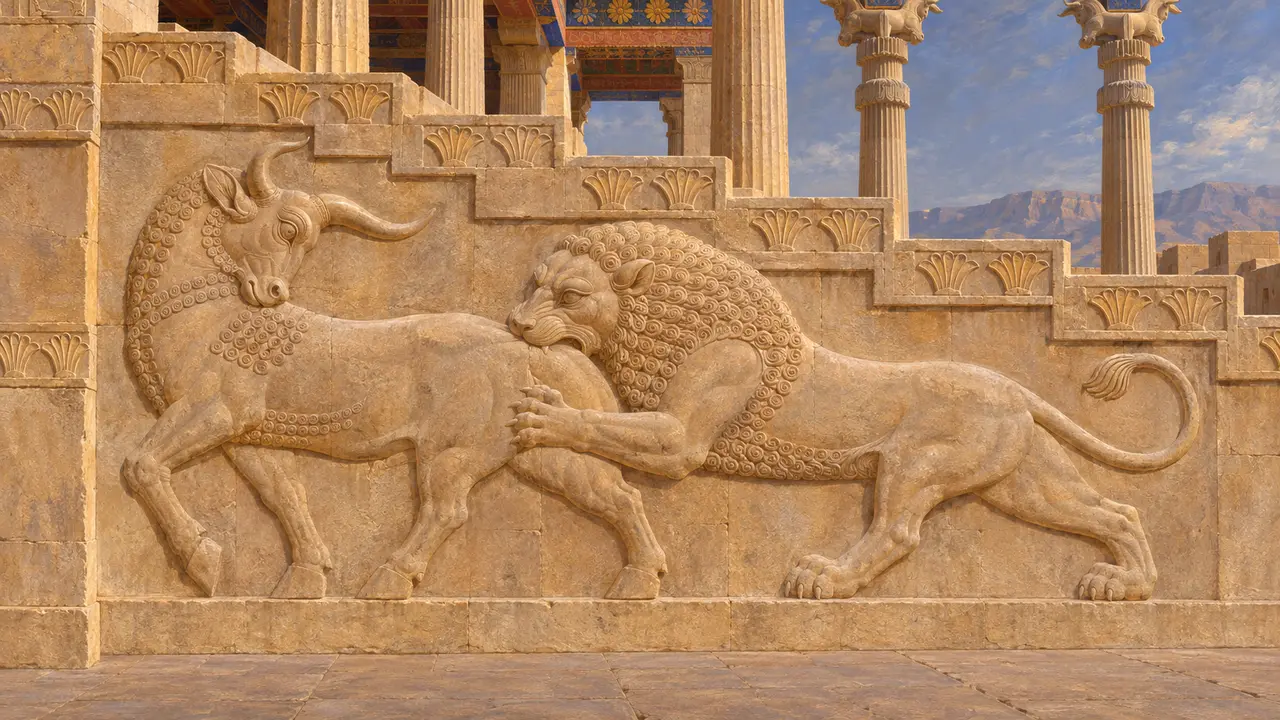
The lion in Persian palace art
In the recordAt Persepolis, lions attacking bulls are carved on the stairways of the Apadana and other buildings, and palace doorways show a royal hero stabbing a rearing lion or monster. At Susa, a frieze of striding lions in glazed brick, probably from Darius's palace, is now in the Louvre. Seal impressions on the Persepolis Fortification tablets also show heroes gripping lions. Few freestanding guardian lions are known from Persia, unlike Lydia.
M. C. Root, The King and Kingship in Achaemenid Art, 1979
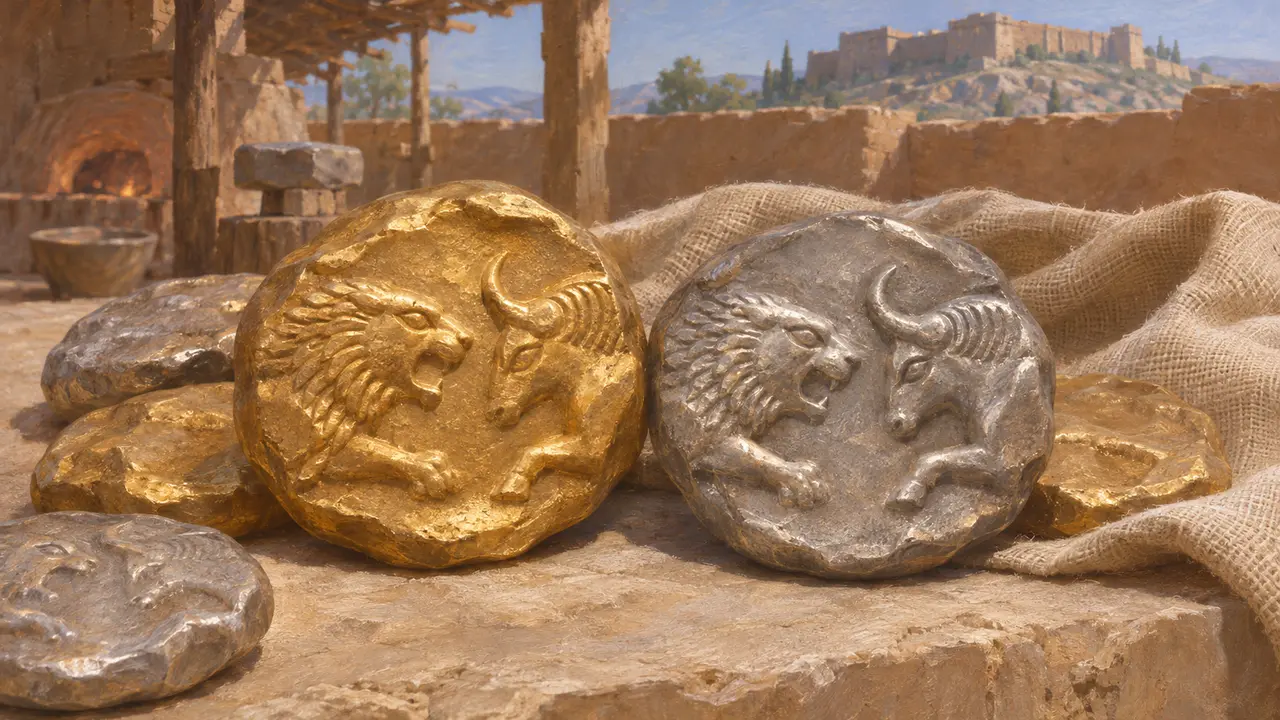
Whose lion-and-bull coins
DisputedGold and silver coins stamped with the foreparts of a lion and a bull facing each other are called croeseids and were long credited to Croesus. Some scholars argued that part of the series was struck at Sardis under Persian rule, before Darius introduced his own coinage. Coins from excavated contexts at Sardis, published in 2005, support a start under Croesus, but how long the series ran remains debated.
N. Cahill and J. H. Kroll, New Archaic Coin Finds at Sardis, American Journal of Archaeology, 2005
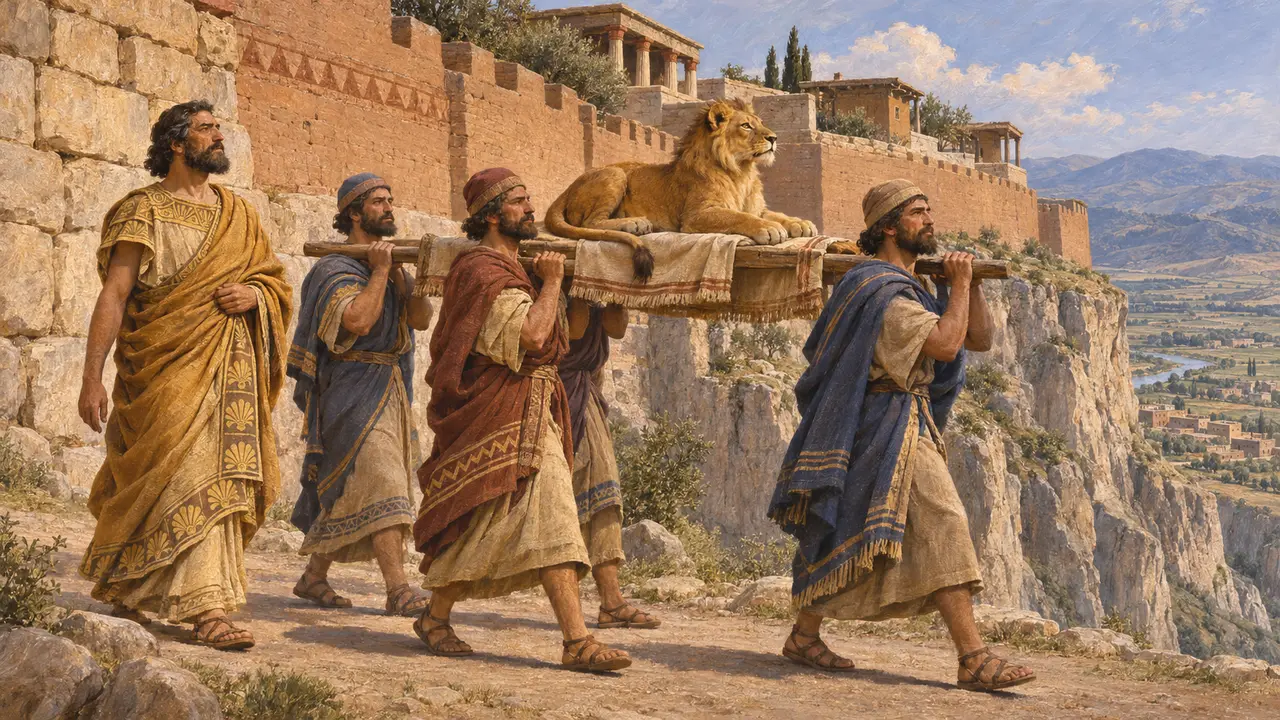
The lion carried round the walls
Later legendHerodotus tells that an early king of Sardis, Meles, was given a lion born to his concubine. Seers said the city would never be taken if the lion were carried round its walls. Meles left out one steep stretch of the citadel, and that was where the Persians climbed in when Cyrus took Sardis. The tale explains the city's fall as fate rather than weakness.
Herodotus 1.84
Sources
- Herodotus 1.50
- Herodotus 1.84
- G. M. A. Hanfmann and N. H. Ramage, Sculpture from Sardis, 1978
- M. C. Root, The King and Kingship in Achaemenid Art, 1979
- N. Cahill and J. H. Kroll, New Archaic Coin Finds at Sardis, American Journal of Archaeology, 2005
- P. Briant, From Cyrus to Alexander, 2002